

Main Facts
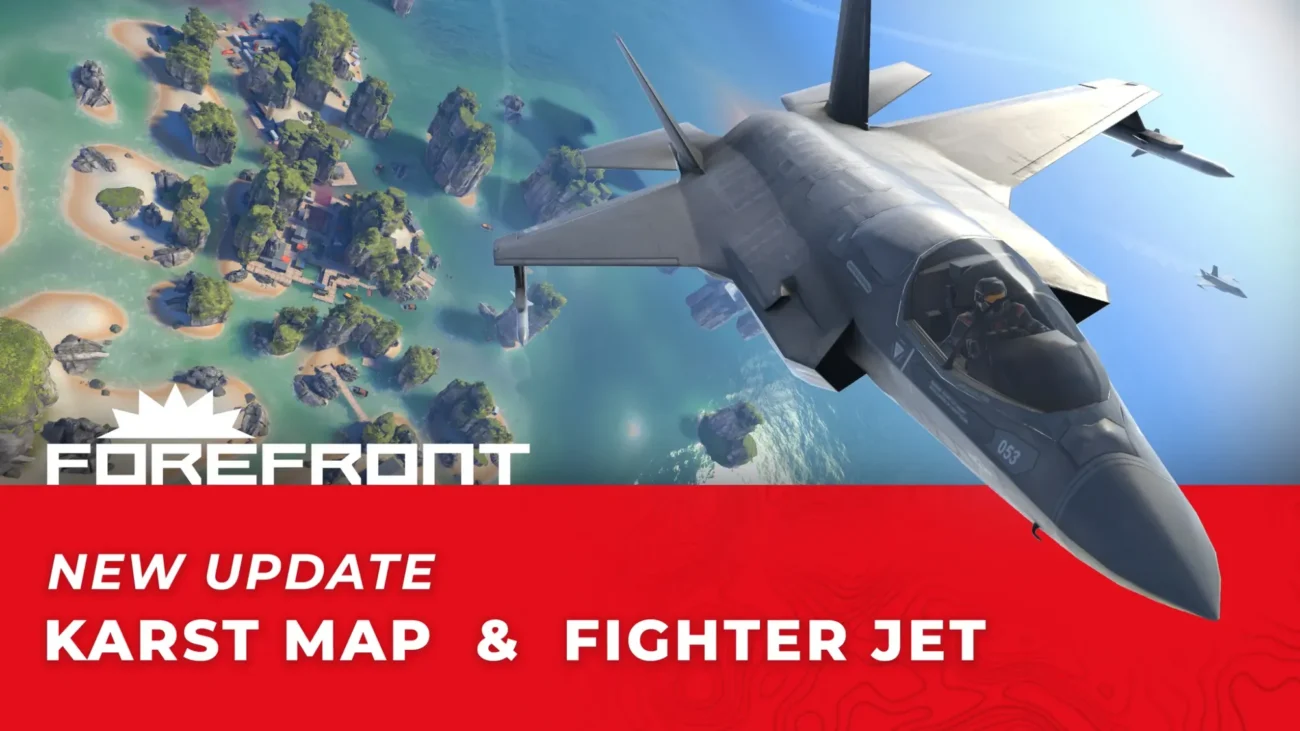
The landscape of virtual reality tactical shooters has shifted dramatically following a landmark content release from developer Triangle Factory. In their latest free update, the large-scale PvP first-person shooter Forefront has officially added high-speed fighter jets to its growing mechanized arsenal. This major expansion also introduces an entirely new battlefield, Karst, complete with distinct terrain features, tactical chokepoints, and an expansive skybox designed to accommodate high-altitude aerial combat.
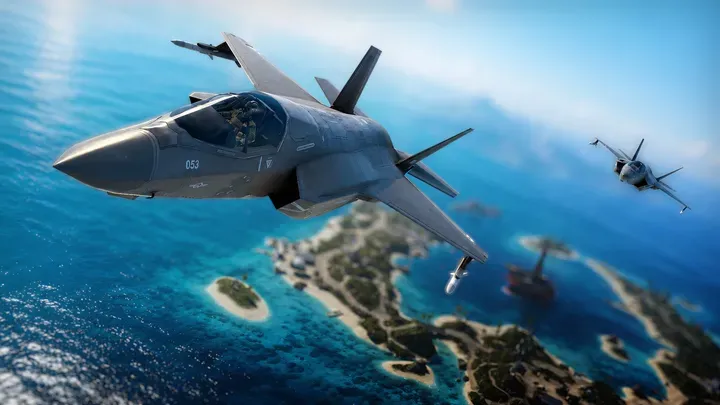
Initially ruled out by the development team due to balance and technical hurdles, the inclusion of fighter jets marks a bold paradigm shift for the game. Labeled by Triangle Factory as an "experimental vehicle," these aircraft can be spawned directly through the in-game spawn menu, allowing players to instantly pivot from boots-on-the-ground infantry skirmishes to high-stakes aerial dogfights complete with lock-on missile capabilities.
To ensure accessibility for a wide range of virtual reality players—who often experience varying degrees of motion sensitivity and have diverse hardware preferences—the jets feature comprehensive flight mechanics. These include Vertical Take-Off and Landing (VTOL) functionality for tight operational spaces, alongside a choice between physical, highly immersive control schemes and more streamlined arcade-style controls.
However, the introduction of air superiority is intentionally constrained to maintain tactical balance across the game’s playlist. Currently, fighter jets are exclusively deployed on two maps: Karst, the atmospheric new environment launched in this update, and a specially adapted Paradise map variant.
The update is entirely free and is now live across all supported platforms, including Meta Quest, SteamVR (PC VR), and Pico headsets.
Chronology of Development and Release
The journey of Forefront to this milestone update reflects Triangle Factory’s iterative approach to large-scale virtual reality game development. Understanding how the title reached the point of introducing combat aircraft requires examining its release trajectory and post-launch roadmap:

- Early Development and Tactical Foundations: Forefront was engineered from the ground up to fill a gaping hole in the virtual reality gaming market: true large-scale, combined-arms tactical warfare. From its early access phases, the developers focused heavily on infantry combat, armored transport vehicles, and structured map objectives reminiscent of traditional flat-screen military shooters like Battlefield.
- The 1.0 Full Release: Earlier this year, Forefront reached its official 1.0 milestone. This launch solidified the core gameplay loop, introducing refined gunplay, network optimizations, and a robust framework for future content expansions. The 1.0 release established positive community momentum and proved that standalone VR headsets and PC VR platforms could handle complex, multi-player battles simultaneously.
- Post-Launch Expansion Phase: Following the full release, Triangle Factory adopted a rapid cadence of content delivery. This period saw the rollout of multiple iterative updates, introducing fresh map locations (such as the popular Clearwater map), new weapons to expand the armory, and substantial graphical and performance enhancements tailored specifically for PC VR players.
- Reversing Course on Aerial Combat: During the early conceptualization and post-1.0 phases, the developers publicly ruled out the integration of fixed-wing aircraft. The studio cited concerns regarding map scale, performance optimization across standalone mobile chipsets (like the Qualcomm Snapdragon series found in Quest headsets), and the severe disruption high-flying vehicles could cause to ground infantry.
- The "Experimental Vehicle" Shift: Listening to community demand and pushing the boundaries of what is technically feasible on current-generation hardware, Triangle Factory quietly pivoted. They treated fighter jets as a high-risk technical challenge, culminating in the current experimental implementation.
- Today – The Fighter Jets and Karst Update: The patch is deployed globally across Meta Quest, Steam, and Pico platforms, successfully merging high-altitude dogfighting with ground-based infantry warfare for the first time in the game’s history.
Supporting Data and Technical Specifications
Integrating fixed-wing aircraft into a multiplayer virtual reality shooter requires immense technical balancing, especially when the game must run seamlessly across both tethered PC VR rigs and standalone wireless headsets. Analyzing the technical makeup of the new update reveals how Triangle Factory achieved this feat:
- Platform Availability:
- Meta Quest ecosystem (Quest 2, Quest 3, Quest Pro via Meta Store).
- SteamVR (optimized with enhanced graphical fidelity for PC VR).
- Pico XR headsets (Global storefront).
- Pricing Model: 100% free expansion update for all existing owners of the base game.
- Vehicle Specifications:
- Classification: Experimental Vehicle.
- Deployment Method: User-accessible via the in-game spawn menu.
- Offensive Capabilities: Air-to-air and air-to-ground lock-on missile systems.
- Mobility Features: Vertical Take-Off and Landing (VTOL) capabilities, allowing pilots to launch from restricted spaces without needing traditional runways.
- Control Schemes: Dual options featuring physics-based interactive cockpit controls for maximum immersion, and arcade-style controls for faster, more forgiving handling.
- Map Integration Matrix:
- Karst: Primary launch map featuring the new fighter jet mechanics.
- Paradise (Variant): Secondary map adapted to support aerial engagements.
- Other Maps: Excluded from the current fighter jet rotation to preserve tightly focused infantry and ground vehicle balancing.
Official Responses and Lore Integration
The Lore Behind the Karst Map
Triangle Factory has always woven environmental storytelling deeply into the architecture of Forefront. The newly introduced Karst map is not merely a collection of assets; it is a focal point for the game’s overarching narrative conflict between global corporate power and localized resistance forces.
Set in a picturesque yet volatile Vietnamese fishing village dramatically framed by towering limestone cliffs, the map’s background lore details a geopolitical flashpoint:
- The O.R.E. Corporation: Orpiment Renewable Energy (O.R.E.) acts as the dominant global entity within the game’s universe, maintaining a strict, worldwide monopoly over the supply and distribution of Red Orpiment, a highly coveted clean energy source.
- The Discovery: O.R.E. surveillance and reconnaissance discovered that the inhabitants of the previously tranquil Karst village—long believed to be isolated and politically neutral—have covertly amassed and traded massive quantities of Red Orpiment.
- The Escalation: Viewing this unsanctioned trade as a direct threat to their global monopoly, O.R.E. corporate leadership authorized an immediate military invasion to seize the reserves and subjugate the local population.
- The Resistance: Meeting the corporate assault head-on, the Coalition Force has mobilized to defend the village, turning the dramatic limestone valleys and tight coastal alleys into a fierce, multi-tier combat zone where infantry, armored ground units, and now fighter jets clash for dominance.
Developer Perspectives on the Update
While the developers initially dismissed the concept of fighter jets, the decision to label them as "experimental" highlights an openness to community-driven innovation. In statements surrounding the update, the studio emphasized that aerial combat was introduced to radically alter the pacing of matches on compatible maps.
By offering both VTOL functionality and flexible control schemes, Triangle Factory sought to bridge the gap between hardcore flight simulation enthusiasts—who demand realistic cockpit interaction—and casual shooter fans who want high-speed thrills without suffering from acute virtual reality motion sickness. The dual-control approach represents a crucial user-experience milestone for high-speed locomotion in VR shooters.
Implications for the VR Gaming Ecosystem
The rollout of the Fighter Jets and Karst update for Forefront carries significant implications for the broader virtual reality gaming landscape, particularly within the competitive tactical shooter genre.
1. Raising the Technical Bar for Standalone VR
One of the most profound implications of this update is proof of technical scaling. Historically, large-scale vehicular combat—especially involving fast-moving aircraft that require massive render distances and high-speed asset streaming—was considered the exclusive domain of high-end PC VR or flat-screen titles. By successfully bringing dogfights with lock-on missiles and VTOL mechanics to the Meta Quest and Pico standalone architectures (alongside PC VR), Triangle Factory demonstrates that standalone mobile chipsets are increasingly capable of handling complex multiplayer mechanics previously thought impossible outside of a tethered PC.
2. Evolution of Tactical and Combined-Arms VR Gameplay
Shooters in virtual reality have traditionally struggled with map pacing. Developers often have to choose strictly between tight, close-quarters combat (like Pavlov or Onward) or sprawling vehicular warfare that risks feeling empty or poorly optimized. Forefront continues to carve out a unique middle ground. The addition of fighter jets forces ground infantry to adapt: players must now factor anti-air strategies, cover utilization, and airspace control into their squad tactics. This elevates team communication and tactical coordination to levels rarely seen in standalone VR multiplayer environments.
3. Community Engagement and Longevity
Free updates of this magnitude directly impact player retention. In a market where multiplayer VR communities can sometimes fracture or experience dwindling user counts over time, continuous drops of high-value content—such as a heavily requested vehicle class coupled with an atmospheric new map—reenergize the player base. It signals to the community that the developers are willing to break their own design rules ("we will never add jets") in order to chase ambitious gameplay experiences based on player desire.
4. Future Outlook for Forefront
With fighter jets currently restricted to Karst and the Paradise variant, a major question looms over the game’s future: will aerial combat be expanded to older or future maps? If the "experimental vehicle" label proves successful and the servers maintain stable performance without breaking game balance, pressure will inevitably mount on Triangle Factory to integrate aircraft into the broader map rotation. Furthermore, the success of this update establishes a precedent for other developers in the VR space, proving that taking calculated risks on traditionally "impossible" features can pay massive dividends for community goodwill and game immersion.
As Forefront continues to mature past its 1.0 release, this update firmly cements its status as one of the most ambitious, feature-rich tactical shooters available in virtual reality today.

