

Introduction: The Evolution of Immersive Puzzlers
The landscape of virtual and mixed reality gaming has evolved far beyond frantic shooter titles and adrenaline-fueled action sequences. Today, some of the most compelling software relies on the intimate, tactile satisfaction of physical interaction within toy-like digital dioramas. Puzzle games, in particular, have found a welcoming home on modern headsets, taking full advantage of spatial computing to let players reach out, grab, and manipulate virtual environments with their bare hands or controllers.
Enter Traffix XR: Cities of Tomorrow, developed and published by Infinity Games. Released on October 15, 2026, for Meta Quest 3, 3S, and Pro headsets at a price point of $19.99, this roadway management puzzler attempts to fuse the relaxing, ambient vibes of urban planning with the challenging cerebral gymnastics of logistical grid management. While its predecessor, the flat-screen title Traffix, tasked players with managing basic traffic lights through simple taps, Traffix XR expands the scope entirely, translating the core concepts into a fully spatial, miniature-building experience.
However, transitioning a traffic management puzzler into mixed and virtual reality brings distinct hurdles. Balancing a zen-like atmosphere with punishing difficulty is a delicate art, and while Infinity Games captures much of the magic, occasional mechanical hiccups and rigid puzzle design prevent the title from achieving absolute perfection.
Main Facts: At a Glance
- Game Traffix XR: Cities of Tomorrow
- Developer & Publisher: Infinity Games Ltd
- Release Date: October 15, 2026
- Platform Support: Meta Quest 3, Quest 3S, and Quest Pro (Reviewed on Quest 3S)
- Price: $19.99 via the Meta Store
- Core Genre: Mixed Reality / Virtual Reality Traffic & Roadway Management Puzzle Game
- Accessibility & Comfort: Features seamless switching between mixed reality and VR, full support for seated or standing play, custom dominant-hand selection, and dual compatibility with standard controllers or intuitive hand-tracking.
Chronology and Gameplay Mechanics: From Blueprint to Metropolis
The developmental trajectory of the Traffix franchise showcases a clear ambition to scale up spatial immersion. Moving from traditional mobile and console screens to Meta’s spatial computing ecosystem required a ground-up redesign of how players interact with civic infrastructure.
The Core Loop
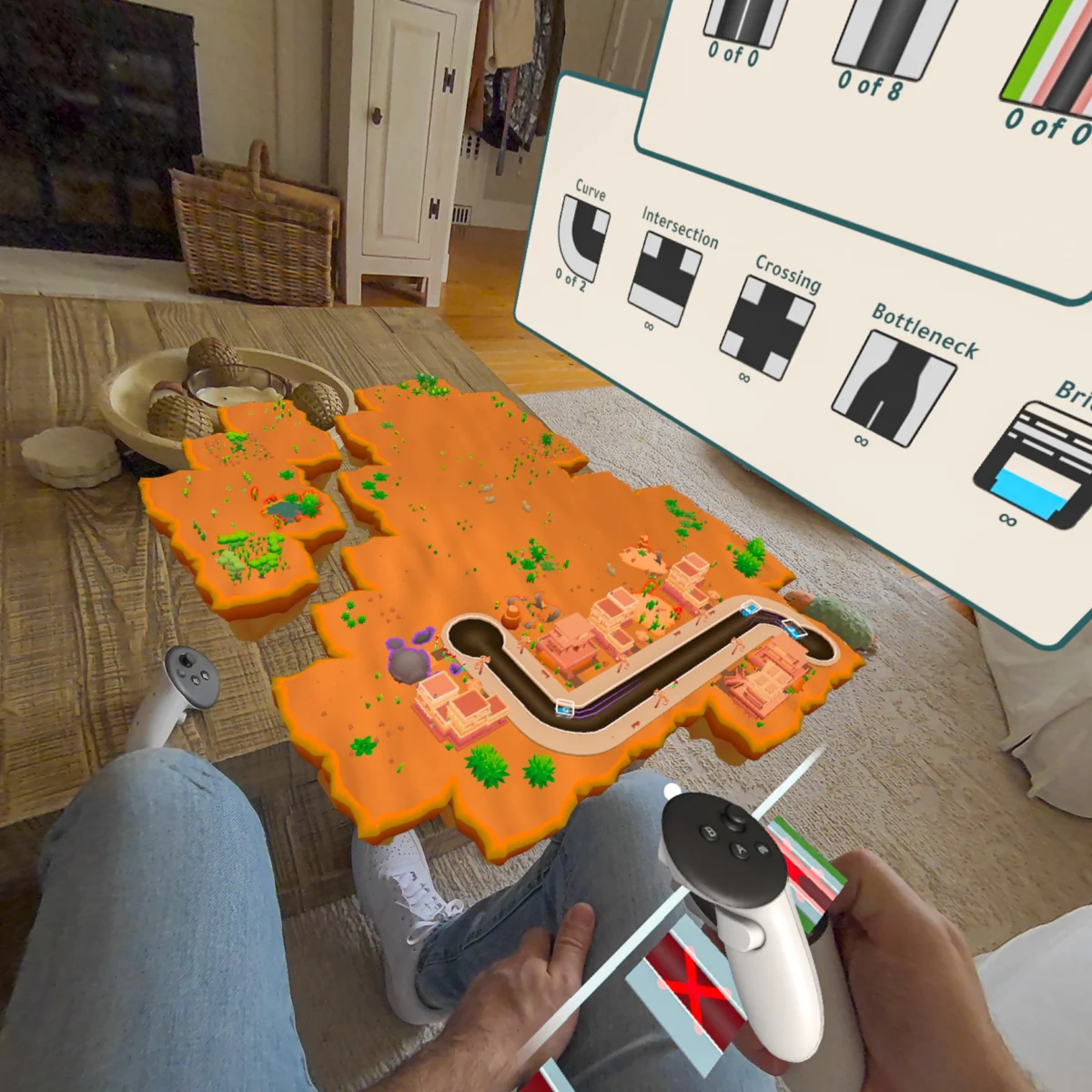
Upon launching Traffix XR, players are greeted by a quick, ten-minute tutorial that clearly outlines the foundational rules. Fans of titles like Mini Motorways will immediately recognize the rhythm of the gameplay, though the spatial medium alters the perspective entirely.
The primary objective in each stage is deceptively simple: connect points of interest (POIs) across a map to establish a flowing network of traffic and pedestrians. As roads link different zones, citizens travel back and forth, activating nodes and triggering rapid urban development. Buildings sprout organically as your network thrives, introducing new points of interest that must subsequently be tied back into the existing roadway grid.
Terrain and Resource Management
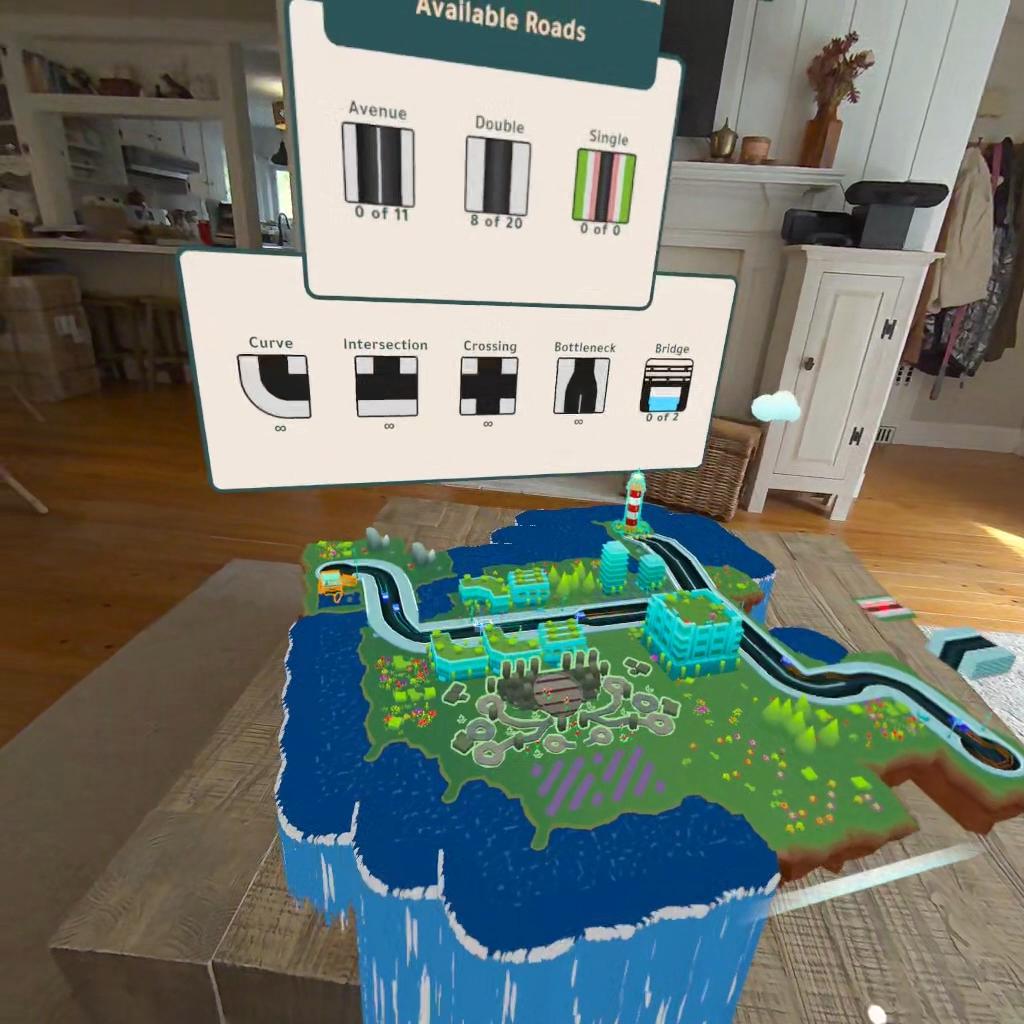
The challenge intensifies rapidly as players contend with hostile terrain and strictly rationed resources. Each level provides:
- A finite number of road tiles.
- Specific restricted road types.
- A limited supply of bridges to bypass natural obstacles.
Boulders, dense forests, winding rivers, and expansive lakes crisscross the maps, blocking direct paths and forcing creative engineering. Players must strategically lay down routes, erase missteps, and redraw connections on the fly. Because your toolset is tightly capped, trial and error become constant companions. Finding the exact configuration required to bridge Point A to Point B—and onward through a sprawling map—demands sustained strategic foresight.
Supporting Data, Biomes, and Presentation
Beyond the core campaign, Traffix XR attempts to offer long-term value through environmental variety and user-generated content.
Biomes and World Design
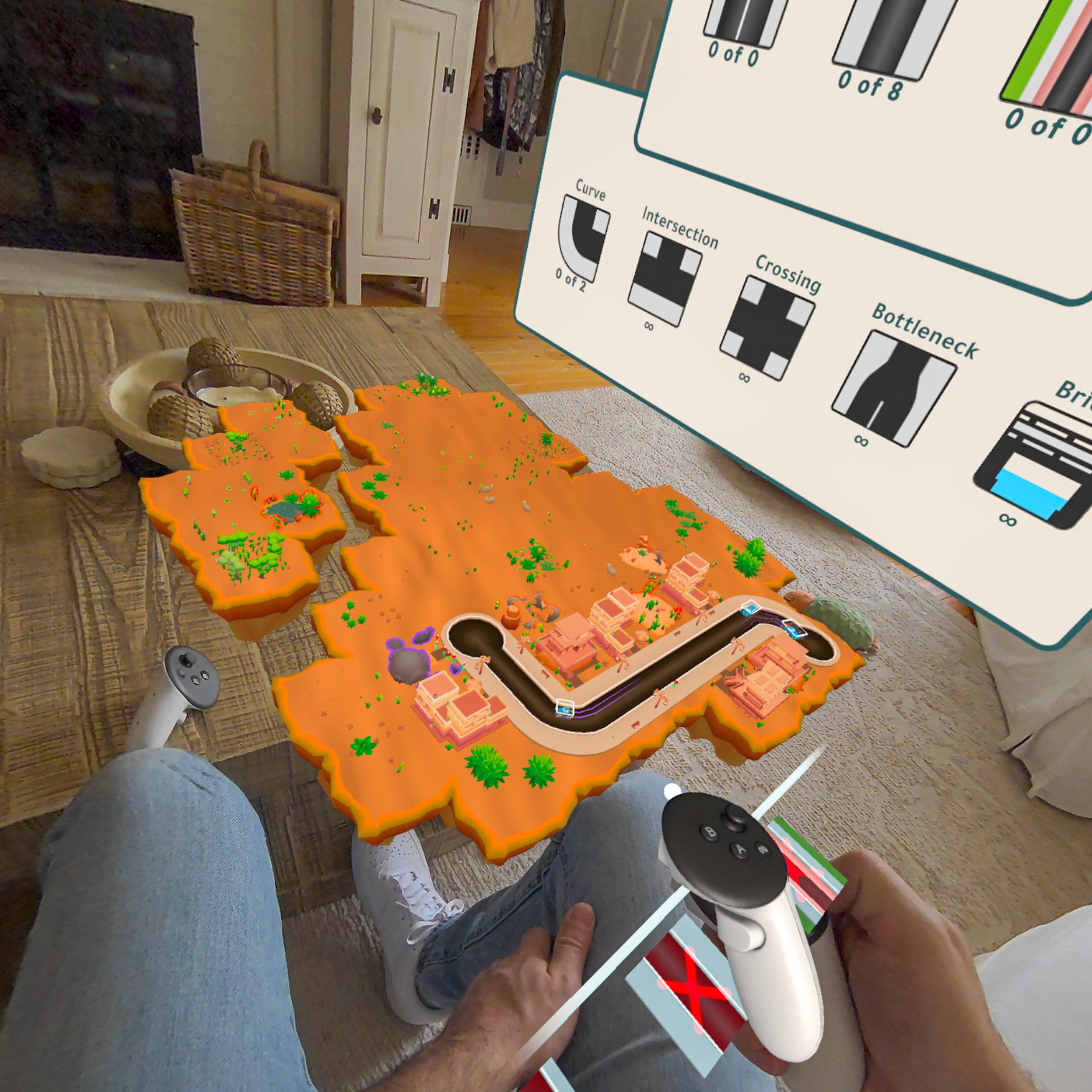
The campaign spans a diverse collection of maps spread across distinct aesthetic biomes. This variety prevents the urban grid layouts from bleeding together visually. Whether you are building roads through a verdant, mountainous valley or navigating dense river networks, the miniature worlds are rich with charming detail.
Audio and Atmosphere
Complementing the visual presentation is a smooth, playful, and deeply relaxing soundtrack. The auditory design leans heavily into the "chill puzzle" aesthetic, providing an effective counterweight to the mounting frustration of later levels.
The Custom Map Maker
For players who exhaust the pre-made campaign, Infinity Games included a robust custom map maker. This tool allows urban planners-in-training to construct their own diorama layouts, test their logistical mettle, and share their architectural nightmares with the broader community.
The Control Dilemma
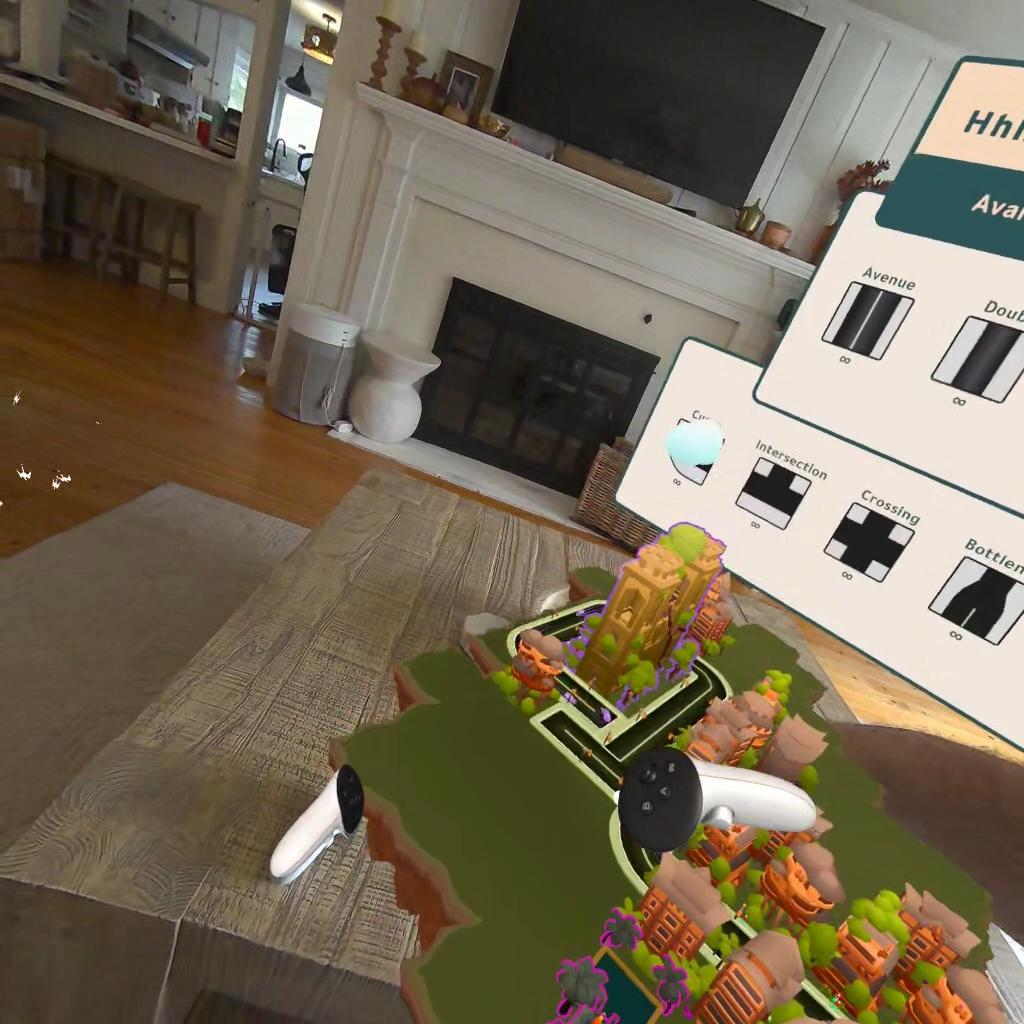
Despite its charming presentation, technical execution reveals several friction points regarding user input. Traffix XR supports both standard Quest controllers and native hand tracking. Unfortunately, neither input method feels entirely refined.
- Grab Mechanics: Selecting and dragging road tiles can feel equally unreliable whether using a controller trigger or pinching with fingertips.
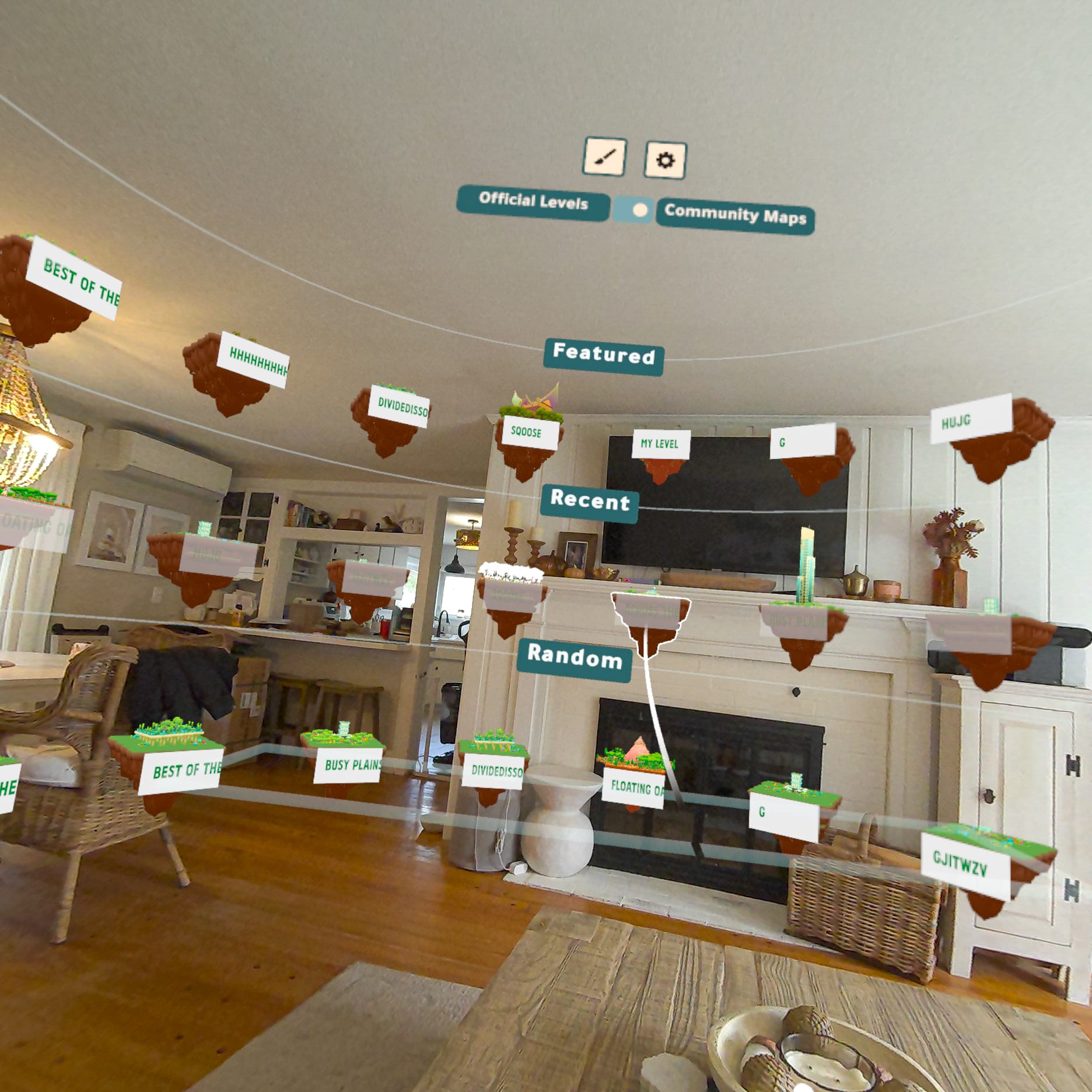
- UI Inconsistencies: Selecting stages requires interacting with a cluster of floating islands rotating around the player. Throughout the user interface, control languages shift unpredictably—sometimes requiring a trigger pull and other times relying on grip buttons.
- Flow Disruption: In a puzzle game where fluid, natural interactions dictate the pacing, these inconsistent control paradigms frequently slow down the experience.
Official Developer Intentions vs. Player Experience
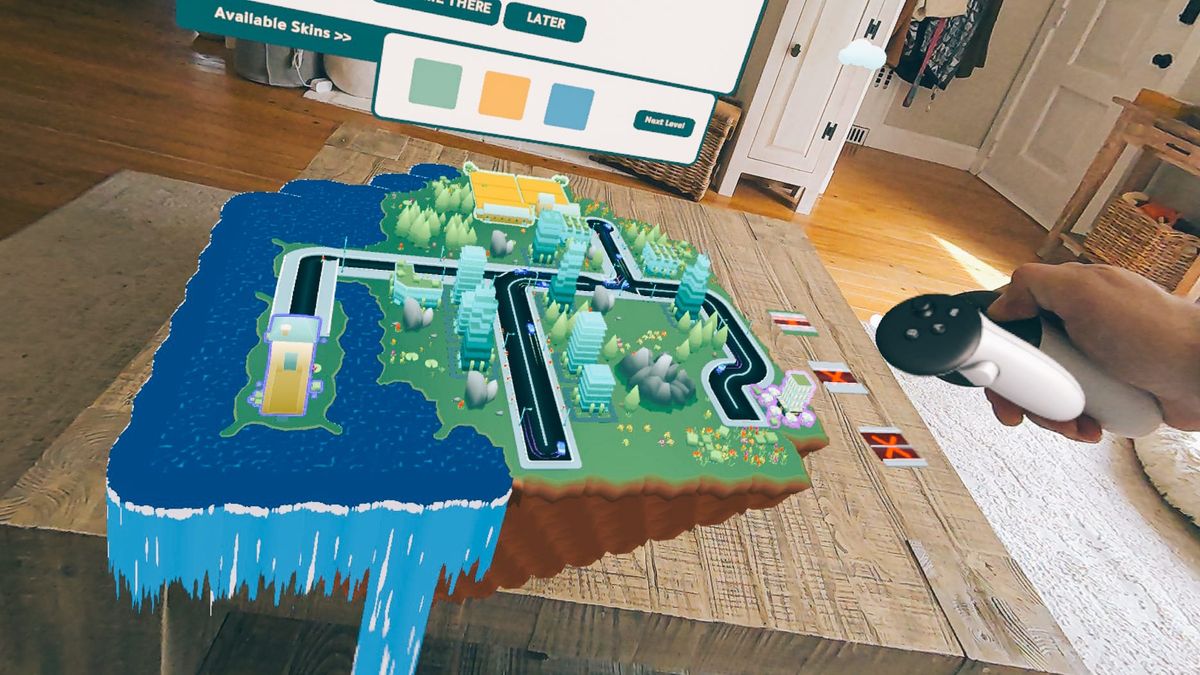
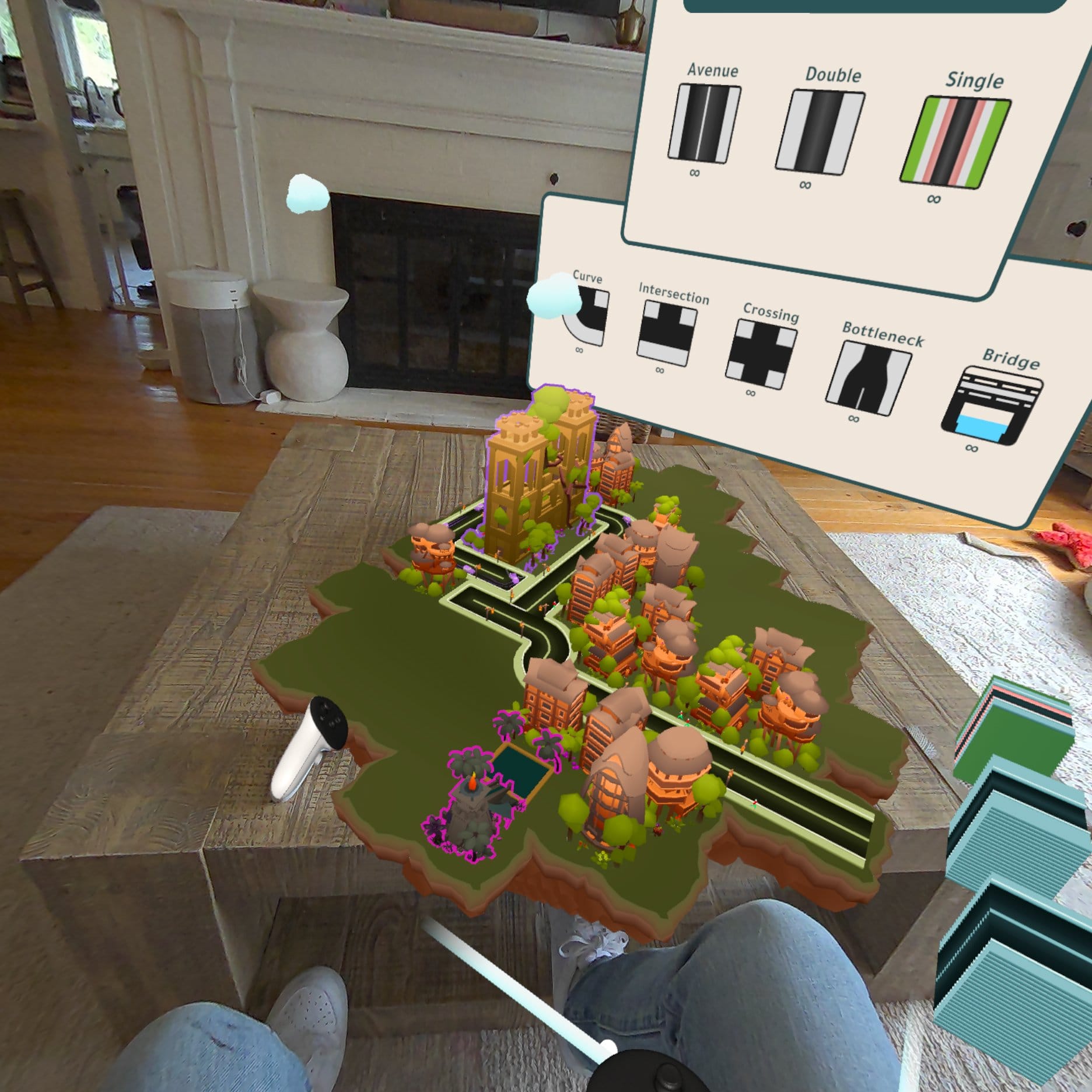
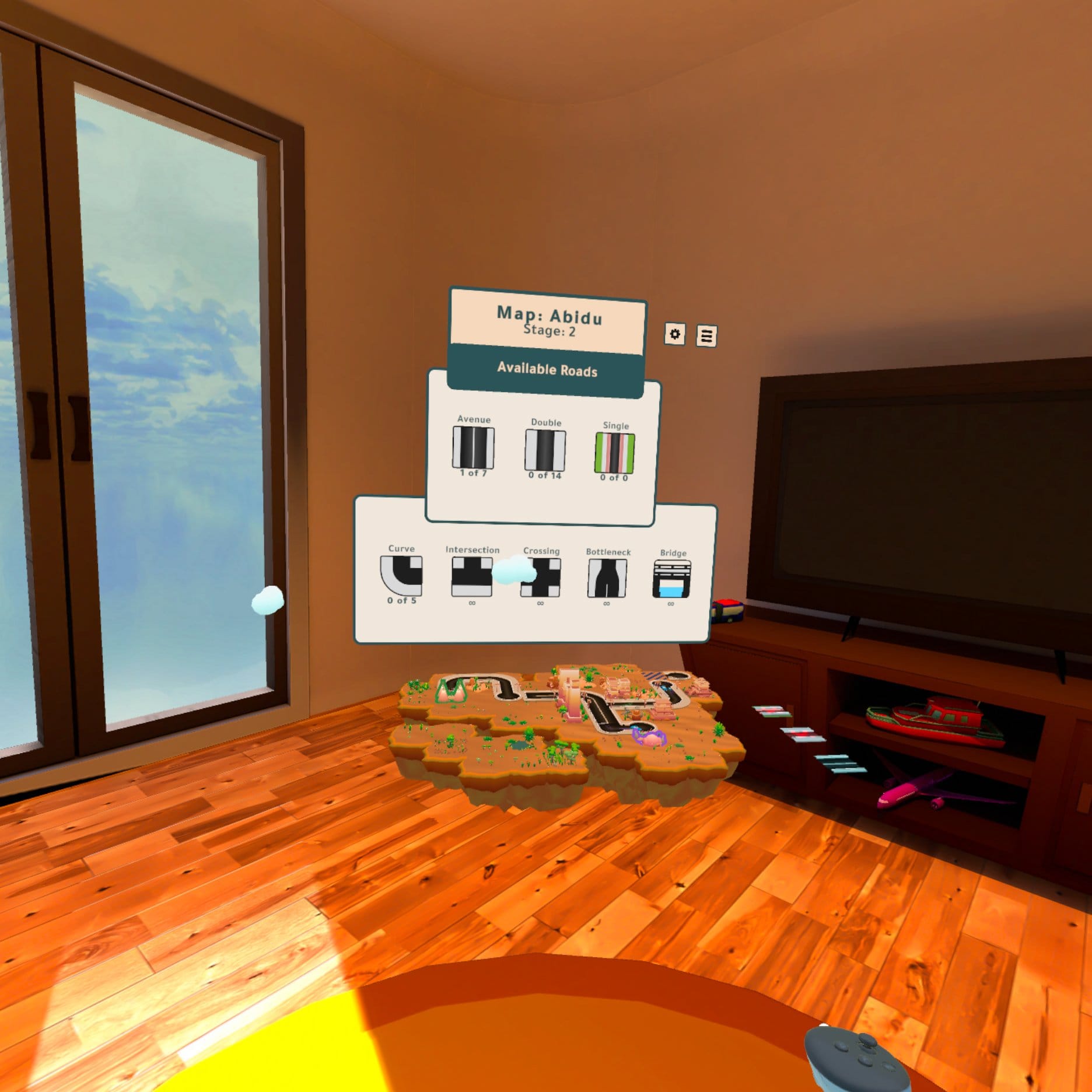
Infinity Games designed Traffix XR to occupy a sweet spot between casual relaxation and cerebral puzzle-solving. By leveraging Meta’s mixed reality pass-through technology, the developers successfully bring these miniature cities directly onto a living room coffee table, anchoring abstract puzzles into the physical world. For players who prefer traditional immersion, a virtual reality mode is also available, though it places the action inside a somewhat sparse and generic living room environment.
However, a philosophical divide often emerges between developer intent and player agency, particularly regarding puzzle rigidity.
The Difficulty Spike
By the fifth or sixth level, the difficulty curve sharpens dramatically. Players are forced into a relentless cycle of trial and error, attempting to force a path through stubborn wilderness using meager resources. When a solution finally clicks, the resulting dopamine hit is undeniable—watching citizens stream through your newly minted highway system brings a profound sense of accomplishment.
The Problem with Single-Solution Puzzles
The friction arises from the game’s strict adherence to a singular, developer-intended solution per stage. In a genre traditionally celebrated for fostering creative, idiosyncratic problem-solving, Traffix XR frequently feels remarkably inflexible. Players often find themselves barred from progressing simply because their alternative, highly functional road layout does not match the precise geometric path the developers envisioned. For a game focused on creative roadway management, this inflexibility undercuts the sandbox freedom players naturally expect from spatial simulators.
Implications for the VR/MR Puzzle Genre
Traffix XR: Cities of Tomorrow occupies a fascinating middle tier in the current ecosystem of standalone VR software. It demonstrates both the immense potential and the persistent growing pains of mixed reality puzzle design.
The Mixed Reality Advantage
The game shines brightest when utilized in mixed reality mode. Having a living, breathing miniature metropolis sitting atop physical furniture transforms a standard grid puzzle into a captivating spatial toy. It proves that MR hardware is uniquely suited for tabletop-style strategy games, offering a level of physical presence that flat screens simply cannot replicate.
Lessons for Future Developers
For upcoming spatial puzzle titles, Traffix XR serves as both a blueprint and a cautionary tale. Developers must prioritize:
- Unified Control Languages: Consistency between triggers, grips, and hand-tracking gestures is paramount to maintaining immersion.
- Design Flexibility: While tightly structured puzzles have their place, open-ended problem-solving significantly enhances replayability in logistical and construction genres.
Final Verdict
Traffix XR: Cities of Tomorrow successfully weaves charm, relaxing audio, and tactile interaction into an engaging puzzle experience. While occasional control quirks and an overly rigid adherence to single-path solutions hold it back from true greatness, its core gameplay loop remains deeply satisfying.
For puzzle enthusiasts looking to test their urban planning skills on a Quest headset, navigating these miniature motorways is well worth the journey.
Rating: 3.5 / 5 Stars (Good, with minor bumps along the road)

