


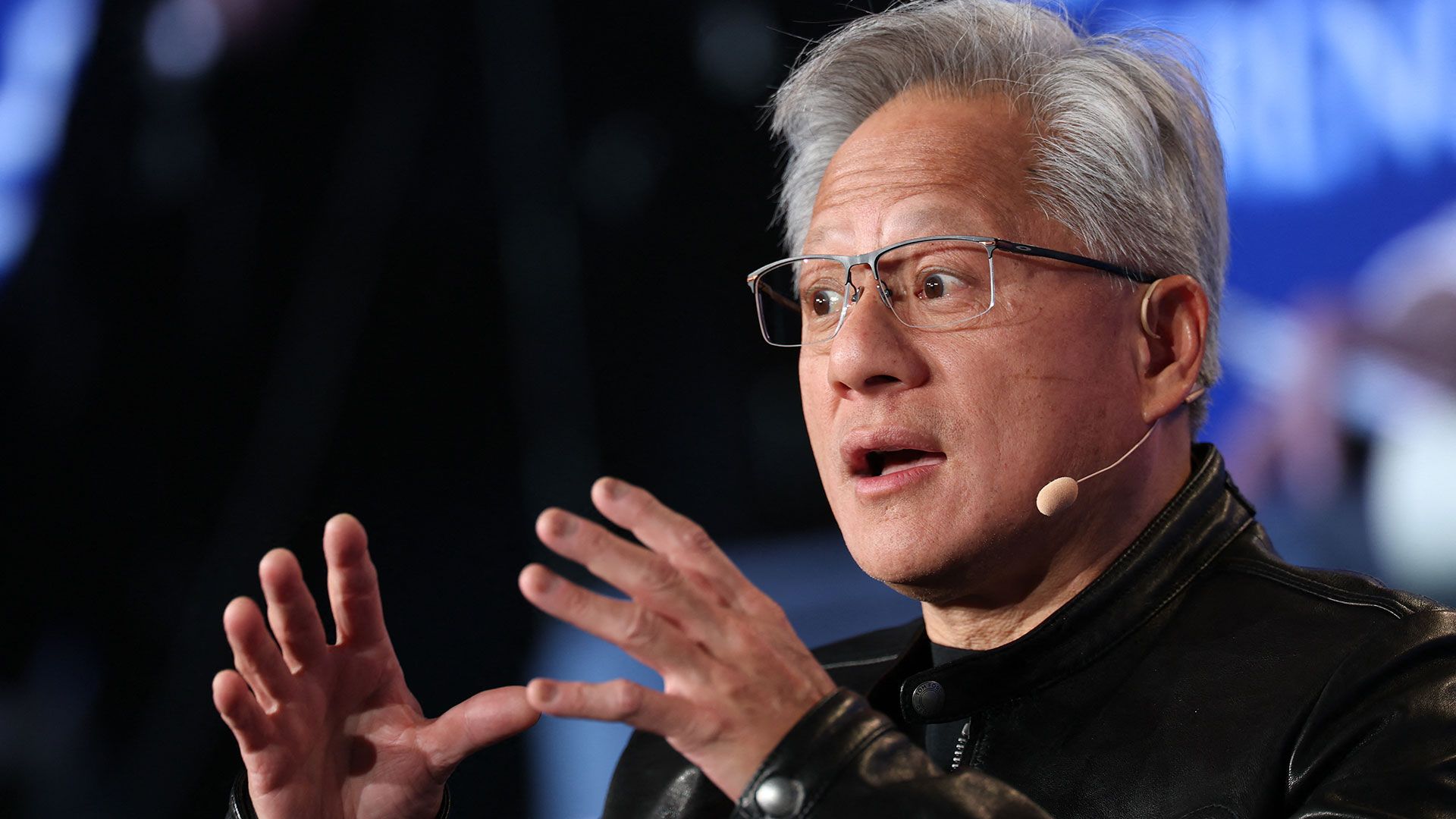
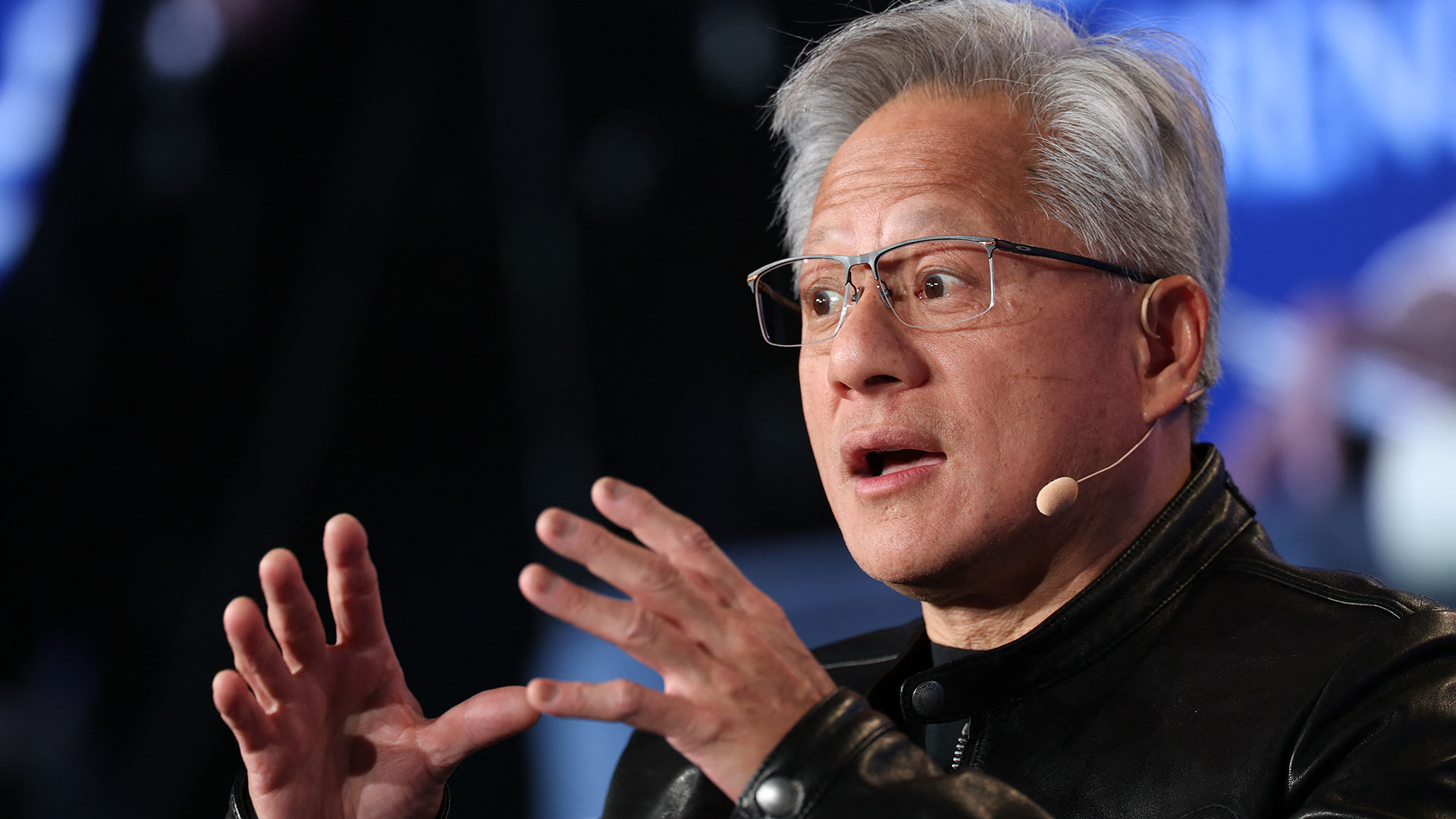
Washington D.C. – In a significant move that underscores the growing tension between national security concerns and the rapid advancement of artificial intelligence, Nvidia CEO Jensen Huang utilized his inaugural post on X (formerly Twitter) last Friday to champion a crucial policy letter titled "Open Weights and American AI Leadership." This three-page document, published the same day, has garnered the support of 25 prominent technology companies, including industry giants like Nvidia, Microsoft, Meta, IBM, Dell Technologies, Palantir, and Hugging Face, signaling a united front against potential governmental restrictions on downloadable AI models.
The letter explicitly urges Washington to "avoid premature restrictions on downloadable AI models." This call to action comes at a critical juncture, merely four days after reports emerged detailing the Trump administration’s renewed efforts to ban Chinese AI models, citing cybersecurity risks and concerns over intellectual property theft. While the policy letter refrains from directly naming China, specific Chinese companies like Moonshot AI, or DeepSeek, its timing and content clearly respond to the escalating debate surrounding the origins and accessibility of powerful AI technologies. Notably absent from the list of co-signatories are other major AI players such as OpenAI, Anthropic, and Google, whose business models largely revolve around proprietary, closed-source frontier models.
The Call for Openness: A United Front
Jensen Huang’s entry onto X, a platform increasingly central to public discourse, marked a deliberate strategic choice to amplify a message vital to the future trajectory of AI development. His initial post, shared on Friday, July 24, 2026 (or more likely, 2024, given the context of "last month" and "Friday" in the source article), articulated the core tenets of the letter: "AI will transform every industry, power every company, and be built by every country. Open models strengthen safety and cybersecurity, accelerate innovation and diffusion, and enable sovereignty." This statement encapsulates the multifaceted arguments for open models, positioning them not just as facilitators of innovation but as essential components for national resilience and security in the AI era.
A Broad Alliance for Open AI
The coalition behind "Open Weights and American AI Leadership" is remarkably diverse, reflecting the broad impact of AI across various sectors. The 25 signatories span the entire AI ecosystem, from the foundational hardware providers to application developers and venture capitalists. Key categories of companies include:
- Chipmakers: Nvidia, the world’s leading designer of AI accelerators, naturally spearheads this effort.
- Server Vendors: Dell Technologies, a major provider of enterprise IT solutions, reinforces the hardware aspect.
- Cloud Operators & Enterprise Software: Microsoft, IBM, Box, and ServiceNow highlight the integration of AI into enterprise workflows and cloud infrastructure.
- Security Companies: CrowdStrike and Palantir’s involvement underscores the letter’s claims regarding enhanced cybersecurity through open models.
- Developer Tools & Platforms: Hugging Face, Telnyx, Replit, and Perplexity represent the developer community and the platforms that facilitate AI creation and deployment.
- Venture Capital Firms: Andreessen Horowitz, Y Combinator, and Emergence Capital demonstrate the financial backing and belief in the open AI paradigm from the investment community.
- Model Developers: Crucially, Meta, Mistral, Black Forest Labs, Arcee AI, and Reflection are among the signatories, all of whom are known for publishing the "weights" (the learned parameters) of their AI models, aligning directly with the letter’s central theme.
- Open-Source Foundations: The Linux Foundation, a venerable steward of open-source software, also lent its weight to the initiative. This organization notably oversees the OpenMDW-1.1 license, which Nvidia itself used to release its 550-billion-parameter Nemotron 3 Ultra model in June. The presence of such a diverse group of stakeholders lends significant credibility and weight to the policy recommendations.
Notable Absences and Their Significance
The absence of OpenAI, Anthropic, and Google from the list of signatories is as telling as the presence of the 25 companies that did sign. These three entities are at the forefront of developing some of the most advanced "frontier" AI models, predominantly operating on a closed-source, proprietary model. Their business strategies often rely on controlling access to their powerful models via APIs, rather than releasing their weights for public download.
This divergence highlights a fundamental philosophical and commercial split within the AI industry. Proponents of closed models argue that withholding weights is necessary for controlling safety, preventing misuse, and protecting significant R&D investments. Conversely, the "Open Weights" letter signatories argue that broad access to models fosters greater innovation, transparency, and a more robust ecosystem, ultimately benefiting society more widely. The non-participation of these major players indicates a complex landscape where commercial interests, safety protocols, and ideological stances on AI development are still actively being negotiated and defined.
Chronology of a Policy Debate
The policy letter emerges from a rapidly evolving geopolitical and technological landscape, marked by increasing government scrutiny over AI.
Mounting Concerns Over Foreign AI
The immediate backdrop to the letter is the reported revival of efforts by the Trump administration to impose a ban on Chinese AI models. These concerns, which gained traction earlier in the week, center on allegations of intellectual property theft and potential cybersecurity vulnerabilities, including the possibility of "backdoors" that could compromise American data and systems. Treasury Secretary Scott Bessent, speaking on Fox Business, specifically stated that the administration would investigate Chinese open-source models for IP theft and consider sanctioning the companies responsible. He claimed that officials had identified "watermarks from U.S. large language models in Chinese systems," suggesting direct evidence of intellectual property infringement. This geopolitical tension over AI capabilities and data security has been simmering for years, but recent reports indicate a renewed push for concrete policy action.
Huang’s Consistent Advocacy
Jensen Huang’s public stance on the matter has been consistent and clear. Just two days after Bessent’s remarks, Huang told Axios that American firms should be permitted to utilize Chinese AI models, directly challenging the notion of inherent "backdoors" as a "misconception." This statement underscores a strategic vision for a more interconnected and competitive global AI landscape, where restrictions based on national origin might stifle overall progress.
Earlier in the year, at Nvidia’s CES 2026 (likely 2024) press Q&A, Huang had already highlighted the growing prevalence of open models, estimating that "one in every four tokens generated today comes from an open model." This statistic suggests a significant and increasing reliance on open-source solutions within the AI community, further bolstering the argument that restricting such models would have widespread and detrimental effects on innovation and development. His consistent advocacy points to a deeply held belief in the power of open collaboration and access to drive technological advancement.
The Case for Open Weights: Innovation, Safety, Sovereignty
The "Open Weights and American AI Leadership" letter meticulously lays out its arguments, positioning open models as foundational for continued American leadership in AI.
Fostering a Vibrant Ecosystem
The core argument for open weights is their capacity to accelerate innovation. By making model weights downloadable and accessible, open models dramatically lower the barrier to entry for countless developers, startups, and researchers. Instead of relying solely on a handful of "hyperscaler API endpoints" controlled by a few dominant companies, developers can deploy and customize models on enterprise clusters, regional clouds, or even on-premises infrastructure. This distributed approach fosters a competitive and dynamic environment, encouraging experimentation, specialization, and the rapid iteration of new applications and services. It mirrors the success of the open-source software movement, which has driven much of the internet’s infrastructure and countless technological advancements. Without open models, the letter implies, innovation would be concentrated, slower, and less diverse, potentially ceding the global lead to other nations.
Enhancing Security Through Transparency
Counterintuitively for some, the letter argues that open models can enhance safety and cybersecurity. The principle here is similar to that in open-source software: more eyes on the code (or in this case, the model weights and architecture) lead to faster identification and remediation of vulnerabilities, biases, or potential misuse vectors. When a model’s inner workings are transparent, a global community of researchers and developers can scrutinize it, discover flaws, and collectively work towards more robust and secure AI systems. This contrasts with closed models, where security audits are often limited to internal teams, potentially leaving critical vulnerabilities undiscovered for longer periods.
Empowering Global AI Development
The letter also emphasizes "diffusion" and "sovereignty" as key benefits. Open models enable countries and smaller entities to build their own AI capabilities without being entirely dependent on foreign, proprietary systems. This fosters technological self-reliance and prevents a scenario where AI development becomes monopolized by a few nations or corporations. For startups and researchers, expanded compute access and public investment in shared datasets and evaluation frameworks – two specific policy asks in the letter – are crucial for leveling the playing field and ensuring that innovation isn’t limited to those with immense capital. The Linux Foundation’s role in stewarding licenses like OpenMDW-1.1, used for Nvidia’s Nemotron 3 Ultra, exemplifies how open frameworks can support cutting-edge model releases and encourage broader adoption. Even with a lower intelligence index score (Nemotron 3 Ultra at 47.7 against Moonshot’s Kimi K2.6 at 53.9, according to Artificial Analysis), the accessibility of such models through open weights can lead to diverse applications and improvements over time.
Addressing the "Distillation" Dilemma
One particular section of the letter stands out, not directly concerning open weights, but addressing a related contentious issue: "distillation." This practice involves training a smaller, "student" model on the outputs of a larger, often proprietary "teacher" model. The letter urges policymakers not to broadly treat distillation as "misappropriation." Instead, it advocates for "targeted legal frameworks" to address instances of "unlawful extraction from closed models."
This distinction is crucial. Distillation is a legitimate and widely used technique for creating more efficient and deployable AI models. Blanket restrictions on distillation could stifle innovation and the development of specialized AI applications. However, the letter acknowledges the legitimate concern about intellectual property. It suggests that if a closed model’s unique intellectual property is demonstrably stolen or unlawfully extracted through distillation, existing or specifically tailored legal mechanisms should address it, rather than imposing sweeping bans on the technique itself. This nuanced approach seeks to protect IP without stifling a valuable AI development methodology.
Washington’s Watchful Eye: Official Responses and Geopolitical Tensions
The policy letter directly confronts the prevailing concerns in Washington regarding AI, particularly in the context of US-China technological rivalry.
National Security vs. Open Innovation
The Trump administration’s reported push to ban Chinese AI models stems from legitimate national security concerns. The fear is that foreign-developed AI, particularly from adversarial nations, could contain embedded backdoors, facilitate espionage, or be used to gain an unfair economic advantage. The Treasury Secretary’s comments about "watermarks from U.S. large language models in Chinese systems" directly point to intellectual property theft as a major driver of this concern. For policymakers, the challenge lies in balancing the desire to protect national interests and maintain technological superiority with the recognized benefits of open-source collaboration and rapid innovation. The "Open Weights" letter argues that an overly restrictive approach could backfire, isolating American developers and slowing their progress compared to global competitors.
The IP Theft Conundrum
The issue of intellectual property theft in the age of AI is complex. Unlike traditional software, where source code can be clearly protected, AI models learn from vast datasets, and their "knowledge" is embedded in their weights. Determining when one model has "stolen" IP from another, especially through indirect means like distillation, presents significant legal and technical challenges. The letter’s call for "targeted legal frameworks" for unlawful extraction rather than broad bans on distillation acknowledges this complexity. It suggests that a nuanced approach, perhaps involving auditing techniques or specific legal definitions for AI IP infringement, would be more effective and less detrimental to the overall ecosystem than broad prohibitions that could inadvertently harm legitimate research and development. Jensen Huang’s assertion that claims of Chinese backdoors are "misconceptions" further complicates the narrative, suggesting that some concerns might be exaggerated or based on incomplete information, urging for a more evidence-based policy discussion.
Implications for American AI Leadership and Beyond
The debate ignited by "Open Weights and American AI Leadership" carries profound implications for the future of AI development, regulation, and global power dynamics.
Shaping the Future of AI Regulation
The letter represents a concerted effort by a significant segment of the tech industry to influence nascent AI policy. Governments worldwide are grappling with how to regulate AI, balancing innovation with safety, ethics, and national security. The recommendations in this letter – expanded compute access, public investment in datasets, and a nuanced approach to distillation – provide concrete proposals that policymakers will need to consider. The challenge for Washington will be to craft regulations that protect national interests without stifling the very innovation that is critical for maintaining American leadership in AI. A heavy-handed approach could push cutting-edge research and talent overseas, or create an environment where only a few well-resourced corporations can develop and deploy AI, hindering broader economic growth.
The Global AI Landscape
The "Open Weights" initiative also highlights the ongoing global competition in AI. By advocating for openness, the signatories suggest that American leadership is best secured through fostering a vibrant, accessible, and collaborative ecosystem, rather than through protectionist measures that could isolate the U.S. from global advancements. The comparison of Nvidia’s Nemotron 3 Ultra to Moonshot’s Kimi K2.6, though showing a lead for the Chinese model in one specific metric, underscores that global competition is fierce and that advancements are happening rapidly across different geographies. An open approach could enable American companies and researchers to leverage global progress, adapt faster, and contribute to a larger pool of knowledge.
Economic and Strategic Ramifications
The economic stakes are immense. AI is projected to reshape industries, create new markets, and drive unprecedented productivity gains. The letter’s implicit argument is that open models will democratize access to these economic opportunities, allowing a wider array of businesses to integrate and innovate with AI, rather than concentrating power and wealth within a few proprietary model developers. Strategically, fostering a strong domestic AI ecosystem through open models could also enhance national resilience and capabilities, ensuring that the U.S. remains at the forefront of this transformative technology.
Ultimately, the policy letter co-signed by Jensen Huang and 24 other tech leaders is more than just a lobbying effort; it’s a declaration of a vision for AI’s future. It challenges policymakers to look beyond immediate security fears and embrace a strategy that leverages openness, collaboration, and widespread access as pillars of American AI leadership. The coming months will reveal whether Washington heeds this call, or if national security concerns will lead to a more restrictive path, potentially altering the global trajectory of artificial intelligence for decades to come.

