

Introduction and Main Facts
For generations of gamers who pumped quarters into 1989 arcade cabinets, Sega’s Golden Axe remains an indelible, if slightly eccentric, memory. A side-scrolling beat-’em-up defined by high-fantasy tropes, muscle-bound barbarians, and bizarre blue-skinned thieves who dropped magic potions when drop-kicked, the franchise was a pillar of early 1990s gaming. Yet, as decades passed and Sega shifted its focus toward modern blockbusters, Golden Axe largely faded into the archives of retro nostalgia.
That is, until now.
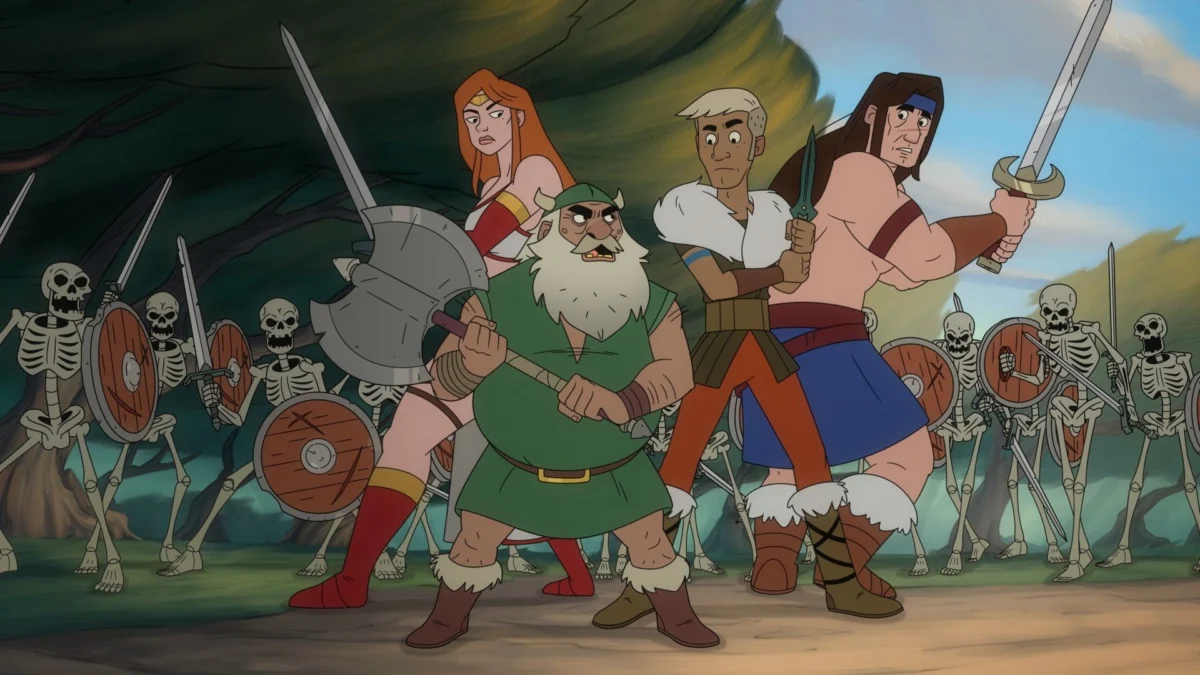
In a recent interview, series co-creators Mike McMahan and Joe Chandler pulled back the curtain on how they transformed a 37-year-old, half-forgotten Sega property into Golden Axe, a critically lauded animated comedy series currently streaming its 10-episode first season on Paramount+. Starring a voice cast that includes Matthew Rhys as Gilius Thunderhead, Liam McIntyre as Ax Battler, Lisa Gilroy as Tyris Flare, and Danny Pudi as Hampton Squib, the series has garnered praise for its meta-humor, deep cuts to arcade lore, and affectionate parody of high-fantasy tropes.
Far from a standard, straight-faced fantasy adaptation, the show leans heavily into the inherent absurdities of the original source material—from a barbarian named "Ax" who fights exclusively with a sword, to treasure-hoarding gnomes who derive explicit pleasure from being kicked by passing heroes. With season one now available to stream, the creators are already eyeing the future, teasing potential continuations and exploring how the vast, lightly-defined lore of Sega’s classic arcade era provided the ultimate creative playground.

Chronology: From Script Doctoring to Sega’s Vault
The genesis of the Golden Axe animated series reads like a Hollywood fairy tale, beginning not in a structured pitch meeting, but on the set of a completely different franchise.
The Pitch (The Sonic Connection)
Mike McMahan was working as a script doctor on Paramount’s live-action Sonic the Hedgehog films when he caught the attention of a Sega executive. Impressed by his work on the blue blur’s cinematic outings, the executive extended an open invitation: Were there any other dormant properties in Sega’s vast intellectual property vault that McMahan would be interested in reviving?
Sega, which has been developing video games since 1973, sits on a goldmine of historical intellectual property, ranging from arcade mainstays like Crazy Taxi and Streets of Rage to modern narrative heavyweights like Yakuza and Persona. However, McMahan didn’t hesitate. He immediately pointed toward Golden Axe.
A Childhood Obsession
McMahan’s affinity for the franchise dates back to his childhood, rooted in a very specific, analog era of gaming culture. Growing up, a local Chicago summer camp had rigged up arcade cabinets—including Golden Axe—allowing campers to play for free.

"When you’re a kid, everything gets magnified," McMahan explained in an interview. "For a lot of people, Golden Axe isn’t a big deal, but for this motherfucker, it was a huge deal."
When McMahan partnered with co-creator and showrunner Joe Chandler, the duo realized that the very things that made the original game feel dated—sparse storytelling, loose world-building, and bizarre localization quirks—actually presented a massive advantage for an animated comedy. While a modern high-fantasy narrative demands meticulous lore and tightly wound continuity, Golden Axe offered a blank canvas filled with visually striking signposts, such as villages built on the backs of giant turtles and eagles, leaving the writers free to invent their own comedic logic.
Supporting Data: Deconstructing the Lore
To understand the comedic approach of the Paramount+ series, one must examine how the creators dissected the mechanics and oddities of the 1989 arcade original and its subsequent sequels.
| Element in Original Game | Original Function | Animated Series Adaptation |
|---|---|---|
| Ax Battler | A barbarian hero who fights primarily with a two-handed broadsword. | The writers lean heavily into the semantic absurdity of a warrior named "Ax" who refuses to use one. |
| Gilius Thunderhead | One of three playable heroes; a dwarf overshadowed physically by his companions. | Portrayed by Matthew Rhys as the third-greatest warrior in the world, wrestling with bitter resentment toward his glory-hogging peers. |
| The Magic Pot Thieves | Gnome-like creatures that flee from players and drop magic-refilling potions when kicked. | Reimagined as a masochistic culture of thieves who view being drop-kicked as a deeply satisfying kink. |
| Boss Localization Quirks | U.S. arcade localizations named bosses after beer brands (e.g., Bud Brothers, Lt. Heineken). | Inspired a general writing philosophy that celebrates the unfiltered, un-corporate weirdness of 90s game translation. |
The Mystery of Ax Battler
The core premise of the original game involves the evil tyrant Death Adder capturing the King of Yuria and seizing the magical Golden Axe. Players could choose from three heroes: Ax Battler, Tyris Flare, or Gilius Thunderhead.

Right out of the gate, the animated series addresses the elephant in the room: Ax Battler’s baffling nomenclature. "It’s crazy," McMahan notes. Chandler adds that addressing the fact that a man named "Ax" wields a giant sword was item number one on their writers’ room checklist.
The Gilius Dilemma and Hampton Squib
While the game treated the trio as equal partners, the television series explores the social hierarchy within the party. Gilius Thunderhead, voiced by Matthew Rhys, feels thoroughly unappreciated next to his towering companions. This resentment forms the narrative catalyst for the show, as Gilius breaks away to launch his own adventure alongside Hampton Squib (voiced by Danny Pudi), an inexperienced, audience-surrogate adventurer who highlights the sheer danger of navigating a violent high-fantasy realm.
The Thief Subculture
Perhaps the most inspired creative leap in the series involves the infamous little thieves who scurry across the screen in the arcade game. In the original code, kicking these sprites forced them to drop blue and green magic potions.
The animated series takes this gameplay mechanic to its logical (and hilarious) extreme. Observing the wide grin on the sprite’s face in the 1989 pixel art, the writers deduced that the thieves actually enjoy the abuse. However, the series goes even further in a later episode, pulling back the curtain on a thief’s domestic life. By giving these background creatures authentic emotional motivations, complex family dynamics, and secret shames, the creators transformed simple video game "wallpaper" into one of the show’s most emotionally resonant and comedic elements.

Official Responses and Creative Vision
The creative team behind Golden Axe has been remarkably transparent about balancing fan service with original storytelling. Rather than leaning on cynical nostalgia, McMahan and Chandler approached the IP with genuine affection for its rough edges.
"It used to be that everything wasn’t so corporate," McMahan reflected, pointing out how localization teams in the 1980s could name boss characters after beer brands without a committee of lawyers stepping in. "Now, everything is so figured out."
That lack of modern corporate sheen is precisely what gave the creators room to breathe. By taking vague fantasy tropes and filtering them through an absurdist, character-driven lens, they managed to craft a world that honors the spirit of the arcade classic while remaining entirely accessible to viewers who have never held a Sega controller.
When asked about the potential for future seasons, Chandler confirmed that the narrative door is wide open. "Death Adder always comes back in the games," Chandler noted, referencing the series’ recurring antagonist. "There’s always a new adventure for these heroes. And we’ve talked a lot about what those would be. Of course, we’d love to do more."

Implications for Future Sega Adaptations
The success of Golden Axe arrives at a pivotal moment for video game adaptations in Hollywood. Following the massive box-office dominance of Paramount’s Sonic the Hedgehog films and prestige television hits like HBO’s The Last of Us and Amazon’s Fallout, studios are increasingly looking beyond contemporary hits to mine decades-old gaming history.
A Blueprint for Retro Revivals
While multi-million-dollar adaptations often focus on cinematic world-building and high-stakes drama, Golden Axe proves that there is a viable, highly lucrative market for comedic, self-aware interpretations of archaic properties. By embracing the limitations and eccentricities of 8-bit and 16-bit source material, creators can bypass the creative constraints of hyper-serialized canons and invent something entirely fresh.
Potential Crossovers and Season 2 Outlook
Naturally, questions have arisen regarding whether Sega’s wider catalog might eventually intersect with Yuria. With eight distinct titles in the Golden Axe franchise alone, there is plenty of direct source material left to explore. Furthermore, McMahan has openly acknowledged that other Sega properties "touch on and cross paths with this game."
However, fans hoping to see Sonic the Hedgehog or a Crazy Taxi cab materialize in a medieval fantasy realm should temper their expectations for the immediate future. Both showrunners have emphasized that season two will remain firmly grounded in the internal logic of the Golden Axe universe.

"Right now, we’re so proud of this first season that we’d want to spend more time with these characters and see where we could expand the show in a place that still feels like the games," McMahan concluded.
As Golden Axe continues to find its audience on Paramount+, its journey from a forgotten quarter-munching arcade cabinet to a celebrated animated series stands as a testament to the power of creative reinvention—proving that even the weirdest, most obscure corners of gaming history can be forged into comedy gold.

