

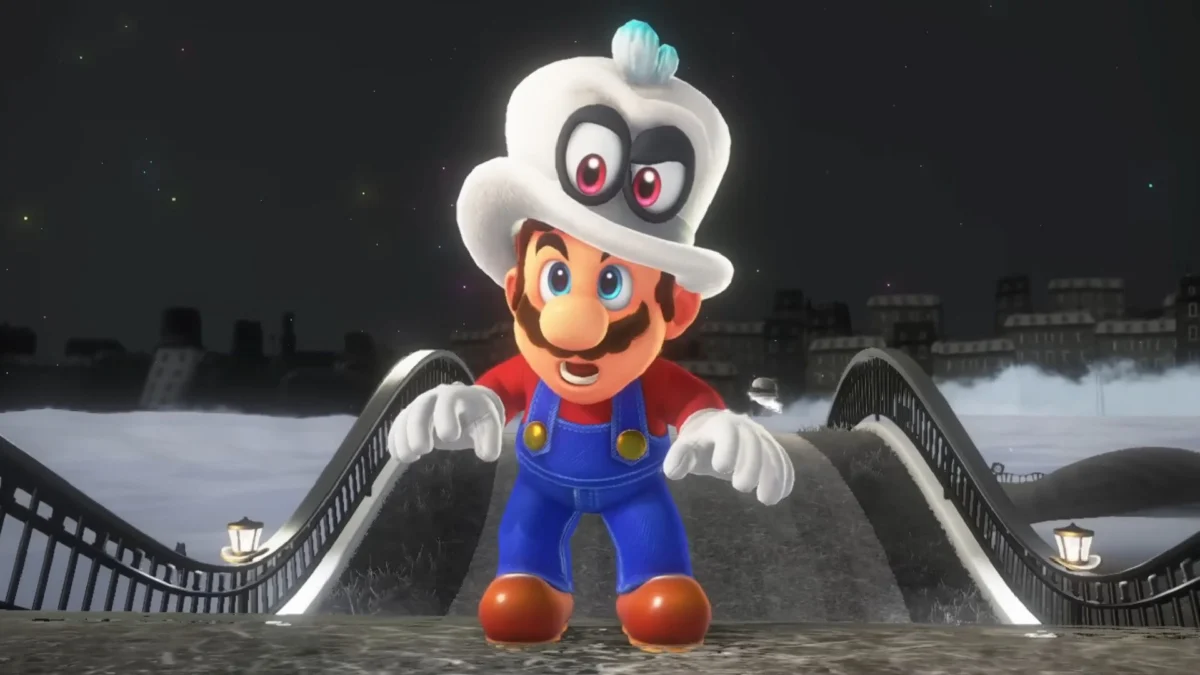
When a monumental release like Super Mario Odyssey or The Legend of Zelda: Breath of the Wild finally graces Nintendo’s hardware, it feels less like an iterative update and more like a cultural event. For decades, Nintendo has deliberately avoided the trap of annualization or franchise fatigue—a pitfall common in the modern AAA gaming landscape, where major intellectual properties are frequently churned out with minimal innovation.
This calculated restraint is not a byproduct of modern development cycles; it is a foundational corporate philosophy. Decades ago, the late, visionary Nintendo President Satoru Iwata articulated a philosophy that would steer the company through its darkest market hours and into its current golden age: true longevity requires continuous reinvention over lazy repetition.
Main Facts: The Blueprint of Nintendo’s Restraint
At its core, Nintendo’s business model rests on a paradox. The company relies heavily on a relatively small, deeply beloved stable of intellectual properties—Mario, Zelda, Metroid, and Pokémon—that command immense global loyalty. Yet, rather than exploiting these properties for safe, yearly sequels, Nintendo treats them as experimental sandboxes.
- The Core Strategy: Instead of oversaturating the market, Nintendo spaces out major franchise entries to ensure each release introduces a paradigm-shifting mechanic.
- The Historical Turning Point: Satoru Iwata’s 2006 interview with MTV News laid bare the company’s existential philosophy: abandoning creative risk-taking would reduce Nintendo to a conservative, stagnant brand.
- The Hardware Synergy: This software philosophy has consistently dictated Nintendo’s hardware design, birthing disruptive platforms like the Wii, DS, and Nintendo Switch, which thrive precisely because they enable unusual gameplay experiences.
Chronology: From the GameCube Slump to the Wii Revolution
To understand the weight of Iwata’s 2006 statements, one must contextualize the era in which they were spoken. Nintendo was navigating a perilous transitional phase in the mid-2000s.
1. The N64 and GameCube Era (Late 1990s – Early 2000s)
Despite releasing critical masterpieces like Super Mario 64, The Legend of Zelda: Ocarina of Time, Super Mario Sunshine, and The Wind Waker, Nintendo’s home consoles were steadily losing ground. The Sony PlayStation and the burgeoning Microsoft Xbox brand were capturing the zeitgeist with gritty graphics, cinematic storytelling, and rapid iteration. The Nintendo 64 and GameCube were commercial underperformers compared to their historical dominance, leading industry analysts to question whether Nintendo’s family-friendly catalog was becoming obsolete.
2. The 2006 Paradigm Shift
Speaking to MTV News just as the industry caught wind of the mysterious "Revolution" console—later unveiled as the Wii—Iwata addressed critics head-on.
"If all we were to ever do is just continue to make sequels and not do anything new or different, people would view us as a very conservative company and a company that is unwilling to really take new initiatives and embark on new adventures," Iwata stated. "That’s not the type of person I am and not the kind of company I want Nintendo to be."
3. The Blue Ocean Strategy (Late 2000s – Early 2010s)
Nintendo aggressively pivoted toward a "Blue Ocean" strategy—finding uncontested market space rather than competing head-to-head in the graphical arms race. By introducing motion controls with the Wii and dual-screen mechanics with the Nintendo DS, alongside casual-focused titles like Nintendogs and Brain Age, Nintendo shattered demographic barriers. They brought in millions of non-traditional gamers, proving that the entertainment pie could be dramatically expanded.
4. The Turbulent Valleys (The 3DS and Wii U Eras)
No strategy is without risk. While the Nintendo DS and Wii printed money, subsequent hardware transitions were fraught with danger. The Nintendo 3DS suffered a notoriously sluggish launch due to a steep price point and unclear messaging, forcing a rapid price cut and strategic course correction. Worse still was the Wii U (2012), a commercial disaster that confused consumers with its tablet-controller gimmick and nearly destabilized Nintendo’s hardware division entirely.
5. The Switch-Era Renaissance (2017 – Present)
Learning hard lessons from the Wii U, Nintendo unified its home and portable development teams under the Nintendo Switch. Capitalizing on Iwata’s foundational doctrine, the system launched alongside The Legend of Zelda: Breath of the Wild—a game that completely dismantled the linear tropes of 3D Zelda design—and was soon followed by Super Mario Odyssey. The resulting era cemented Nintendo’s status as an independent titan operating on its own cultural frequency.
Supporting Data: Balancing Tradition and Disruption
Nintendo’s approach relies on a delicate balance: satisfying the entrenched fanbase while courting entirely new audiences.
[Traditional Fanbase Expectations]
       │
       ├─► Demand for familiar characters (Mario, Zelda)
       │
       ▼
[The Iwata Doctrine: Innovation within Franchises]
       │
       ├─► Core sequels must reinvent core mechanics (e.g., Cappy in Odyssey, Open-Air in BotW)
       │
       ▼
[Market Expansion ("Blue Ocean")]
       └─► Attracting non-traditional and casual gamers (Wii, DS, Switch)
As Iwata explained regarding the balancing act of franchise management:
"We’re going to continue to serve, of course, the people who are looking for those classic Zelda experiences and those classic Mario experiences. At the same time, we’re going to offer these new experiences to people who haven’t played games before… People can expect to see both the classic style of game that we’ve done in the past and these entirely new different styles of gameplay."
This philosophy insulated Nintendo from the perils of franchise fatigue. While competing publishers often fell into yearly release cycles that diluted the prestige of properties like Call of Duty or Assassin’s Creed, Nintendo kept anticipation at a fever pitch precisely because years—sometimes half a decade or more—separated mainline entries.
Official Responses and Industry Impact
Industry veterans and economic analysts frequently point to Iwata’s leadership as a masterclass in corporate resilience. When major industry players began embracing hyper-realistic graphics, ballooning development budgets, and live-service monetization, Nintendo stubbornly clung to playability, charm, and hardware-software integration.
In retrospective analyses, video game historians note that if the Nintendo Switch had failed—much like the Wii U before it—it could have spelled the end of the Japanese console market as a hardware competitor, potentially forcing Nintendo down a third-party path akin to Sega. Instead, the triumph of the Switch validated Iwata’s foresight: players do not necessarily want the same thing faster; they want to be surprised by what they already love.
Even after Iwata’s untimely passing in 2015, his strategic architecture has continued to guide Nintendo’s output. Modern producers like Eiji Aonuma (Zelda) and Yoshiaki Koizumi (Mario) routinely cite the necessity of discarding old rules to make way for new gameplay loops.
Implications: The Future of Nintendo Post-Iwata
As the industry looks toward the horizon—anticipating announcements regarding Nintendo’s successor hardware (often colloquially referred to as the "Switch 2")—the lessons established by Satoru Iwata remain remarkably relevant.
- Protection Against Fatigue: By refusing to flood the market with iterative sequels, Nintendo maintains high perceived value for its software. A new Mario or Zelda title is an undisputed industry event.
- Hardware-Driven Innovation: Nintendo’s refusal to build traditional "powerhouse" boxes means future hardware iterations will almost certainly continue to prioritize unique physical or interactive gimmicks over raw teraflop counts.
- Legacy Stewardship: As the company transitions further into transmedia projects (such as The Super Mario Bros. Movie universe), the underlying characters are protected by strict quality control and creative reinvention rather than rapid commercial exploitation.
Ultimately, Iwata’s 2006 warning remains Nintendo’s greatest protective shield: to stop taking risks is to cease being Nintendo. By treating nostalgia not as a crutch, but as a springboard for radical design, the company has secured its place as an eternal outlier in the global entertainment ecosystem.

