

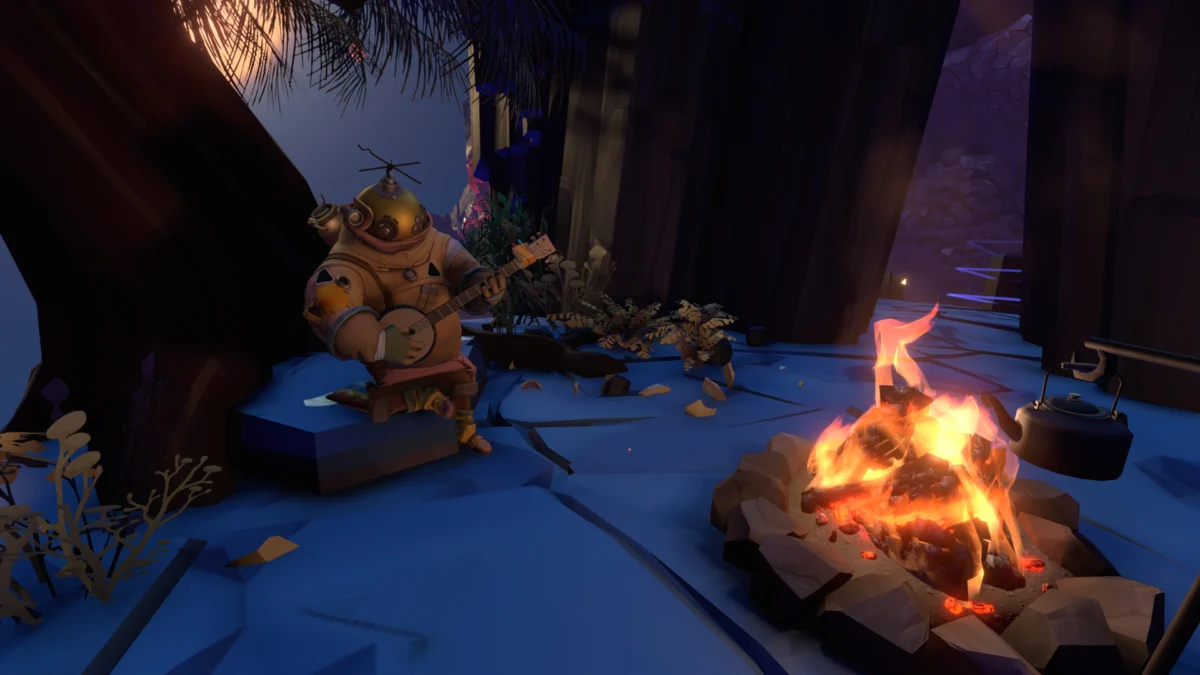
Since its initial release in 2019, Outer Wilds—developed by Mobius Digital and published by Annapurna Interactive—has transcended the typical lifecycle of an indie title. While many games see a surge in popularity upon launch followed by a steady decline in discourse, Outer Wilds has maintained a persistent, almost cult-like presence in gaming culture. It is frequently cited in podcasts, retrospectives, and "Game of the Decade" lists, proving that its unique brand of existential exploration is far more than a passing trend.
The Core Concept: Knowledge as Progression
At its heart, Outer Wilds is a masterclass in non-linear design. The premise is deceptively simple: you are an astronaut for the Outer Wilds Ventures, a fledgling space program tasked with exploring a small, handcrafted solar system. However, there is a catch—the entire solar system is trapped in a 22-minute time loop, at the end of which the sun goes supernova, obliterating everything in its path.
Unlike traditional RPGs where progression is measured by leveling up a character’s stats or acquiring better equipment, Outer Wilds operates on a foundation of "knowledge-based progression." The only thing that carries over between loops is the information you have gathered. If you learn how to navigate a treacherous path through a shifting planet, or uncover the code to an ancient gate, you retain that knowledge in your ship’s log. This design choice turns the player into a genuine detective of the cosmos, rewarding curiosity over raw reflexes.
Chronology of an Indie Phenomenon
To understand the impact of Outer Wilds, one must look at the timeline of its development and subsequent cultural integration.
The Origin Story (2012–2018)
The project began as the master’s thesis of Alex Beachum at the University of Southern California’s Interactive Media & Games Division. What started as a small exploration game about camping in space eventually caught the attention of the industry. The team at Mobius Digital secured funding through a Fig crowdfunding campaign in 2015, which signaled early interest from the core gaming community.
The Launch (2019)
When Outer Wilds finally launched on May 28, 2019, for Windows and Xbox One, it was met with immediate critical acclaim. Critics praised its narrative structure, which unfolds organically without a single quest marker or traditional mission log. The game’s ability to tell a profound, emotional story through environmental storytelling became a benchmark for the medium.
Post-Launch Longevity (2020–Present)
Following its launch, the game expanded to PlayStation 4, Nintendo Switch, and Steam. In September 2021, Mobius Digital released the Echoes of the Eye expansion, which added a significant amount of content that seamlessly integrated with the base game’s narrative. Even years after its release, the game continues to see spikes in popularity, driven by word-of-mouth recommendations and its status as a "must-play" title for anyone interested in the narrative potential of video games.
Supporting Data and Critical Reception
The metrics surrounding Outer Wilds speak for themselves. The game holds a "Very Positive" rating on Steam with tens of thousands of reviews, a rarity for titles that rely on puzzle-solving and niche gameplay loops.
| Metric | Significance |
|---|---|
| Metacritic Score | 85/100 (Average across platforms) |
| Awards | Winner of the 2020 BAFTA Games Award for Best Game |
| Community Engagement | High, with an active subreddit and constant presence in top-tier gaming podcasts |
What makes these numbers particularly impressive is that the game is intentionally difficult. It does not hold the player’s hand. It forces them to face the frustration of failure—often involving death by fire, drowning, or gravity—before granting the satisfaction of a breakthrough. This "frustratingly satisfying" loop is the primary driver of the game’s high player retention rate.
Official Responses and Developer Philosophy
Mobius Digital has maintained a transparent and humble approach to their success. In various interviews, Alex Beachum and the development team have consistently emphasized that their goal was to create a game that felt like a "curiosity-driven science mystery."

In a retrospective interview, the developers noted that the most challenging aspect of development was ensuring that the player never felt "stuck" due to a lack of ability, but rather due to a lack of information. They intentionally avoided traditional difficulty settings, arguing that the game’s difficulty is not mechanical, but cognitive. By keeping the player in a constant state of "failing, learning, and growing," they ensured that the emotional payoff—the discovery of the universe’s secrets—felt earned.
Implications for the Industry
The success of Outer Wilds has profound implications for the gaming industry, challenging several long-held assumptions about game design:
1. The Myth of the "Casual" Player
For years, the industry pushed the idea that players required constant hand-holding, waypoint markers, and linear paths to stay engaged. Outer Wilds shattered this. It proved that a broad audience is capable of—and hungry for—complex, systemic, and intellectually demanding gameplay that respects the player’s intelligence.
2. The Power of Environmental Storytelling
The game serves as a gold standard for narrative delivery. By placing the story in the world rather than in cutscenes, Mobius Digital created a sense of discovery that is impossible to replicate in film or literature. This has inspired a wave of "archeological" games where the player piece-by-piece uncovers the history of a lost civilization.
3. The Value of Replayability
While Outer Wilds is technically a single-playthrough game (once you know the secrets, you cannot "unlearn" them), its design encourages a unique form of community sharing. Veteran players often watch others play the game for the first time, reliving their own sense of wonder through a newcomer’s eyes. This has fostered one of the most welcoming and supportive communities in gaming.
Why You Should Play It Today
If you are currently looking for a game to fill your time off, there is arguably no better candidate than Outer Wilds. It is a game that demands your full attention, your patience, and your curiosity.
Some might be intimidated by the "die a lot" factor. It is true: you will crash your ship. You will run out of oxygen. You will be swallowed by giant anglerfish. But every single one of these deaths provides a piece of the puzzle. The game is designed so that even in your most frustrating moments, you are making progress. You are learning the physics of the world, the timing of the events, and the history of the Nomai—the ancient, long-dead race whose mystery you are trying to solve.
Ultimately, Outer Wilds is about the human condition. It explores themes of mortality, the inevitability of change, and the importance of leaving a legacy. It is a game that stays with you long after the final credits roll, prompting you to look up at the night sky with a slightly different perspective.
It is, without hyperbole, one of the most essential pieces of interactive media produced in the 21st century. Whether you consider yourself a fan of puzzle games, space exploration, or deep narrative experiences, Outer Wilds deserves a spot on your hard drive. As the developers suggest, it is time to stop asking why others are talking about it and start your own journey into the loop. Just be careful where you land.

