

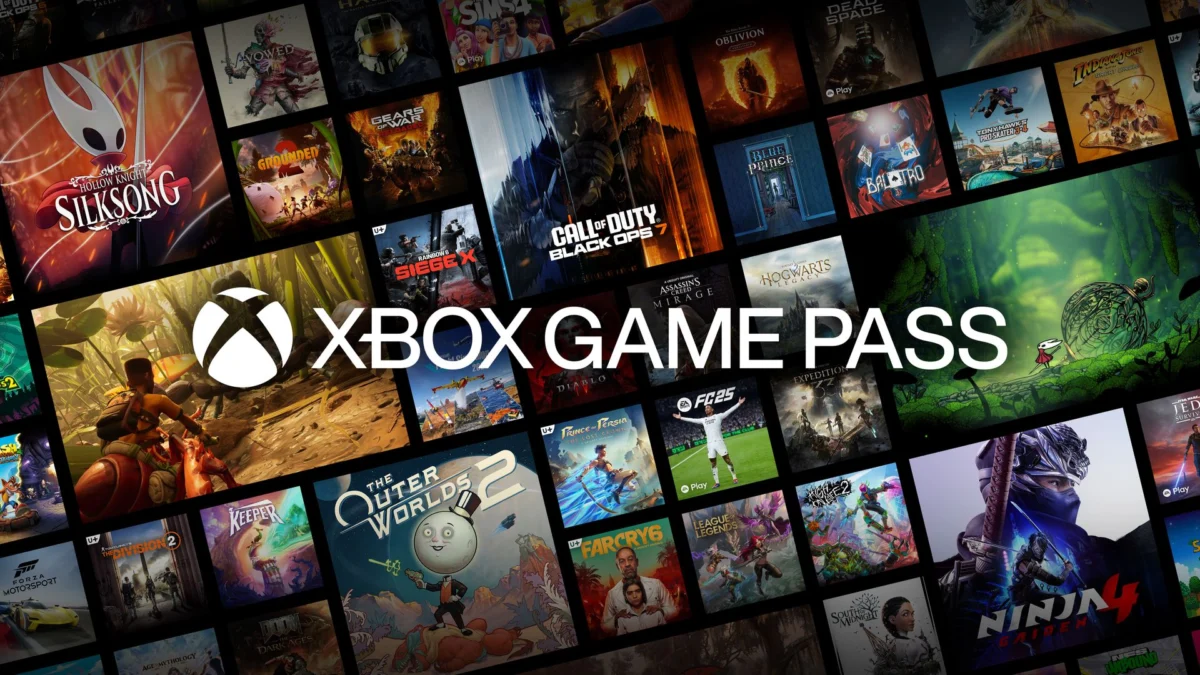
In the rapidly evolving landscape of the digital gaming industry, few business models have proven as disruptive—or as contentious—as the subscription service. Leading the charge is Microsoft’s Xbox Game Pass, a platform often heralded as the "Netflix of gaming." However, as the industry matures, high-profile industry veterans are beginning to question the long-term mathematical viability of this model, particularly for high-budget, "AAA" titles.
Shawn Layden, the former chairman of Sony Interactive Entertainment Worldwide Studios and a veteran who steered PlayStation through the massive success of the PlayStation 4, has emerged as a vocal critic of the subscription-first strategy. In a candid interview on The Expansion Pass podcast, Layden dissected the economic paradoxes facing developers and publishers who opt to bring their games to subscription services on launch day.
The Mathematical Hurdle: Is Profitability Even Possible?
At the heart of Layden’s critique is a fundamental concern regarding scale. "I think I said somewhere that in order for Game Pass to become profitable, you have to have something like 500 million subscribers," Layden noted during the discussion. While he conceded that the figure was chosen for its hyperbolic effect, he argued that the underlying point remains strikingly relevant as Microsoft continues to integrate its massive acquisition portfolio into the service.
Layden drew an evocative analogy, comparing the platform owner’s position to that of a casino operator. "People would always say, well, Microsoft is profitable. But that’s like saying the casino is profitable. The house always wins, right?"
The "house" in this scenario—the platform holder—can leverage the subscription service to bolster ecosystem retention, hardware sales, and long-term user engagement. However, for the individual developer or the third-party publisher, the math is significantly less forgiving. In a traditional retail model, a game has a specific "break-even" point determined by unit sales. Once that point is surpassed, every subsequent copy sold represents pure profit. In a subscription model, where revenue is divvied up based on engagement or fixed licensing fees, the path to reaching that break-even point is obscured, if not entirely blocked.
A Chronology of the Subscription Shift
To understand the current tension, one must look at the timeline of how Game Pass shifted the industry’s center of gravity.
- The Launch (2017): Microsoft introduced Xbox Game Pass as a value-add service, primarily focused on back-catalog titles. It was viewed as a consumer-friendly way to monetize older games that had already exhausted their retail life cycle.
- The Expansion (2018–2020): Microsoft made the seismic decision to include its own first-party titles in Game Pass on "day-and-date" of release. This marked the shift from a "Netflix for old games" to a "Netflix for everything."
- The AAA Tension (2021–Present): As development costs for AAA games skyrocketed—often exceeding $200 million for a single project—publishers began to grapple with the "Day One" dilemma. The concern is that putting a massive, high-budget game into a subscription service cannibalizes full-price sales, potentially devaluing the product in the eyes of the consumer.
- The Current Debate: With recent price hikes and the integration of massive franchises like Call of Duty into the service, the industry is currently in a state of flux, debating whether the subscription model serves as a growth engine or a profit-ceiling mechanism.
The Developer’s Perspective: A Tale of Two Realities
The impact of Game Pass is not uniform across the industry. The narrative surrounding the service is effectively split between the indie sector and the AAA behemoths.
The Indie Lifeline
For many independent developers, the subscription model has been a transformative, and arguably necessary, evolution. Thomas Sala, the solo developer behind The Falconeer and Bulwark: Falconeer Chronicles, has spoken openly about how the service provides a platform for niche titles to find an audience that might otherwise ignore them in a crowded storefront. For an indie dev, being "signed" to Game Pass provides an upfront guarantee, reducing the risk of a title failing to recoup its development costs entirely.
Similarly, Gareth Damian Martin, the creator of the acclaimed Citizen Sleeper, has stated that the existence of the service was pivotal to the survival and continued production of his projects. When a game is small, the "discoverability" crisis of digital storefronts is a greater threat than the potential loss of full-price sales. In this context, Game Pass is not a profit-killer; it is a marketing and funding engine.
The AAA Collision
Conversely, Layden’s concerns center on the $70 AAA market. "Strictly speaking, your $69.99 game has one chance to bust out and break through," Layden explained. "And that’s where these subscription models, I think, came into conflict."
The logic is simple: If a consumer can pay $15 to access a new, $70 game, the incentive to purchase that game at full retail price diminishes. For companies like PlayStation, which have doubled down on high-fidelity, high-budget single-player experiences, the "Day One" model poses an existential threat to the recoupment of massive production budgets.
Supporting Data: The Costs of High-End Development
The industry is currently facing a "productivity and cost crisis." According to various reports from the Game Developers Conference (GDC) and industry analysts, the cost of developing a flagship title has grown exponentially over the last decade. Teams have ballooned from a few dozen to hundreds, and development cycles have extended from two years to five or more.
When a game costs $200 million to make, the revenue requirement is staggering. If a platform holder pays a flat fee for a game to appear on a subscription service, that fee must theoretically be high enough to cover the game’s development budget plus a margin of profit. If the subscriber base is not large enough—or if the subscriber’s "willingness to pay" is capped by the monthly fee—the platform holder loses money.
Layden’s suggestion that 500 million subscribers might be the "magic number" highlights the disparity between the current subscriber count of Game Pass (which sits significantly lower) and the astronomical costs of modern game production.

Official Responses and Strategic Divergence
The industry has responded to this challenge with two distinct strategies. Microsoft has leaned into the "Ecosystem" model. By owning the hardware, the PC storefront, the cloud infrastructure, and a massive portfolio of intellectual property, Microsoft is playing a long-term game. They are betting that the subscription fee is merely one part of a larger, recurring revenue stream that includes in-game microtransactions, DLC, and hardware lock-in.
Sony, led by figures like Jim Ryan and now the current leadership, has largely rejected the "Day One" model. While PlayStation Plus offers a library of games, it does not typically offer their premier, high-budget titles at launch. Their strategy remains rooted in the traditional model: drive sales through quality, prestige, and the "event" nature of a new release.
Implications: The Future of Gaming Business
The implications of this divide are profound for the future of the medium:
- Market Fragmentation: We may see a future where "Game Pass-style" games—designed for recurring engagement—thrive in subscription services, while "prestige" titles remain sold exclusively at retail.
- Increased Consolidation: If the AAA model continues to struggle with the subscription dilemma, more studios may be forced into the arms of platform holders (Microsoft, Sony, or Tencent) simply to ensure they have the financial runway to operate outside the volatility of the retail market.
- The "Live Service" Pivot: To make the math work for subscription services, developers are increasingly pushed toward "Live Service" models—games that evolve over years rather than being completed in a single launch. This ensures that a player who subscribes for a month stays for six months, justifying the cost to the platform.
Conclusion: Picking a Lane
Shawn Layden’s critique serves as a sobering reminder that the "Netflix-ification" of gaming is not a guaranteed path to prosperity. While subscription services provide incredible value to the consumer and a vital safety net for smaller developers, they present a fundamental conflict for the blockbuster titles that have historically defined the industry.
As Layden noted, Microsoft’s challenge—and the challenge for the industry at large—is that they are trying to balance two opposing economic systems: the high-margin, event-driven retail model and the low-margin, volume-driven subscription model. As the industry moves forward, the "pickle" remains: can the house continue to win without eventually stifling the very developers that keep the games coming? For now, the answer remains a point of intense, multi-billion-dollar debate.

