

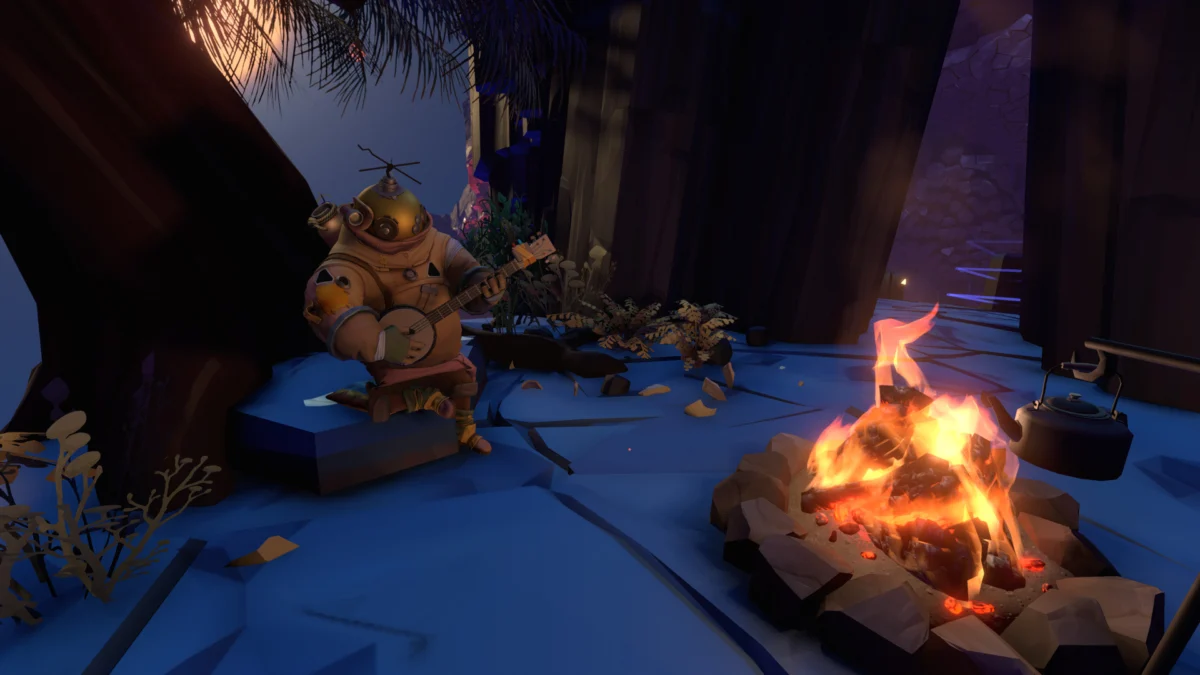
Since its debut in 2019, Mobius Digital’s Outer Wilds has transcended the typical lifecycle of an indie title. While many games see a spike in popularity upon release followed by a gradual decline in the public consciousness, Outer Wilds has instead become a permanent fixture in the discourse of game design, narrative structure, and player agency. It is a title that refuses to be forgotten, occupying a rare space in the industry as a "must-play" experience that defines its own genre.
Main Facts: A Universe Defined by Knowledge
At its core, Outer Wilds is an open-world mystery game set in a hand-crafted solar system trapped in an endless 22-minute time loop. The player assumes the role of the newest recruit of Outer Wilds Ventures, a fledgling space program tasked with exploring a volatile, crumbling cosmos.
The game’s brilliance lies in its "knowledge-based progression." Unlike traditional RPGs, where your character grows stronger via experience points or better equipment, Outer Wilds operates on a simple premise: you do not get stronger; you get smarter. Everything you need to complete the game is available to you from the very first minute, provided you have the information necessary to navigate the environmental puzzles and survive the celestial hazards. This design choice places the agency entirely in the hands of the player, turning every death—often explosive or tragic—into a lesson in cosmic mechanics.
Chronology of a Cult Phenomenon
The journey of Outer Wilds began long before its 2019 launch. Originally the master’s thesis project of Alex Beachum at the University of Southern California’s Interactive Media & Games Division, the game was refined over years of meticulous development.
- 2012–2015: The prototype garnered significant attention after winning the Seumas McNally Grand Prize at the 2015 Independent Games Festival. This early success proved that the core concept—a solar system that decays in real-time—was both technically viable and narratively compelling.
- 2018: Mobius Digital secured funding from Annapurna Interactive, a partnership that allowed the team to polish the game’s intricate physics engine and dense, lore-heavy narrative.
- May 2019: The game officially launched on PC and Xbox One, quickly becoming a critical darling.
- 2021: The release of the Echoes of the Eye expansion solidified the game’s reputation, adding a significant, complex narrative layer that seamlessly integrated with the base game’s existing mysteries.
Supporting Data: The Anatomy of Success
The sustained success of Outer Wilds is not merely anecdotal; it is reflected in the metrics of the gaming industry. On platforms like Steam, the game maintains an "Overwhelmingly Positive" rating, a feat achieved by few titles in the last decade.
Furthermore, the game’s presence on "Best of" lists—from Game of the Year awards to retrospective lists of the 2010s—highlights its lasting impact. Industry analysts have pointed to Outer Wilds as a benchmark for "emergent narrative," where the player’s experience is not dictated by cutscenes, but by their own curiosity and investigation. When looking at the "time-to-completion" metrics, players often spend dozens of hours in the loop, not because they are stuck on a mechanical hurdle, but because the game’s environmental storytelling is so dense and rewarding that they choose to spend extra time uncovering the history of the extinct Nomai civilization.
Official Responses and Creative Vision
The creators of Outer Wilds have consistently emphasized that the game was designed to foster wonder, not frustration. In various developer diaries, Mobius Digital has spoken about the challenge of balancing the "frustratingly satisfying" nature of the loop.
"We wanted the player to feel like an explorer, not a guided tourist," says lead designer Alex Beachum. The studio’s approach to accessibility was unconventional; they opted to trust the player’s intelligence rather than implementing hand-holding mechanics or quest markers. This philosophy is echoed in the game’s critical reception, where journalists have frequently praised the game for its "respect for the player’s intelligence." The studio’s commitment to this vision—despite the potential for player burnout—is perhaps the greatest testament to the integrity of the project.

Implications for the Future of Game Design
The success of Outer Wilds has sent ripples through the industry, influencing how developers approach open-world design. It serves as a proof-of-concept that players are willing to engage with "hard" games—not hard in terms of reflex-heavy combat, but hard in terms of cognitive load and patience.
The Death of the Quest Marker
Outer Wilds has helped shift the industry conversation away from the "Ubisoft-style" map, littered with icons and waypoints. Developers are increasingly looking at Outer Wilds as a blueprint for how to encourage organic exploration. By hiding objectives behind environmental logic rather than interface elements, games can create a deeper sense of immersion that resonates with players long after they stop playing.
The Persistence of Mystery
Another major implication is the value of the "solve-it-once" mystery. Because Outer Wilds relies on information rather than stats, the game has no "New Game+" mode in the traditional sense. You cannot un-know the secrets of the universe. This makes it a rare commodity: a game that can only be played for the first time once. This exclusivity has turned it into a rite of passage among gamers, fostering a community that is deeply protective of spoilers, further extending the game’s lifespan through word-of-mouth recommendations.
Why You Should Play It Now
If you are currently in the midst of a holiday break or looking for a title to consume your downtime, Outer Wilds is the quintessential recommendation. It is a game that demands your full attention, rewarding you with moments of profound philosophical realization.
You will die. You will miss a jump, get crushed by a falling celestial body, or run out of oxygen while exploring a distant ruin. You will likely feel a flash of irritation as the screen fades to black, signaling the start of the next 22-minute cycle. But then, you will realize that the information you gathered in that life—the location of a switch, the frequency of a signal, the trajectory of a comet—is now permanently etched into your own brain.
Outer Wilds is more than just a game about space; it is a game about the human desire to understand the unknown. It is an essential, life-affirming, and utterly unique experience that stands as a pillar of modern art. Whether you are a seasoned veteran of the genre or a casual player looking for something that will challenge your perspective, Outer Wilds is waiting. It is time to step into the ship, strap into the cockpit, and see what the universe has to offer—before it all comes to an end.
In a market saturated with sequels, remakes, and service-based models, Outer Wilds stands tall as a singular, finished, and perfect work. It is not just one of the best games of the last few years; it is a benchmark by which all future exploratory games will be measured. Go to your digital storefront, download it, and prepare to be changed.

