


For nearly three decades, Final Fantasy VII has stood as a monolith in the landscape of interactive entertainment. When Square Enix announced the ambitious Final Fantasy VII Remake project—a multi-part reimagining of the 1997 PlayStation classic—it ignited a firestorm of discourse among fans and industry analysts alike. With the upcoming conclusion to the saga, Final Fantasy VII Revelation, the question of entry points has become more pressing than ever: Is it better to experience the story through the lens of modern graphical fidelity, or is the original 1997 experience a prerequisite for understanding the meta-narrative layers being woven by director Naoki Hamaguchi and his team?
In a recent candid discussion with GamesRadar+, Hamaguchi addressed this dilemma, offering a nuanced perspective that suggests there is no "clear cut" answer. Instead, the path a player chooses fundamentally alters their relationship with the lore, the characters, and the subversive nature of the modern trilogy.
The Case for Heritage: Why the 1997 Classic Matters
The argument for starting with the original game is rooted in the "meta-narrative" structure of the Remake trilogy. Since the release of the first installment, it has become increasingly clear that these games are not merely a 1:1 graphical overhaul. They function, in many ways, as a sequel or a thematic deconstruction of the source material.
Hamaguchi acknowledges that fans who insist on playing the original first are "not mistaken at all." This is because the narrative DNA of the 1997 game is "very much enshrined within the story" of the new trilogy. For veteran players, the excitement lies in the subversion of expectations. When Cloud Strife, Tifa Lockhart, and Aerith Gainsborough traverse locations that fans have known for decades, the game plays with the audience’s foreknowledge of key plot beats.
If a player understands the original tragic arc—the looming threat of Sephiroth, the history of the Cetra, and the ultimate fate of key protagonists—every deviation in the new games carries a heavier emotional weight. The Remake series consistently references destiny, fate, and the struggle to change an outcome that has already been written in the annals of gaming history. To those who know the original, these are not just story beats; they are existential battles against a fixed timeline.
The Modern Lens: Why Newcomers Might Prefer the Remake
Conversely, Hamaguchi presents a compelling counter-argument for those who find the dated mechanics and blocky 3D models of 1997 to be a barrier to entry. For many modern gamers, the original Final Fantasy VII is an artifact—a historical curiosity that, while culturally significant, lacks the "graphical splendor" and intuitive, action-oriented combat systems of the current generation.
Hamaguchi suggests that, in some respects, it might actually be better to start with the Remake saga. The modern trilogy is designed with accessibility in mind, ensuring that "even someone who’s not played the original can jump in on any of them and still have a really great experience."
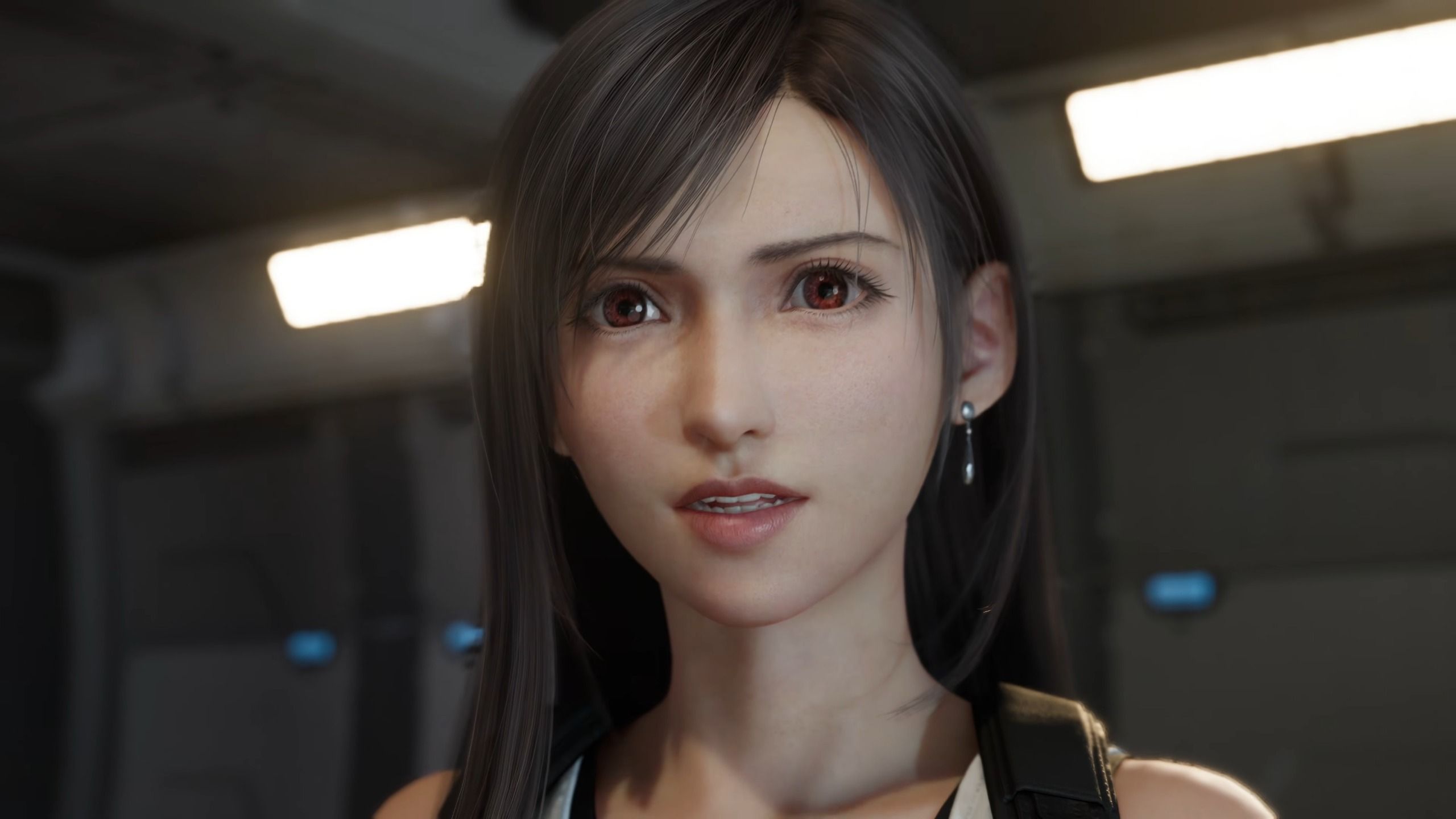
The emotional resonance of the new trilogy is bolstered by high-fidelity character models, expressive facial animations, and cinematic direction that simply was not possible on the original PlayStation hardware. For a first-time player, the gravity of Aerith’s situation or the intensity of the conflict with Shinra can be felt more viscerally when presented through modern technology. By avoiding the baggage of the 1997 original, a player can experience the narrative as a standalone, self-contained mystery, without the "spoilers" or the fatigue of comparing every scene to its predecessor.
Chronology and Context: The Evolution of the Project
To understand the gravity of this debate, one must look at the timeline of the Final Fantasy VII project. The original 1997 game was a turning point for the JRPG genre, effectively bringing the medium into the mainstream global spotlight. For years, fans clamored for a remake, but the scale of such a project seemed impossible until the announcement at E3 2015.
The release of Final Fantasy VII Remake (2020) focused exclusively on the city of Midgar—an area that occupied roughly five to seven hours of the original game, expanded here into a full-length, 40-hour epic. This decision established the scope of the project: the developers were not just remaking the game; they were expanding the world, deepening the character motivations, and exploring the "unknown" spaces between the original’s major beats.
With Final Fantasy VII Rebirth (2024), the project moved into the open world, further distancing itself from the rigid path of the original game and introducing complex theories regarding alternate timelines and multiverse theory. As the team approaches the final chapter, Revelation, the narrative is expected to converge these disparate threads. The trajectory of the project has been one of increasing divergence, making the choice of entry point even more critical for how a player interprets the final outcome.
Supporting Data: Narrative Layers and Player Retention
Statistical analysis of player engagement suggests that the Remake series has been highly successful in capturing a new generation of fans who have no prior connection to Cloud Strife or the planet Gaia. According to Square Enix’s investor reports, the Remake series has performed well in attracting demographics that were not active gamers during the 90s.
This success is largely attributed to the hybrid combat system, which balances real-time action with the classic "ATB" (Active Time Battle) menu-driven tactics. This design choice serves as a bridge, appealing to fans of modern action games while maintaining the tactical depth required by long-term fans.
Furthermore, the "Remake" branding has acted as a double-edged sword. While it draws in the legacy audience, it also sets up a contract of expectations. If a player approaches the games expecting a faithful retelling, they may be surprised by the meta-fictional elements. If they approach it as a blank slate, the "surprises" lose some of their impact, as the game assumes a level of ambient knowledge about the original world-building.
Official Responses and Developer Philosophy
The development philosophy behind Revelation reflects a desire to balance these two audiences. Hamaguchi’s team has had to walk a tightrope: satisfying the nostalgia of millions while creating a coherent story for someone who has never touched a controller before.
Hamaguchi’s stance is one of inclusivity. By refusing to declare one path superior, he empowers the player to choose their own adventure. He acknowledges that the Remake trilogy is a "different experience" entirely. He suggests that the "emotional impact" of the modern trilogy, combined with its high-end production values, might provide a more immediate connection for new players than the original game, which requires a certain level of "gaming literacy" and patience for its era’s limitations.
This philosophy extends beyond just the narrative. Even in mechanical design, the developers have sought to learn from previous criticisms. For example, following feedback regarding the extreme difficulty of the Platinum trophy in Rebirth, Hamaguchi has confirmed that Revelation will feature a more balanced and "easier" path for those looking to engage with the game’s completionist content. This mirrors his approach to the narrative: the goal is to make the experience as accessible as possible without sacrificing the depth that the series is known for.
Implications for the Future of Remakes
The debate surrounding the Final Fantasy VII trilogy has profound implications for the gaming industry at large. As developers look back at their catalogs to remake classics from the 90s and early 2000s, the "Remake vs. Remaster" question is becoming a defining feature of the era.
By choosing to treat the Final Fantasy VII project as a creative reinterpretation rather than a simple aesthetic upgrade, Square Enix has set a new standard. They have proven that there is a market for high-budget, meta-narrative storytelling that challenges the audience’s knowledge of the source material.
For the player, the implications are clear: the "correct" way to experience the saga is no longer a matter of chronological order, but of preferred style. If you crave the historical context and the thrill of spotting subverted expectations, the 1997 original remains the bedrock. If you prefer a cinematic, high-octane emotional journey that stands on its own merits as a modern masterpiece, the Remake trilogy offers a gateway that is just as valid.
Ultimately, whether you start in Midgar in 1997 or 2020, the journey of Cloud and his allies remains one of the most significant narratives in gaming. The fact that the director himself encourages both paths highlights the enduring power of the story. Final Fantasy VII is no longer just a game; it is a shared cultural experience that continues to evolve, adapt, and challenge those who dare to step into its world. As the Revelation approaches, the only certainty is that the conversation will continue long after the final credits roll.

