

By Editorial Staff
In the world of game development, the most profound changes are often the most granular. While the industry frequently obsesses over ray tracing, 4K textures, and procedural generation, sometimes the community’s loudest demands boil down to the most fundamental biological components. Today, that component is the human neck.
Facepunch Studios, the developer behind the ambitious sandbox creation platform s&box, has officially introduced a feature that many players thought might never arrive: necks for their default character models. The update, which arrives amidst a backdrop of ongoing player feedback and iterative development, marks a pivotal shift in the platform’s aesthetic direction.
The Anatomy of the Update: What Has Changed?
For those unfamiliar with the current state of s&box, the "citizen" models have long been defined by a squat, neckless aesthetic that gave them a distinct, almost toy-like silhouette. While this design choice was intentional—a nod to the stylized, functional nature of sandbox development environments—it has been a persistent point of contention within the player base.
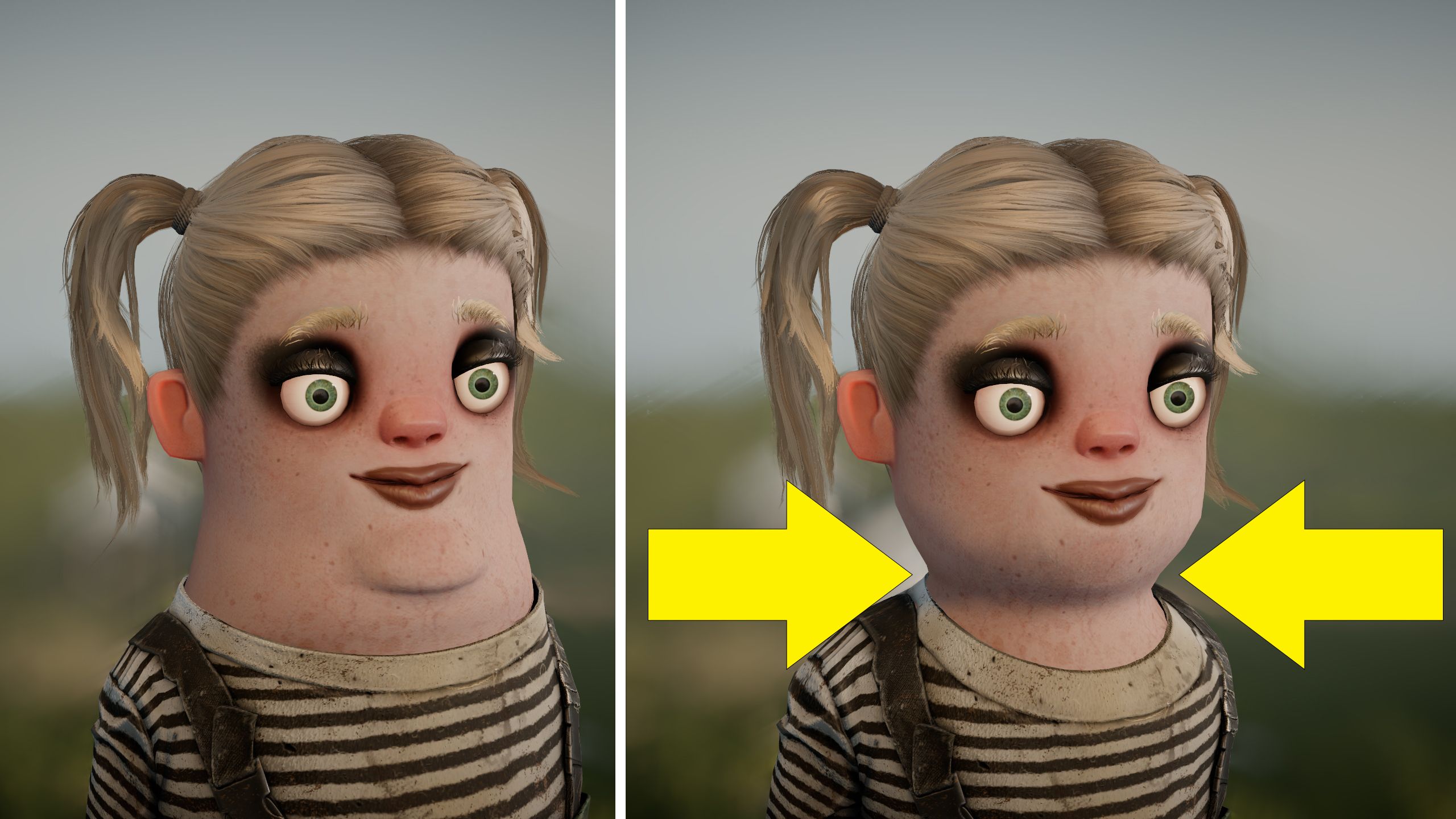
The latest patch effectively ends this era. The default citizen character now possesses a distinct neck, providing a more anatomically conventional appearance. Beyond the addition of the neck itself, the update includes a suite of customization sliders that allow users to modulate the physical proportions of their avatars. These include:
- Neck length and thickness: Allowing for a range of appearances from subtle to prominent.
- Chest and waist width: Providing greater control over the character’s core build.
- Nose size: A new layer of facial modularity that, when paired with eye-color selection, significantly increases the potential for character variety.
- Neutral facial expressions: The transition away from a default "frowny" face to a more neutral, adaptable baseline.
These additions are not merely cosmetic; they represent a fundamental change in the skeletal rigging of the character models, signaling a broader commitment from the development team to prioritize user-requested aesthetics over rigid design mandates.
A Chronology of the "No-Neck" Era
To understand the weight of this update, one must look back at the development philosophy of s&box. When the project was first unveiled as the spiritual successor to the iconic Garry’s Mod, the goal was to provide creators with a clean, unpretentious canvas.
The initial character models—the "citizens"—were designed for efficiency. In a sandbox environment where performance and ease of animation are paramount, the lack of a neck was a technical shortcut that became a stylistic signature. However, as s&box grew from a closed prototype to a more accessible development platform, the "neckless" look began to draw criticism.
- Phase One: The Prototype: The models were purely functional, designed to be seen from a distance. The lack of a neck simplified weight painting and animation blending for early testers.
- Phase Two: The Community Pushback: As the platform gained traction, players began to express that the models felt "off" or "stunted." The lack of verticality in the upper body became a recurring theme in user reviews.
- Phase Three: The "Negative Feedback" Loop: Throughout 2023 and into early 2024, the developers at Facepunch noted that the aesthetic of the player character was consistently cited in negative reviews. It became clear that the "no-neck" look was acting as a barrier to immersion for new users.
- Phase Four: The Implementation: Following months of internal debate, Garry Newman and his team began work on a modular skeleton system, allowing for the reintroduction of the neck without sacrificing the performance benefits of the original design.
Official Commentary: The "Garry Newman" Perspective
Garry Newman, the founder of Facepunch Studios and the architect behind the legendary Garry’s Mod, has been remarkably transparent about the conflict between his own artistic preferences and the demands of the player base.

In a recent communication, Newman admitted that the shift was not necessarily his personal preference, but a necessary pivot for the health of the project. "I love the citizen, I love how he looks, I love that he has no neck," Newman stated. However, he acknowledged the reality of the situation, noting, "The feedback we’ve consistently got is that people hate them. They hate everything about them."
This admission highlights a delicate balance in modern game design: the tension between a developer’s creative vision and the user-experience requirements of a live-service or sandbox platform. Newman’s decision to move forward with the change demonstrates a pragmatic approach to development—prioritizing user adoption and satisfaction over a stubborn adherence to an original, albeit divisive, design concept.
Crucially, the team has implemented the changes in a way that respects the history of the project. By making the neck a slider-based option, those who preferred the classic, neckless look can, quite literally, dial it back in. "If you liked having no neck, you can bring that back with a slider," Newman confirmed.
The Broader Implications for Sandbox Design
The decision to add necks to the s&box citizens is more than just a minor asset tweak; it serves as a case study in how developers should handle community feedback in the age of early access.
1. The Power of Modular Customization
By choosing to use sliders rather than a blanket replacement of the model, Facepunch has avoided alienating the segment of the player base that enjoyed the original aesthetic. This "have your cake and eat it too" approach is becoming the gold standard for character-driven games. It allows for a standardized base model that can be uniquely shaped by the player, ensuring that even within a shared ecosystem, characters feel personal.
2. Addressing "Death by a Thousand Cuts"
Newman noted that while this change won’t "fix" the game on its own, it addresses one of the most persistent items on the list of community complaints. In development, it is often tempting to focus on "major" systems like networking, physics, or rendering pipelines. However, this update serves as a reminder that user satisfaction is often dictated by the "feel" of the avatar. By clearing away this hurdle, the development team has effectively neutralized one of the most common talking points in negative reviews.

3. The Shift Toward Inclusivity and Expression
In sandbox games, the character model is an extension of the player’s identity. The previous model, with its fixed, frowning expression and lack of anatomical nuance, limited the types of stories players could tell. With the addition of neutral expressions and customizable physical traits, s&box becomes a more versatile tool for roleplaying and creative projects.
Conclusion: Looking Ahead
As s&box continues to evolve, the "neck update" will likely be remembered as a turning point—a moment where the developers chose to listen to the collective voice of their community over their own internal design inertia.
While it may seem like a small detail to an outsider, for the s&box community, the presence of a neck is a sign that the platform is maturing. It suggests a future where the software is flexible, user-focused, and increasingly capable of meeting the diverse aesthetic demands of a global player base.
As we move forward, we will continue to monitor the s&box patch notes for further developments. Whether the next big update concerns the addition of eyebrows, the nuance of gait cycles, or other, even more subtle anatomical refinements, one thing is clear: Facepunch Studios is listening, and they are not afraid to pivot. For now, the citizens of s&box can finally hold their heads high—literally.

