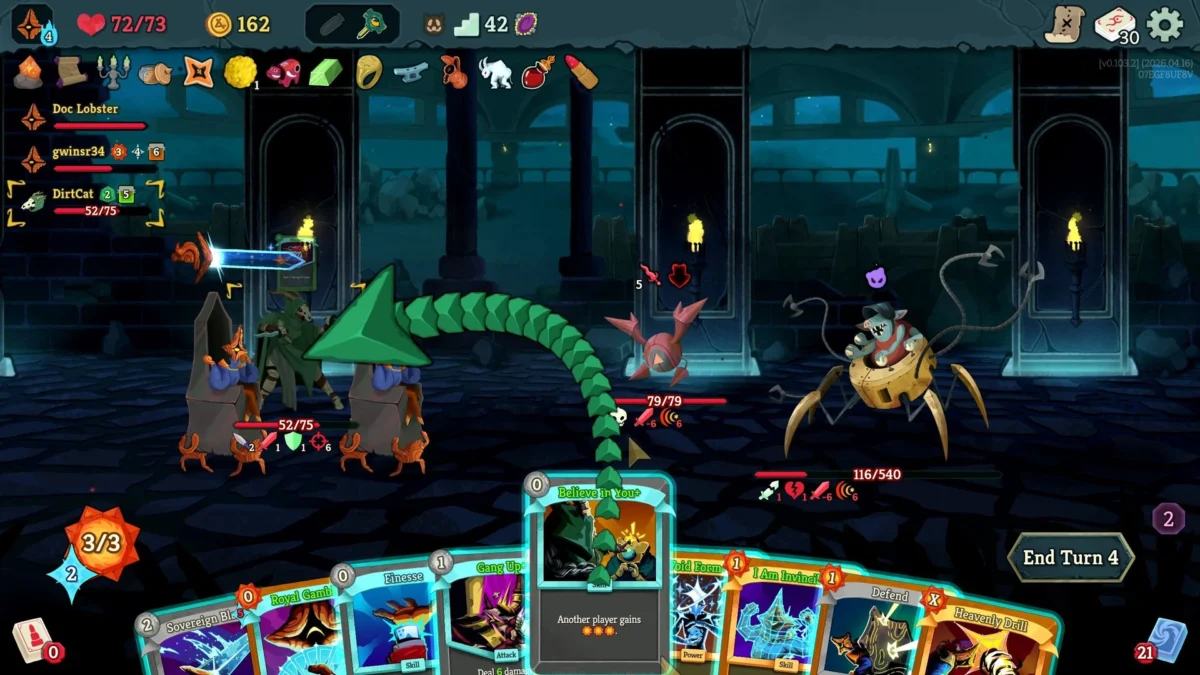
Slay the Spire 2 has officially cemented its status as a monumental cultural and commercial milestone for the rogue-lite deckbuilder genre. Launching into early access, developer Mega Crit’s highly anticipated sequel shattered expectations by drawing an astonishing 574,638 concurrent players on Steam during its opening weekend.
This historic peak completely vaporizes previous high-water marks for the deckbuilder category, transforming what was once considered a niche tactical genre into an undeniable mainstream juggernaut. To put its dominance into perspective, Slay the Spire 2 routinely boasts nearly seven times the concurrent player count of massive digital card games like Magic: The Gathering Arena.
Following several months of community engagement and early access refinement, a panel of industry veterans and editorial critics has reconvened to evaluate the game’s deeply systemic design. While the sequel continues to captivate millions, its early access period has also ignited fiery internal debates regarding its punishing balance curve, conservative tactical design, and polarizing boss mechanics.
Chronology: From Indie Darling to Steam Record-Breaker
The journey toward Slay the Spire 2 began with the earth-shattering success of the original 2017 title, which pioneered and practically defined the modern rogue-lite card game genre. Mega Crit spent years refining the formula, announcing the sequel in early 2024 to an avalanche of fan enthusiasm.
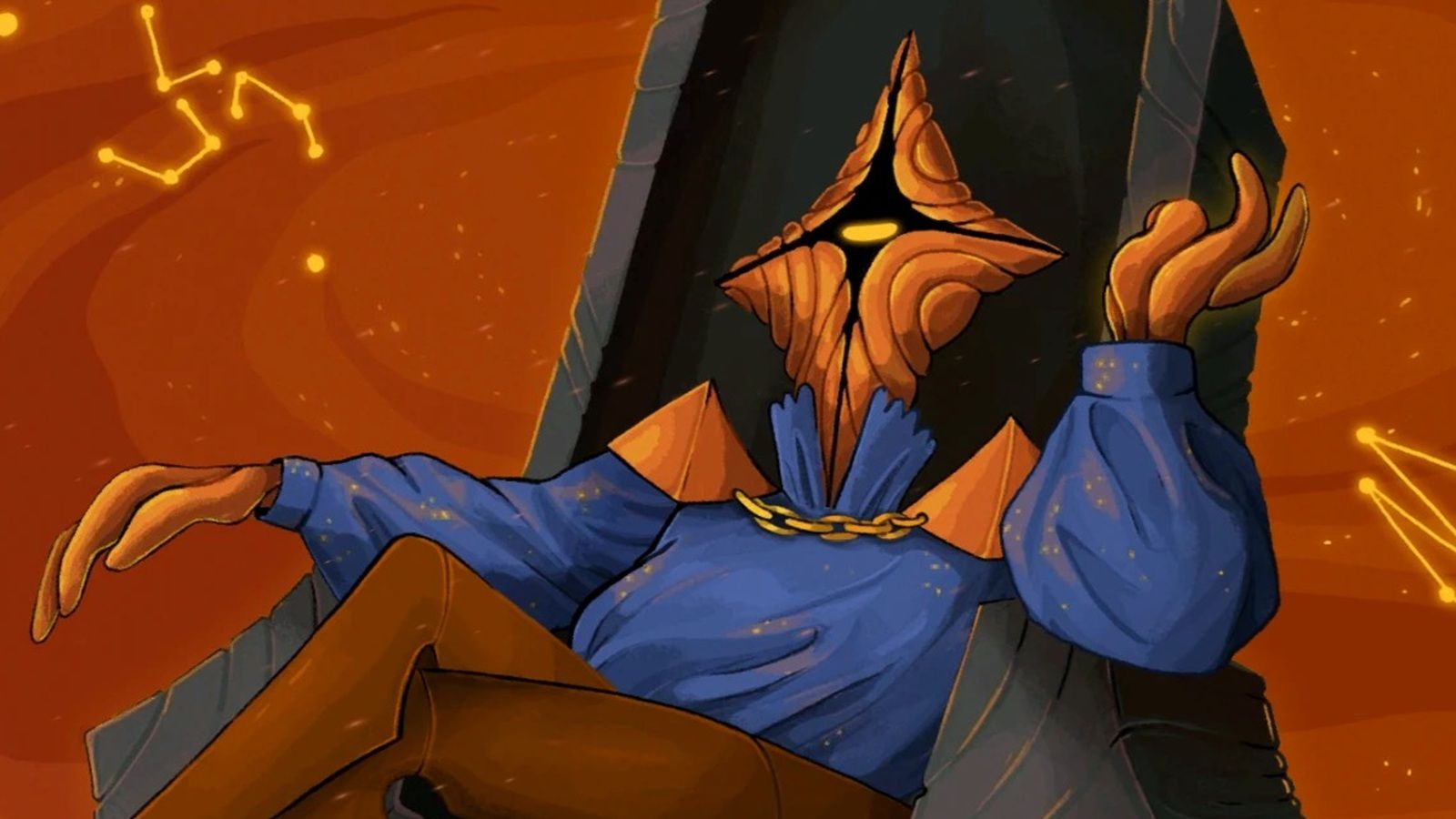
As development progressed through closed betas and showcases, anticipation steadily mounted. Mega Crit co-founder Casey Yano teased unique character archetypes—such as the whimsical, star-collecting Regent—building immense momentum heading into the early access launch. When the servers finally went live, the game did not merely meet expectations; it obliterated them, instantly claiming the throne as Steam’s undisputed premier card-based experience.
Yet, the transition from early access rollout to deep-dive optimization has been far from frictionless. Players and critics alike have navigated aggressive mid-stream patches, adjustments to notorious encounters like the Doormaker and its successor, and continuous systemic tweaks designed to balance the razor-thin margins of Ascension 10 runs.
Supporting Data: Critical Perspectives and Systemic Analysis
With hundreds of hours collectively poured into the early access build, editorial critics Austin Wood (GamesRadar+) and Evan Lahti (PC Gamer) have mapped out the triumphs and pain points defining the meta of Slay the Spire 2.
Act 1 Balance: A Brutal Tax on Innovation
According to Austin Wood, the game’s opening chapter suffers from an over-reliance on mandatory damage checks.
"The easiest way to clear Act 1 reliably is just to rest at every opportunity… The entire act is a health check, throwing tons of unavoidable damage at you immediately and forcing you to either high-roll a monstrous build within 10 cards or top up for the HP tax of the final boss."
This aggressive balance philosophy heavily penalizes experimental drafting, funneling players into conservative pathing—especially within the punishing biomes of the Overgrowth. Consequently, players often rely on high-variance Neow relics like the Silver Crucible, or cross their fingers for game-breaking early drops like the polarizing Silken Tress, which grants a free first-turn replay to every card in your opening reward at the cost of all gold.
The Joy of Low Input, High Output: Shivs and Sly
Conversely, high-momentum basic builds continue to provide the purest serotonin hits in the game. Evan Lahti notes that Shiv and Sly mechanics showcase the foundational design triumph of Slay the Spire 2: allowing players to play massive quantities of cards and receive cascading systemic rewards. Combining Shivs with relics like Shuriken, Helical Dart, and Kunai triggers a cascade of strength, dexterity, and block generation that mimics the dopamine loop of classic arcade puzzlers.
Character Breakdowns: Regent vs. Osty
Character design remains deeply divisive. The Necrobinder class, anchored by the aggressively overpowered summon Osty, offers smooth progression and robust defensive scaling. Austin Wood aptly summarizes:
"As it turns out, the class that starts with its own version of Barricade and Body Slam is pretty good."
On the other end of the spectrum lies the Regent. Adored for his comedic, space-faring aesthetic and rotund kamikaze servants, his actual mechanical loop requires complex multi-turn star-charting. For players seeking fast-paced, visceral card action, the Regent’s cosmic accounting can feel restrictive and tedious.
Official Responses and Developer Intentions
Mega Crit has maintained an active dialogue with the community throughout the early access phase, deploying rapid hotfixes and iterating on enemy design based on player telemetry and feedback.
When addressing community pushback regarding frustrating late-game encounters—such as the removal of the notoriously unpopular Doormaker boss—Mega Crit has shown a willingness to completely overhaul systems that warp player deckbuilding strategies. However, the introduction of replacement encounters like the Aeonglass has proven equally controversial. Critics argue that Aeonglass replicates the worst traits of its predecessor by excessively punishing players for simply playing cards—the core verb of a card game—and littering decks with status cards that apply ramping, inescapable damage.
Furthermore, Mega Crit’s integration of co-op multiplayer has transformed from a rudimentary novelty into a fascinating social experiment. While initial impressions dismissed multiplayer as merely scaling up enemy health bars, prolonged engagement has revealed rich, emergent synergies when pairing absurd player builds—though critics emphasize that the mode desperately requires dedicated multiplayer-specific mechanics and relics to fully realize its potential.
Implications: The Future of the Rogue-Lite Genre
The release and reception of Slay the Spire 2 carry profound implications for the future of digital deckbuilders. On one hand, Mega Crit has proven that refined polish, beloved characters, and tight economic scaling can capture the global gaming consciousness on an unprecedented scale.
On the other hand, critical evaluations suggest that Slay the Spire 2 plays it remarkably safe. Compared to genre contemporaries like Monster Train 2—which utilizes spatial unit positioning, multi-floor tactical depth, and wildly irregular mechanical toolboxes—Spire 2 leans heavily into elegant, albeit conservative, mathematical multiplication (adding block, stacking poison, and inflating strength).
As Slay the Spire 2 continues its early access roadmap, the core challenge facing Mega Crit is clear: balancing the tight, beloved math of the original masterpiece with the appetite for bolder, weirder, and more transgressive game design. If the developers can inject greater tactical variety into early acts and soften the punitive edges of late-game boss encounters, Slay the Spire 2 will not only retain its crown as the most popular deckbuilder in history—it will become an enduring artistic benchmark for the entire rogue-lite genre.