

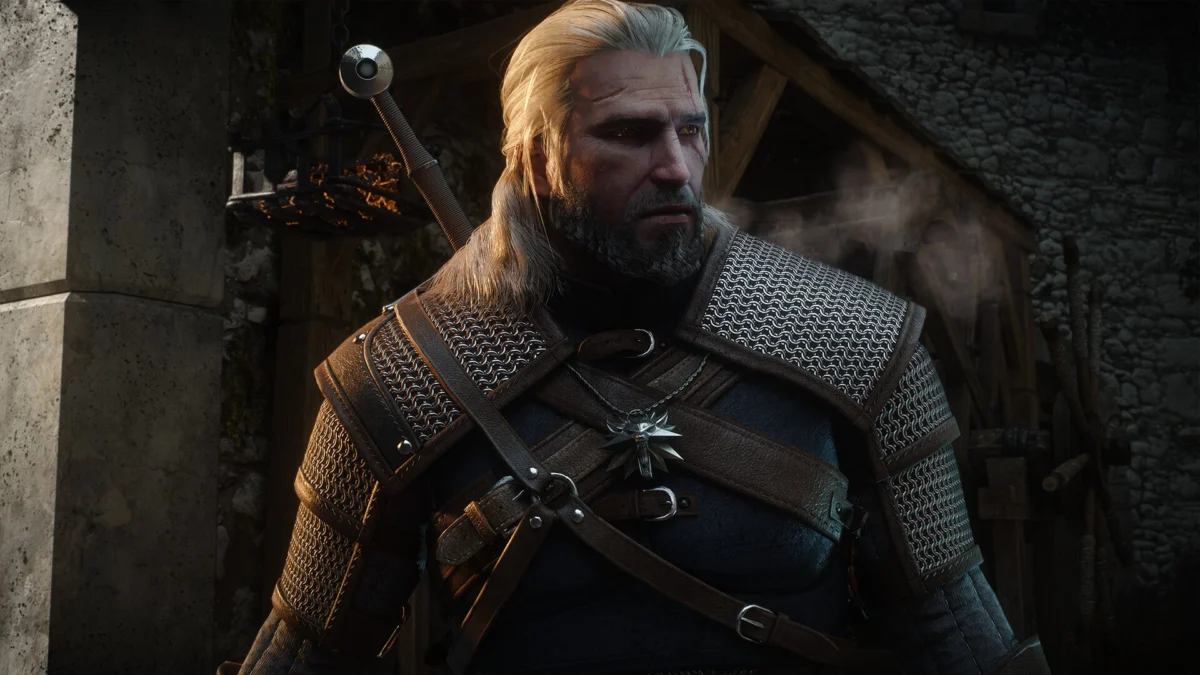
In an industry where the lifespan of a single-player title is often measured in weeks, The Witcher 3: Wild Hunt has achieved the impossible. Eleven years after its initial debut, CD Projekt Red’s magnum opus has shattered its own historical concurrent player records on Steam. Driven by the recent deployment of a comprehensive, free-of-charge "Remastered" update, the game has managed to outperform its original 2015 launch statistics, signaling a remarkable longevity that few games in history have ever attained.
The Core Phenomenon: Breaking Records a Decade Later
At the time of reporting, The Witcher 3 surged past 120,000 concurrent players on Steam, a staggering figure for a title that hit the market over a decade ago. This performance places the game comfortably within the top tier of Steam’s most-played titles, rubbing shoulders with modern live-service juggernauts and recent AAA releases.
What makes this achievement particularly noteworthy is that it represents a "clean" surge. Unlike many games that rely on heavy discounts or seasonal events to inflate player numbers, The Witcher 3 is reaping the benefits of a technical overhaul that respects the loyalty of its existing player base. By providing a free "next-gen" upgrade to anyone who already owns the game, CD Projekt Red has effectively incentivized a massive wave of both returning veterans and curious newcomers to step back into the shoes of Geralt of Rivia.
A Chronology of Success: From Launch to Legacy
To understand the magnitude of this achievement, one must look at the game’s historical trajectory on PC. Since its launch in 2015, The Witcher 3 has benefited from a unique "long-tail" effect, buoyed by critical acclaim, post-launch expansions, and cultural phenomena.
1. The 2015 Foundation
Upon its release, The Witcher 3 set a high bar for open-world RPGs, peaking at approximately 92,000 concurrent players on Steam. At the time, it was widely considered a gold standard for narrative-driven design.
2. The Netflix Catalyst (2020)
The game experienced its first major resurgence in January 2020. The premiere of Netflix’s The Witcher series sparked a global renewed interest in the intellectual property, pushing the game to a then-record peak of 103,000 concurrent players. It was a rare instance of transmedia success where the streaming adaptation directly fueled the software’s commercial health.
3. The Next-Gen Update (2022)
In December 2022, CD Projekt Red introduced a significant visual overhaul, including ray-tracing, enhanced textures, and gameplay quality-of-life adjustments. This update pushed player counts to roughly 89,000. While impressive, it served as a precursor to the current momentum.
4. The Current Remastered Peak
The latest iteration of the game has surpassed all previous benchmarks, proving that the combination of deep, meaningful content and technical modernization is a winning formula for player retention. It is important to note that these figures only account for the Steam storefront; they do not include the massive player populations on GOG (owned by CD Projekt), the Epic Games Store, or the console ecosystems (PlayStation, Xbox, and Nintendo Switch), suggesting the true scale of the player base is likely exponentially higher.
Supporting Data: Why Players Are Returning
The "Remastered" update is more than just a fresh coat of paint. CD Projekt Red has utilized modern rendering techniques to revitalize the aging REDengine 3.
- Visual Fidelity: The implementation of Global Illumination and Ray-Traced Ambient Occlusion has brought a new sense of depth to the game’s sprawling forests and urban centers.
- Gameplay Adjustments: Beyond the aesthetics, the update includes camera distance options, quick-casting signs, and an integrated mod suite that modernizes the user experience to compete with 2024 standards.
- The "Expansion" Factor: By bundling the critically acclaimed Hearts of Stone and Blood and Wine expansions into the core experience for free for owners, the studio has ensured that the "value proposition" of returning to the game is nearly impossible to ignore.
SteamDB data consistently shows that while many games suffer from an 80-90% drop-off in player engagement within the first month of release, The Witcher 3 maintains a steady "floor" of players. This indicates a high level of "replayability," a quality that CD Projekt Red prioritized during the game’s lengthy development cycle.
Official Responses and Studio Strategy
CD Projekt Red has remained largely modest regarding the record-breaking numbers, focusing instead on the philosophy that informed the update: "Player-first development."
In various developer diaries and community posts, the studio has emphasized that the remaster was designed as a "thank you" to the community. By refusing to monetize the upgrade, they avoided the common industry trap of "double-dipping," where developers charge full price for minor visual tweaks. This move has bolstered consumer trust, a commodity that is particularly precious for the studio following the rocky launch of Cyberpunk 2077.
The studio’s commitment to the franchise remains undiminished. While the Netflix series—which recently announced that its fifth season would be its final—is navigating its own narrative challenges, the video game franchise remains the primary touchstone for the brand’s identity. CD Projekt Red is currently deep in development on the next chapter of the Witcher saga, and the sustained interest in the third entry serves as the perfect marketing engine to keep the brand alive in the public consciousness.
Implications for the Industry
The success of The Witcher 3 in 2024 holds several lessons for the broader video game industry:
- The Death of the "Dead Game" Myth: The narrative that a game is "dead" after its first year is being dismantled. High-quality single-player experiences can have lives that span over a decade if the developer continues to support the product.
- The Value of Free Upgrades: Publishers are increasingly pressured to monetize every incremental improvement. CD Projekt Red’s decision to offer a free, comprehensive remaster demonstrates that goodwill and community loyalty can lead to sustained, long-term commercial success that might outweigh the short-term profit of a paid re-release.
- Modernization is Key: The ability to port or upgrade older titles to leverage new hardware capabilities (like DLSS, FSR, and ray-tracing) is now a core requirement for maintaining a back-catalog.
Conclusion: A Testament to Quality
As the dust settles on this latest record-breaking milestone, it is clear that The Witcher 3: Wild Hunt has transcended the typical lifecycle of a video game. It has become a digital "evergreen"—a work of art that people return to not just for the sake of completion, but for the experience itself.
The fact that 120,000 people were simultaneously wandering the Continent in 2024 is a testament to the depth of the writing, the strength of the world-building, and the studio’s dedication to maintaining a masterpiece. As the industry moves toward an era of increasingly expensive and fleeting experiences, the enduring reign of the White Wolf serves as a powerful reminder that when a game is built with care, it will always find an audience, regardless of the passage of time.

