

By Global Gaming Desk
Published: November 2023 / Updated for Current-Gen Reporting
Main Facts
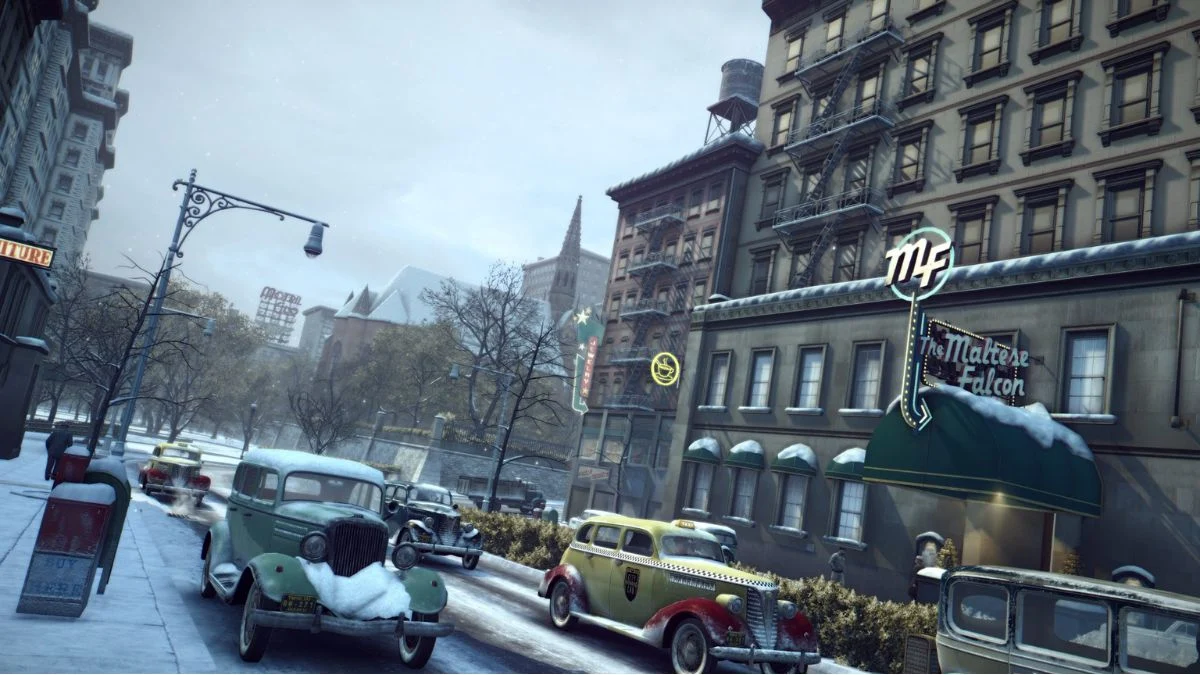
Fans of cinematic crime sagas and immersive historical storytelling may soon have a compelling reason to return to the rain-slicked alleys of Empire Bay and the murky bayous of New Bordeaux. Recent filings uncovered on the Entertainment Software Rating Board (ESRB) official database strongly suggest that native PlayStation 5 and Xbox Series X|S editions of both Mafia II: Definitive Edition and Mafia III: Definitive Edition are currently in the pipeline from publisher 2K and developer Hangar 13.
While both of these titles are already playable on current-generation hardware via backward compatibility—allowing users to port over their PlayStation 4 and Xbox One iterations—the appearance of brand-new, standalone ESRB classifications indicates that dedicated current-generation SKUs (Stock Keeping Units) are imminent. A native release would unlock the full technical potential of Sony’s and Microsoft’s contemporary machines. This means players could finally experience optimized frame rates, higher native resolutions, and, most importantly, lightning-fast load times made possible by custom ultra-high-speed solid-state drives (SSDs).
Both titles have reaffirmed their traditional "Mature 17+" classifications from the rating board. The ESRB has cited familiar content descriptors for both entries, warning consumers about "Blood and Gore, Intense Violence, Nudity, Strong Language, Strong Sexual Content, and Use of Drugs and Alcohol." These pillars have historically defined the gritty, uncompromised storytelling of the Mafia intellectual property, which has never shied away from exploring the grim realities of organized crime, racial tensions, corruption, and moral decay throughout twentieth-century America.
Industry analysts note that this potential catalog refresh arrives at an exceptionally strategic juncture for publisher 2K. With worldwide anticipation for the open-world crime genre reaching a fever pitch—largely driven by the impending arrival of Rockstar Games’ monumental Grand Theft Auto VI—cultivating renewed interest in established crime franchises allows publishers to capitalize on an increasingly hungry demographic of action-adventure enthusiasts.
Despite the strong evidence provided by the ratings board, neither 2K nor Hangar 13 has officially stepped forward to confirm the existence of these native current-gen ports, leaving fans to speculate on pricing, upgrade paths, and potential graphical overhauls.
Chronology: The Evolution of a Syndicate
To understand the significance of these rumored current-generation releases, it is vital to trace the historical trajectory of the Mafia franchise. Over more than two decades, the series has evolved from a niche PC passion project into one of the most recognizable narrative-driven crime properties in interactive entertainment.
The Origins and the Golden Era (2002–2010)
The journey began back in 2002 with the release of the original Mafia, developed by Illusion Softworks (later renamed 2K Czech) and published gathering critical acclaim on Microsoft Windows before being ported to the PlayStation 2 and original Xbox. Set in the fictional American city of Lost Heaven during the Great Depression, the game was celebrated for its uncompromising dedication to historical authenticity, realistic driving physics, and a mature, tragic mob narrative centered on cab driver-turned-gangster Tommy Angelo.
Building on that foundational success, Mafia II launched in August 2010 for the PlayStation 3, Xbox 360, and PC. Chronicling the life of war veteran Vito Scaletta between 1943 and 1951 in Empire Bay (a fictionalized composite of New York, Chicago, and Detroit), the sequel leaned heavily into cinematic presentation, a sprawling licensed soundtrack of mid-century classics, and a poignant look at the cyclical nature of loyalty and betrayal within the American Mafia.
The Transition to Hangar 13 and New Horizons (2016–2020)
As the industry shifted toward the eighth generation of consoles, the torch was passed to a newly formed studio: Hangar 13. In October 2016, the team released Mafia III for the PlayStation 4, Xbox One, and PC. Relocating the action to 1968 New Bordeaux (a stylized, volatile recreation of New Orleans), the game starred Lincoln Clay, a biracial Vietnam War veteran seeking vengeance against the Italian mob after his surrogate family is betrayed and slaughtered. Mafia III pushed narrative boundaries by directly tackling systemic racism, political corruption, and the lingering psychological scars of the Vietnam War, though its open-world structure received mixed reviews due to repetitive mission design.
Recognizing the enduring appeal of the trilogy, 2K and Hangar 13 orchestrated a massive revitalization effort in May 2020. This initiative included the release of Mafia: Definitive Edition—a breathtaking, ground-up remake of the 2002 original utilizing modern engine technology—alongside remastered "Definitive Editions" of Mafia II and Mafia III. While the first game’s remake was heralded as a triumph, the second and third entries’ Definitive Editions suffered from technical hiccups and lingering bugs at launch, making native current-gen upgrades a welcome opportunity for redemption.
The Expansion of the Empire (2020–Present)
The momentum generated by the 2020 trilogy release proved that the appetite for organized crime dramas remained robust. This resurgence was further supercharged by the announcement and subsequent launch of Mafia: The Old Country, which took the franchise back to its roots by exploring the origins of the Sicilian underworld in the early 20th century. Designed from the ground up for current-generation hardware (PlayStation 5 and Xbox Series X|S alongside PC), Mafia: The Old Country showcased what Hangar 13 could achieve when unencumbered by legacy last-generation constraints, setting a new graphical and atmospheric benchmark for the series.
Supporting Data and Technical Context
The discovery of the new ESRB ratings serves as the latest piece of technical and administrative evidence pointing toward an imminent current-gen rollout. Below is a comparative breakdown of the franchise’s key entries, platforms, and technical iterations:
| Game Title | Original Release Year | Original Platforms | Definitive Edition Release | Potential Current-Gen SKU | |
|---|---|---|---|---|---|
| Mafia | 2002 | PC, PS2, Xbox | September 2020 (Full Remake) | Backward Compatible / Remake | |
| Mafia II | 2010 | PC, PS3, Xbox 360 | May 2020 | Pending (ESRB Rated) | |
| Mafia III | 2016 | PC, PS4, Xbox One | May 2020 | Pending (ESRB Rated) | |
| Mafia: The Old Country | Upcoming/Recent | PC, PS5, Xbox Series X | S | N/A (Native Current-Gen) | Native |
What Native Hardware Integration Means
When developers transition a game from backward compatibility mode to a native current-gen build, several foundational changes occur beneath the hood:
- API Optimization: Native PS5 and Xbox Series X|S versions utilize the consoles’ specific graphics application programming interfaces (APIs), granting developers direct access to hardware-accelerated ray tracing, variable refresh rates (VRR), and advanced texture streaming.
- Storage Architecture: Last-generation games running via backward compatibility are often bottlenecked by emulation layers and the storage speeds of older architectures. A native build unlocks high-bandwidth I/O controllers, transforming tedious loading screens into instantaneous transitions.
- DualSense Integration (PlayStation 5): Should Hangar 13 invest deeply in the PS5 version, players could experience adaptive triggers that simulate the weight and recoil of Tommygun firefights, alongside haptic feedback that conveys the distinct rumble of classic muscle cars tearing down the asphalt of Empire Bay.
Official Responses and Industry Silence
As of press time, neither publisher 2K nor developer Hangar 13 has issued a formal press release or public statement regarding the newly discovered ESRB classifications. This is standard operating procedure for major corporate entities; ratings boards frequently leak project listings weeks or months before marketing campaigns officially kick off.
Industry insiders suggest that silence from the publisher is deliberate, likely intended to coordinate a surprise drop, a dedicated digital showcase, or a bundled announcement alongside other corporate updates. When the original Mafia: Trilogy was leaked via the Microsoft Store ahead of schedule in 2020, 2K responded by quickly pivoting to a formal worldwide reveal trailer just days later. Observers expect a similar timeline if these native current-gen editions are slated for a late-year release window or an early-year strategic rollout.
Furthermore, consumer advocacy questions remain regarding upgrade paths. Will players who already own Mafia II: Definitive Edition or Mafia III: Definitive Edition on PlayStation 4 and Xbox One be granted a free, or heavily discounted, upgrade path to the native PS5 and Xbox Series X|S versions? Or will 2K bundle them into a unified "Next-Gen Trilogy" package? Historically, major publishers have adopted mixed strategies; while some offer free upgrades as a gesture of goodwill to their community, others package enhanced ports as standalone purchases or include them in subscription services like PlayStation Plus or Xbox Game Pass.
Implications for the Open-World Genre
The timing of these leaked ratings cannot be divorced from the broader macroeconomic and cultural landscape of the interactive entertainment industry. We are currently living through a period of immense anticipation for the open-world crime genre, catalyzed by the looming, multi-billion-dollar shadow of Rockstar Games’ Grand Theft Auto VI.
When a giant like Rockstar commands the global gaming spotlight, the entire ecosystem experiences a ripple effect. Gamers become ravenous for urban exploration, gritty criminal narratives, satirical Americana, and high-stakes heists. Publishers recognize this behavioral trend and frequently align their catalogs to capture the spillover audience. By upgrading Mafia II and Mafia III to run natively on modern hardware, 2K is effectively future-proofing its prestige crime portfolio.
Moreover, this move benefits preservation and accessibility. As Sony and Microsoft continue to refine their digital ecosystems, ensuring that older titles can leverage modern visual fidelity and performance modes guarantees that these artistic achievements do not feel dated to younger generations of gamers. Mafia II is frequently cited by critics and fans alike as possessing one of the most tightly paced, emotionally resonant character arcs in gaming history, anchored by the tragic friendship of Vito Scaletta and Joe Barbaro. Similarly, Mafia III, despite its structural controversies, offered a watershed moment for representation in AAA gaming, tackling the ugly underbelly of the American South with unflinching bravery.
If Hangar 13 and 2K deliver polished, technically sound native ports that resolve the frame-rate dips and technical hiccups plaguing the original backward-compatible releases, these definitive editions could find a vibrant second wind. For veterans of Empire Bay and New Bordeaux, it represents the ultimate excuse to dust off the Tommy gun, press play on the vintage radio, and head back out into the underworld. For newcomers, it presents the definitive, uncompromised way to experience some of the finest narrative crime fiction the medium has ever produced.
Global Gaming Desk will continue to monitor this story and provide immediate updates as soon as 2K or Hangar 13 officially breaks their silence.

