

Main Facts
- Omega Pilot Evolution
- Developer: XOCUS
- Genre: Futuristic VR Racing Game (incorporating time trials, Grand Prix series, bot battles, and online multiplayer)
- Platforms: PlayStation VR2 (PS VR2), Meta Quest, SteamVR (Reviewed on Meta Quest 3S; Pico version slated for Fall 2026)
- Price: $19.99
- Release Timeline: August 13, 2026 (PS VR2); September 17, 2026 (Steam); September 24, 2026 (Quest)
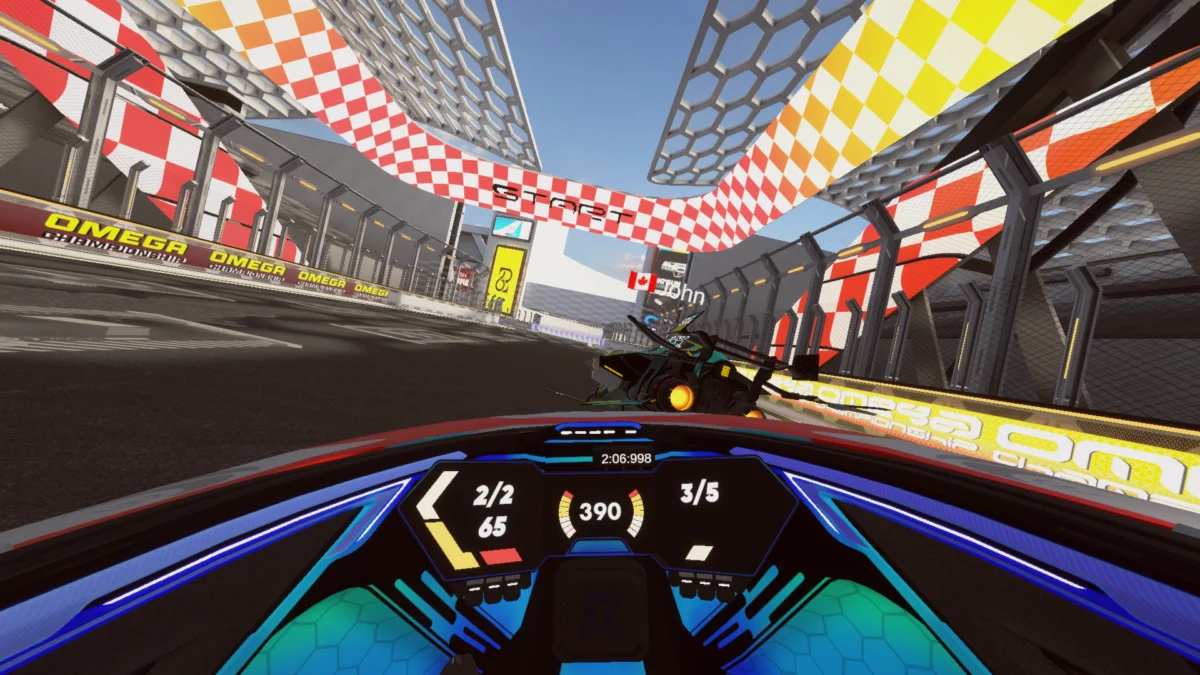
- The Core Verdict: While delivering breathtaking 300-mph momentum reminiscent of classic futuristic arcade racers like Wipeout and F-Zero, the game is ultimately held back by two critical design flaws: incoherent weapon feedback and an uninspired stat-upgrade progression system.
Chronology: The Evolution of High-Speed VR Racing
Virtual reality has long struggled with a fundamental design paradox: how to deliver the heart-pounding, adrenaline-fueled velocity of arcade racing without triggering debilitating motion sickness in the player. Historically, developers have had to severely pace down their titles, utilizing fixed-rail movements, heavily restricted cockpit views, or aggressive comfort filters that rob the genre of its core appeal.
When XOCUS announced Omega Pilot Evolution, the studio took on the immense challenge of bridging this gap. Aiming to marry the chaotic, neon-drenched aesthetic of futuristic cityscapes blended with oversized, mythic Greek architecture, the developers sought to engineer a true high-velocity cockpit simulator for modern VR hardware.
The title rolled out across major platforms in late 2026, launching first on PlayStation VR2 in August, followed by SteamVR in mid-September, and arriving on the Meta Quest ecosystem on September 24, 2026. Priced accessibly at $19.99, it offered a robust menu of content right out of the box, including 27 distinct tracks, a career/time trial mode, grand prix series events, bot-driven arena battles, and competitive online multiplayer. However, as players strapped into their virtual cockpits and hit the tarmac, the chronological journey from awe-inspiring velocity to mechanical frustration became quickly apparent.
Supporting Data & Mechanics
Handling and Control Physics
Omega Pilot Evolution treats your vehicle less like a traditional ground-bound automobile and more like an agile, tethered aircraft navigating a magnetic chute.
- Acceleration & Braking: Handled via the controller triggers (right trigger for gas, left trigger for brake).
- Steering: Players grip a virtual joystick in front of them with either controller, pulling side-to-side to shift trajectories.
- Drifting Dynamics: Mastering the physics engine requires a delicate balance of braking through turns. Simply slamming the acceleration down will inevitably result in clipping walls. Holding the brake while executing sharp turns tightens your vehicle’s cornering radius, creating a steep skill ceiling that rewards precise timing.
- Additional Inputs: The Quest 3 controller’s "A" button unleashes Nitro speed boosts, while the "B" button handles offensive/defensive weaponry.
Game Modes
- Career Mode / Time Trials: Serving as the foundation of the experience, this mode allows players to learn individual tracks uninhibited by aggressive artificial intelligence or random weapon drops.
- Series Mode: A traditional Grand Prix structure where players compete across consecutive races against bots to accumulate points and secure podium finishes.
- Bot Races & Arena Battles: Combines standard racing configurations with combat-heavy layouts.
- Online Multiplayer: Pits human drivers against one another in high-speed lobbies.
Comfort and Accessibility
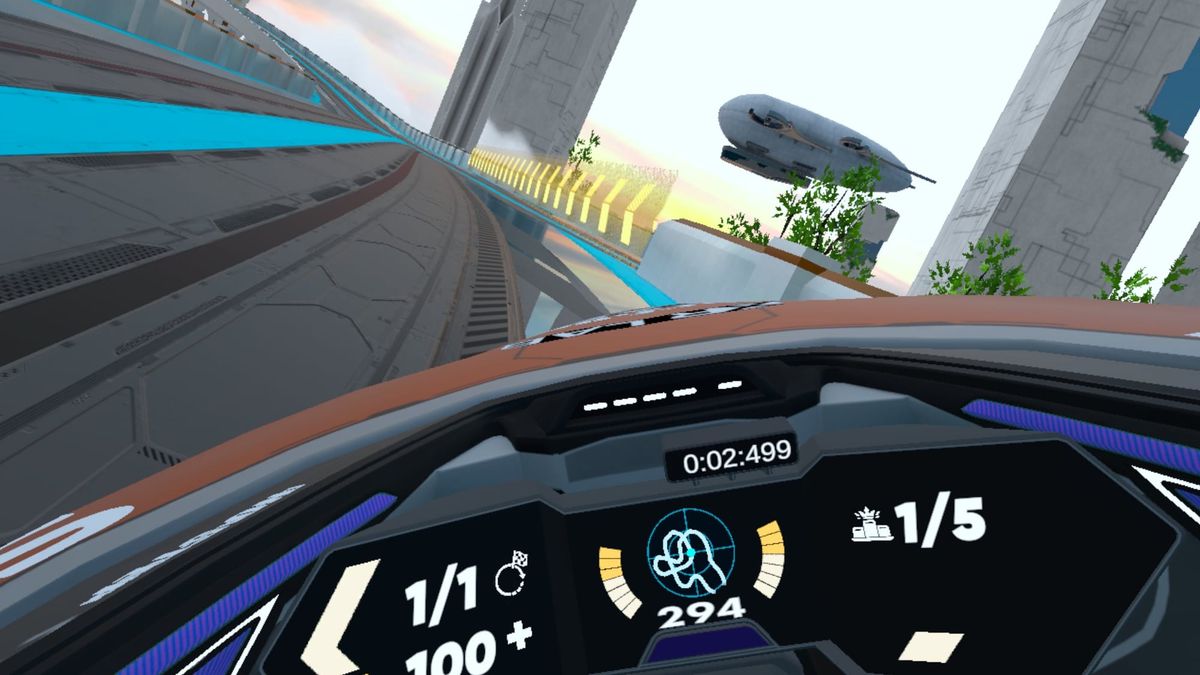
Designed to be played entirely in a stationary position, Omega Pilot Evolution addresses VR comfort by allowing players to scale down the aggressive visual tilting of the vehicle during sharp turns via the settings menu. Despite reaching simulated speeds of up to 300 miles per hour, XOCUS has engineered a relatively stable headset experience—provided players are reasonably adapted to virtual motion.
Official Responses & Developer Intent
XOCUS set out to prove that intensive, white-knuckle racing could exist natively within standalone and tethered VR ecosystems without sacrificing visual fidelity or frame rates. In pre-launch statements, the development team emphasized their goal of creating an uncompromising arcade racer that would test the reflexes of veterans and newcomers alike.
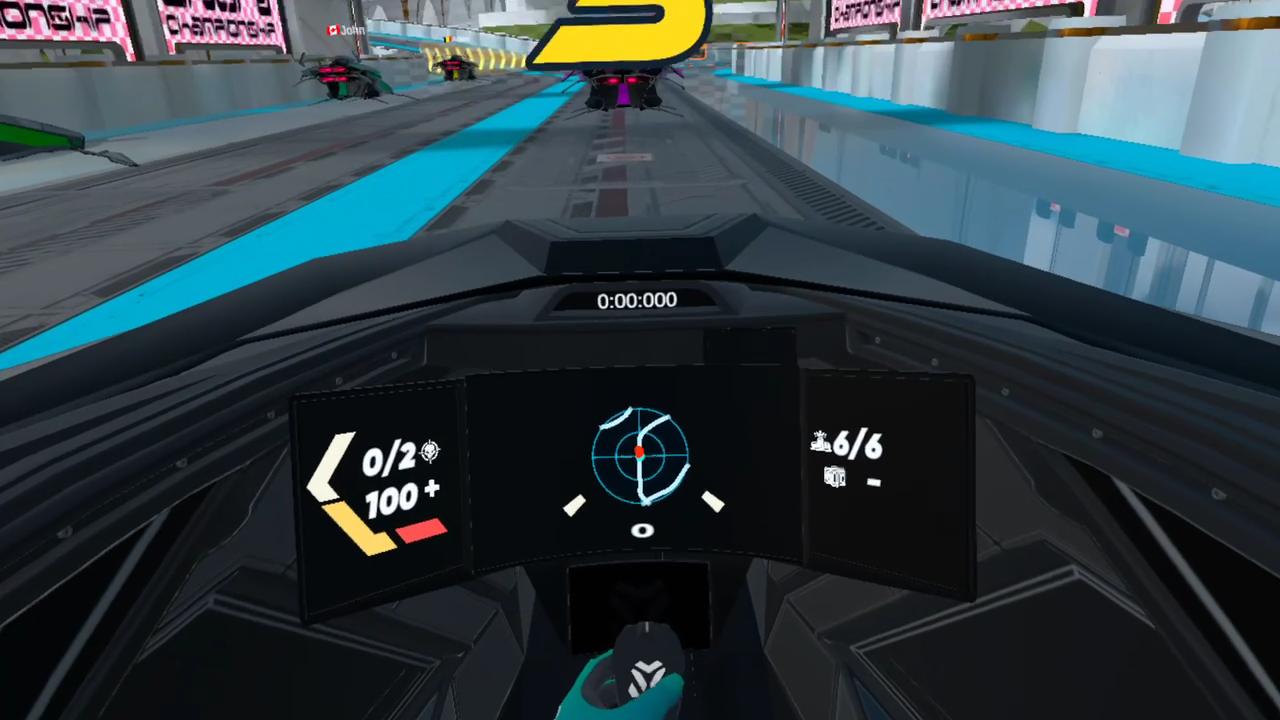
While the studio successfully captured the visceral thrill of hurtling through futuristic urban environments at breakneck speeds, player community feedback and critical reviews have highlighted a stark disconnect between XOCUS’s arcade combat vision and actual user experience. The absence of a thorough onboarding tutorial or guided training module was a deliberate choice to let players "sink or swim," but it has inadvertently created an unnecessarily punishing barrier to entry. Furthermore, the studio’s implementation of randomized item boxes—meant to inject chaotic party-game energy into the races—has instead drawn heavy scrutiny due to its complete lack of visual and audio feedback.
Implications for the VR Racing Genre
The release of Omega Pilot Evolution carries significant implications for the future of arcade racing development in virtual reality. It serves as both a triumphant milestone and a cautionary tale.
1. The Triumph of Pure Velocity
On the positive side, XOCUS has demonstrated that high-speed, 300-mph VR racing can be achieved comfortably on modern hardware without widespread motion sickness. The game’s 27 tracks showcase brilliant environmental design, successfully merging cyberpunk aesthetics with classical antiquity. For purists who stick strictly to Time Trial modes, the title offers an engaging, skill-based sandbox that justifies its budget-friendly price point.
2. The Pitfalls of Randomized Combat Feedback
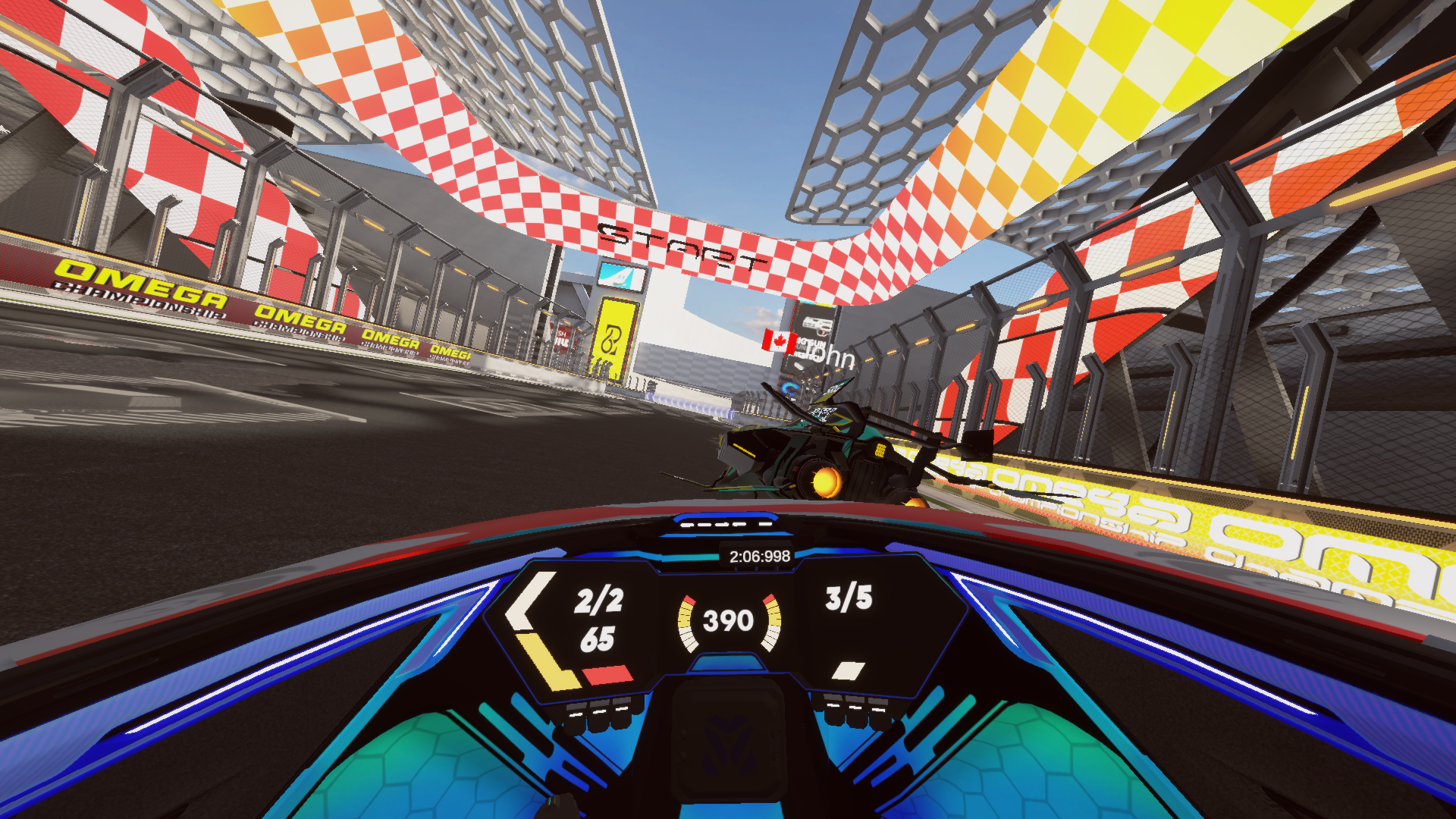
Conversely, the game underscores a vital design rule for VR game developers: immersion requires immediate, legible feedback. When weapon systems fail to communicate their state—such as mines blending invisibly into the track, or long-range arcing weapons leaving the player entirely in the dark regarding their trajectory and impact—the gameplay shifts from challenging to profoundly frustrating. Being caught in an inescapable respawn loop due to invisible or poorly telegraphed rocket fire shatters player agency, proving that chaotic arcade mechanics do not automatically translate well to first-person virtual reality.
3. Flawed Progression and Player Skill
The choice to utilize a monetary upgrade system rather than distinct, balanced ship classes also damages the integrity of competitive racing. When personal best times are dictated by how many grinded credits have been poured into raw engine upgrades rather than pure driver proficiency, the intrinsic reward of self-improvement is muddied. Players are left questioning whether a new record was earned through skill or simply bought.
Final Takeaway
Omega Pilot Evolution proves that the engine beneath the hood is capable of delivering top-tier VR racing thrills. However, until developers refine their combat feedback loops and rethink how player progression interacts with skill expression, racers would do well to mute the weapons, bypass the upgrade grind, and stick strictly to the solitary purity of the time trials.

