

By Global Gaming Desk
Published: November 2023
Main Facts
- Strategic Shift: Embark Studios, the developer behind the third-person shooter Arc Raiders, has officially moved away from a frequent, monthly patch model in favor of a major, tentpole content cycle running approximately every six months.
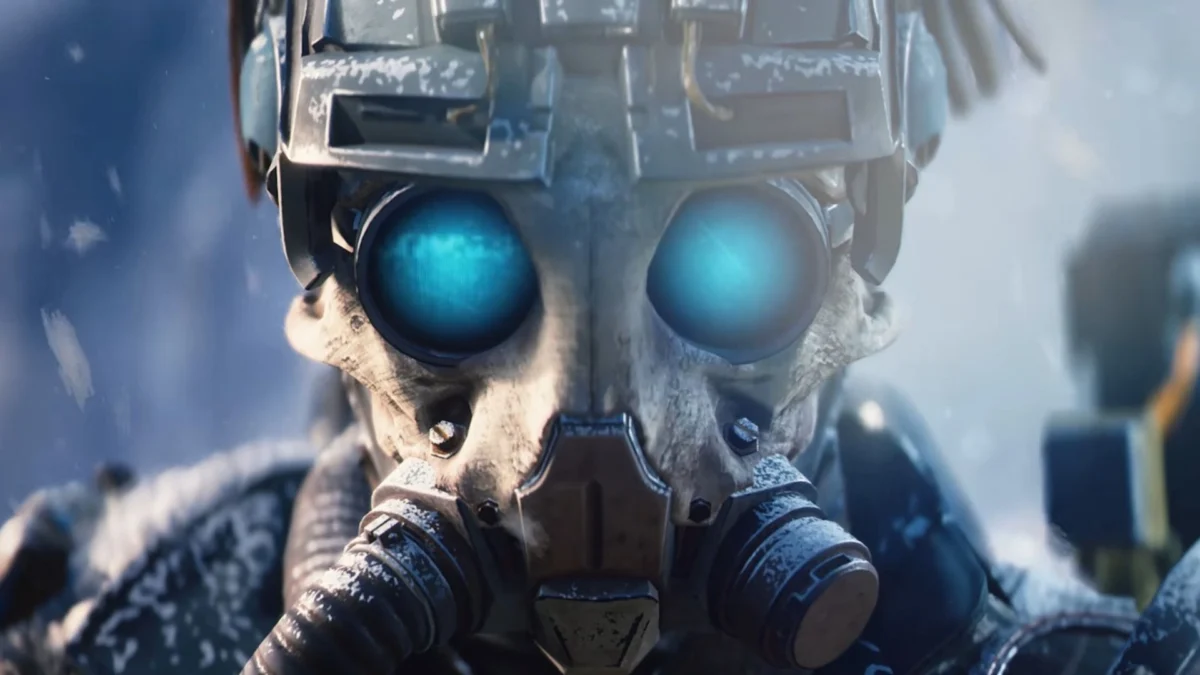
- The "Frozen Trail" Update: Serving as the flagship launch for this new paradigm, the upcoming Frozen Trail update functions as a soft relaunch for the live-service title following months of comparative quiet.
- Anticipated Dips: Leadership at Embark Studios openly acknowledged that they deliberately courted a decline in concurrent daily players (CCU) and Steam chart visibility during the transition period, prioritizing long-term game health and development quality over immediate metric chasing.
- Developer Burnout Mitigation: According to Executive Producer Aleksander Grøndal, the shift was heavily requested by the development team, who found the unsustainable pursuit of perpetual updates to be counterproductive to their creative output and overall studio well-being.
- Live-Service Realities: Acknowledging the towering presence of industry giants within the live-service landscape, Embark has chosen to play to its distinct creative strengths rather than attempting to out-content larger, better-resourced competitors.
Chronology: The Evolution of Arc Raiders’ Development Pipeline
The journey of Arc Raiders from its initial high-profile conceptualization to its current status as a refined live-service experience has been defined by rapid adaptation and internal recalibration.
The Early Phases and Initial Launch
When Arc Raiders initially burst onto the scene, it captured the industry’s imagination with its striking aesthetic, immersive third-person shooting mechanics, and tense cooperative survival loops. Like many modern multiplayer titles, its early days were characterized by massive player acquisition spikes, followed by the inevitable normalization of concurrent user metrics. During this honeymoon phase, the development team fell into the industry-standard trap of trying to maintain perpetual momentum through continuous, rapidly deployed updates.
The Maintenance Quagmire
As the game settled into its live-service lifecycle, the reality of maintaining an online multiplayer ecosystem began to severely tax Embark Studios’ internal capacity. Bug fixes, server integrity maintenance, and minor hotfixes consumed the vast majority of the team’s working hours. According to Executive Producer Aleksander Grøndal, the residual time left over for crafting meaningful, high-impact content was drastically reduced. The studio realized that constantly putting out spot-fires was actively preventing them from moving the needle on major features.
The Six-Month Pivot and the "Frozen Trail" Relaunch
In response to production bottlenecks and mounting team fatigue, Embark made a calculated executive decision: halt the relentless cadence of minor patches and return to a structured, milestone-driven development cycle reminiscent of their earlier prototyping phases. This pivot laid the groundwork for Frozen Trail. Positioned as a comprehensive overhaul and virtual relaunch, the update represents the inaugural test of Embark’s new semi-annual content delivery model. By consolidating resources and giving major expansions "room to cook," the studio hopes to reset the player experience while simultaneously safeguarding the health of its workforce.
Supporting Data & Industry Context: Navigating the Steam Charts Microscope
In the modern gaming ecosystem, few tools exert as much psychological and financial influence over developers as public metrics dashboards, most notably Steam Charts. For titles like Arc Raiders, fluctuations in concurrent user (CCU) counts are frequently weaponized by internet discourse, turning normal post-launch player retention curves into flashpoints for speculation about a game’s health.
The Burden of Public Metrics
Grøndal candidly addressed the psychological toll that public player counts take on a development studio, even when a game is objectively performing well. While developers understand that player numbers naturally taper off from peak launch figures—as players complete core content and rotate to other titles—seeing those declines picked apart under public scrutiny is never an easy pill to swallow.
Industry figures across the board have increasingly pushed back against this metric-obsessed culture. Figures like the lead developers behind breakout hits like Palworld have previously highlighted a widespread public misunderstanding of how player retention naturally works in modern gaming. Despite this industry-wide awareness, studio executives still bear the burden of managing morale when the community reacts to expected dips in daily active users.
Deliberate Attrition for Long-Term Gain
What sets Embark Studios’ current strategy apart is its proactive embrace of these metrics dips. By intentionally slowing down the release of minor patches to focus engineering efforts on massive updates like Frozen Trail, leadership knew they were inviting a temporary lull in player engagement.
- The Trade-Off: Accept a temporary valley in CCU numbers in exchange for the engineering bandwidth required to build transformative, high-quality expansions.
- The Goal: Re-engage both lapsed and core players with substantial, game-changing content drops every six months, rather than trickling out superficial tweaks that fail to move the needle.
Official Responses: Inside Embark Studios’ Decision-Making
Speaking candidly with industry media, Executive Producer Aleksander Grøndal offered a transparent look into the philosophy driving Arc Raiders’ current iteration. Rather than chasing unattainable industry standards, Embark is doubling down on authenticity and internal sustainability.
Sticking to Institutional Guns
"Of course, as developers we look at all our numbers and discuss what we want to do, what are the things we can look into, what are some of the challenges we’re facing," Grøndal explained when discussing the studio’s data-driven reviews. "We’re constantly doing that. At the same time, when we did the change of the update cadence, we also accepted the fact that we would have less players over a period of time, with the hope that we could reengage those players with more interesting pieces of content like Frozen Trail. So we were kind of aware of it."
Addressing the emotional impact of watching player counts decline during the development lull, Grøndal admitted that it is a stressful experience for any team:
"Of course, it’s not something that you look at and go, ‘Oh, that feels great.’ That’s not what I’m saying. But at the same time, you have to stick to your guns a bit when you make a decision. This is what we’re going to do, and you have to believe that’s the right approach. And, of course, we hope that works out."
Escaping the "Infinite Content" Trap
Grøndal was particularly vocal about the fallacy of the "infinite content" model that dominates modern live-service game design. Many mid-sized and AAA studios exhaust themselves attempting to match the sheer content-output velocity of multi-studio behemoths—a race that Grøndal notes Embark has no intention of running.
"We always try to think about doing things from the Embark perspective," Grøndal said. "I mean, we can’t necessarily compete with the amount of stuff that some of the large games out there can [do]. We’re just not that large."
Instead, the team looked inward to discover what made Arc Raiders successful in the first place:
"Rather, what got us here in the first place was the trust in our own instincts and trust in trying to make decisions that make the most sense for the game and for the developers and for our business. We got to Arc Raiders in the first place doing that, so we should continue doing what we’re good at, and kind of accepting that that will come with some drawbacks. Of course, that’s not a perfect solution. I’m not suggesting that. But we have to play to our strengths."
Implications for Arc Raiders and the Live-Service Landscape
The strategic pivot executed by Embark Studios carries profound implications not only for the future of Arc Raiders but also for the broader conversation surrounding live-service game development.
1. A Blueprint for Sustainable Studio Culture
By prioritizing team well-being and acknowledging that developers cannot—and should not—work under the crushing pressure of endless, weekly content cycles, Embark is setting a progressive precedent. The decision to return to a six-month milestone cadence demonstrates that studio leadership is willing to risk short-term public relations challenges to preserve the mental health and creative efficacy of their workforce. If Frozen Trail successfully revitalizes the game’s player base, it could serve as a valuable blueprint for other mid-sized studios looking to escape the live-service burnout treadmill.
2. Redefining Player Expectations
The gaming public has long been conditioned to expect weekly roadmaps, constant communication, and infinite scaling from online multiplayer games. Embark’s open messaging—including the refreshing sentiment that it is entirely acceptable for players to step away, play other games, and return when new content drops—challenges this paradigm. By reframing Arc Raiders as a game meant to be experienced in substantial, highly rewarding bursts rather than a compulsory daily chore, the studio is fostering a healthier relationship between its community and its product.
3. The Test Ahead: Frozen Trail as a Litmus Test
Ultimately, the success of Embark’s strategy rests entirely on the execution and reception of the Frozen Trail update. If the semi-annual content drop successfully captures the imagination of the player base, brings back lapsed users, and stabilizes the game’s long-term retention metrics, it will validate the studio’s bold gamble. Should it fall flat, however, the studio may face renewed scrutiny over its reduced update frequency. For now, Embark Studios remains steadfast in its vision, proving that sometimes, taking a step back is the only way to leap forward.

