

By Gaming Desk
Published: October 2025
Main Facts
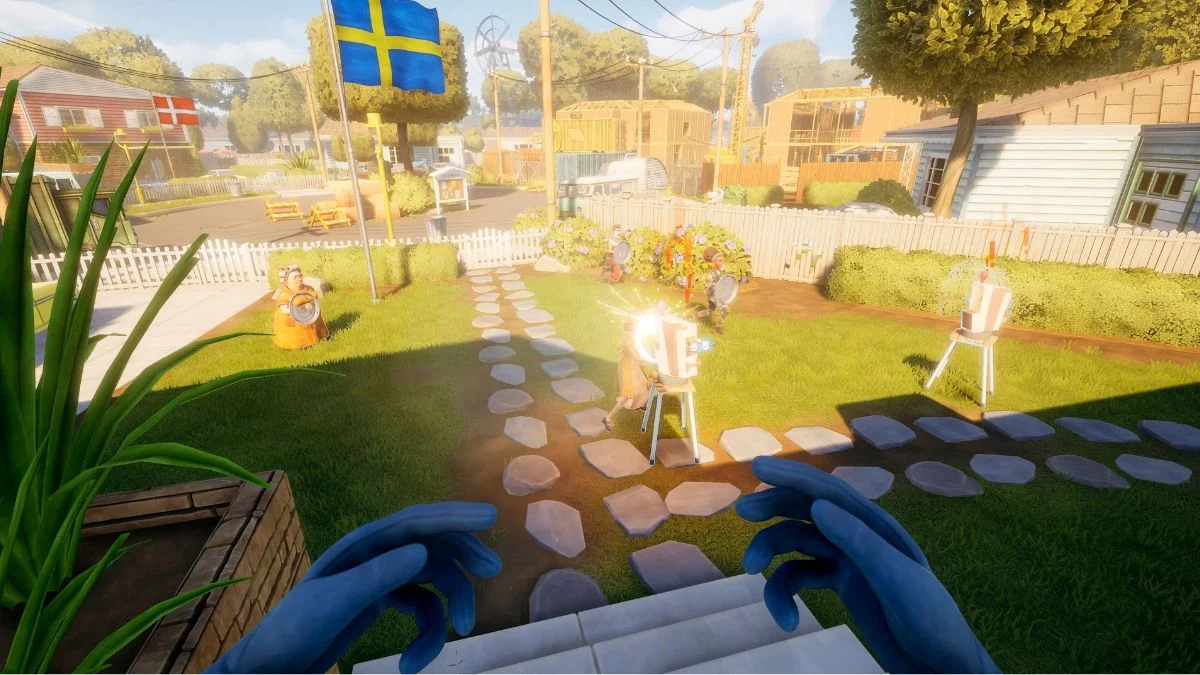
The modern gaming landscape is constantly evolving, with developers searching for fresh, accessible ways to capture player attention in an increasingly saturated market. Enter Neighbors: Suburban Warfare, a vibrant, chaotic, and completely free multiplayer party brawler that has officially arrived on current-generation hardware. Available now for digital download on the PlayStation Store for PlayStation 5, as well as on Xbox Series X|S and PC platforms, the title invites players to turn idyllic neighborhood squabbles into apocalyptic levels of property damage.
Developed with a focus on fast-paced, physics-driven multiplayer amusement, Neighbors: Suburban Warfare has already managed to turn heads within the gaming community. Since its landing on the PlayStation Store, the game has accumulated a strong user reception, boasting an impressive 4.38 out of 5-star rating from early adopters. This positive score reflects an enthusiastic initial player base drawn to its comedic premise, accessible gameplay mechanics, and cross-platform availability.
At its core, the game revolves around an exaggerated, satirical take on suburban life. Long-standing property line disputes, noise complaints, and over-the-top lawn care rivalries escalate into full-scale domestic warfare. Players must team up with friends to defend their meticulously manicured lawns and homesteads while simultaneously executing coordinated attacks to demolish their adversaries’ properties. Armed with an arsenal of makeshift household items—ranging from ordinary kitchen utensils to chaotic wildlife—participants must balance offensive demolition with defensive fortifications.
The transition of Neighbors: Suburban Warfare from a restricted early access title into a fully realized version 1.0 release has unlocked its complete vision. By shedding its early access tag and pivoting to a free-to-play model across all major platforms, the developers have effectively removed the barrier to entry, welcoming both casual party-game enthusiasts and competitive multiplayer fans alike into its delightfully destructive world.
Chronology of Development
The journey of Neighbors: Suburban Warfare from concept to a full cross-platform release is a testament to the modern iterative development cycle. Understanding how the game reached its current version 1.0 status provides valuable context for its current state of polish, community engagement, and feature richness.
The Conceptual Phase and Early Testing
Long before its public debut, the foundational idea for Neighbors: Suburban Warfare was born out of a desire to blend the chaotic physics of party brawlers with the relatable, everyday humor of suburban life. The developers recognized a gap in the market for a multiplayer game that combined property destruction mechanics with accessible, pick-up-and-play mechanics reminiscent of classic couch co-op titles, but modernized for online matchmaking.
The Early Access Launch (April 2025)
In April 2025, Neighbors: Suburban Warfare officially entered its early access phase. This period served as a crucial testing ground for the development team. Early access allowed the studio to stress-test servers, gather vital player feedback regarding weapon balancing, and observe how communities interacted with the initial suite of characters and maps.
During this multi-month developmental window, the game received several incremental updates. These patches introduced new improvised weapons, refined the physics engine to make property destruction more satisfying, and expanded the roster of playable characters, each equipped with distinct tactical playstyles. The transparent communication between the developers and the early adopter community helped sculpt the foundational experience into a much more stable and engaging product.
The Version 1.0 Milestone (September 30, 2025)
The definitive turning point in the game’s lifecycle occurred on September 30, 2025, when Neighbors: Suburban Warfare officially transitioned from early access to its version 1.0 release. This major milestone marked the rollout of the complete, intended feature set, including finalized game modes, a polished character selection system, optimized performance across all platforms, and the official pivot to a free-to-play distribution model.
By dropping the paywall and expanding its reach simultaneously to PlayStation 5, Xbox Series X|S, and PC users, the developers ensured that the version 1.0 launch would be met with an influx of fresh players ready to test the newly balanced mechanics and expanded map pool.
Supporting Data and Gameplay Mechanics
To truly understand why Neighbors: Suburban Warfare has captured a 4.38/5 rating on the PlayStation Store, one must examine the intricate mechanics, mode variety, and sandbox elements that define its gameplay loop.
Character Selection and Squad Building
The game encourages strategic depth long before the first punch is thrown or the first fence is torn down. Players can choose from a diverse roster of quirky suburban archetypes, each bringing a unique set of abilities, passive traits, and movement mechanics to the battlefield. Whether players prefer a fast, agile character adept at stealthy infiltration or a heavy-duty brawler designed for brute-force property demolition, squad composition matters. Before entering a match, friends must coordinate their character choices to ensure a balanced team capable of both offensive raids and defensive lockdown.
The Arsenal: "Anything Can Be a Weapon"
One of the most heavily promoted design philosophies of Neighbors: Suburban Warfare is the mantra that "anything can be a weapon." Eschewing traditional military hardware or sci-fi weaponry, the game embraces domestic absurdity. Players can arm themselves with everyday items found in garages, kitchens, and backyards:
- Frying Pans: Ideal for close-quarters melee combat and staggering rival neighbors.
- Slingshots: Perfect for ranged harassment and breaking windows from a distance.
- Golf Clubs: Offering sweeping area-of-effect damage to clear out invading squads.
- Tomatoes: Used as throwable projectiles to obscure enemy vision or distract opponents.
- Flocks of Seagulls: Perhaps the most chaotic environmental weapon available, allowing players to weaponize wildlife that can coordinate aerial bombardments of sticky, disruptive droppings onto enemy properties.
Comprehensive Game Modes
Variety is a cornerstone of the Neighbors: Suburban Warfare experience, keeping matches fresh through four distinct gameplay modes:
- Destruction Mode: The ultimate test of architectural sabotage. In this mode, teams face off with a singular, primary objective: completely dismantle and demolish the opposing team’s house before they can do the same to yours. Players must utilize heavy items, structural weak points, and specialized tools to level walls, smash roofs, and reduce suburban dream homes to rubble.
- Brawl Mode: For players looking for pure, unadulterated combat without the architectural distractions, Brawl mode strips away the houses entirely. There are no properties to defend and no rules to follow—just raw, chaotic hand-to-hand combat where the goal is to knock out opposing neighbors through sheer force and agility.
- Prop Hunt Mode: A beloved multiplayer staple reimagined through a suburban lens. In Prop Hunt, one team of players disguises themselves as everyday household and garden objects—ranging from garden gnomes to lawnmowers—blending seamlessly into the environment. The opposing team must actively hunt down and unmask the disguised players before time runs out, creating tense, humorous moments of hide-and-seek.
- Robot Invasion Mode: Shifting the focus from player-versus-player conflict to cooperative survival, Robot Invasion mode unites squads against a common enemy. Players must pool their resources, coordinate their defenses, and use their entire arsenal of improvised weapons to fend off waves of automated robotic intruders bent on destroying the neighborhood.
Official Responses and Developer Insights
The reception of Neighbors: Suburban Warfare has elicited strong reactions from both the development studio and the broader gaming community. In official press statements accompanying the version 1.0 launch and free-to-play rollout, the studio emphasized their commitment to delivering a fun, stress-relieving multiplayer experience that does not take itself too seriously.
According to the official game description provided by the developers:
"Neighbors: Suburban Warfare is a chaotic multiplayer party brawler where everyday neighbors turn lawn disputes into full-blown house-destroying mayhem. Team up with friends to defend your home, use whatever you can grab, from frying pans to slingshots, [and] destroy your neighbor’s property before they destroy yours."
Community managers have echoed these sentiments across social media channels and PlayStation Store forums, expressing gratitude for the constructive feedback received during the April 2025 early access phase. The development team noted that player testing directly shaped the refinement of the physics engine and the introduction of community-requested features, such as the inclusion of the cooperative Robot Invasion mode and expanded prop options for Prop Hunt.
Player response, as evidenced by the stellar 4.38/5 store rating, highlights an overwhelming appreciation for the game’s accessibility. Reviewers and content creators have praised the studio for opting for a free-to-play model, noting that it drastically lowers the barrier to entry for friend groups looking for a new game to play together on Friday nights without financial commitments.
Implications for the Multiplayer Party Genre
The successful launch of Neighbors: Suburban Warfare on PlayStation 5, Xbox Series X|S, and PC carries several notable implications for the broader gaming industry, particularly within the competitive and party brawler genres.
The Power of Free-to-Play Accessibility
In an era where AAA gaming budgets continue to balloon and retail prices for standard editions frequently reach $70, the decision by indie and mid-tier developers to adopt a free-to-play model is becoming an increasingly viable strategy for multiplayer longevity. By removing the upfront financial barrier, Neighbors: Suburban Warfare has engineered a healthy, active player pool across multiple platforms from day one. This high player density is crucial for matchmaking in party-focused titles, ensuring that lobbies remain populated and queue times short.
Cross-Platform Play and Community Unity
The availability of the title across PlayStation 5, Xbox Series X|S, and PC underscores the industry’s ongoing shift toward cross-platform integration. Allowing players regardless of their hardware preference to team up or compete against one another prevents community fragmentation. For console owners, particularly on PlayStation 5, having access to polished, highly rated multiplayer titles on launch day enriches the platform’s ecosystem and offers a lighthearted alternative to gritty, high-stakes shooters and complex role-playing games.
The Demand for Casual, Physics-Based Humor
The strong 4.38/5 user rating on the PlayStation Store signals a sustained consumer appetite for lighthearted, physics-driven sandbox games. While hyper-realistic graphics and sprawling open-world epics dominate headlines, titles that prioritize pure, unadulterated fun, emergent gameplay moments, and cooperative chaos consistently carve out dedicated, passionate communities. The ability to weaponize seagulls, turn lawn gnomes into secret combatants, and systematically demolish a friend’s virtual home provides a unique brand of cathartic entertainment that resonates deeply with modern gamers.
As Neighbors: Suburban Warfare continues to grow post-launch, its future hinges on the developers’ ability to maintain a consistent cadence of content updates, seasonal events, and community-driven balancing. If the early response from PlayStation 5, Xbox, and PC players is any indication, the suburban battlegrounds are going to remain packed with chaotic homeowners for a long time to come.

