

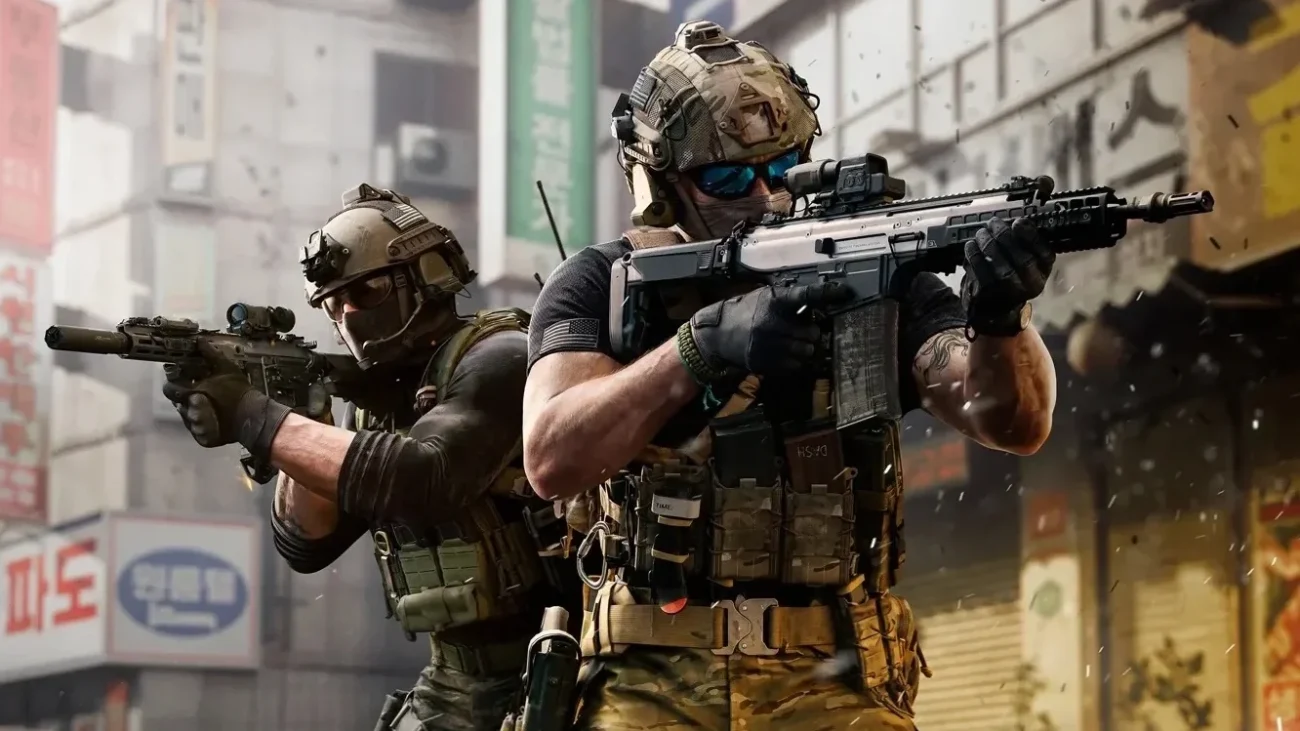
For Activision, the stakes surrounding Call of Duty: Modern Warfare 4 (MW4) could not have been higher. Following the tepid reception and commercial underperformance of last year’s Black Ops 7—which saw player engagement metrics plummet to half their previous levels within a single year—the industry was left wondering if the long-running military shooter had finally exhausted its cultural capital.
However, early critical consensus suggests that Infinity Ward has successfully orchestrated a comeback. With a robust Metacritic score of 84 and widespread praise for its refined mechanics, MW4 is being hailed as a definitive "return to form." By balancing the cinematic spectacle of the rebooted Modern Warfare trilogy with a renewed focus on technical polish and innovative multiplayer modes, the studio has signaled that the franchise is far from finished.
Chronology of a Turnaround: From Crisis to Redemption
The trajectory of Modern Warfare 4 is inextricably linked to the struggle of its predecessor. Black Ops 7 was marred by fragmented design and technical inconsistencies, leading to a significant exodus of the core player base. Data from market analysts at GamesIndustry.biz highlighted a concerning trend: player retention had halved in just twelve months, forcing Activision to re-evaluate its aggressive release strategy and focus on long-term stability.
Infinity Ward’s response was to pivot toward a more deliberate, polished experience. The development cycle for MW4 focused on closing the narrative loop of the rebooted Modern Warfare sub-series while modernizing the "boots-on-the-ground" feel that long-time fans have craved.
The launch of MW4 also marks a historic milestone: it is the first mainline Call of Duty title to arrive on a Nintendo platform since 2013. Tasked with the ambitious port, Digital Legends successfully navigated the technical hurdles of the Switch 2, delivering a "full-fat" experience that maintains cross-platform parity, proving that the franchise’s engine can scale effectively across disparate hardware.
Story Campaign: A Thrilling, If Uneven, Geopolitical Epic
Modern Warfare 4 picks up in the immediate aftermath of the previous title, thrusting players into a high-stakes fictional conflict between North and South Korea. Critics have lauded the campaign for its sheer kinetic energy.
Keith Stuart of The Guardian described the experience as a "bombastic, thrilling airport novel of a game," noting that the six-hour campaign is a relentless sequence of set pieces—ranging from parkour sequences over Manhattan skyscrapers to high-speed vehicular chases through the streets of Paris.
IGN’s Simon Cardy noted that while the story’s direction is predictable, the character-driven moments involving Captain Price provide the emotional anchor the series has lacked for years. However, not all critics were enamored with the pacing. Game Informer’s Michael Murphy observed that while the campaign works as a conclusion to the rebooted arc, it occasionally "rushes through character arcs and story beats in an uneven fashion."

A notable departure from traditional linear corridors is the inclusion of "open-zone" missions, which borrow heavily from the Phantom Pain-inspired mechanics seen in recent titles. Players are encouraged to forage for resources, build outposts, and craft equipment. While this adds tactical depth, Cardy pointed out that the game struggles when it forces players into "unforgiving stealth segments" or an "imprecise counter-based melee system," which can prove frustrating during pivotal emotional beats.
Gameplay Mechanics: Refinement Over Revolution
The core gunplay in MW4 remains the industry benchmark. The tactile satisfaction of movement—the transition from a sprint to a slide and the weight of weapons—feels deliberate and responsive. Infinity Ward has prioritized "naturalistic" movement, steering away from the hyper-kinetic, floaty feel that characterized Black Ops 7.
Despite these successes, some technical friction remains. The "first-person thumping" during melee encounters can be disorienting, and certain enemy encounters, particularly against armored brutes, can feel like a test of patience rather than skill. Yet, when the game finds its groove, the fluidity of the combat remains unmatched.
Multiplayer: The Bread and Butter of Competitive Play
In the multiplayer arena, MW4 functions as a sophisticated refinement of the franchise’s established formula. While it lacks the extreme velocity of its predecessor, the design of maps—from the tight, claustrophobic corridors of "Nautical" to the sprawling, expansive combat zones of "Reactor U92"—ensures that gameplay remains fresh.
A standout addition is the "Kill Block" mode. This randomized training environment forces players to adapt to shifting landscapes and weapon loadouts, preventing the stagnation often found in competitive shooters.
However, not every mode hits the mark. Nintendo Life’s Gavin Lane noted that the 32v32 "Combat Outpost" mode felt repetitive, likening it to a "pinball" experience where players cycle between capturing and losing the same three points. For players seeking a more focused experience, standard modes like Team Deathmatch and Kill Confirmed continue to provide the competitive, "gun-ho" thrill that fans expect.
DMZ: The Future of the Franchise?
Perhaps the most significant addition to the Modern Warfare ecosystem is the DMZ extraction mode. In an increasingly crowded market—dominated by titles like Escape from Tarkov and Arc Raiders—DMZ represents Activision’s most serious attempt to capture the high-stakes, tension-driven extraction shooter audience.
Critics are largely impressed. Michael Murphy of Game Informer noted that the mode "impresses out of the gate," offering a level of replayability that the traditional campaign cannot match. The tension of managing resources while gambling on a final, high-risk extraction provides a psychological depth that elevates the mode beyond mere combat.

Whether DMZ can sustain its player base long-term remains the defining question. As Keith Stuart noted, "its success will depend on how many players Activision can attract and retain." The mode serves as a proof-of-concept for a potential shift in the franchise’s identity, suggesting that the future of Call of Duty may lie in these more emergent, sandbox-style experiences.
Supporting Data and Technical Performance
The technical accomplishment of MW4 cannot be overstated. On the Switch 2, the game runs at a stable 30fps for the campaign and targets 60fps for multiplayer. Digital Legends’ ability to maintain the "full-fat" Call of Duty experience on handheld hardware is a technical triumph.
While critics noted occasional "fuzzy presentation" and minor visual compromises, the core experience remains intact. Cross-progression and cross-play features further cement the title as a unified platform, effectively bridging the gap between console, PC, and handheld users.
Implications for the Industry and the Franchise
The successful launch of Modern Warfare 4 serves as a critical stabilization point for Activision. It proves that the franchise is still capable of producing a "prestige" military shooter that commands both critical respect and commercial interest.
However, the shadow of Grand Theft Auto 6 looms large. As the industry looks toward the next generation of massive open-world titles, the "gung-ho Hollywood fantasy" of Call of Duty faces a challenge in attracting new, younger audiences. The game’s reliance on the military-industrial complex as a narrative framework, while polished and cinematic, is a formula that has been repeated for two decades.
As the rebooted Modern Warfare sub-series reaches its conclusion, the question remains: what comes next? Does Activision double down on the extraction shooter mechanics of DMZ, or will they seek to reinvent the campaign structure entirely?
For now, Modern Warfare 4 stands as a testament to Infinity Ward’s ability to listen to player feedback and course-correct. By refining the fundamentals—gunplay, map design, and technical stability—and taking calculated risks with new modes, the developers have ensured that, for at least one more year, Call of Duty remains the titan of the first-person shooter genre.
It is a polished, loud, and undeniably thrilling sendoff for a series that has defined an entire generation of gaming. Whether it can maintain this momentum in the face of shifting market trends and massive upcoming competition will be the true test for Activision in the years to come.

