


As the Disgaea franchise pivots into the action-RPG genre with Disgaea Mayhem, expectations for technical polish have been high. Following the rocky launch of Disgaea 6 on Nintendo Switch and the more refined, stable experience of Disgaea 7, fans and critics alike have been watching NIS America closely. With the Western launch arriving next week across PlayStation 5, Nintendo Switch 2, Nintendo Switch, and PC, the burning question remains: Does Disgaea Mayhem maintain the upward trajectory of the series’ technical performance, or does it falter under the weight of its own ambition?
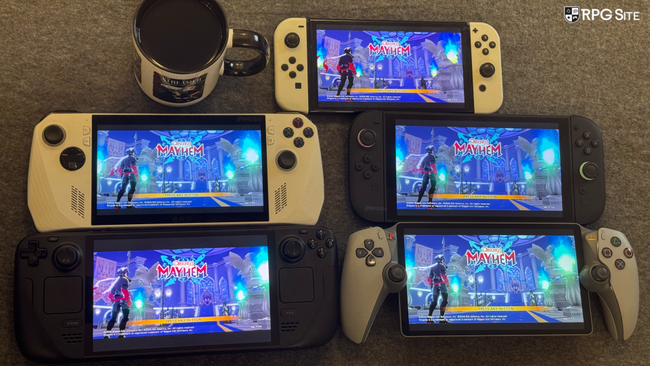
After extensive hands-on testing across every available platform—including the PS5, PS5 Pro, Switch OLED, Switch 2, Steam Deck, and ROG Ally—it is clear that Disgaea Mayhem presents a complicated landscape of performance hurdles, visual inconsistencies, and optimization challenges that potential players should weigh carefully before purchasing.
Main Facts: The State of Disgaea Mayhem
Disgaea Mayhem is scheduled for a Western release on July 23 for PlayStation 5, Nintendo Switch 2, Nintendo Switch, and PC via Steam. This title represents a departure from the traditional tactical-RPG roots of the series, opting for an action-RPG framework.

While NIS Japan has already released and patched the game in its home market, the Western version arrives as a delayed port. Disappointingly, there is currently no indication that the Western release will receive performance or visual improvements beyond standard bug fixes in the day-one patch. Consequently, the version arriving in the West is functionally identical to the one currently being played in Japan, meaning the technical shortcomings identified by early adopters are likely to persist at launch.
A Chronology of Technical Expectations
The Disgaea series has a storied history regarding its transition to 3D. Disgaea 6 famously suffered from severe performance issues on the Switch, struggling to maintain consistent frame rates. NIS addressed these criticisms with Disgaea 7, which featured much better optimization and a more stable visual presentation.
When Disgaea Mayhem was announced, the community hoped that the lessons learned from Disgaea 7 would be applied to this new action-focused spin-off. However, my testing suggests a step backward. The game’s visual design is deceptively simple; it utilizes flat levels with sparse foliage and limited draw distances. Despite this, the game’s performance across platforms suggests an underlying lack of optimization, as the visual fidelity does not seem to justify the high resource requirements on hardware like the Steam Deck.
Supporting Data: Visuals, Performance, and Load Times
To evaluate the game’s performance, I conducted a comprehensive series of tests. The following analysis breaks down the experience by platform and hardware configuration.
Graphics and Visual Fidelity
Visually, Disgaea Mayhem is a dated experience. Even at maximum settings on PC, the game fails to impress. The environments are characterized by poor draw distances and a lack of environmental complexity, which, ironically, makes the game look somewhat like a legacy title despite being developed for modern hardware.
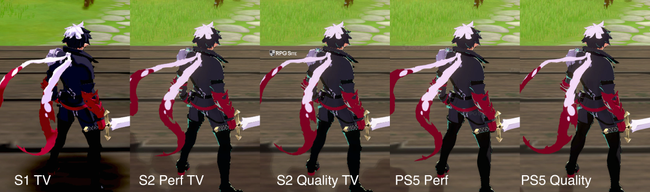
On the Switch 1, the experience is significantly compromised. Players will encounter drastic reductions in foliage density, shadow quality, and draw distance, resulting in an experience that feels a generation behind. The Switch 2 version fares better but still suffers from noticeable resolution drops and foliage pop-in compared to the PlayStation 5. Across all platforms, there appears to be a reliance on aggressive reconstruction or upscaling, which often results in distorted distant objects and poor post-processing artifacts.

Performance Benchmarks
Performance targets vary wildly by hardware:
- PlayStation 5 / PS5 Pro: The PS5 version offers a "Quality" and "Performance" mode. While the Performance mode targets 60fps, it still experiences minor dips. Only the PS5 Pro, through pure hardware brute force, provides a near-locked 60fps experience, as the game lacks specific Pro-enhanced optimizations.
- Nintendo Switch 2: This version defaults to a "Quality" mode that is, frankly, detrimental to the experience. It features an uncapped frame rate and heavy motion blur that can induce motion sickness. While it can hit 60fps when docked, it frequently fluctuates in the 40s. Switching to Performance mode is highly recommended, though it results in a significant visual downgrade.
- Nintendo Switch (Original): The game targets a 30fps experience. It is functional but, like its graphical fidelity, it is barely acceptable.
- PC and Handhelds: The PC version is arguably the most inconsistent. On the Steam Deck, the game suffers from poor frame times and hitches even at the lowest settings. The ROG Ally provides a better experience, though it remains too resource-heavy for a game of this visual caliber.
Load Time Comparison (in seconds)
| Platform | Dashboard to Title | Loading Save File |
|---|---|---|
| PS5 / PS5 Pro | 6-7 | 3-4 |
| Switch 2 | 10 | 4-5 |
| Switch 1 (on S2) | 10-11 | 6-7 |
| Switch 1 (Original) | 20-21 | 7-8 |
| Steam Deck | 15 | 4-5 |
| ROG Ally | 11-13 | 2-3 |
Official Responses and Developer Context
In my previous interview with the Disgaea Mayhem development team, we discussed the shift toward action-RPG combat and the challenges of adapting the Disgaea art style to real-time gameplay. While the team expressed enthusiasm for the mechanical changes, the reality of the porting process seems to have been more taxing than anticipated.
NIS America has maintained that the game is stable for launch, though they have been transparent that this is a direct port of the Japanese version. They have acknowledged that a day-one patch is incoming to address bugs, but they have remained silent on whether any major performance overhauls or graphical updates are in the pipeline. Players should manage their expectations accordingly: the game as it launches is essentially the "final" product for the foreseeable future.
Implications for Players and Potential Buyers
For prospective players, the decision to purchase Disgaea Mayhem depends heavily on which platform you own.
The Verdict on Platform Choice
- The Recommended Path: The PlayStation 5 remains the most stable way to experience the game. If you have access to a PS5 Pro, you will find the most consistent performance, though it is disappointing that the game does not leverage the extra power for visual enhancements.
- The PC Landscape: If you are a PC gamer, stick to a Windows-based desktop. While the ROG Ally can run the game adequately on lower settings, the current state of the game on Steam Deck via Proton is abysmal. The performance issues are too severe to recommend it for Valve’s handheld at this time.
- The Nintendo Dilemma: If you are playing on Nintendo hardware, the Switch 2 is the only viable option, and even then, only in docked mode using Performance settings. Handheld play on both the original Switch and the Switch 2 is severely compromised by frame rate instability and visual cuts.
Final Thoughts
Disgaea Mayhem is a title that feels caught between generations. It lacks the visual polish of a modern high-fidelity game, yet it struggles to run smoothly on hardware that should, in theory, handle it with ease. The reliance on heavy motion blur in the default "Quality" mode on consoles is a particular point of concern for players prone to eye strain or motion sickness.
If you are a die-hard fan of the Disgaea universe and want to see the characters in an action-RPG setting, the game is playable on high-end hardware. However, for those seeking a polished, optimized, and seamless experience, it might be worth waiting to see if subsequent patches can rectify the current performance instability. Before committing, I strongly suggest downloading the demo—if available—to test how these performance issues manifest on your specific hardware. The technical debt carried over from the Japanese release is significant, and until NIS America issues substantial performance-focused updates, Disgaea Mayhem remains a recommendation with major caveats.

