

Main Facts: The Battle for Budget Supremacy
When it comes to building or upgrading a PC gaming setup, the peripherals market has undergone a remarkable transformation. Features that were once exclusively locked behind premium, enthusiast-tier price tags—such as Hall effect switches, rapid trigger capabilities, and lightning-fast polling rates—are increasingly finding their way into budget-friendly offerings.
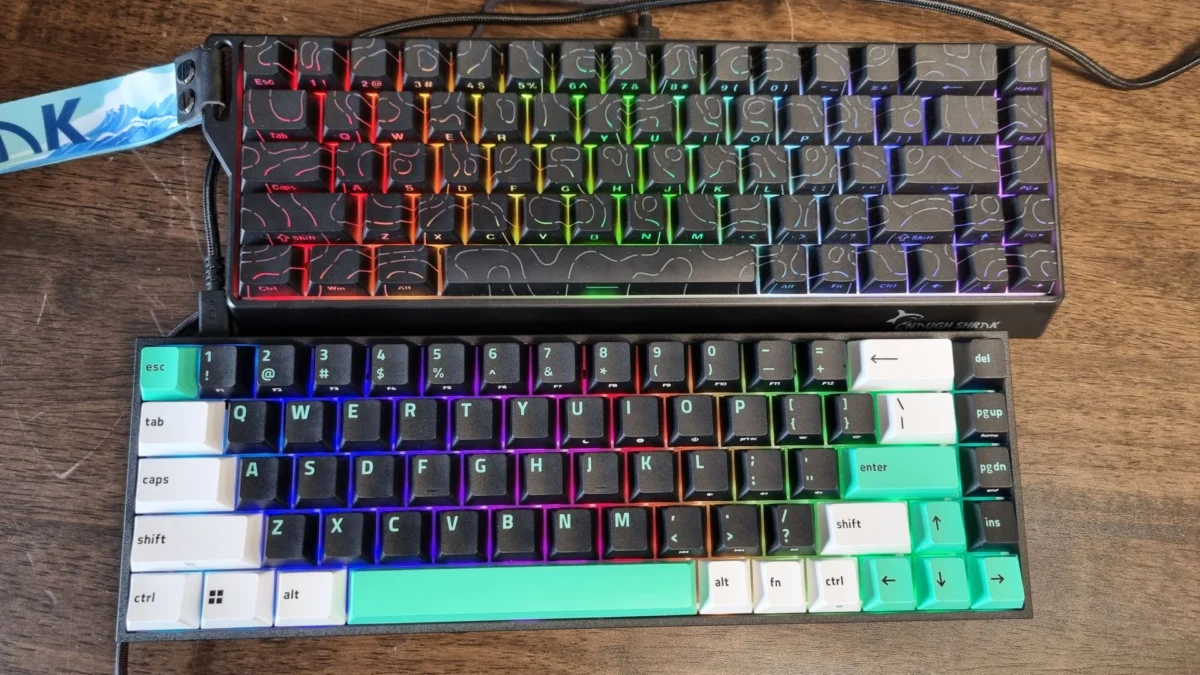
In this exhaustive hardware face-off, we pit two sub-$60 contenders against one another to determine which mechanical keyboard truly deserves a spot on your desk. In the left corner stands the Gamakay x NaughShark NS68, a critically acclaimed value champion loaded with cutting-edge magnetic switches and an 8,000 Hz polling rate. In the right corner is the Razer Reclusa X Mini 65%, a fresh-to-market challenger backed by a legacy brand, offering robust physical build quality, traditional mechanical switches, and a streamlined software ecosystem.
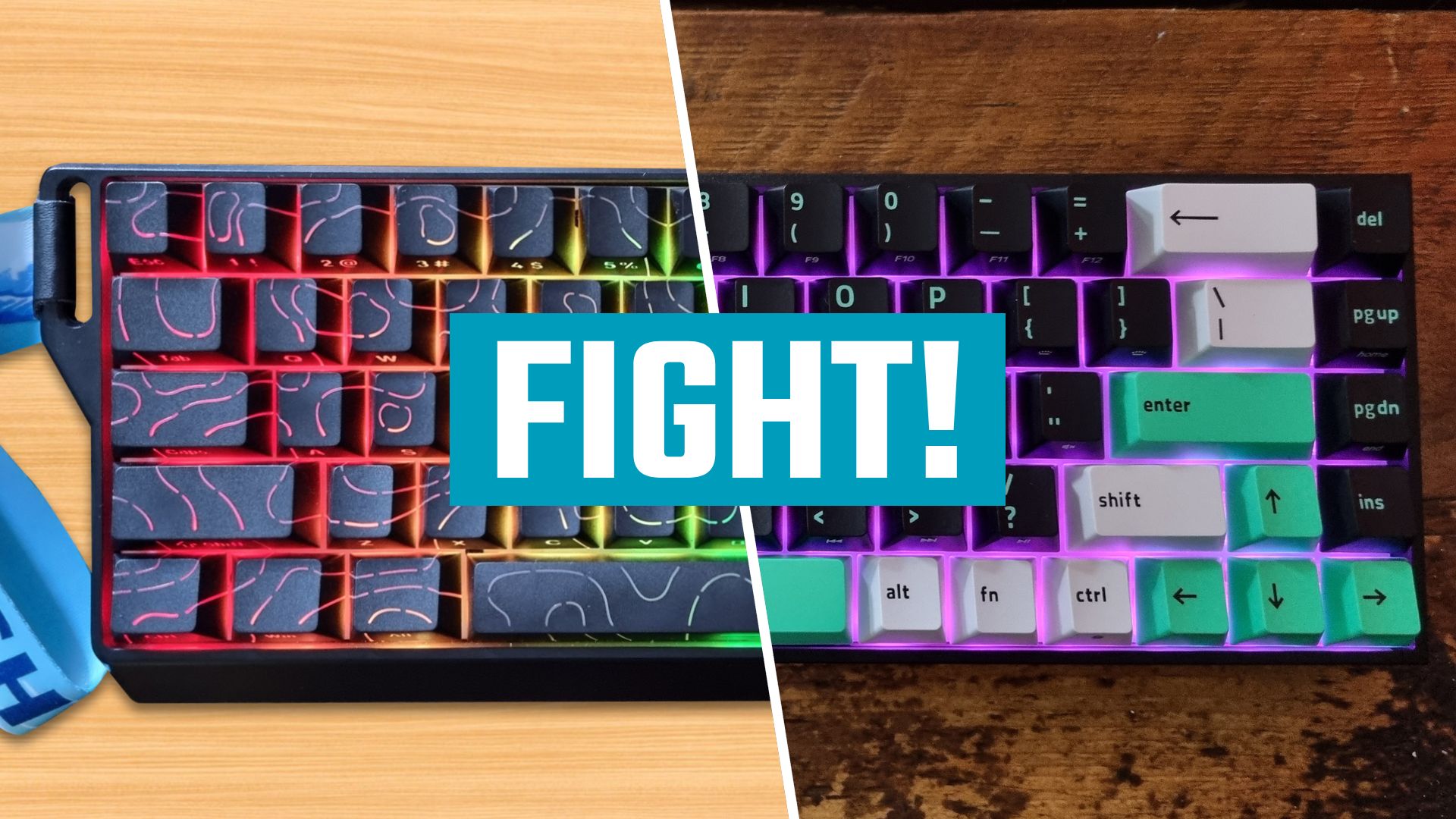
While the Gamakay x NaughShark NS68 commands attention with its tech-heavy spec sheet, the Razer Reclusa X Mini counters with superior ergonomics, mature aesthetics, and a tactile typing experience that defies its price point. This review breaks down both peripherals across five rigorous testing categories to determine which device emerges victorious.
Chronology: How the Contenders Entered the Ring
The journey of budget mechanical keyboards has accelerated dramatically over the past two years. Brands have transitioned from basic membrane alternatives to hot-swappable, custom-feeling boards that appeal to both casual players and competitive esports hopefuls.
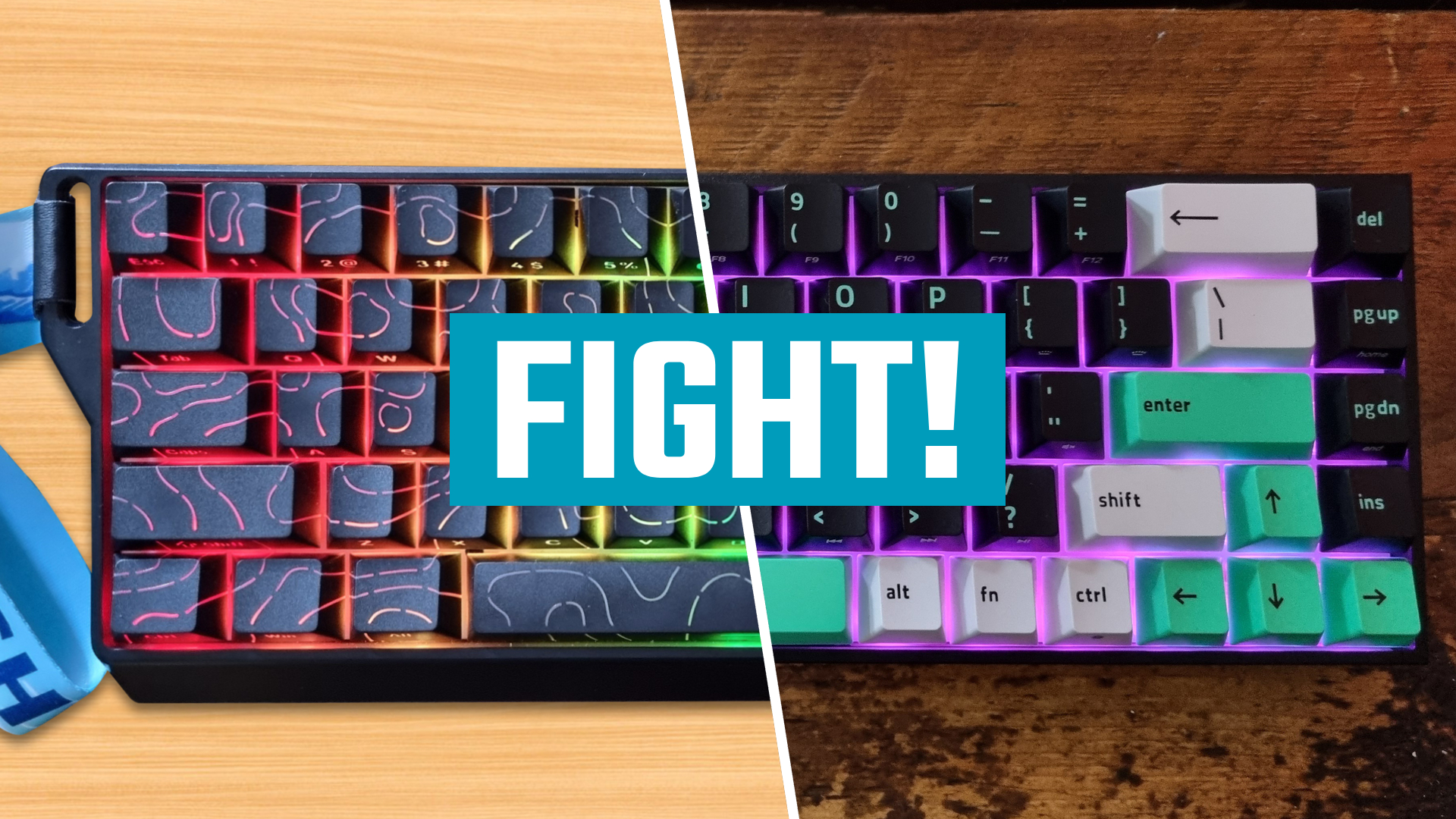
- The Rise of the NaughShark: The Gamakay x NaughShark NS68 first captured industry attention as a disruptive budget option, initially retailing around $40 before settling closer to $50–$60. It quickly claimed top honors on various "best budget gaming keyboard" roundups due to its inclusion of Hall effect magnetic switches.
- Razer Enters the Fray: Recognizing the massive demand for compact, affordable 65% form-factor boards, Razer introduced the Reclusa X Mini 65%. Priced competitively right around the $50 mark, Razer designed the board to capture mainstream users who want reliability and software stability without the steep learning curve of niche enthusiast brands.
- The Testing Phase: Over a rigorous multi-day evaluation period, reviewer Andy—utilizing a casual yet demanding gaming routine across titles like Gray Zone Warfare, Borderlands 4, Ready or Not, and Helldivers 2—put both keyboards head-to-head to evaluate real-world performance, acoustics, and daily usability.
Supporting Data: Technical Specifications Compared
To understand how these two keyboards stack up, we look at their core mechanical and electronic components:
| Feature | Gamakay x NaughShark NS68 | Razer Reclusa X Mini 65% |
|---|---|---|
| Layout | 65% | 65% |
| Number of Keys | 68 | 68 |
| Switch Type | Outemu Peach Magnetic | Razer Gen-3 Orange Tactile |
| Hall Effect | Yes | No |
| Actuation Point | Adjustable up to 3.7 mm | Fixed 3.5 mm |
| Actuation Force | 40 g | 50 g |
| Keycaps | Doubleshot PBT | Doubleshot ABS |
| Connectivity | Wired (Wireless variant +$20) | Wired |
| Max Polling Rate | 8,000 Hz | 1,000 Hz |
| RGB Lighting | Per-key RGB | Per-key RGB |
| Price (US/UK) | $54 / £47 | $50 / £60 |
Round One: Technical Specs
Looking strictly at the numbers, the Gamakay x NaughShark NS68 holds a theoretical advantage. Its inclusion of Hall effect magnetic switches allows users to adjust actuation points dynamically, while its blistering 8,000 Hz polling rate targets ultra-competitive players. However, the Outemu Peach Magnetic switches require only 40 grams of actuation force compared to the Razer’s firmer 50 grams, resulting in a noticeably lighter, more sensitive touch.
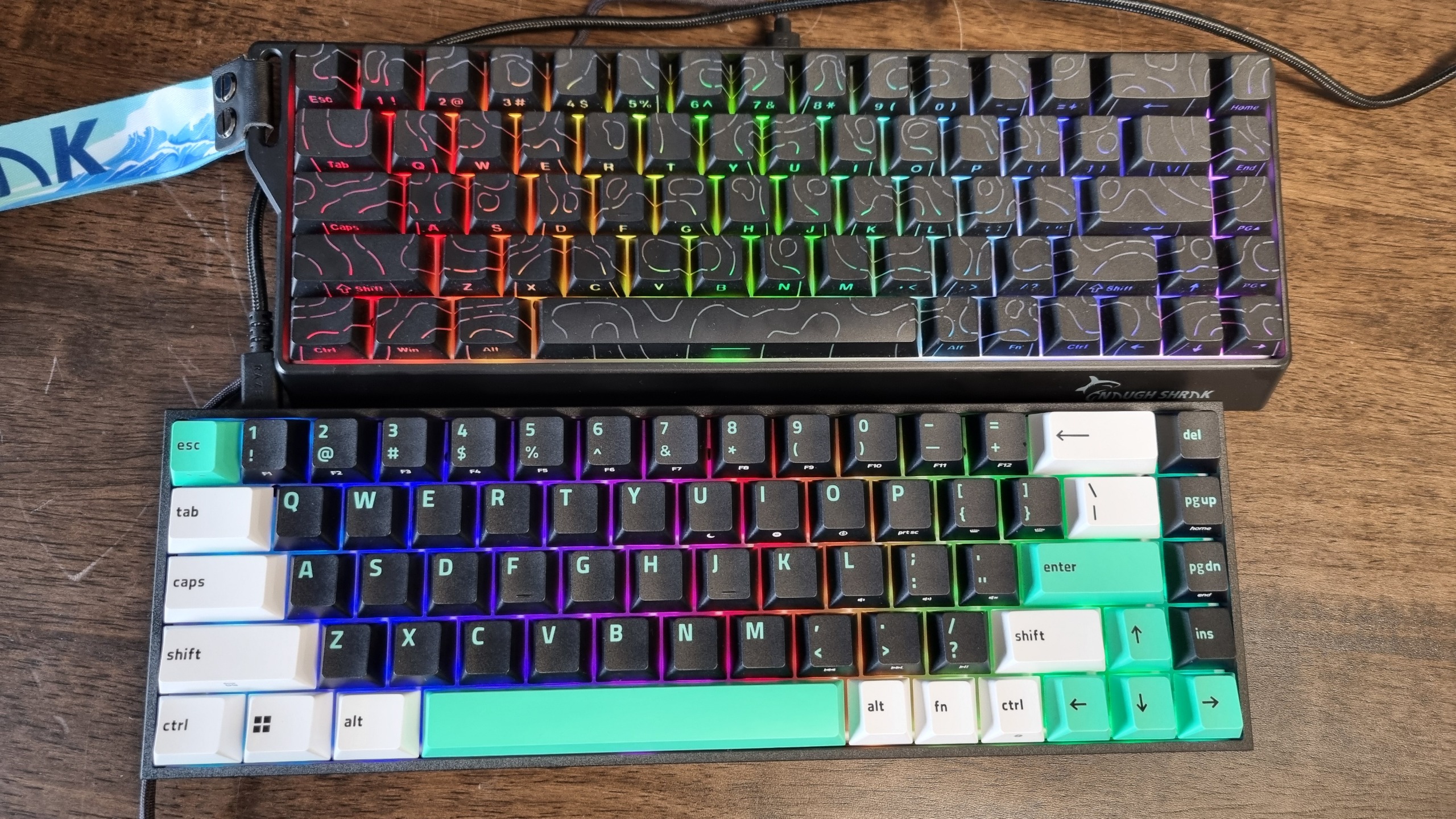
While Gamakay utilizes durable doubleshot PBT keycaps, Razer opts for doubleshot ABS, which delivers crisper edges visually. Despite Razer’s solid effort, the NaughShark takes the technical round purely on the merit of its advanced switch technology and high polling rate.
Round Two: Build Quality and Chassis Design
When subjecting both boards to structural tests—gently twisting the chassis to check for deck flex—both models display impressive rigidity. However, the underlying materials tell a different story.
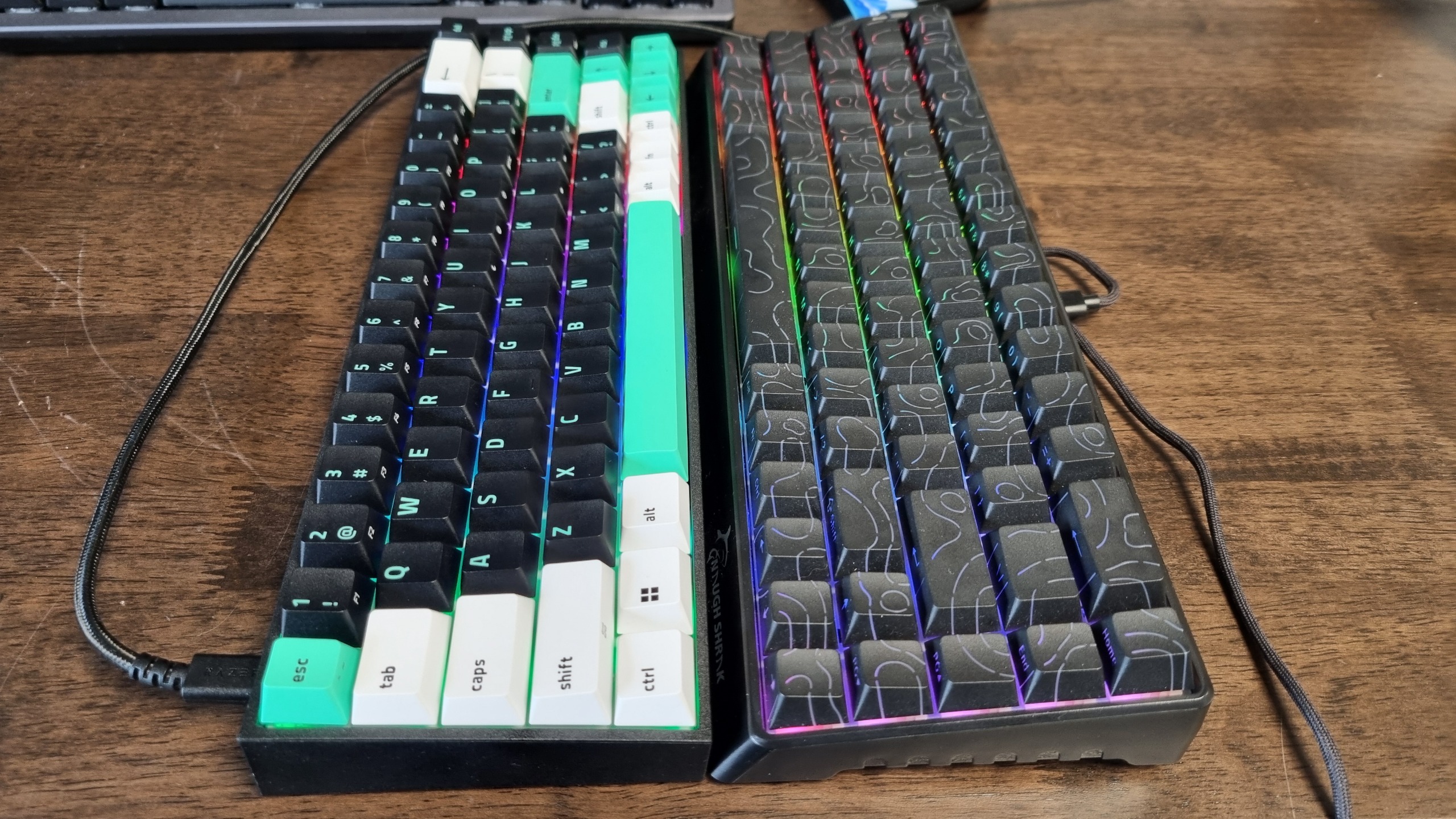
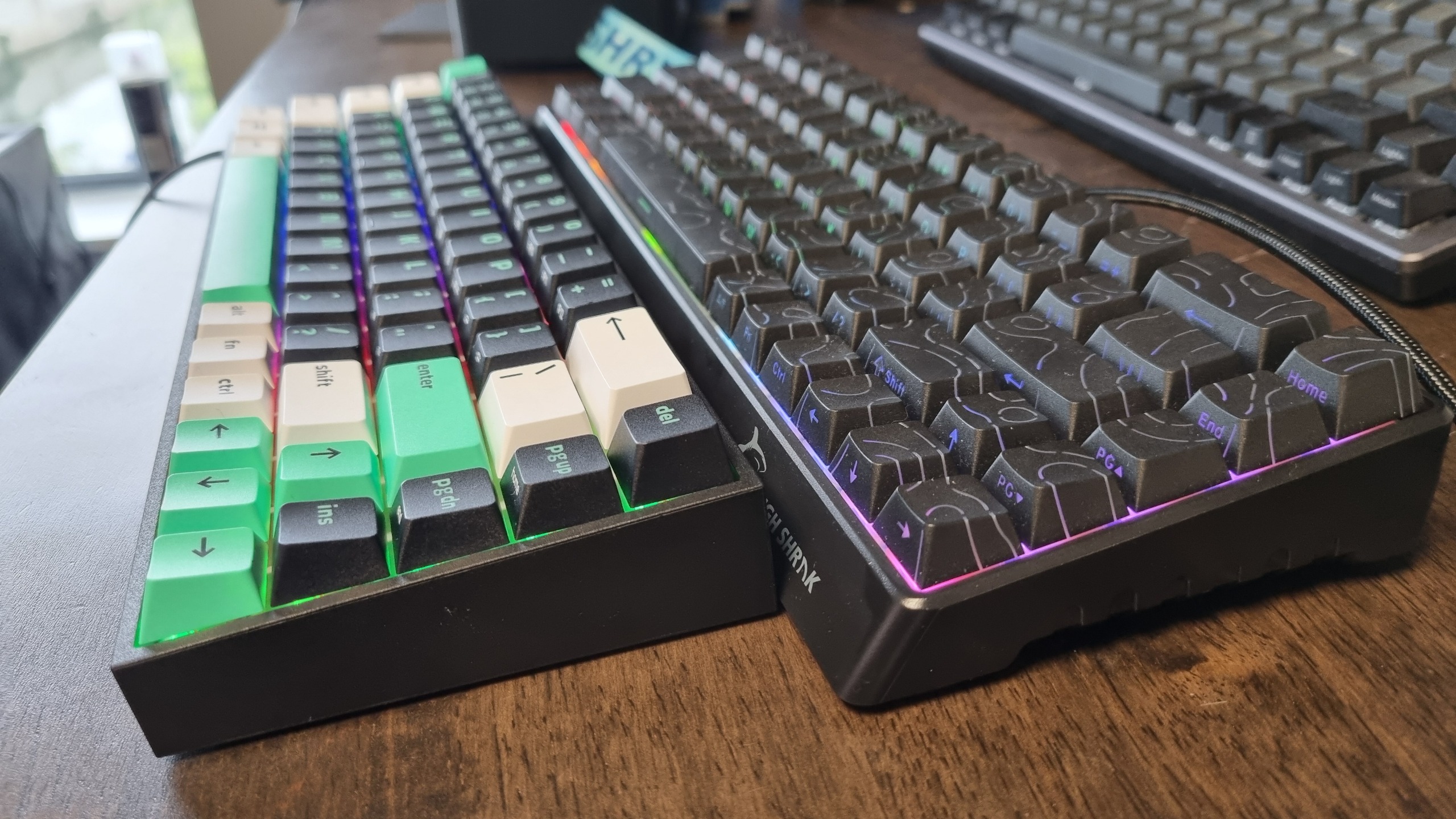
The Gamakay relies on a substantial lower lip to mask a somewhat hollow plastic construction, and its keycaps exhibit noticeable side-to-side rattle. By contrast, the Razer Reclusa X Mini feels remarkably dense and robust. Its keycaps sit securely on the switches with minimal wobble, making it feel like a much more expensive peripheral. Razer takes a decisive win in structural integrity.
Round Three: Aesthetics and Desk Presence
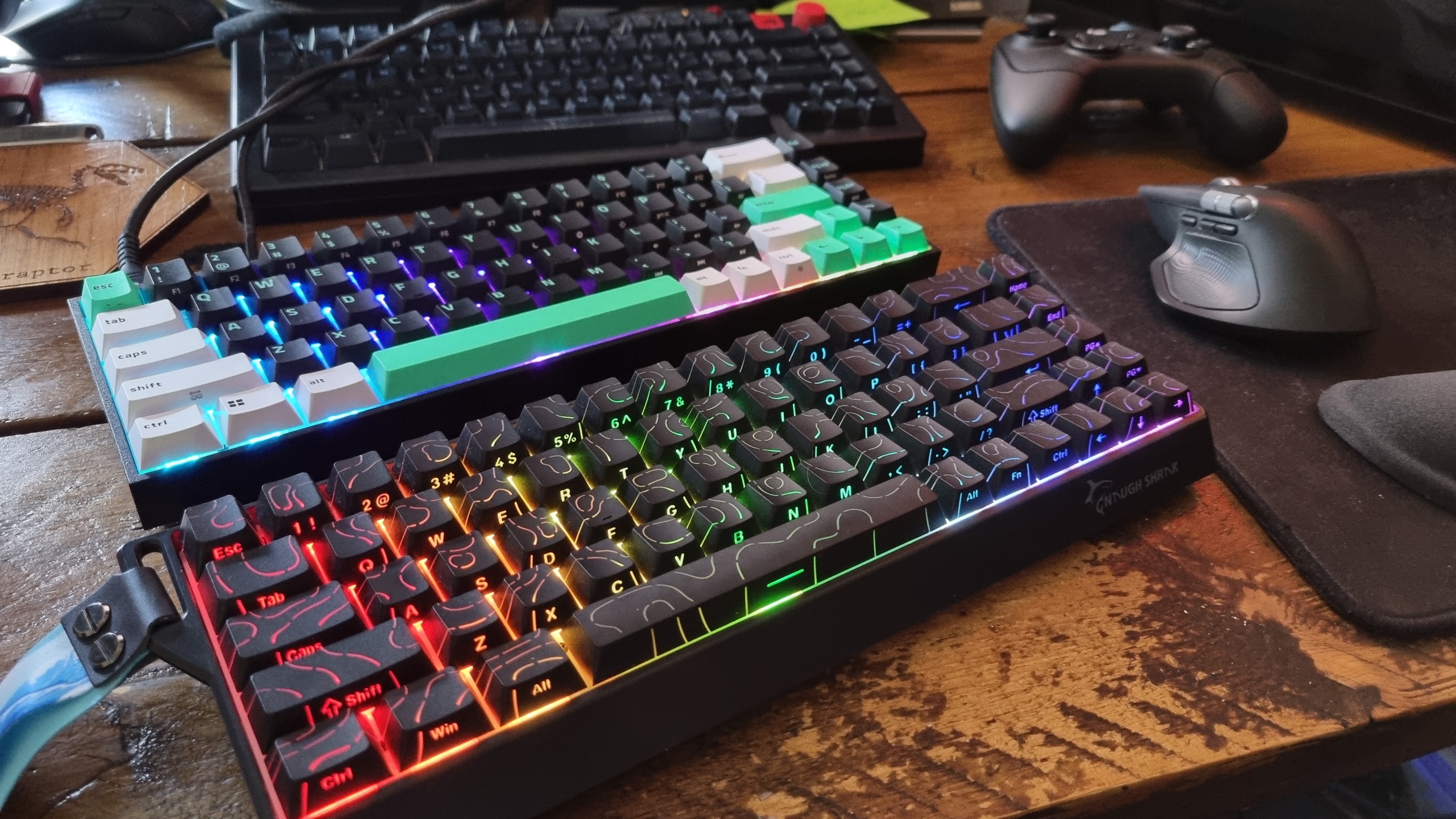
Aesthetics are subjective, but design choices can make or break a desk setup. The Razer Reclusa X Mini embraces a mature white, green, and black keycap colorway that looks refined and professional.
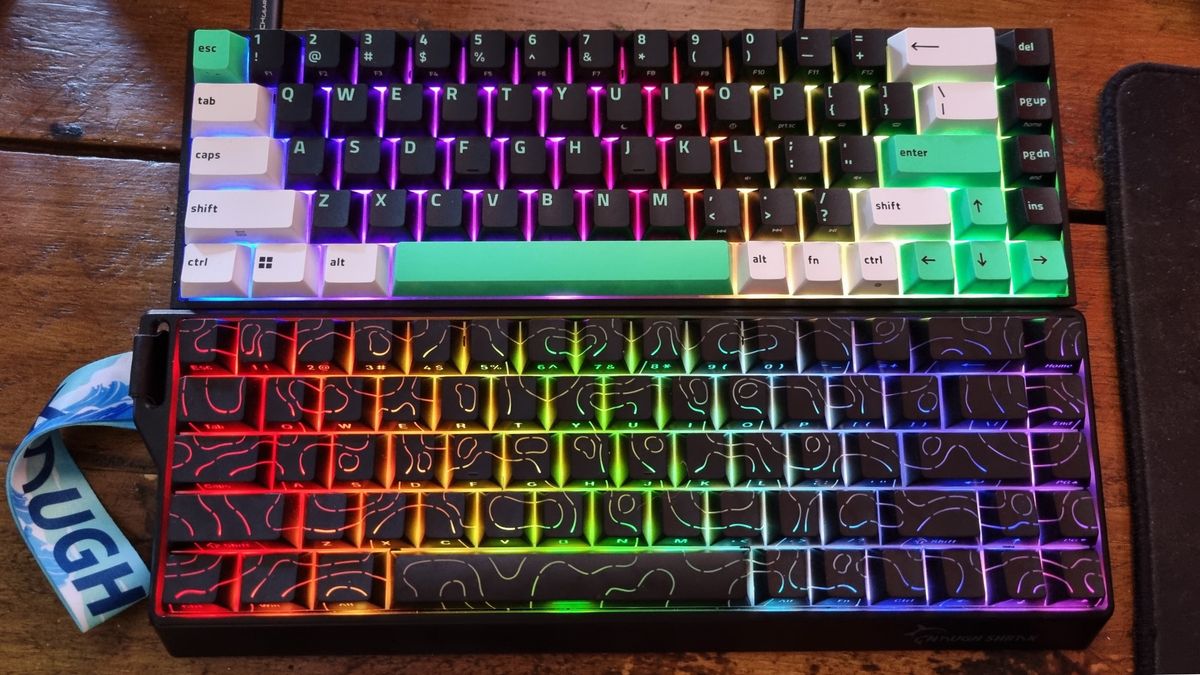
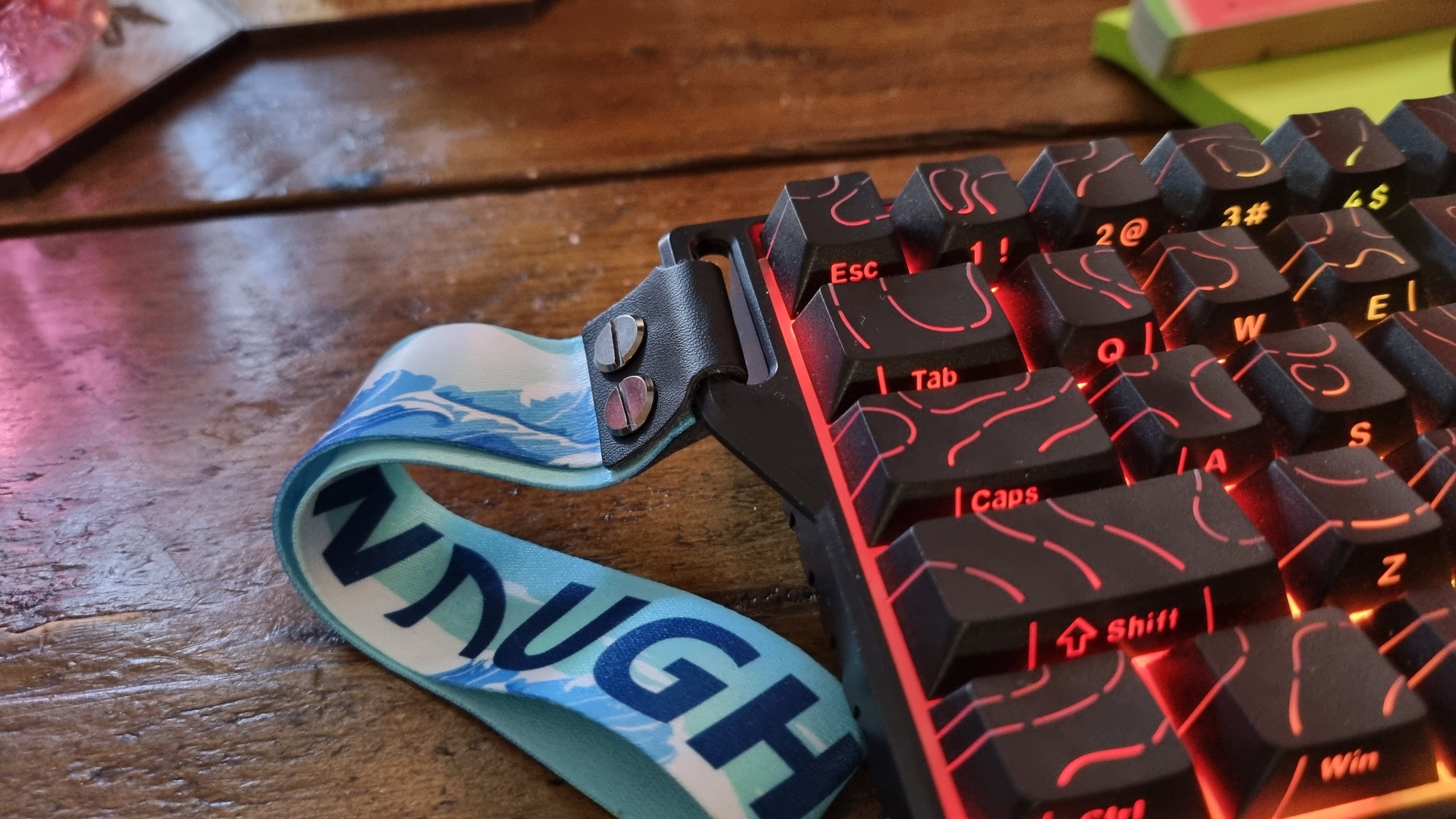
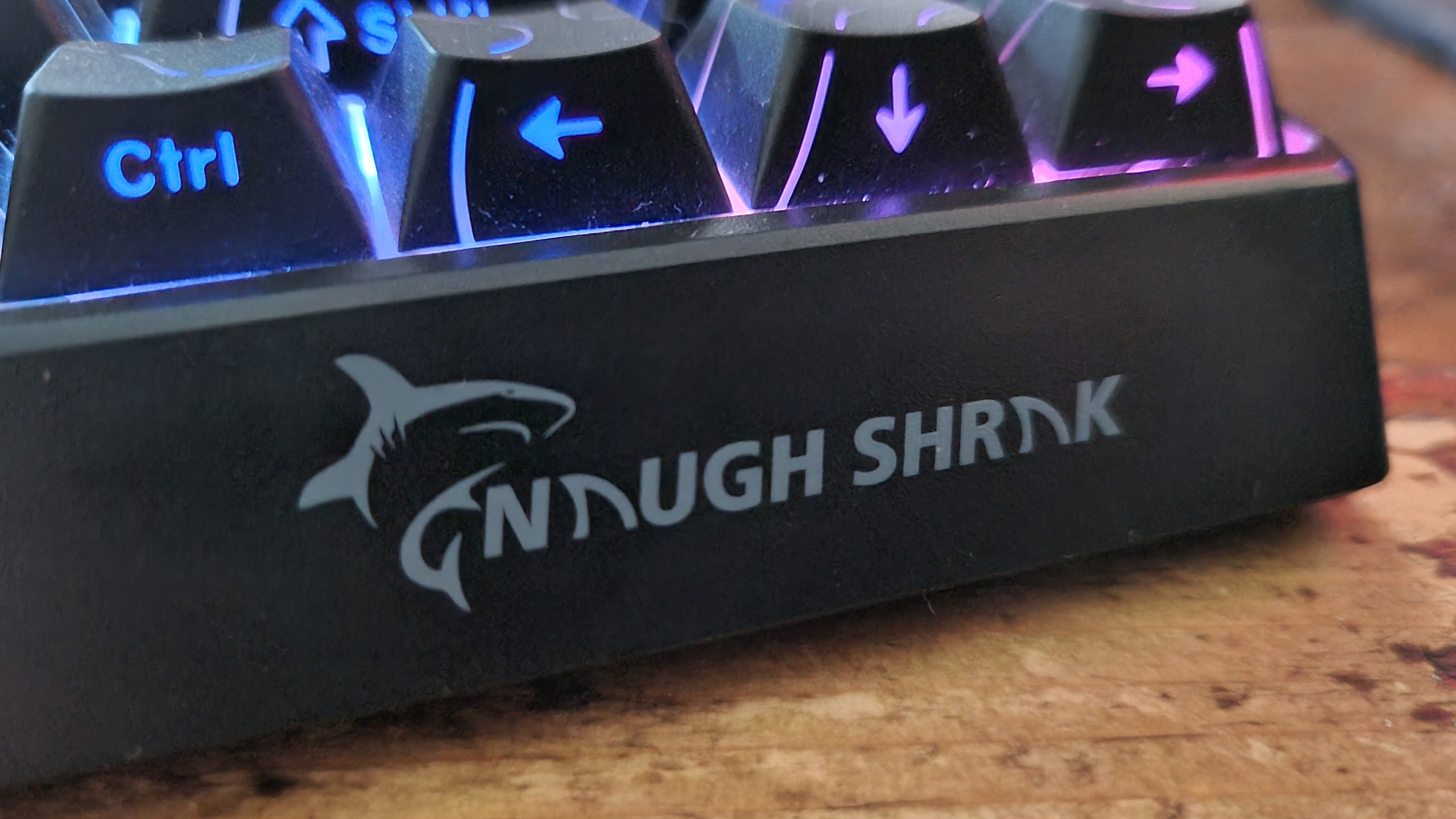
The Gamakay NS68, on the other hand, leans into polarizing choices. It features a permanent side-hook and lanyard strap attachment (complete with a graphic of a great white shark and the words "Naugh Shark" stamped on the front). While some users appreciate whimsical design elements, the Gamakay’s styling borders on juvenile, whereas Razer offers a clean, understated aesthetic that blends seamlessly into any environment.
Round Four: Acoustics and Sound Profile
Sound profiling has become a major talking point in the mechanical keyboard community.
- Gamakay NS68: Offers a muted, "tappity-tap" acoustic signature. However, it suffers from tonal inconsistency, with the delete key sounding noticeably hollow compared to the rest of the board.
- Razer Reclusa X Mini: Delivers a classic, crisp mechanical click and clack reminiscent of enthusiast-tier boards. While internal dual-layer silicone dampening helps control the volume, the high-end snap travels further.
For purists who love traditional mechanical feedback, the Razer wins the acoustic battle.
Round Five: Real-World Gaming and Software Performance
Tested across modern shooters and tactical titles like Helldivers 2 and Ready or Not, both keyboards perform admirably. The NaughShark’s 8K polling rate and adjustable actuation offer theoretical speed advantages, and its software supports advanced features like rapid trigger, dynamic keystrokes, and snap-tap priorities.
However, Gamakay’s companion software is frustratingly complex, poorly translated, and prone to resetting settings unpredictably. Razer Synapse, while occasionally criticized for bloatware, provides a vastly superior user experience with clearly labeled menus for features like Snap Tap and Dual-Keypress priority. Furthermore, the heavier 50g actuation force of the Razer switches provides a reassuring sense of physical control during intense firefights.
Official Responses and Industry Context
The budget mechanical keyboard landscape has forced legacy brands like Razer to rethink their entry-level strategies. For years, enthusiast brands dominated the magnetic switch and Hall effect conversation, undercutting mainstream manufacturers on price while offering superior customization.
With the introduction of the Reclusa series, Razer has signaled that it will no longer cede the budget territory to lesser-known direct-to-consumer brands. By focusing on out-of-the-box reliability, solid build quality, and a polished software suite, Razer aims to capture everyday gamers who value plug-and-play stability over endless, complicated software tweaking. Conversely, manufacturers like Gamakay continue to push the boundaries of raw hardware specifications, proving that high-end sensor technology and magnetic switches can be democratized for under $60.
Implications for Consumers
Choosing between these two keyboards ultimately comes down to a philosophical question: Do you prefer raw hardware specifications on paper, or refined physical execution in practice?
- Choose the Gamakay x NaughShark NS68 if: You are an esports enthusiast who demands an 8,000 Hz polling rate, wants to experiment with Hall effect magnetic switches, and values rapid trigger technology for competitive advantage—and you don’t mind navigating quirky software.
- Choose the Razer Reclusa X Mini 65% if: You want a reliable, rock-solid daily driver that feels premium under your fingertips, sounds crisp, features a mature design, and pairs with a straightforward, hassle-free configuration software.
The Final Verdict
While the Gamakay x NaughShark NS68 remains a milestone achievement in budget hardware technology, its build quirks and frustrating software pull it down in everyday use. For the average gamer sitting down for a weekend session, the Razer Reclusa X Mini 65% delivers a superior tactile experience, making it the definitive winner of this budget battle.

