

By: Tech & Cybersecurity Desk
Updated: October 2023
Main Facts
In a high-stakes collision between corporate surveillance and digital privacy advocacy, Proton AG—the Switzerland-based company renowned for privacy-first tools such as Proton Mail and Proton VPN—has officially stepped in to host the controversial Flock surveillance camera map. The map, originally constructed by security researcher Joshua Michael, charts the precise nationwide locations of hundreds of thousands of automated license plate recognition (ALPR) cameras owned and operated by Flock Safety.
The dataset used to create the map originated from an unauthenticated vulnerability that exposed over 335,000 camera locations across the United States. Following the public disclosure of the map, Flock Safety moved aggressively to suppress the project, hitting Michael with a cease-and-desist letter and demanding the immediate removal of the interactive tool.
Compounding the pressure on the independent researcher, Michael’s original website was geo-restricted, rendering it accessible exclusively from within the United States. International users attempting to view the map were blocked unless they utilized virtual private networks (VPNs) to obscure their locations. By migrating and hosting the map on its own infrastructure, Proton AG has bypassed these geographic barriers. Because Proton operates out of Switzerland—a jurisdiction known for rigorous data protection laws and independence from aggressive U.S. corporate litigation—the map is now globally accessible, fully insulated from immediate takedown demands, and permanently preserved as a testament to digital transparency.
Chronology of Events
The unfolding controversy surrounding the Flock camera map developed rapidly through a series of technical discoveries, corporate pushback, and swift interventions by the open-source and privacy communities.
- Discovery of the Flaw: Security researcher Joshua Michael identified a critical unauthenticated vulnerability within Flock Safety’s ecosystem. This security lapse exposed a massive trove of data containing the exact geographical coordinates and metadata of 335,701 automated license plate reading cameras deployed nationwide in the United States.
- Mapping the Surveillance Grid: Utilizing the leaked data, Michael synthesized the information into a comprehensive, interactive public resource known as the Flock Surveillance Map. The tool offered ordinary citizens, civil liberties advocates, and journalists an unprecedented look at the dense web of tracking technology operating in their communities.
- Corporate Retaliation and Legal Action: As the map gained widespread attention across cybersecurity forums and news outlets, representatives for Flock Safety intervened. The company issued a formal cease-and-desist letter to Michael, demanding that he take down the map and alleging unauthorized data exposure and proprietary infringement.
- Geo-Restriction Hurdles: Under mounting pressure and legal threats, access to Michael’s original domain became severely constrained. The site was reconfigured to restrict visitors, making the map accessible solely to users browsing from inside U.S. borders. International visitors were effectively locked out unless they leveraged commercial or private VPN services.
- Proton AG Intervenes: Recognizing the public interest value of the data and aligning with its foundational corporate ethos of defending privacy and transparency, Proton AG made the strategic decision to host a mirror of the map. By moving the asset to Swiss servers and making it globally available, Proton effectively neutralized the single-point-of-failure vulnerability that Flock Safety was exploiting through legal pressure.
Supporting Data and Technical Context
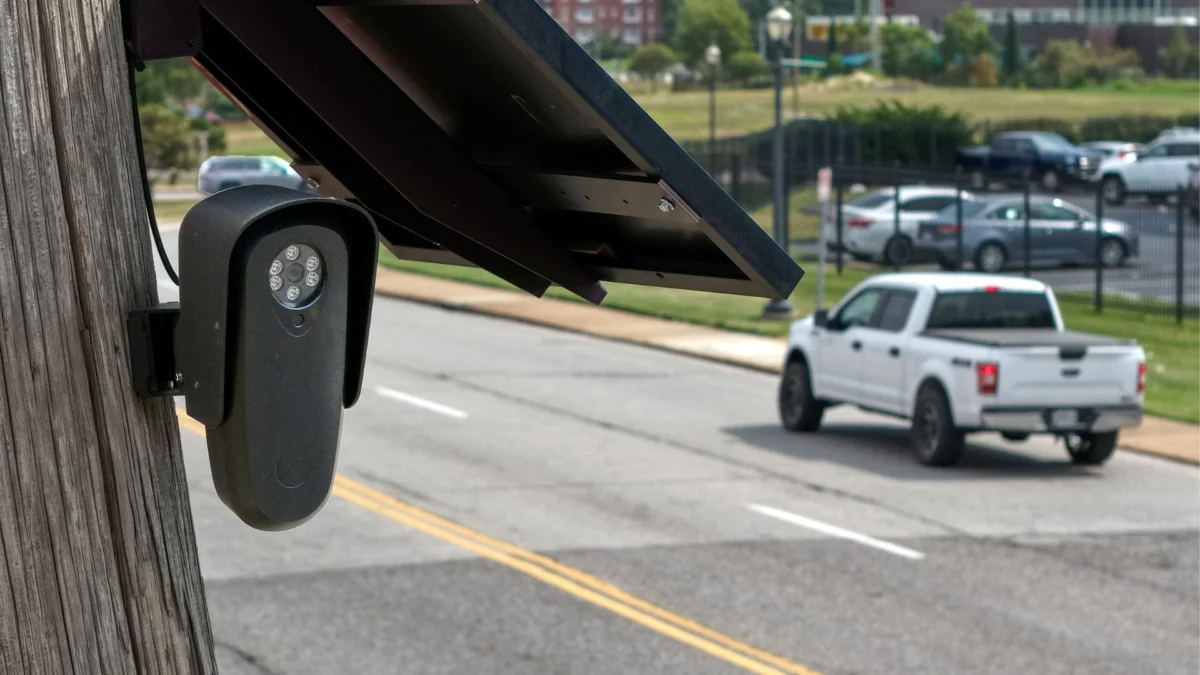
The scale of the mapping project underscores the pervasive nature of modern automated surveillance in the United States. Automated License Plate Recognition (ALPR) systems, popularized by companies like Flock Safety, are widely utilized by law enforcement agencies, private homeowners associations, and commercial entities to monitor vehicular traffic in real-time.
Key metrics surrounding the incident include:
- 335,701: The total number of unique Flock camera locations exposed by the unauthenticated vulnerability discovered by Joshua Michael.
- Nationwide Footprint: The cameras span urban, suburban, and rural corridors across multiple U.S. states, creating a continuous grid capable of tracking the historical movements of millions of vehicles daily.
- Jurisdictional Shielding (Switzerland): Proton AG’s operational base in Geneva, Switzerland, places the hosted map under Swiss federal data protection frameworks, making it significantly harder for U.S.-based entities to secure foreign court orders for immediate content removal.
- Accessibility Shift: Prior to Proton’s intervention, 100% of international web traffic outside the U.S. was blocked from viewing the map natively. Proton’s hosting solution restores open access to a worldwide audience without requiring specialized circumvention tools.
Official Responses and Stakeholder Perspectives
The confrontation between Flock Safety and privacy advocates has drawn stark lines regarding corporate accountability, data stewardship, and the ethics of public surveillance.
Flock Safety’s Position
Flock Safety has consistently defended its business model, emphasizing that its ALPR technology is designed to assist law enforcement agencies in solving property crimes, violent offenses, and locating missing persons. While the company has not publicly detailed the technical mechanics of the original data exposure, its legal actions—including the deployment of cease-and-desist letters—signal a fierce defense of its proprietary network architecture and operational security. From Flock’s perspective, the dissemination of a comprehensive map of its hardware network poses security risks and violates terms of service regarding data access.
Joshua Michael’s Dilemma
For Joshua Michael, the discovery and subsequent mapping of the cameras was framed as an exercise in responsible security research and public awareness. Confronted with aggressive legal maneuvers from a heavily funded corporate entity, independent researchers often lack the financial and legal resources required to fight protracted courtroom battles. The geo-restriction of his site was a defensive measure to mitigate immediate domestic liability, though it ultimately limited the democratic visibility of the project.
Proton AG’s Rationale
Proton AG’s decision to step in is rooted directly in its corporate mission statement. In public statements regarding the partnership, Proton highlighted that transparency is a fundamental pillar of a free society. By stepping forward to host the Flock camera map, Proton is acting as an institutional shield for independent research. The company argues that citizens have a right to know the exact extent to which they are being monitored in public spaces, and that burying security disclosures through legal intimidation undermines public trust.
Implications for Digital Privacy and Security Research
The intervention by Proton AG in the Flock camera map controversy carries profound implications for the broader cybersecurity landscape, independent researchers, and the future of public surveillance transparency.
1. The Vulnerability of Independent Researchers
Security researchers frequently operate in a precarious legal and financial space. When vulnerabilities are discovered in high-profile corporate or governmental systems, researchers who publish their findings or derived data often face immediate retaliation, including threats of litigation under statutes like the Computer Fraud and Abuse Act (CFAA) or claims of intellectual property theft. Proton’s willingness to shoulder the hosting burden demonstrates a new model of solidarity, wherein large, well-resourced privacy organizations can protect individual whistleblowers and researchers from being legally silenced.
2. The Normalization of Mass Public Surveillance
The existence of over 335,000 private-public surveillance nodes highlights how deeply automated tracking has integrated into everyday civic life. Unlike traditional CCTV cameras, which typically require active monitoring or manual footage retrieval, modern ALPR systems create searchable, searchable databases containing timestamps, vehicle makes, models, colors, and license plate numbers. The ability of a single researcher to map this network—and the subsequent corporate panic to suppress it—reveals the sensitivity surrounding just how much data is being quietly aggregated about ordinary citizens without their explicit consent.
3. Cross-Border Jurisdictions as a Safe Haven for Information
The geopolitical dimension of this case is equally significant. By utilizing Swiss infrastructure, Proton AG has leveraged international legal boundaries to protect information of high public interest. This mirrors historical instances where controversial data, leaks, and investigative journalism moved to offshore jurisdictions to evade domestic censorship or legal injunctions. As governments and corporations increasingly seek to control digital narratives and suppress inconvenient disclosures, cross-border data hosting may become an increasingly vital mechanism for preserving public access to truth.
Conclusion
The partnership between security researcher Joshua Michael and Proton AG marks a watershed moment in the ongoing struggle between ubiquitous corporate surveillance and digital civil liberties. By ensuring that the Flock surveillance camera map remains online, globally accessible, and legally protected by Swiss jurisdiction, Proton has not only preserved a critical piece of security research but has also sparked a necessary global conversation about the boundaries of public monitoring, corporate accountability, and the right to privacy in the digital age.

