

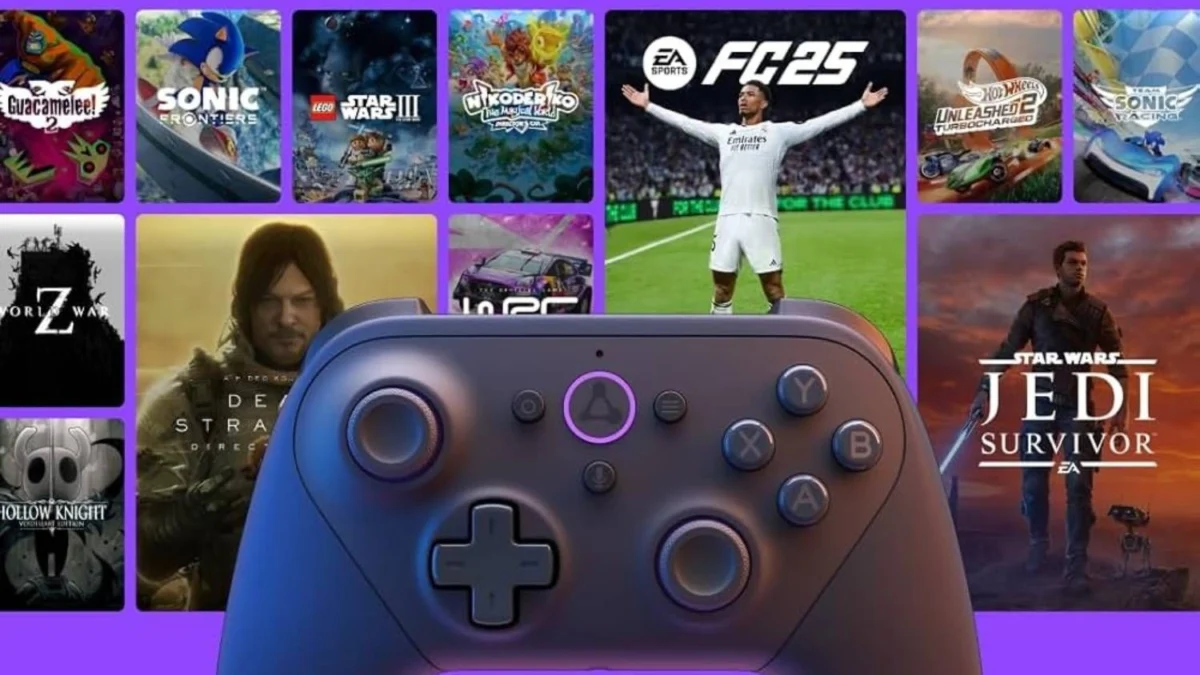
For over a decade, Amazon has functioned as the industry’s most persistent, yet puzzling, titan. With the infinite resources of a global retail behemoth, the company has spent years attempting to carve out a permanent residency in the video game landscape. From the 2011 founding of Amazon Game Studios and the landmark $970 million acquisition of Twitch in 2014, to the launch of the Luna cloud-gaming service in 2022, the company has demonstrated an unwavering desire to become a household name in interactive entertainment.
Yet, despite these gargantuan efforts, a disconnect remains. If you were to stop a random gamer on the street and ask them to define Amazon’s gaming strategy, you would likely be met with confusion. Now, under the guidance of General Manager Jeff Gattis—an industry veteran who arrived in 2025 following a six-year tenure at Microsoft—the company is finally acknowledging the elephant in the room: Amazon is a giant that has yet to learn how to walk in the gaming world.
A History of Fragmentation: The Road to 2026
The story of Amazon’s gaming journey is one of disjointed ambition. For years, the company operated as a collection of silos. Prime Gaming, Luna, and the development studios functioned as separate entities, often lacking a unified vision or a cohesive cross-promotional strategy.
The chronology of this struggle is marked by both high-profile launches and quiet failures:
- 2011: Amazon Game Studios is established, signaling a move into internal development.
- 2014: Amazon acquires Twitch, becoming the central hub for gaming culture, though it struggles to integrate this with its own publishing efforts.
- 2022: Amazon launches Luna, a cloud-gaming service designed to bring high-end gaming to casual hardware.
- 2025: The company undergoes a massive strategic pivot, rebranding Luna and shifting away from some of its more ambitious, and ultimately unsustainable, AAA and MMO projects.
- 2026: Jeff Gattis leads a restructuring effort, aiming to unify Amazon’s fragmented gaming assets under a single, coherent ecosystem.
During this period, internal morale reportedly suffered as projects were launched, pivoted, and eventually canceled. The report of a failed internal project utilizing generative AI—only to be shut down despite the pivot—serves as a grim reminder of the "chaotic" culture that plagued the division before the recent leadership transition.
The "Invisible" Subscription Giant
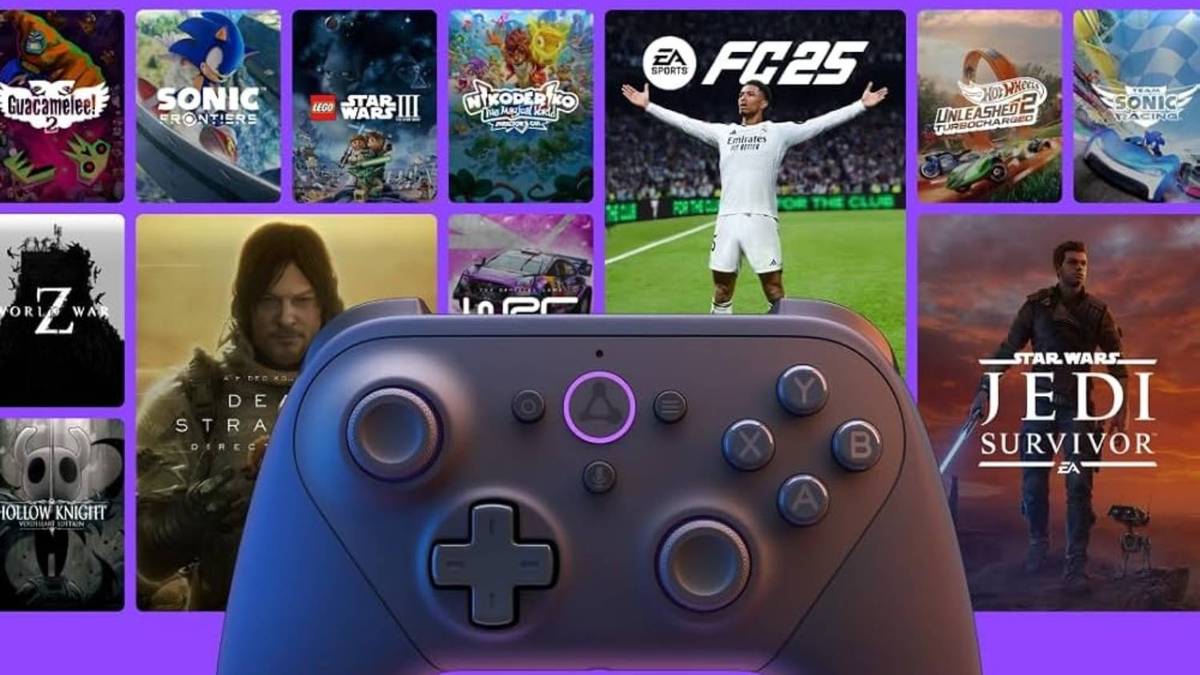
Perhaps the most startling revelation from the leadership transition is the paradox of scale. Amazon believes it is currently "the largest paid gaming subscription in the world," yet they concede that the vast majority of their subscribers have no idea they are part of it.
Because Luna is bundled into the broader Prime membership, millions of users technically have access to a cloud-gaming library at no additional cost. When asked by Polygon about the public’s lack of awareness regarding this service, Gattis was refreshingly candid: "Nobody knows they have [it]."
This highlights the core tension in Amazon’s strategy: it is a company that excels at logistics and subscription management but has historically struggled with consumer-facing identity in the gaming space. To become a household name, Amazon must bridge the gap between its massive Prime subscriber base and the actual usage of its gaming services.
The Hard Lesson of ‘King of Meat’
If there is a cautionary tale for the modern iteration of Amazon Games, it is the short-lived life of King of Meat. Launched in October 2025, the title was praised for its creative premise and distinct style. Despite positive previews, it failed to gain traction and was shuttered by February 2026.
Gattis, who inherited the project, points to this as a definitive learning moment. In an era dominated by "forever games"—entrenched live-service titles and massive platforms like Roblox—new intellectual property faces a brutal uphill battle.

"The game might have found a stronger foothold had it launched directly into a large subscription service," Gattis noted. The failure of King of Meat proved that in the current climate, discoverability is as critical as the game’s mechanics. Players are less likely to risk an upfront purchase on an unknown title when they are already deeply invested in existing ecosystems. Amazon’s future strategy, therefore, must leverage its internal distribution power to give new titles a fighting chance.
Moving Beyond the "Xbox Model"
One of the most significant shifts under Gattis is the abandonment of the "console warrior" mentality. For years, observers assumed Amazon wanted to be the next Sony or Microsoft—building hardware and competing for the same slice of the high-end, dedicated gaming pie.
Gattis is quick to dismiss this: "We’re not trying to compete with PlayStation or Xbox or Steam. That market’s well served, if not overserved, today."
Instead, Amazon is pivoting toward the "3 billion" argument. There are approximately 3 billion gamers worldwide, but only a fraction of them own high-end gaming PCs or current-generation consoles. Amazon is positioning itself to serve the rest—the casual, mobile, or cloud-based players who want high-fidelity experiences without the barrier of entry represented by a $500 console.
The Ecosystem Strategy: MGM, Prime, and Beyond
While the days of trying to "out-console" the industry giants are over, Amazon is doubling down on its unique advantage: intellectual property ownership. With the acquisition of MGM, Amazon now controls the future of the James Bond franchise. Furthermore, they are heavily invested in the Tomb Raider IP.
The goal is no longer just to sell a game, but to create a "franchise ecosystem." Imagine a scenario where a Tomb Raider game, a Tomb Raider television series, and a curated experience on Twitch all launch in tandem. By linking these media silos, Amazon hopes to create a flywheel effect that keeps users within the Amazon ecosystem regardless of the medium.
Implications: A New Era of Synergy
The implications of this strategy are profound. If Amazon succeeds, it will not be because they built a better console or a more powerful graphics engine. It will be because they successfully leveraged the Prime infrastructure to make gaming a frictionless utility for the average household.
The "broken" state of Amazon Games in the past was characterized by a lack of vision. The current strategy, as outlined by Gattis, is one of consolidation and synergy. By putting all pieces—Twitch, Luna, Prime Gaming, and the studios—under one roof, Amazon is finally acting like the behemoth it is.
The challenge remains the same as it ever was: culture and execution. While the strategy looks clear on paper, the gaming industry is notoriously volatile. Whether Amazon can translate its massive reach into genuine player engagement remains to be seen. However, for the first time in years, the "largest company in the world" seems to have a clear idea of what it wants to be: not the next Xbox, but the first truly universal gaming utility.
As Gattis suggests, the tools are already there. The final step is simply ensuring that the millions of Prime subscribers actually realize they have the keys to the kingdom.

