

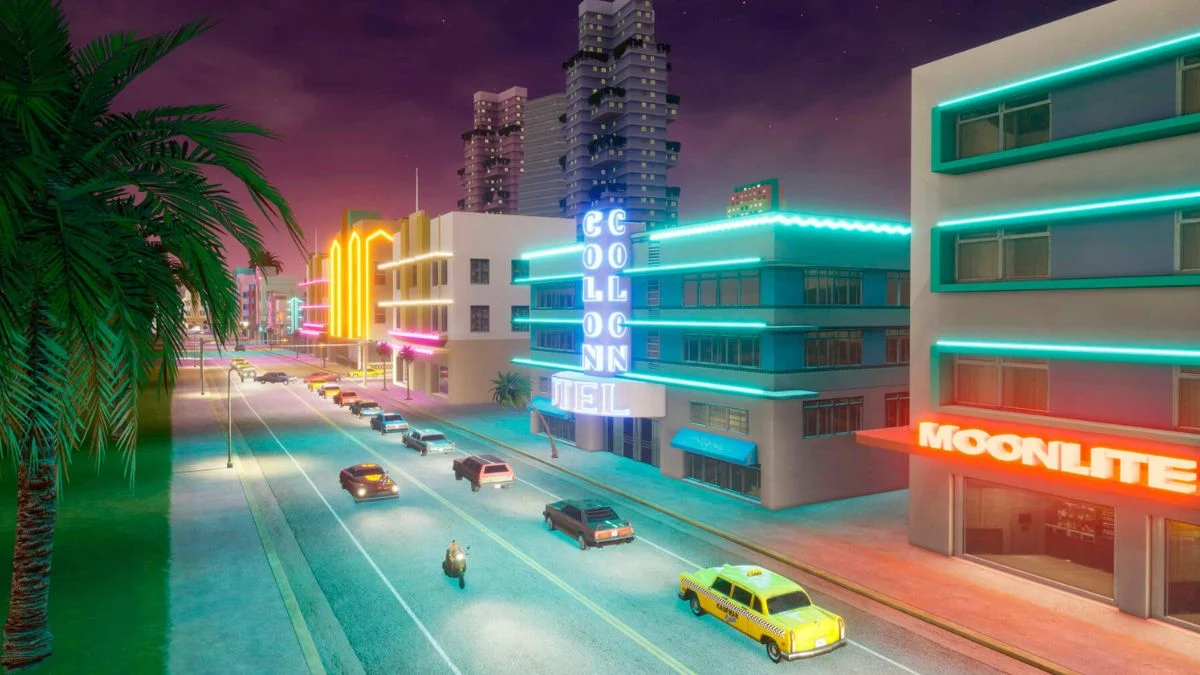
Long before Grand Theft Auto VI set its sights on a modern, neon-drenched return to Vice City, the minds behind the most lucrative entertainment franchise in history seriously considered taking their signature brand of open-world satire across the Pacific Ocean.
New revelations from a former key architect at Rockstar Games have illuminated a fascinating chapter in video game history: the very real, remarkably advanced plans to develop Grand Theft Auto: Tokyo during the PlayStation 2 era. Had the stars aligned, the franchise might have swapped out its parodies of American consumerism for the neon signs, narrow alleys, and high-speed drift culture of Japan’s sprawling capital.
Main Facts: What Was GTA: Tokyo?
The existence of GTA: Tokyo is not entirely new to industry sleuths; trademark filings from the early 2000s occasionally surfaced, hinting at geographical horizons beyond the United States. However, recent disclosures from Obbe Vermeij, Rockstar’s former technical director, have provided the first comprehensive look at what the project actually entailed.
Speaking in an extensive interview with Thunderpick, Vermeij laid out the scope of the developer’s ambitions immediately following the watershed release of Grand Theft Auto III in 2001. According to Vermeij, Tokyo was not merely a fleeting thought or a concept pitch tossed around during lunch; it was the studio’s most serious contender for a post-GTA III setting.
- The Vision: The project was conceived as a GTA III-style sandbox game set explicitly within the Japanese capital.
- Core Mechanics and Flavor: Vermeij revealed that the development team planned to heavily emphasize Japan’s rich automotive subculture, specifically street racing and drifting. Furthermore, samurai swords were intended to "play a big part" in the game’s melee combat system, offering a distinct cultural flavor compared to the baseball bats and brass knuckles of Liberty City.
- Structural Parallels: In an intriguing comparison, Vermeij noted that the workflow and organizational approach for GTA: Tokyo shared conceptual similarities with Rockstar’s later cult-classic, Bully. The strategy relied on outsourcing or collaborating with an external Japanese studio to handle local production, with the intent to "export it back to the West."
Chronology: The Evolution and Demise of Rockstar’s Global Ambitions
To understand how GTA: Tokyo came to the brink of production—and why it ultimately vanished—it is necessary to look at the timeline of Rockstar Games during the early 2000s, a period of hyper-growth and creative experimentation.
2001–2002: The Post-GTA III Gold Rush
When Grand Theft Auto III revolutionized the gaming landscape by transitioning the series into a fully 3D open world, Rockstar North found itself suddenly sitting on top of the world. The pressure to figure out the next step for the franchise was immense. During this window, the studio brainstormed a dizzying array of international locations.
As Vermeij outlined, the shortlist of potential settings included:
- Rio de Janeiro
- Moscow
- Istanbul
- London (which eventually manifested as the 1999 expansion Grand Theft Auto: London 1969)
- Paris
- Tokyo
Of these, Tokyo quickly emerged as the frontrunner. Rockstar management and core developers were captivated by the visual contrast of Tokyo’s dense urban sprawl, neon lights, and distinct cultural identity.
The Trademark Wave
During this exploratory phase, Rockstar’s parent company, Take-Two Interactive, actively secured its intellectual property rights globally. Alongside GTA: Tokyo, trademarks were filed for titles such as GTA: Bogota and GTA: Sin City. This bureaucratic paper trail suggested that Rockstar was seriously hedging its bets on internationalizing the franchise.
The Breakdown of Logistics
Despite the enthusiasm, the project began to unravel due to practical, ground-level hurdles. Developing a game inside an alien culture and language presented monumental challenges for a Scottish-led development team (Rockstar North) that heavily relied on its internal, insular culture to craft its biting satire.
According to Vermeij, the ultimate roadblock was deceptively simple: the contracts were never signed. As negotiations stalled and the sheer logistical nightmare of managing overseas development began to outweigh the creative appeal, Rockstar pulled the plug. The concept was quietly shelved, and the team pivoted back to familiar domestic shores, leading directly to the development of Grand Theft Auto: Vice City (2002) and Grand Theft Auto: San Andreas (2004).
Supporting Data: The Anatomy of a Canceled Blockbuster
To contextualize why GTA: Tokyo represents such a massive historical "what if," it helps to examine the state of the industry, Rockstar’s corporate structure at the time, and the technical limitations of the PlayStation 2 hardware.
| Feature / Element | GTA: Tokyo (Proposed) | GTA III (Actualized, 2001) |
|---|---|---|
| Engine | RenderWare (Modified) | RenderWare |
| Primary Setting | Tokyo, Japan | Liberty City (Fictional New York) |
| Cultural Focus | Street racing, drift culture, samurai combat | American mafia, urban decay, consumer satire |
| Production Model | Intended collaborative/outsourced Japanese studio model | In-house at Rockstar North (Edinburgh) |
| Hardware Target | PlayStation 2 / Xbox / PC | PlayStation 2 / PC (Later Xbox) |
The Technical Hurdle: Real-World Geography vs. Satire
Rockstar’s secret sauce has always been its ability to construct hyper-satirical parodies of American life, media, and politics. Translating that specific brand of irony to a foreign country like Japan—where the developers did not possess an innate, native understanding of the social nuances—posed a massive creative risk.
Furthermore, translating real-world road layouts into the technical constraints of the PlayStation 2 was vastly more difficult than building fictionalized pastiches like Liberty City or Vice City. In a fictional city, level designers have total freedom to bend geography for gameplay pacing. Replicating Tokyo accurately within the memory limits of a 2002 console would have required immense compromises.
Official Responses and Reflections
In the years following the cancelation, key members of the Rockstar old guard have occasionally reflected on the road not taken. Obbe Vermeij’s recent disclosures offer the most transparent look into the corporate mindset of Rockstar during their transition from a scrappy development house to a global juggernaut.
Vermeij’s reflections emphasize that the decision to abandon Tokyo was not born of creative bankruptcy, but rather of pragmatic self-awareness. Rockstar North realized that their strength lay in their unique, cynical lens on Americana. Forcing the team to operate outside that comfort zone—especially with the added friction of cross-continental partnerships—threatened the meticulous quality control that defined the studio’s output.
While current Rockstar leadership—including Dan Houser, who departed the company in 2020—rarely dwells publicly on canceled projects from twenty years ago, the legacy of those early brainstorming sessions remains evident in how the company approaches its settings. Every map since GTA III has prioritized dense atmospheric storytelling, systemic traffic AI, and localized cultural touchstones.
Implications: What If GTA: Tokyo Had Succeeded?
The cancelation of Grand Theft Auto: Tokyo fundamentally altered the trajectory of the video game industry. One must consider several major counterfactual implications:
1. The Death of the "American Dream" Satire
The Grand Theft Auto franchise is inextricably linked to its critique of the United States. If GTA: Tokyo had released to critical acclaim in the mid-2000s, Rockstar might have pivoted into a truly global anthology series, jumping from Tokyo to London to Rio. Instead, the franchise doubled down on American myths, cementing its identity as the ultimate digital mirror of the US cultural zeitgeist.
2. A Blueprint for Open-World Japan
In 2002, an open-world game set in Tokyo featuring street racing and melee weapon combat would have beaten franchises like Sega’s Yakuza (which debuted in 2005) to the punch by several years. Had Rockstar succeeded in creating a compelling virtual Tokyo on the PS2, the modern market for Japanese-set open-world games—including titles like Sleeping Dogs and Ghost of Tsushima—might have evolved along a completely different timeline.
3. The Modern Era: Looking Toward GTA VI
Today, Rockstar sits comfortably as the titan of the industry, preparing for the November 19, 2026 launch of Grand Theft Auto VI on PlayStation 5 and Xbox Series X|S. The upcoming game returns to the sun-soaked, social-media-obsessed pastiche of modern Vice City.
As fans pore over every trailer and detail for GTA VI, the resurfacing of GTA: Tokyo serves as a tantalizing reminder of the paths untaken. It underscores how close we came to exploring the neon-lit alleys of Japan through Rockstar’s irreverent lens—a ghost of a game that remains one of the industry’s most legendary lost horizons.

