

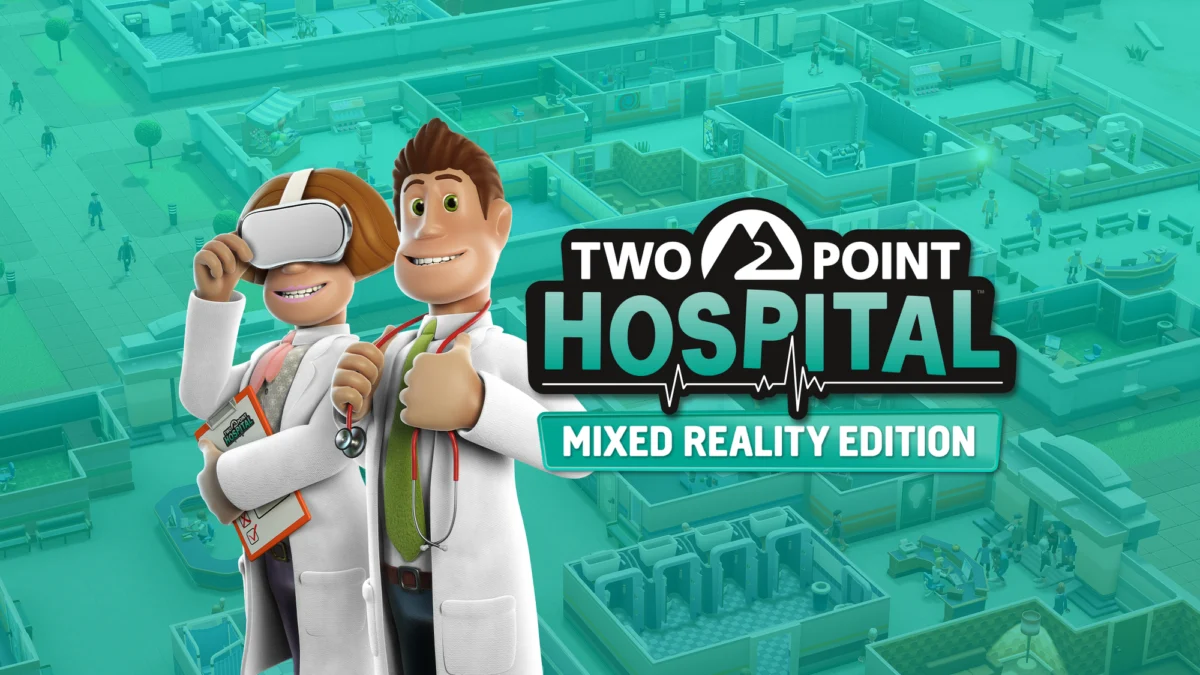
LOS ANGELES — The chaotic, humorous, and deeply strategic world of medical administration is about to get a whole lot more immersive. During a major hardware and software showcase today, Meta announced that the beloved management simulation hit Two Point Hospital is officially making the jump to virtual and mixed reality.
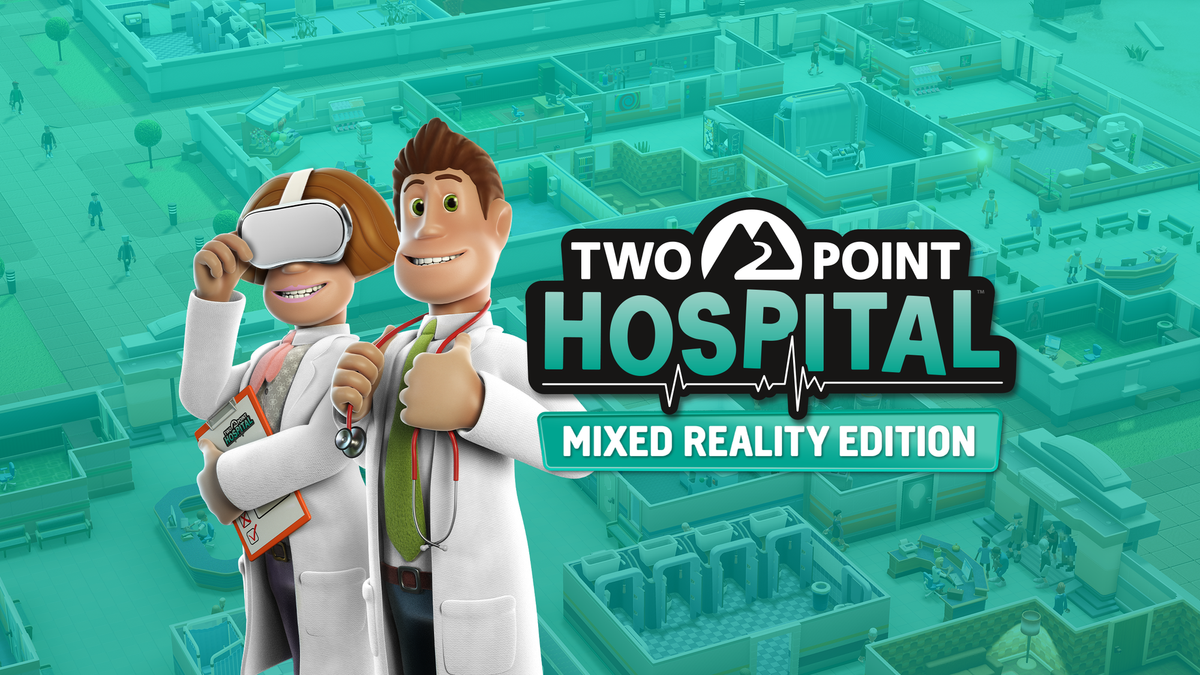
Slated for release in Spring 2027, Two Point Hospital Mixed Reality Edition is being custom-built for Meta’s hardware ecosystem, specifically targeting the Meta Quest 3, Quest 3S, and Meta’s newly unveiled next-generation VR glasses. Rather than serving as a simple straight port, the upcoming title is a ground-up virtual reality reimagining designed to leverage cutting-edge hardware features—including advanced eye-tracking and intuitive hand-tracking capabilities—to transform how players construct, manage, and optimize their delightfully dysfunctional medical empires.
Main Facts: Bringing Chaos to the Virtual Clinic
At its core, Two Point Hospital Mixed Reality Edition retains the DNA that made the 2018 original a breakout success for developer Two Point Studios and publisher Sega. Players will once again step into the polished (or utterly neglected) shoes of a hospital administrator tasked with transforming failing healthcare facilities into thriving, highly profitable institutions.
However, playing in virtual and mixed reality introduces an entirely new dimension to the simulation genre. Key facts surrounding the upcoming release include:
- Platform Exclusivity & Hardware Integration: The game is launching exclusively for Meta hardware, taking full advantage of the Meta Quest 3, Quest 3S, and the newly announced Meta VR Glasses.
- Next-Gen Control Schemes: Eschewing traditional controllers for heavy lifting, the title will heavily utilize Meta’s sophisticated hand-tracking and eye-tracking technologies, allowing administrators to point, grab, and place objects using natural physical gestures.
- Mixed Reality Capabilities: True to its name, the Mixed Reality Edition will allow players to blend virtual hospital corridors with their real-world environments, projecting diagnostic rooms and waiting areas directly onto their living room coffee tables or office desks.
- Release Window: Fans won’t have to wait indefinitely, though a bit of patience is required—Two Point Hospital Mixed Reality Edition is scheduled to launch in Spring 2027.
- Signature Humor and Depth: The game promises to retain the idiosyncratic British wit, bizarre fictional ailments (such as "Light-Headedness" and "Pandemic"), and surprisingly robust underlying economic simulation that defined the flat-screen version.
Chronology: The Evolution of a Management Masterpiece
To understand the significance of Two Point Hospital Mixed Reality Edition, it is helpful to trace the franchise’s journey from its spiritual roots to its upcoming VR milestone.
1997–2018: The Legacy of Theme Hospital
Long before Two Point Studios opened its virtual doors, the genre of comedic management sims was defined by Theme Hospital, released by Bullfrog Productions in 1997 and designed by industry legends like Peter Molyneux and Mark Webley. For over two decades, fans clamored for a true successor to its unique brand of dark, silly humor combined with tight economic strategy.
August 2018: The Birth of Two Point Hospital
Two Point Studios—founded by several key alumni of Bullfrog—finally delivered that spiritual successor with the release of Two Point Hospital on PC. The game was an instant critical and commercial hit, praised for modernizing the classic isometric management formula with slick UI, charming art style, and voice acting dripping with satirical charm.
2019–2020: Expanding to Consoles
Recognizing the broad appeal of the game, Sega and Two Point Studios expanded the title beyond PC, launching it on PlayStation 4, Xbox One, and Nintendo Switch in early 2020. This required a complete redesign of the control scheme to make a mouse-and-keyboard heavy strategy game playable via console gamepads—a crucial stepping stone for the development team in learning how to adapt their UI for non-traditional platforms.
2022: Diversifying the Portfolio
The studio followed up its medical success with Two Point Campus, applying the same formula to higher education. While successful, the medical setting remained the nostalgic favorite for the core community.
Today: The VR & Mixed Reality Announcement
During Meta’s hardware showcase, the partnership between Meta and Sega was solidified with the official unveiling of Two Point Hospital Mixed Reality Edition. The announcement marks the franchise’s formal entry into spatial computing, capitalizing on the maturation of mixed reality hardware capable of handling complex simulation graphics while tracking fine motor inputs.
Supporting Data: The Mechanics of Management in XR
Translating a dense tycoon game from a desktop monitor to spatial computing presents unique design challenges and opportunities. Based on details revealed alongside the announcement, several key data points outline how the gameplay loop will function in the new medium:
The Patient and Staff Ecosystem
- Bizarre Ailments: Over dozens of distinct, fictional illnesses will require specialized treatment rooms, custom diagnostic equipment, and medical staff trained specifically to handle ridiculous symptoms.
- Staff Micro-Management: Doctors, nurses, janitors, and receptionists retain their individual personality traits, happiness meters, and salary demands. In VR, keeping staff from burning out could take on a deeply personal feel as players physically gesture to direct or reprimand employees.
- Queue and Flow Optimization: The spatial layout of a hospital matters more than ever. In mixed reality, seeing a 3D bottleneck of vomiting patients snaking across your actual hardwood floor provides immediate visual feedback on architectural inefficiencies.
Hardware Utilization Metrics
- Hand-Tracking Precision: By eliminating the need to hold standard controllers for basic UI navigation, players can pinch to grab walls, swipe to rotate medical devices, and use natural hand gestures to sweep up litter or deal with pesky corporate inspectors.
- Eye-Tracking Efficiency: Eye-tracking is utilized to rapidly scan patient charts, check room statuses, and pull up financial overviews simply by looking at the relevant UI elements, reducing menu fatigue common in VR strategy ports.
- Passthrough Integration: Using Meta’s advanced passthrough cameras on the Quest 3 and 3S, players can opt to scale a hospital down to tabletop size within their real physical room, or completely immerse themselves in the stylized, cartoonish Two Point County aesthetic.
Official Responses and Industry Perspectives
While full promotional interviews and deep-dive developer diaries are expected to roll out over the coming months leading up to the Spring 2027 release, initial statements from the publishing and platform sides highlight the strategic importance of this crossover.
A spokesperson for Meta emphasized the company’s ongoing push to bring "AAA-depth productivity and strategy software" to the Quest ecosystem.
"For years, virtual reality has excelled at immersion, action, and physical interaction. With Two Point Hospital Mixed Reality Edition, we are proving that spatial computing and mixed reality are equally powerful mediums for deep, cerebral management games," the spokesperson noted during the showcase. "Being able to physically reach out and organize a hospital layout on your living room table using natural hand gestures elevates the strategic experience to an entirely new level."
Meanwhile, representatives from Two Point Studios echoed enthusiasm about the creative freedom afforded by VR hardware. Adapting the game’s signature visual style—reminiscent of stop-motion claymation blended with modern 3D rendering—into a stereoscopic 3D environment has allowed the art team to pack rooms with background details that pop out in ways flat screens simply cannot replicate.
Industry analysts have already begun weighing in on the announcement, noting that simulation and management games are uniquely suited for the growing mixed reality market. Unlike fast-paced first-person shooters or athletic titles that can induce motion sickness or require wide open physical spaces, management sims allow players to remain stationary while interacting with a dynamic, localized virtual space.
Implications: What This Means for the Future of Management Sims in VR
The announcement of Two Point Hospital Mixed Reality Edition carries significant implications not just for Sega and Two Point Studios, but for the broader games industry regarding how traditional PC and console genres migrate to spatial computing.
1. Proving Grounds for Complex UI in XR
Historically, virtual reality strategy games have been niche products, often forced to reinvent control schemes due to the limitations of early hardware. By utilizing Meta’s advanced eye-tracking and hand-tracking on the Quest 3 and newer glasses, Two Point Hospital has the opportunity to set a new gold standard for how complex, menu-heavy management games can be made intuitive in VR. If successful, it could pave the way for other classic tycoon franchises—such as SimCity, Civilization, or RollerCoaster Tycoon—to seriously consider spatial computing ports.
2. The Maturation of Mixed Reality
The emphasis on mixed reality rather than purely closed virtual reality is telling. As passthrough technology improves, users increasingly want digital content that interacts with, rather than completely blocks out, their physical environment. Building a hospital that overlays your actual home office or living room taps into the novelty and utility that hardware manufacturers like Meta are banking on to drive mainstream adoption.
3. Expanding the Franchise Footprint
For Two Point Studios, bringing their flagship IP to a completely new hardware demographic breathes fresh life into a game that originally debuted nearly a decade prior. It introduces the quirky humor and distinct British charm of the Two Point universe to an enthusiastic, tech-forward VR audience who may not have invested heavily in traditional gaming PCs or consoles.
Conclusion
As the gaming community looks ahead to Spring 2027, anticipation for Two Point Hospital Mixed Reality Edition is bound to grow. Whether you are a veteran hospital administrator who has spent hundreds of hours curing Light-Headedness on a monitor, or a newcomer eager to manage a chaotic medical center right on your own living room table, the future of virtual healthcare is shaping up to be wonderfully, hilariously messy.

