

By Tom’s Hardware News Desk
Published: November 2024
Main Facts
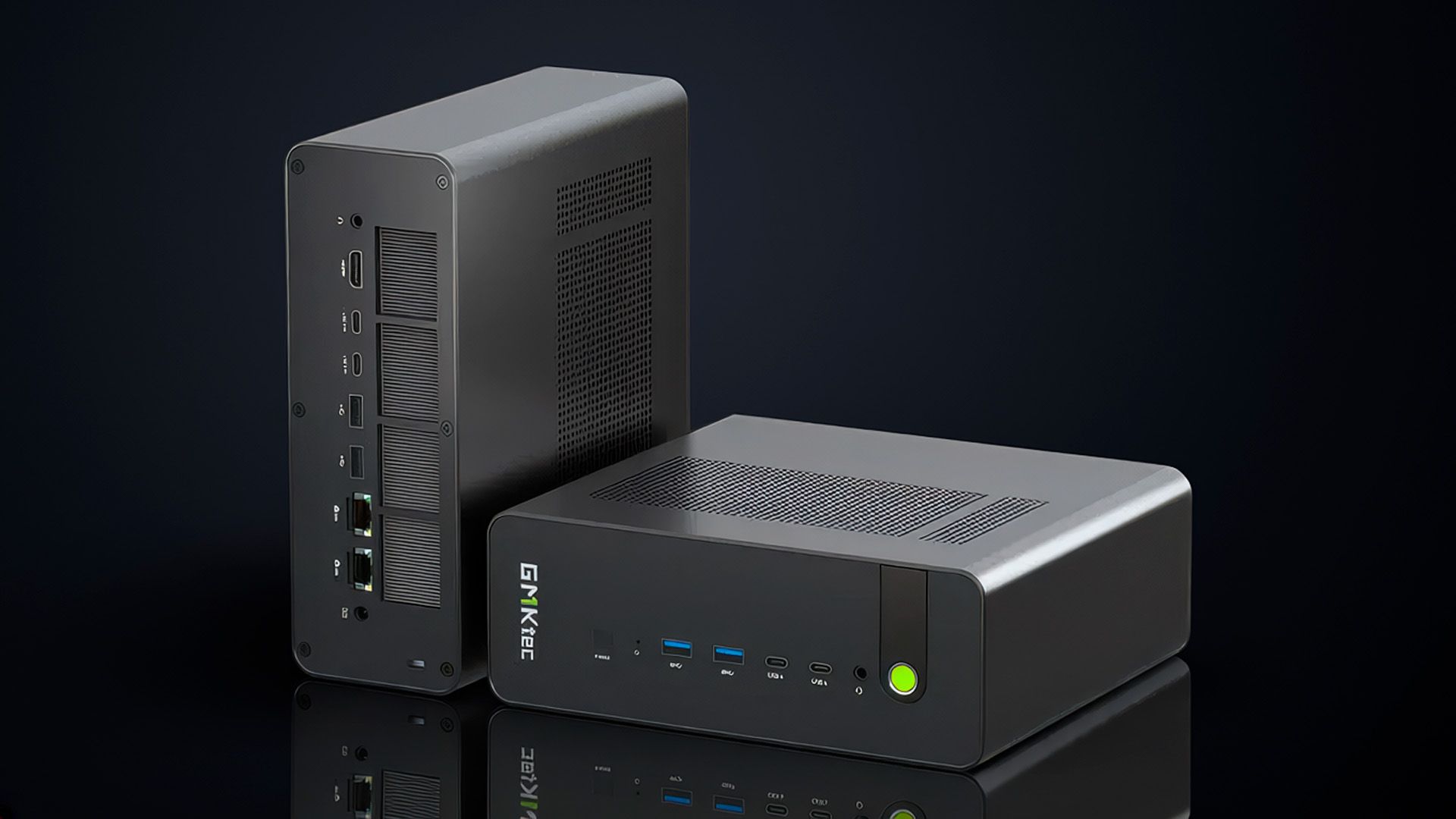
The miniaturization of high-performance computing has reached a staggering new milestone. Hardware manufacturer GMKtec has officially launched the Evo-X5 Pro, an ultra-compact agentic AI mini-PC that packs the computing capabilities of a high-end workstation into a chassis small enough to fit inside a backpack. At the heart of this diminutive marvel sits AMD’s flagship Ryzen AI Max+ Pro 495 processor—part of the highly anticipated "Gorgon Halo" APU family—paired with an astonishing 192GB of LPDDR5X-8533 unified memory.
Unsurprisingly, this desktop-shattering power comes with a price tag to match. The base variant featuring a 2TB PCIe 4.0 NVMe solid-state drive commands a hefty $6,799, while the maxed-out 495 configuration equipped with a 4TB SSD stretches to an eye-watering $7,099.
To soften the blow for early adopters, GMKtec has introduced a "super early bird" promotional window, offering a modest $425 discount on initial pre-orders. Despite the steep investment, the Evo-X5 Pro represents a massive paradigm shift for professionals, machine learning engineers, and data scientists who require massive local memory bandwidth and high-end AI processing power without the bulk of a traditional tower workstation.
Chronology: The Evolution of the ‘Gorgon Halo’ Ecosystem
The journey toward desktop-class processors capable of fitting into miniature form factors has been a long time coming. Understanding the arrival of the GMKtec Evo-X5 Pro requires looking back at the strategic silicon shifts that made it possible.
Late 2023 – Early 2024: The Rumors of ‘Strix Halo’ and ‘Gorgon’
Industry insiders began tracking AMD’s plans for a massive, enthusiast-grade APU architecture codenamed "Strix Halo" (later intersecting with terminology like "Gorgon Halo"). Unlike traditional mobile processors that rely on discrete graphics cards for heavy workloads, this new breed of silicon was designed to integrate desktop-class CPU cores with a remarkably robust graphics engine and an unprecedentedly wide memory interface.
Mid 2024: AMD Formalizes the Ryzen AI Max 400 Series
At major hardware expos, AMD laid the groundwork for its next-generation APU lineup, confirming that the new processors would combine Zen 5 CPU cores with RDNA 3.5 graphics architecture, alongside dedicated neural processing units (NPUs) built for heavy enterprise and local AI tasks. Crucially, the architecture promised support for massive amounts of unified memory, clocking up to 5.2 GHz and tearing down the traditional bottlenecks separating system RAM and video memory.
November 2024: GMKtec Breaks Cover with the Evo-X5 Pro
Breaking away from traditional laptop and massive desktop implementations, boutique PC manufacturer GMKtec seized the opportunity to pioneer the ultimate small-form-factor (SFF) AI workstation. By designing a custom thermal and motherboard layout capable of housing the flagship Ryzen AI Max+ Pro 495 alongside 192GB of high-speed LPDDR5X memory, GMKtec became one of the first vendors to commercialize a "Gorgon Halo" mini-PC.
Present Day: The Super Early Bird Launch
The Evo-X5 Pro has officially opened for pre-orders. While standard retail channels reflect the full $6,799 to $7,099 pricing matrix, early-bird buyers utilizing launch-day promotions can secure a $425 price reduction, signaling the official commercial birth of ultra-high-end, desktop-replacement AI mini-PCs.
Supporting Data & Hardware Specifications
To understand why a mini-PC commands a price higher than many used automobiles, one must examine the raw hardware specifications packed beneath the hood of the GMKtec Evo-X5 Pro.
Technical Breakdown:
- Processor (APU): AMD Ryzen AI Max+ Pro 495 (Flagship "Gorgon Halo" silicon)
- Architecture: Zen 5 CPU cores combined with RDNA 3.5 integrated graphics
- Boost Clock: Up to 5.2 GHz
- NPU Integration: High-performance neural processing unit optimized for local agentic AI, LLM (Large Language Model) inference, and autonomous workflows.
- Unified System Memory: 192GB LPDDR5X-8533
- Operating at a blazing-fast 8533 MT/s, this massive memory pool is shared dynamically between the CPU and the integrated RDNA 3.5 graphics engine via a wide memory bus.
- Storage Options:
- Base configuration: 2TB PCIe 4.0 NVMe SSD ($6,799 retail)
- Premium configuration: 4TB PCIe 4.0 NVMe SSD ($7,099 retail)
- Form Factor: Ultra-compact mini-PC chassis (pocket-sized powerhouse dimensions designed for portability and desk-space conservation).
- Promotional Incentive: $425 discount applied via select "super early bird" retail channels during the initial launch phase.
Official Responses and Industry Reception
The introduction of a $7,000+ mini-PC has sent shockwaves through the enthusiast community, prompting diverse reactions from hardware analysts, consumers, and industry representatives alike.
Market Positioning from GMKtec
Makers of high-end mini-PCs like GMKtec have historically focused on cost-effective office solutions, gaming boxes, and budget-friendly home servers. With the Evo-X5 Pro, GMKtec is boldly stepping into enterprise territory. Company representatives have emphasized that this machine is not designed for the casual consumer or typical weekend gamer.
Instead, it targets software developers, AI researchers, financial modelers, and enterprise professionals who need to run localized, parameter-heavy large language models (LLMs) without relying on cloud servers or hauling a 50-pound workstation through airports.
Analyst Perspectives and Community Feedback
Initial reactions across hardware forums and tech journalism outlets have been a mix of awe and sticker shock:
- The Performance Triumph: Reviewers note that having 192GB of lightning-fast unified memory (LPDDR5X-8533) means an AI developer can load massive open-source models (such as Llama 3 70B or similar variants) entirely into local memory, bypassing the severe latency penalties typically associated with PCIe bus transfers or limited VRAM on consumer GPUs.
- The Cost Barrier: At $7,099, critics point out that the Evo-X5 Pro creeps into the pricing territory of fully custom-built desktop workstations featuring multiple discrete enterprise GPUs (such as NVIDIA RTX Ada Lovelace cards). However, proponents argue that no desktop tower can match this level of computing density in a chassis that fits inside a briefcase.
Implications for the Future of Computing
The GMKtec Evo-X5 Pro and its underlying AMD "Gorgon Halo" architecture point toward several profound shifts in how high-performance computing will be delivered in the coming years.
1. The Rise of Localized "Agentic AI" Workstations
As companies and independent developers push toward agentic AI—autonomous software systems capable of executing complex multi-step workflows—privacy, data sovereignty, and latency become paramount. Sending sensitive enterprise data to cloud APIs is no longer viable for every sector. The Evo-X5 Pro demonstrates that high-end local AI inferencing is no longer exclusive to massive server racks; it can be deployed on a desk or carried in a mobile kit.
2. The Death of the Traditional RAM/VRAM Boundary
For decades, the physical separation between system RAM (DDR4/DDR5) and graphics memory (GDDR6/HBM) created a major bottleneck for graphics rendering and machine learning tasks. By leveraging unified memory architectures with ultra-high bandwidth (LPDDR5X-8533), processors like the Ryzen AI Max+ Pro 495 allow the integrated GPU to treat system memory as its own. This effectively grants the system 192GB of usable memory space for graphic assets, data sets, and neural weights alike.
3. A Glimpse into the Future Pricing Curve
While the initial price tag of over $7,000 puts the Evo-X5 Pro strictly in the hands of enterprise pioneers, wealthy enthusiasts, and heavily funded development studios, technology historically trickles down. As manufacturing yields improve and production scales for "Gorgon Halo" derivatives, future iterations of these high-memory APU mini-PCs are likely to see more accessible price points.
For now, the GMKtec Evo-X5 Pro stands as a bold, expensive, and undeniably impressive testament to what happens when you cram absolute cutting-edge silicon into the smallest possible space.

