

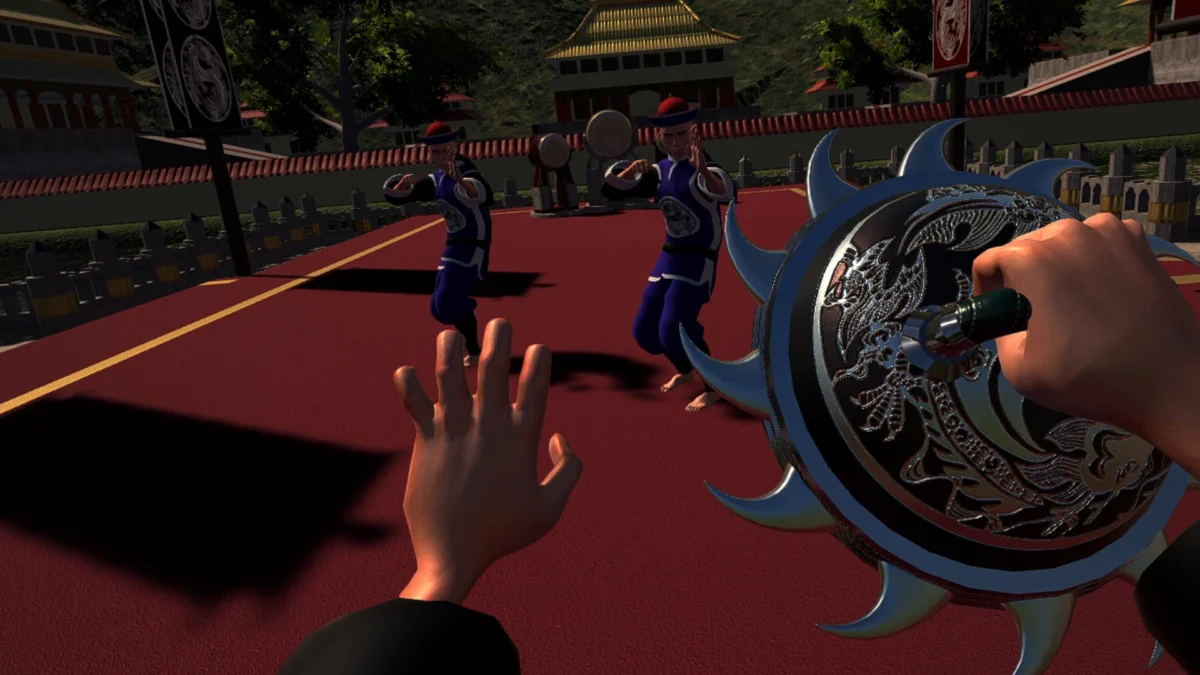
As the Virtual Reality (VR) landscape matures, the barrier to entry—once defined by cumbersome cables, expensive high-end hardware, and limited software libraries—is rapidly crumbling. The intersection of accessible hardware, such as the Meta (formerly Oculus) Quest 2, and seamless wireless streaming solutions like AirLink and Virtual Desktop, has democratized the VR experience. Among the titles capitalizing on this newfound accessibility is Dragon Fist: VR Kung Fu, a combat simulator that challenges players to step beyond mere button-mashing and into the disciplined, tactical world of martial arts.
The Evolution of Virtual Combat
Virtual Reality has long promised a level of immersion that traditional "flat" gaming simply cannot replicate. However, the genre of fighting games has historically struggled to translate the precision of a joystick-driven combo system into the physical realm of motion tracking. Dragon Fist: VR Kung Fu represents a significant evolution in this space, eschewing the arcade-style "health bar" mentality for a more grounded, biomechanical approach to combat.
At its core, Dragon Fist is a first-person martial arts simulation that emphasizes kinetic feedback. Players are tasked with selecting a character from a diverse roster, each possessing unique fighting styles, strengths, and weaknesses. The game then guides the player through a progression of increasingly difficult bouts, requiring not just physical exertion, but a strategic understanding of anatomy and combat flow.
Tactical Mechanics: More Than Just Swings
What sets Dragon Fist apart from its VR counterparts is its emphasis on tactical depth. In many VR titles, success is often achieved through high-speed, repetitive motion. Dragon Fist mandates precision. The game utilizes a sophisticated hit-detection system that accounts for the specific anatomy of the opponent.
Strategic Debuffs and Combat Flow
The combat engine rewards players for targeting specific areas of the opponent’s body:
- Ocular Strikes: A well-placed finger jab to the eyes temporarily impairs an opponent’s vision, creating an opening for a follow-up flurry.
- Ribcage Impacts: Precision punches directed at the lower ribs serve to deplete the opponent’s stamina regeneration, effectively slowing their ability to retaliate or maintain a high-intensity guard.
- The Stamina Economy: Players must manage their own stamina, preventing the "wild swinging" that often leads to exhaustion in less refined VR brawlers.
This creates a "rhythm of combat" that forces the player to pause, assess, and strike with intent rather than desperation. As the difficulty scales, the AI becomes more adept at blocking and parrying, rendering mindless flailing ineffective and even detrimental to the player’s survival.
A Roster of Mastery: Character Diversity
The game features an extensive roster of fighters, each designed with specific narrative and mechanical archetypes in mind. Whether a player prefers the heavy, crushing blows of a tank-like character or the lightning-fast, high-precision strikes of a speed-focused martial artist, the game offers a playground for experimentation.
This variety serves a dual purpose: it adds replayability and forces players to adapt their real-world physicality to match the digital persona they have selected. One might find that their preferred style in-game is vastly different from their actual athletic capabilities, prompting a journey of self-improvement and learning that mirrors the traditional path of a martial arts student.
Chronology of Development and Reception
Since its release on platforms like Steam, Dragon Fist has carved out a niche as one of the most physically demanding titles available. The development cycle reflects a focus on player feedback, with the creators continuously refining the hit detection and tracking algorithms.
While the game is not without its technical hurdles—most notably the occasional latency between player input and on-screen response—it is widely considered a benchmark for what can be achieved in independent VR development. These "tracking hiccups," as acknowledged by the community, are often viewed as limitations of current consumer-grade tracking technology rather than failings of the software itself. As headset tracking improves, the efficacy of Dragon Fist’s combat engine is expected to sharpen further.

Supporting Data: The VR Fitness Movement
It is impossible to discuss Dragon Fist without addressing the "VR Fitness" phenomenon. With many users utilizing VR as a primary source of cardiovascular exercise, titles that focus on high-movement, high-engagement gameplay are seeing a surge in popularity.
The Physics of the Workout
Data from various VR fitness communities suggest that consistent play sessions in Dragon Fist can result in significant caloric expenditure. Unlike stationary rhythm games, the constant movement required for dodging, weaving, and striking provides a full-body workout that engages the core, shoulders, and legs.
- Average Caloric Burn: Depending on the intensity level, players report burning between 300 to 500 calories per hour, comparable to shadowboxing or light sparring in a real-world gym.
- Accessibility: The ability to play wirelessly via Quest 2 allows for a larger, unobstructed space, which is essential for the wide-arc movements required in the game.
Implications for the Future of VR Fighting
The success of Dragon Fist signals a broader shift in the industry. As developers move away from "gimmick" titles, the focus is shifting toward deep, systemic gameplay.
The Professionalization of VR Esports
With the rise of VR competitive gaming, the implications for titles like Dragon Fist are substantial. If the game continues to iterate on its competitive balance, it could become a staple of VR esports. The skill ceiling is high; elite players are already demonstrating a level of mastery that involves complex feints, parries, and distance management that was previously thought impossible in a virtual space.
Technological Hurdles
However, the path forward is not without challenges. The industry must overcome:
- Latency: The gap between physical movement and visual feedback must shrink further to achieve true "sim-level" fidelity.
- Hardware Weight: For a game that requires significant movement, the weight of the headset and the pressure on the neck remain a limiting factor for long-term play.
- Sensor Blindness: Current inside-out tracking cameras on headsets like the Quest 2 can lose track of controllers when they are held behind the player’s back or too close to the headset, which poses a significant hurdle for a 360-degree fighting game.
Official Responses and Developer Stance
The developers of Dragon Fist have consistently engaged with the community through platforms like Discord and Steam community forums. Their response to user feedback has been proactive, frequently updating the game to adjust AI difficulty and refine controller mapping. This transparent development style has fostered a dedicated player base that feels invested in the game’s evolution.
In public statements, the development team has emphasized their goal of creating a "living" martial arts experience—one that doesn’t just simulate a fight, but simulates the discipline of a fight. They have underscored that while the game is meant to be fun, the underlying philosophy is one of respect for the martial arts discipline, which is why the game avoids the "gore-heavy" tropes of other fighting titles in favor of a clean, technical aesthetic.
Conclusion: The Future is Physical
Dragon Fist: VR Kung Fu is more than just a game; it is a testament to the potential of VR as a medium for active, tactical engagement. By bridging the gap between high-intensity exercise and strategic gaming, it provides a unique value proposition that is rarely seen in the broader gaming market.
For those looking to move beyond the controller and into the virtual dojo, Dragon Fist offers a compelling, challenging, and deeply rewarding experience. While it reminds us that VR technology still has room to grow, it simultaneously proves that the foundation for a new era of interactive combat is already here. As hardware continues to evolve, we can expect titles like Dragon Fist to serve as the pillars of a new, physically active gaming paradigm. Whether you are a fan of martial arts, a fitness enthusiast, or simply a gamer looking for a new challenge, Dragon Fist is a title that demands—and deserves—your full attention.

