

Valve’s long-awaited Steam Machine has officially hit the consumer market, and while social media feeds are currently flooded with images of the sleek, compact device unboxed in living rooms across the globe, a darker narrative is beginning to emerge. Despite high expectations, the device has faced criticism for its premium $1,000 price point and lackluster gaming performance. Now, these frustrations have been compounded by what appears to be the first documented instance of a hardware failure reminiscent of the infamous Xbox 360’s "Red Ring of Death."
For early adopters, the allure of a dedicated "Steam console" was undeniable, but as reports of flickering red LEDs surface, the community is left questioning the long-term reliability of Valve’s ambitious hardware foray.
The Chronology of a Failure
The incident originated on the r/steammachine subreddit, where user me_hill shared a discouraging account of their experience. According to the user, the device functioned perfectly for approximately 20 minutes—just enough time to begin exploring the expansive universe of No Man’s Sky.
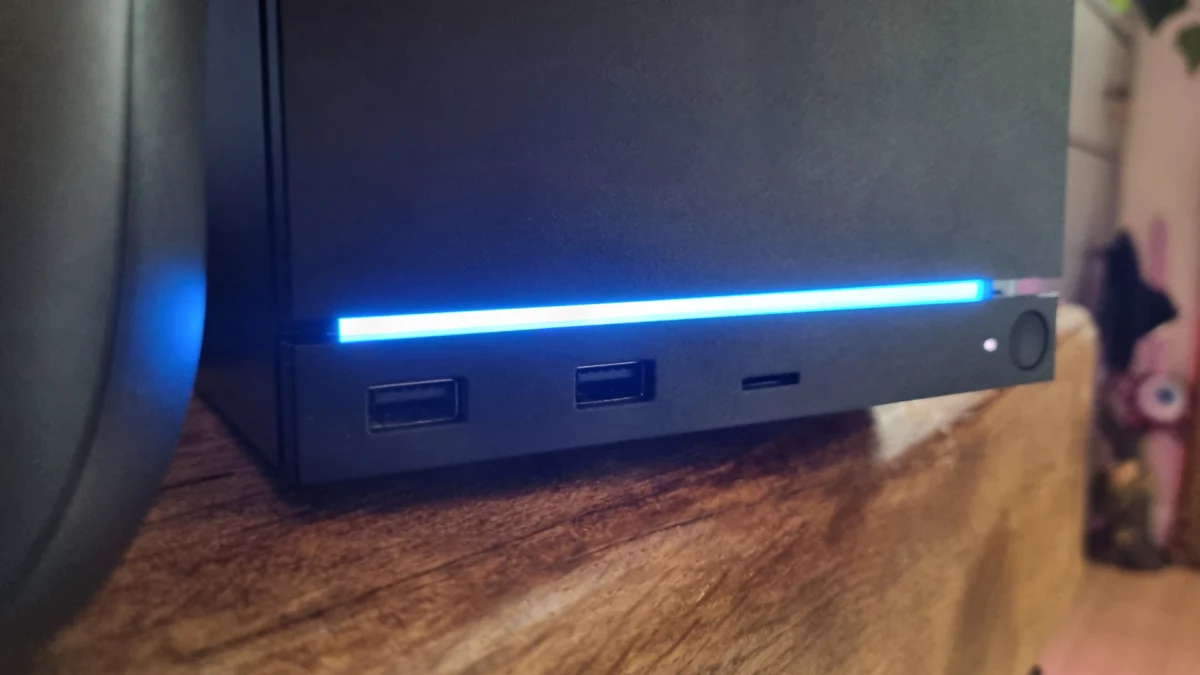
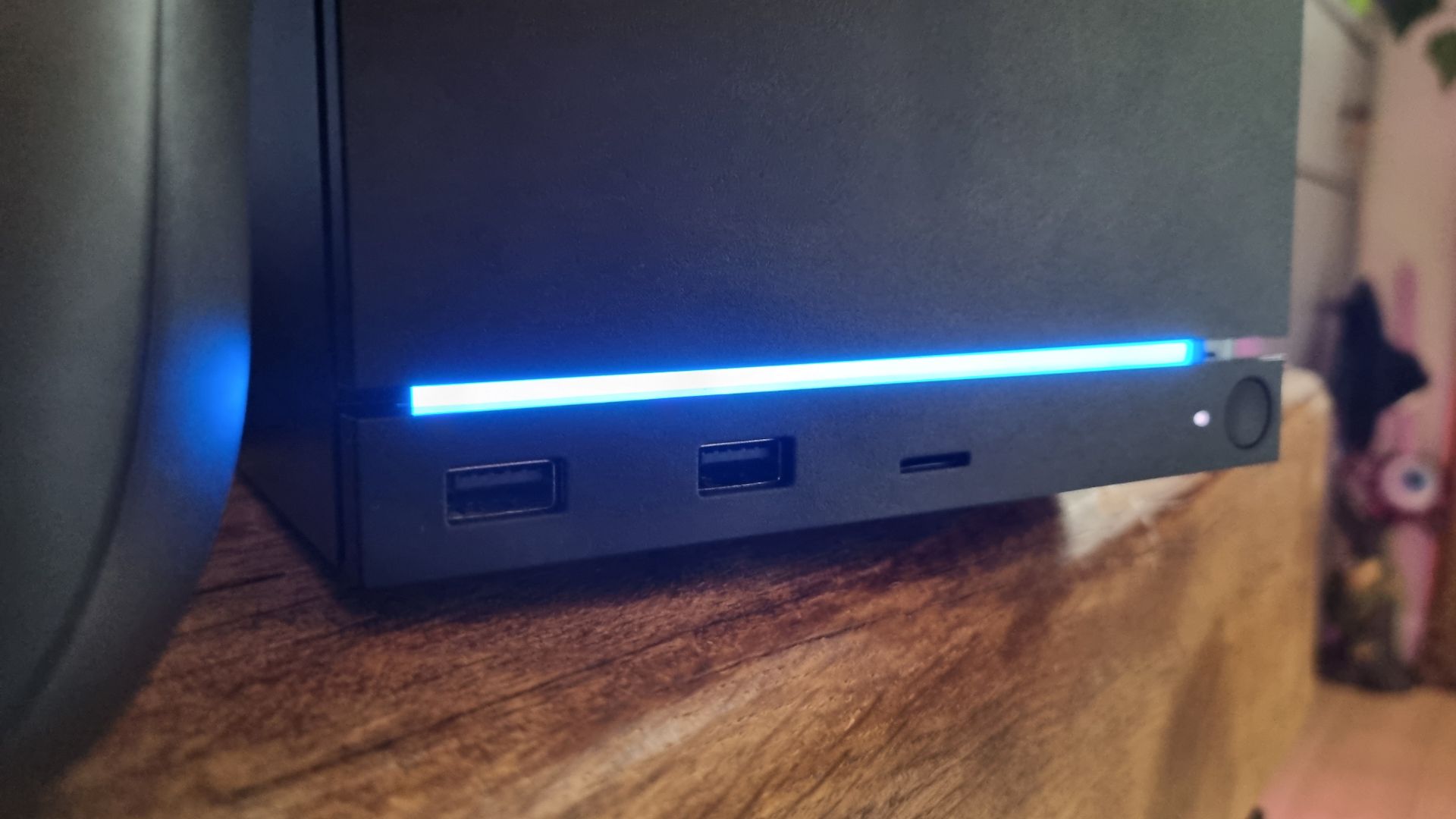
However, the trouble began immediately following a routine software update. Upon rebooting, the device failed to initialize. Instead of the standard, inviting blue glow of the front-facing LED strip, the user was greeted by a pulsing red line.
"Well, the Steam Machine was pretty cool for the 20 minutes that it worked," the user remarked, highlighting the stark contrast between the initial excitement of purchase and the immediate reality of a "bricked" console. This failure, which manifested as a half-line of pulsing red light, has been identified by the community as a diagnostic indicator of GPU failure. While the exact cause remains under investigation, the timing—occurring immediately post-update—suggests a potential conflict between the device’s firmware and its custom-tuned hardware components.
Decoding the LEDs: A Diagnostic Warning
Valve has designed the Steam Machine’s front panel to serve as a primary communication tool for the user. Under normal operating conditions, the device cycles through shades of white and blue to signify that the system is idling, processing, or actively engaged in a gaming session.
However, the inclusion of a red light sequence is an explicit warning from the system’s BIOS and monitoring software. According to official Valve support documentation, a pulsing red LED is the system’s way of signaling a critical hardware fault. In this specific case, the "Red Line of Death" points directly to the graphical processing unit (GPU).
While it is theoretically possible that the error is a software-induced false positive—perhaps a driver handshake failure caused by the update—the physical nature of the error suggests that the GPU may have encountered a fatal instruction or thermal threshold that triggered a hard safety lockout.
Beneath the Chassis: The Reality of "Semi-Custom" Hardware
To understand why such a failure might occur, one must look at what lies beneath the Steam Machine’s minimalist exterior. Valve has marketed the device as utilizing "semi-custom" chips from AMD, a term often used to denote bespoke engineering tailored for a specific thermal envelope and form factor.
However, industry analysis reveals that beneath the hood, the architecture is remarkably similar to established, mass-produced components found in high-end laptops. The CPU is functionally equivalent to the AMD Ryzen 5 7540U, and the GPU shares the DNA of the Radeon RX 7600M.
While these are capable, mid-to-high-range components, their integration into a small, enclosed chassis presents significant thermal management challenges. Mass production, by its nature, allows for slight variances in component quality. Even with stringent quality control, the probability of a "bad batch" of chips or a failure in the soldering of the BGA (Ball Grid Array) packages remains a mathematical certainty in large-scale manufacturing.
When a company relies on high-density, integrated mobile chips, the thermal dissipation becomes the primary point of failure. If the software update caused an unexpected spike in voltage or frequency, or if the fan controller failed to ramp up, the GPU could have effectively "cooked" itself within minutes of operation.
The Implications for Valve and Early Adopters
The emergence of a potential "Red Line of Death" carries significant weight for Valve, a company that has historically prioritized software ecosystem stability over hardware manufacturing. The Xbox 360’s hardware failures in the mid-2000s cost Microsoft over a billion dollars in repairs and permanently damaged the brand’s reputation for years. Valve, currently navigating a competitive market where the Steam Machine is already fighting an uphill battle against its high price tag, cannot afford a similar systemic failure.
If this incident proves to be an isolated case of "infant mortality"—a term used in manufacturing for components that fail shortly after first use—it may be dismissed as a statistical outlier. However, if reports of the red LED error begin to proliferate, Valve will face a public relations nightmare. The $1,000 price point creates a high barrier to entry and, by extension, a high expectation of quality. Consumers who spend a significant sum on a console expect a "plug-and-play" experience that is inherently more reliable than building their own PC.
Official Responses and Next Steps
At the time of writing, me_hill has confirmed that they have reached out to Valve’s support channels. The response from the manufacturer will be the litmus test for Valve’s commitment to its hardware division.
Will Valve offer a rapid replacement, or will the user be forced to navigate a lengthy RMA (Return Merchandise Authorization) process? The manner in which Valve handles this support case will dictate whether this becomes a mere blip on the radar or a defining "failure" of the Steam Machine’s launch window.
For the broader consumer base, this serves as a reminder that the Steam Machine is, effectively, a PC in a box. It is susceptible to the same software conflicts, driver bugs, and hardware thermal limits as any desktop or laptop. The convenience of a console-like form factor does not exempt the device from the complexities of modern computing.
Conclusion: A Cautionary Tale
As Valve moves forward, the pressure to optimize the software and ensure that hardware components are not pushed beyond their thermal limits will be paramount. For the early adopters who have already invested, the hope is that this "Red Line of Death" is a software bug that can be patched with a BIOS update, rather than a systemic design flaw.
In the meantime, the user community remains in a state of watchful waiting. The Steam Machine represents a bold vision for the future of PC gaming in the living room, but that vision is currently flickering—and in at least one instance, glowing an ominous, unyielding red. Whether the Steam Machine can overcome these early hardware hurdles and justify its premium price will depend on how transparently Valve communicates with its users and how decisively it addresses these critical failure reports.
For now, the Steam Machine remains a powerful, if temperamental, piece of hardware—a device that, when it works, offers a glimpse into the future, but when it fails, serves as a expensive, mute reminder of the fragility of modern silicon.

