

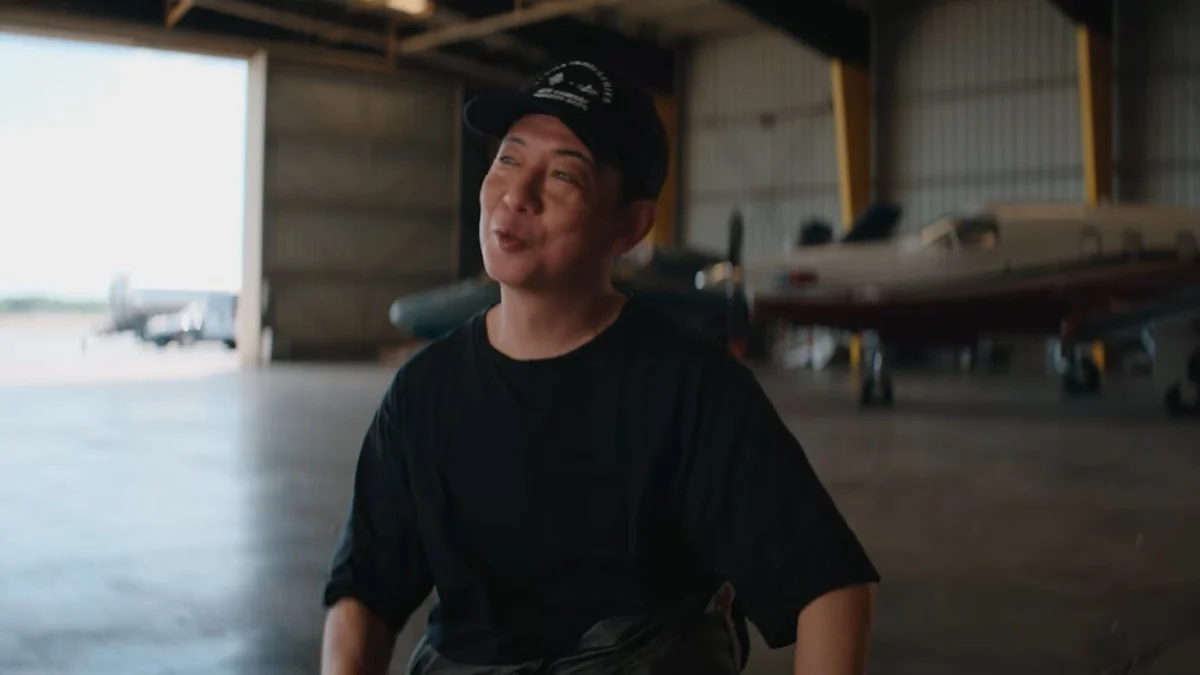
For three decades, Kazutoki Kono has been the visionary architect behind the skies of the Ace Combat series. Since his early contributions to the franchise beginning with Ace Combat 2 in 1997, Kono has spent his professional life crafting the ultimate aerial combat experience. He has meticulously simulated the physics of dogfights, the roar of afterburners, and the G-force-induced tension of high-altitude maneuvers. Yet, for all his mastery of the virtual cockpit, there remained one glaring void in his resume: he had never actually flown in a fighter jet.
That changed this week. In a moment of poetic professional fulfillment, Bandai Namco released a promotional featurette alongside the announcement of Ace Combat 8: Wings of Theve, showcasing Kono finally taking to the skies. It is a story that bridges the gap between digital art and physical reality, proving that even the most seasoned creators can find new inspiration in the very subject matter they have spent a lifetime emulating.
The Chronology of a Long-Held Ambition
The narrative of Kono’s quest for flight is one of patience and persistent professional curiosity. During a candid interview in June 2024, Kono reflected on his tenure with the Ace Combat brand. When asked if his deep involvement with the franchise had ever provided him the opportunity to strap into an F-16 or similar aircraft, his answer was both humble and slightly wistful.
"Unfortunately, over the last 30 years of my career, I’ve been appealing, saying ‘hey, we want to ride in one of these jets!’ but we have not yet had the chance," Kono admitted. "Neither myself, nor anyone on the team."
This admission sparked a lighthearted but resonant conversation within the gaming community. It highlighted a fascinating irony: here was a man responsible for millions of players feeling the rush of aerial combat, yet he remained grounded. Following the publication of that interview, a groundswell of support—and perhaps a nudge from the marketing departments at Bandai Namco—set wheels in motion.
In a recent social media post, Kono confirmed that the interview was, in fact, the catalyst for the events that followed. "A tweet from Ace Combat brand director Kazutoki Kono confirms that our interview did, in fact, set events in motion that culminated with his recent fighter jet joyride," noted reports. By late 2024, the arrangements were finalized, and Kono was brought to an airfield to experience the reality of the skies he had spent decades designing.
The Experience: Inside the MiG-21 Cockpit
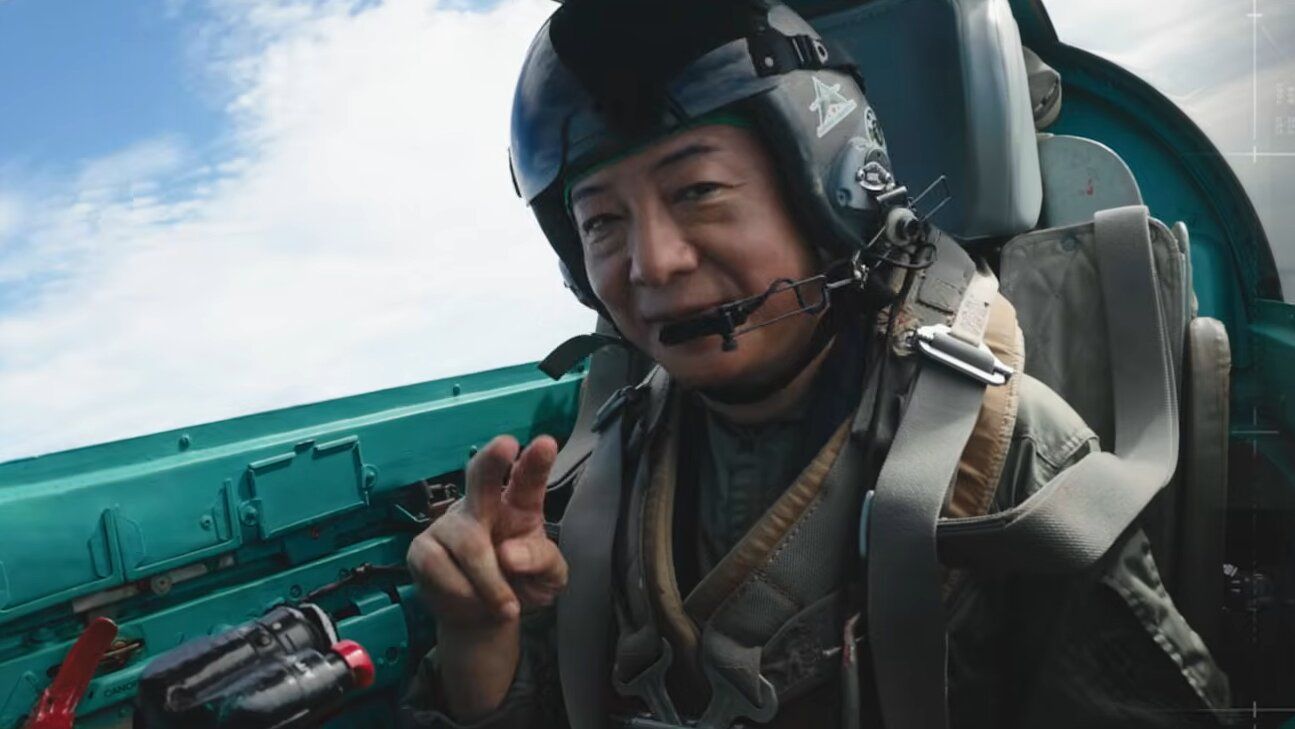
The promotional footage released by Bandai Namco offers a window into Kono’s transformative experience. Strapped into the cockpit of a MiG-21, Kono transitioned from the role of director to that of a pilot—or at least a very high-level passenger.
"I was scared before getting in," Kono confessed in the video. "But once we were airborne, it turned into one of the most beautiful experiences."
For someone accustomed to the "unlimited" physics of gaming, the visceral reality of flight was a shock to the system. Kono noted that while the G-forces during turns were certainly noticeable, the most surprising element was the downward pressure—the sheer weight of the maneuver acting upon his body.
"Being up in the sky inside such a compact cockpit felt incredible," he continued. "It was a surprisingly comfortable and enjoyable space to be in. Compared to a large aircraft, it really made me appreciate the appeal of fighter jets."
Data and Development: The Intersection of Simulation and Reality
The Ace Combat series has long been lauded for its balance between arcade-style accessibility and authentic atmospheric presentation. The series is not a strict flight simulator, yet its "feel" is legendary. Kono’s experience in the MiG-21 provided an unexpected feedback loop for the development of Ace Combat 8.
"Looking out at the clouds and the sky while flying, I couldn’t help but think how Ace Combat is incredibly well-made," Kono remarked post-flight.
From a development standpoint, this experience serves as a qualitative benchmark. While the technical limitations of software are well-understood by his team, the subjective experience of the pilot—the claustrophobia of the cockpit, the blinding clarity of the horizon, and the physical exhaustion caused by high-G maneuvers—are elements that cannot be easily replicated by code. By finally experiencing these variables, Kono has gained a unique perspective that will undoubtedly influence the design philosophy of the upcoming title.
Official Responses and Marketing Implications
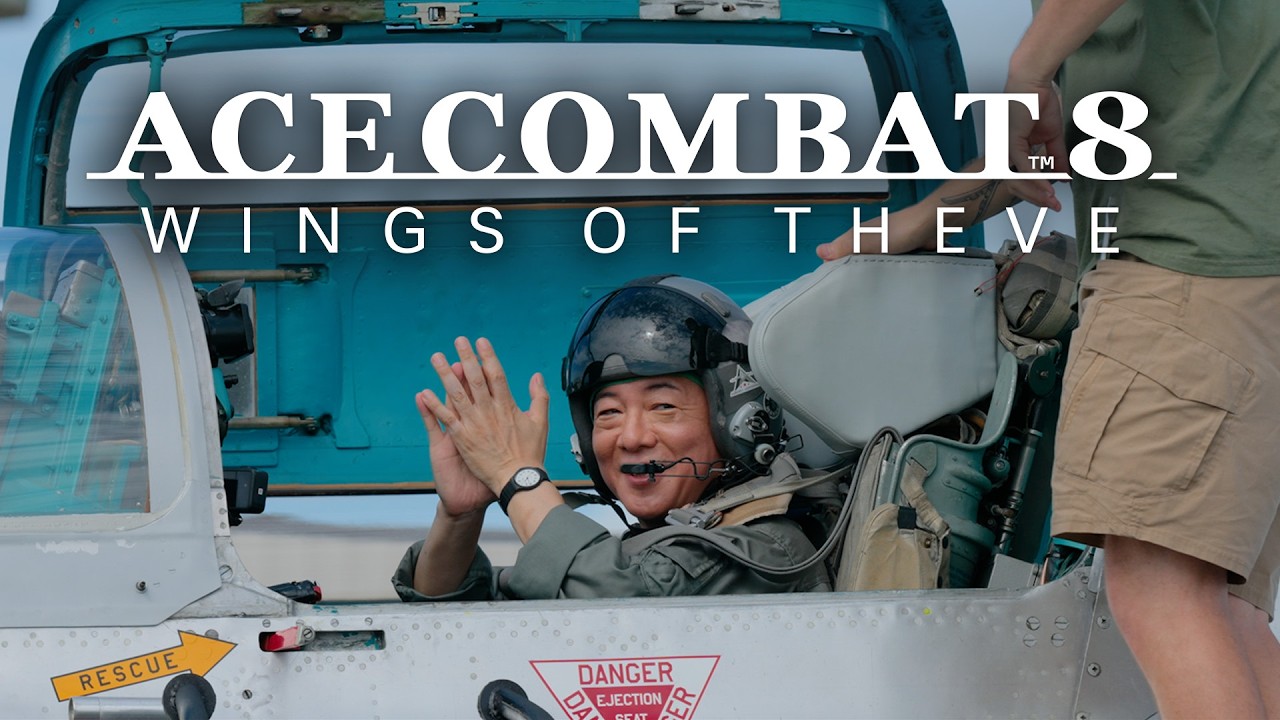
The move by Bandai Namco to facilitate this flight is, at its core, a brilliant piece of marketing. Ace Combat 8: Wings of Theve is clearly a high-priority title for the publisher, supported by a significant budget and an expansive multimedia strategy, including a live-action YouTube miniseries.
By documenting Kono’s journey, the publisher has successfully humanized the development process. It creates a narrative arc that ties the legacy of the creator to the future of the product. It suggests to the consumer that Ace Combat 8 is not merely a sequel, but the culmination of 30 years of research, passion, and, finally, direct experience.
The industry reaction has been overwhelmingly positive. There is a distinct sense of "justice" in seeing a veteran creator finally cross an item off his bucket list. As one observer noted, "The public outcry after the initial interview was published reached a level of fervor that simply could not be ignored." While the impact of a single article or a few social media posts may be debated, the result is undeniable: the brand director is now an "ace" in his own right.
Implications for the Future of the Franchise
What does this mean for the future of Ace Combat? Historically, the series has moved toward more cinematic, grand-scale narratives. With Wings of Theve, there is an expectation of even greater visual fidelity and a more profound focus on the "pilot experience."
Kono’s post-flight comments suggest that he remains as dedicated as ever. Even after the adrenaline of the flight, he maintained his focus on the franchise. The fact that he was evaluating the "well-made" nature of his own games while flying at hundreds of miles per hour is a testament to his commitment.
Furthermore, this event sets a precedent for how gaming directors interact with their subject matter. In an era where AAA titles are becoming increasingly realistic, the expectation for directors to "live the game" is rising. We may see more developers seeking out real-world experiences to ground their digital creations, leading to a new wave of authenticity in the medium.
Conclusion
Kazutoki Kono’s journey from the desk to the cockpit is more than just a promotional stunt; it is the closing of a circle. For 30 years, he has been the puppet master of the skies, defining what it feels like to fly for a generation of players. By finally taking the controls, he has validated his own work and reinforced the legacy of the Ace Combat brand.
As Ace Combat 8: Wings of Theve approaches, fans can look forward to a title crafted by a director who now knows exactly what it feels like to look down at the clouds and realize, for the first time, that he is finally home. The sky, it seems, is no longer just a digital canvas for Kono—it is a lived reality.

