

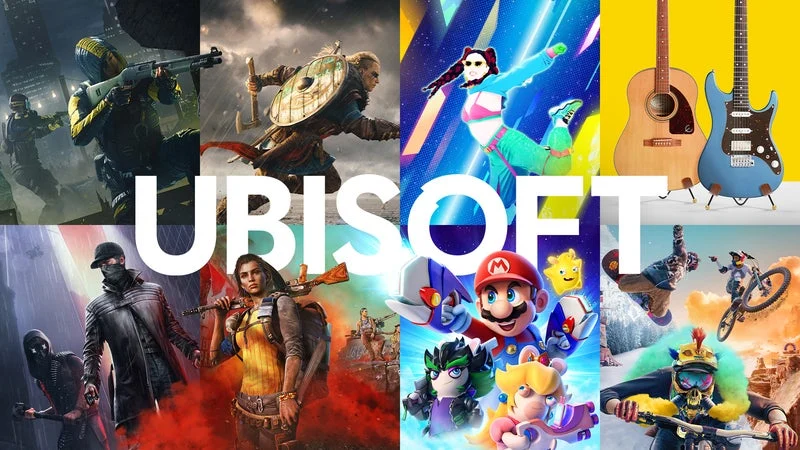
In a strategic maneuver aimed at streamlining operations and revitalizing its most iconic intellectual properties, Ubisoft has tapped industry veteran Christoph Hartmann to head its newly minted "Creative House 2" division.
The appointment marks a significant turning point in the French gaming giant’s ongoing corporate restructuring, placing one of the industry’s most seasoned executives at the helm of a portfolio that includes some of the most influential titles in modern gaming history.
The Strategic Shift: A New Structure for Ubisoft
The creation of "Creative House 2" is not an isolated organizational change; it is the cornerstone of a sweeping, long-term restructuring plan initiated by Ubisoft to drive efficiency and creative focus. Faced with mounting market pressures, the company has moved away from a centralized command structure toward a more modular approach.
Under this new framework, Ubisoft has organized its sprawling development network into "Creative Houses." These units are designed to be semi-autonomous entities that take full ownership of specific key intellectual properties (IPs). While central business teams provide support, the Creative Houses are empowered to drive the strategic vision, development pipeline, and long-term viability of their respective brands.
Creative House 2, which will be directed by Hartmann, carries the weight of several of the industry’s most recognizable franchises:
- Splinter Cell: The stealth-action series that defined a generation.
- The Division: A cornerstone of the tactical, open-world shooter genre.
- Ghost Recon: A hallmark of military-tactical gameplay.
The first of these units, now rebranded as "Vantage Studios," focuses on Ubisoft’s "heavy hitters," including Assassin’s Creed, Far Cry, and Rainbow Six. Vantage Studios is currently headed by Charlie Guillemot, the son of Ubisoft CEO Yves Guillemot.
Christoph Hartmann: A Legacy of Leadership
The selection of Christoph Hartmann is a calculated move. Hartmann’s career trajectory reads like a map of the modern gaming industry’s evolution. He is perhaps best known for his foundational work at Take-Two Interactive, where he built the 2K Games label into a powerhouse. During his tenure, he oversaw the development and publishing of massive hits, establishing a reputation for balancing creative ambition with commercial viability.
In 2017, Hartmann transitioned to Amazon, where he was tasked with leading the retail giant’s ambitious—and notoriously difficult—push into the video game market. His tenure at Amazon Games was characterized by the company’s efforts to establish a foothold in the console and PC space, a mission that saw both high-profile successes and significant internal turbulence. Hartmann departed Amazon in January of this year, leading to speculation about his next move.
Ubisoft’s decision to bring him on board suggests a desire for "battle-tested" leadership. The company is currently navigating a complex transition, and having a veteran who understands the intricacies of both independent studio culture and massive corporate infrastructure is seen as a major asset.
The Integration of ‘March of Giants’
A critical component of Hartmann’s new mandate is the integration of March of Giants. This upcoming free-to-play Multiplayer Online Battle Arena (MOBA) game represents a unique addition to the Ubisoft portfolio.
Acquired by Ubisoft from Amazon Game Studios in December, March of Giants was developed by a cohort of veteran Ubisoft creatives who had previously been working under the Amazon umbrella. The acquisition was an unusual move—effectively bringing internal talent back into the fold after they had migrated to a competitor. By housing March of Giants within Creative House 2, Ubisoft is signaling that this project will be a primary focus for the division, serving as a testbed for the company’s long-term aspirations in the live-service and competitive multiplayer space.
Chronology: The Road to Restructuring
To understand the significance of this appointment, one must look at the timeline of Ubisoft’s recent evolution:
- 2023 – Early 2024: Ubisoft announces a series of cost-cutting measures, including project cancellations and studio closures, intended to achieve $200 million in annual savings.
- Late 2024: The company unveils its new "Creative House" structure, a response to the need for greater agility in a rapidly changing market.
- December 2024: Ubisoft officially acquires the MOBA March of Giants from Amazon, signaling a shift in its competitive multiplayer strategy.
- January 2025: Christoph Hartmann officially departs Amazon Games, sparking industry rumors regarding his future.
- Current Date: Ubisoft confirms Hartmann as the General Manager of Creative House 2, effectively finalizing the leadership structure for its new organizational model.
Official Responses and Strategic Vision
The announcement has been met with optimism from the company’s upper echelons. CEO Yves Guillemot highlighted the necessity of a leader who can bridge the gap between creative excellence and disciplined execution.
"Christoph is exactly the kind of leader we needed for Creative House 2—a passionate gamer with a proven ability to bring out the best in creative teams and build franchises that last," said Guillemot in a company statement. "His experience across development and publishing, as well as his management style, give him a rare understanding of what it takes to make great games."
For his part, Hartmann has emphasized a return to the fundamentals of player experience.
"The talented teams at Massive, Ubisoft Montreal, Ubisoft Paris, and Ubisoft Toronto have always known how to create worlds that players lose themselves in," Hartmann remarked. "With Creative House 2, we are giving them the structure, support, and vision to go further, to build the kind of intense, unforgettable experiences that remind players why they fell in love with games in the first place."
Implications for the Future
The implications of this appointment are manifold, impacting not just Ubisoft’s internal culture but the broader market landscape:
1. Stability for Flagship Franchises
Splinter Cell and The Division have experienced periods of uncertainty regarding their long-term development pipelines. By concentrating these titles under a single leader, Ubisoft is providing a clear point of accountability. Fans can expect a more unified vision for these IPs moving forward.
2. A Pivot Toward Live-Service Competitiveness
The inclusion of March of Giants in Creative House 2 indicates that Ubisoft is serious about breaking into the MOBA market. Hartmann’s experience at Amazon—a company that has struggled to balance its technical infrastructure with game-design talent—will be tested as he attempts to scale this project effectively.
3. The "Creative House" Model as a Competitive Advantage
If the Creative House model succeeds, it could serve as a template for other large publishers struggling with bloat. By delegating authority, Ubisoft aims to reduce the "bureaucratic drag" that often plagues large-scale AAA development. The success of Hartmann’s division will be the primary barometer for whether this structural shift is a genuine solution or merely a rebranding of old problems.
4. Cultural Transformation
Hartmann faces the challenge of managing diverse, global studios—Massive, Montreal, Paris, and Toronto—that have historically operated with significant independence. Unifying these teams under a single strategic umbrella while maintaining the unique "creative spark" of each studio will require a delicate hand.
Conclusion
As Ubisoft enters this new chapter, the appointment of Christoph Hartmann signals a move toward consolidation and focus. With the weight of beloved franchises and the promise of new, competitive ventures like March of Giants on his shoulders, Hartmann occupies one of the most important seats in the industry. Whether he can leverage his past successes to navigate the specific challenges of Ubisoft’s current era remains to be seen, but the industry is watching closely.
The goal is clear: to move past the turbulence of recent years and restore Ubisoft to a position of undisputed creative and commercial leadership in the global gaming market.

