

For many players, the end of a Path of Exile 2 (PoE 2) league marks a period of quiet resignation. The adrenaline of the grind fades, the gear is sold off, and the servers experience a gradual exodus as the community awaits the next season’s content. However, for content creator and theory-crafter Empyriangaming, the end of a league is not a time for rest—it is an invitation to perform "stress tests" that push the limits of Grinding Gear Games’ proprietary engine.
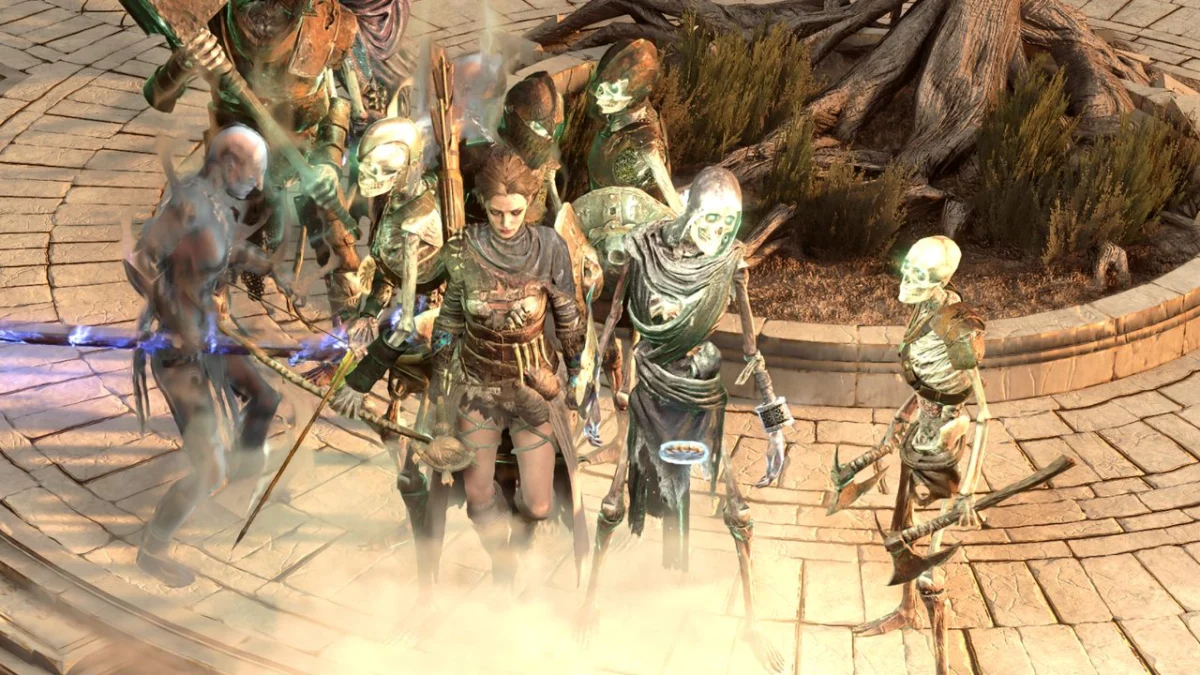
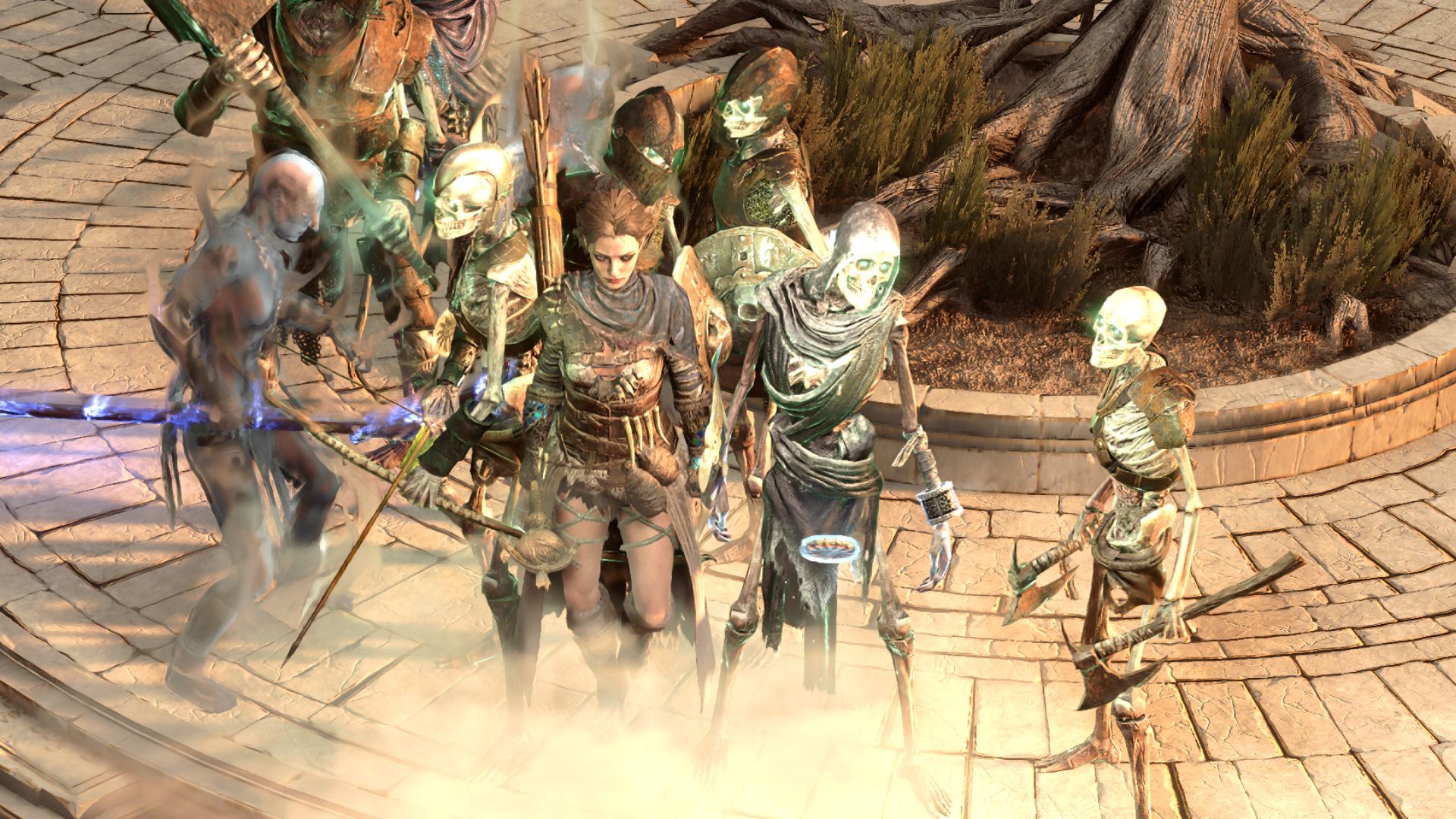
In a recent experiment that has sent shockwaves through the community, Empyriangaming and a group of associates attempted the impossible: they sought to summon an army so vast that it would effectively collapse the game’s server-side processing. By coordinating six players to simultaneously hit the game’s minion cap, the group successfully generated a "skeleton singularity" of 2,000 undead warriors, turning a high-octane action RPG into a frame-rate-starved slide show.
The Economics of Excess: Minion-Maxxing
To understand the scale of this undertaking, one must first appreciate the staggering cost involved. In Path of Exile 2, min-maxing is an art form, but Empyriangaming’s project moved into the realm of financial absurdity. The gear sets required to sustain such an army cost more in-game currency than the average player earns in hundreds of hours of dedicated gameplay.
The strategy relied on a sophisticated manipulation of the game’s resource mechanics. By aggressively stacking "resource cost reduction" modifiers, the team managed to drive the mana/energy cost of summoning a single skeletal priest into the single digits. When coupled with massive pools of that specific resource, the players could cast their summoning spells hundreds of times in rapid succession.
However, the developers at Grinding Gear Games have implemented safeguards to prevent total system crashes. The game’s logic dictates a hard cap of 255 minions per type; once this limit is hit, the game engine automatically purges the oldest summons to make room for the new. To bypass this, Empyriangaming recruited five other players, each bringing their own optimized build, effectively pooling their collective army to breach the 2,000-minion threshold.
Chronology of the Chaos
The event began in the "Trial of the Sekhemas," a roguelike mode within Path of Exile 2 that offers unique, temporary buffs. One such boon allows for a significant increase in the number of active minions a player can sustain.
- Phase One: Preparation: The group spent days theory-crafting and acquiring the necessary items, ensuring all six players had the required "Trial" buffs active.
- Phase Two: The Summoning: Upon reaching the designated zone, the six players began the spam-summoning process. As the screen filled with skeletal warriors, the game’s frame rate began a precipitous decline.
- Phase Three: Engine Stasis: As the 2,000-minion count was hit, the game essentially ceased to function as a real-time experience. Commands like "dodge roll" took upwards of 60 seconds to register. The server, struggling to calculate the pathing and AI behavior for two thousand individual entities, defaulted to a near-halt.
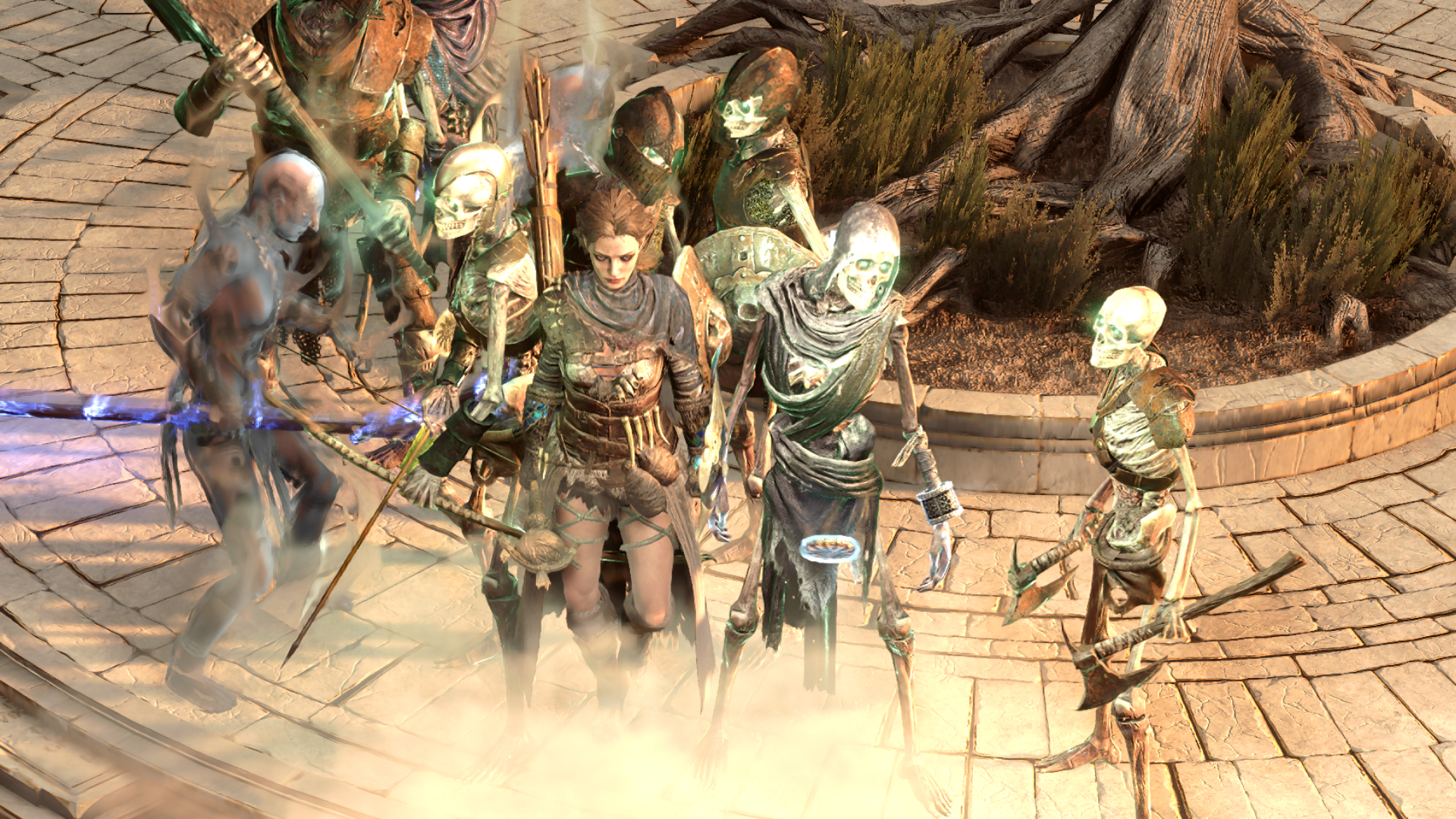
- Phase Four: The Social Experiment: Finally, the team relocated to a public-facing hideout. Empyriangaming posted a highly desirable item on the game’s trade site for an artificially low price. As unsuspecting players "whispered" to purchase the item and were invited to the hideout, they were greeted not by a trader, but by a terrifying, undulating mass of 2,000 skeletons.
Technical Implications and Engine Constraints
The technical fallout of this project highlights the delicate balance between player agency and server stability. Modern ARPGs are designed to handle high-density combat, but they are generally optimized for a specific ratio of entities to screen space.
When a player exceeds these parameters, the primary bottleneck is usually the CPU’s ability to process "AI ticks"—the frequency at which the game calculates an entity’s next movement or action. By spawning 2,000 skeletons, the team forced the server to process 2,000 individual decision-making loops every fraction of a second. The resulting "stop-motion" effect observed by the streamers is the physical manifestation of the game engine failing to reconcile its own physics and logic in real-time.
While Grinding Gear Games has consistently improved the Path of Exile engine over the last decade, this experiment proves that even the most robust systems have a breaking point when faced with coordinated, emergent behavior.
The Community and Developer Response
The community response has been a mix of amusement and genuine concern regarding the game’s optimization. The video documenting the event has become a viral sensation, drawing thousands of viewers who were eager to see the "minion-maxxing" build in action.
While Grinding Gear Games has not issued a formal "cease and desist" or an official patch note specifically addressing this stunt, the existence of the 255-minion cap serves as a tacit acknowledgment that the developers are aware of the potential for such exploits. For many, this event was a "stress test" that provides the studio with valuable data on how their engine handles extreme edge cases.
There is also a dark, comedic element to the event: the "hideout trap." By luring players into a situation where their client-side performance would inevitably crash, Empyriangaming essentially created an involuntary horror experience. The confusion in the game’s chat—with players asking "Wtf is this?" upon entering the room—highlights the absurdity of the game’s flexibility.
The Future of "Broken" Builds
This project raises a broader question about the philosophy of Path of Exile 2. Should developers place hard locks on build creativity to ensure stability, or is there value in allowing players to "break" the game in the name of discovery?
Empyriangaming’s experiment suggests that the latter is a fundamental part of the ARPG experience. The desire to see "what happens if I do this" is what drives the top-tier of the player base. These experiments often lead to the discovery of unintended synergies that, while perhaps game-breaking in this instance, inform the future balance of the game.
Ultimately, the Skeleton Singularity stands as a testament to the sheer depth of Path of Exile 2. Even in a broken, unplayable state, the game remained a spectacle. Whether or not Grinding Gear Games decides to implement further restrictions on minion counts in the future, the memory of the 2,000-strong army will likely remain a highlight of the current league. It serves as a reminder that for a dedicated community, the game’s rules are merely suggestions, and the real fun begins when those rules are pushed to the breaking point.

