

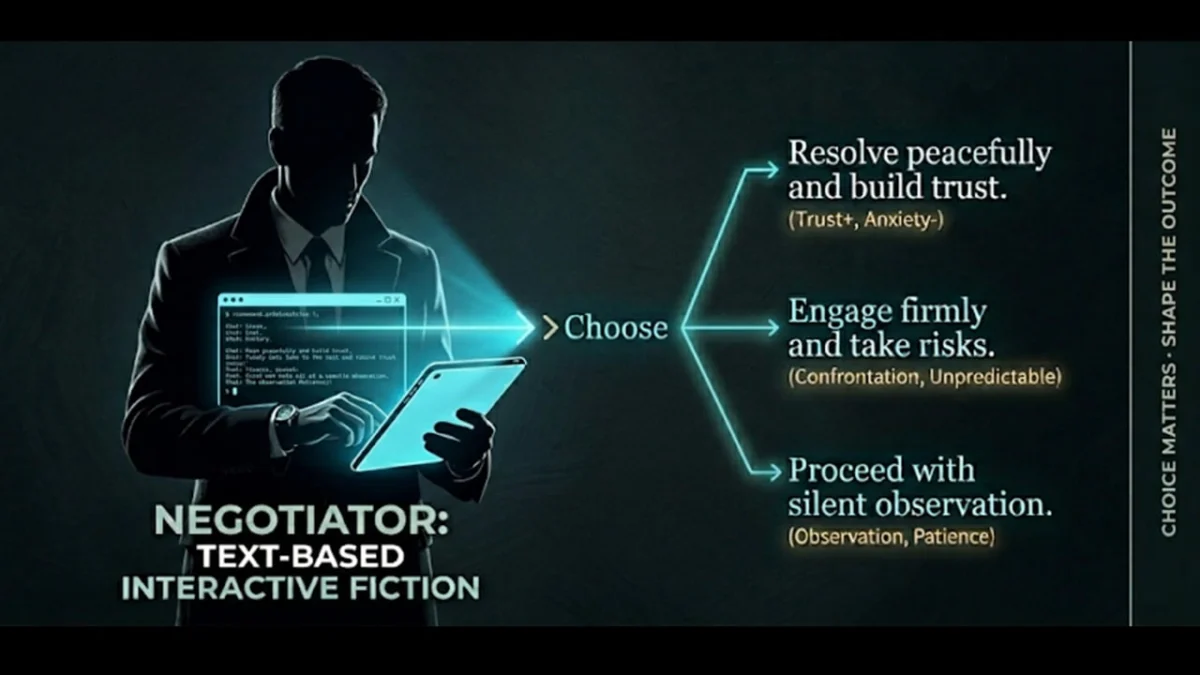
In an era where digital communication has become our primary mode of connection, the boundary between our real-world devices and our entertainment is blurring. We spend hours daily tethered to our screens, firing off messages, reacting to typing indicators, and obsessing over "read" receipts. It is precisely this mundane, high-stakes ritual of modern texting that serves as the foundation for Negotiator: Choice Text Game, a gripping new interactive thriller that turns the smartphone into both a weapon and a lifeline.
Developed as a narrative-heavy experience, Negotiator strips away the spectacle of traditional action gaming to focus on the raw, psychological intensity of crisis intervention. Players are thrust into the role of Felix Fandor, a professional negotiator tasked with de-escalating life-or-death situations, one text message at a time.
Main Facts: The Anatomy of a Digital Crisis
At its core, Negotiator is a simulation of the high-pressure environment faced by real-world crisis intervention specialists. Unlike games that rely on fast reflexes or combat prowess, Negotiator demands emotional intelligence, analytical rigor, and the ability to read between the lines of human despair.
The game is built entirely within a hyper-realistic SMS interface. Players interact with individuals who are not "stereotypical villains" or cartoonish antagonists. Instead, the game presents a gallery of "everyman" characters: the law-abiding citizen, the forgotten worker, or the desperate parent who has followed every rule in the book, only to be crushed by a callous bureaucracy. When these individuals hit their breaking point, their only recourse is the phone in their hand—and the player is the person on the other end of the line.
The game’s mechanics hinge on a sophisticated "hidden" engine. Under the surface, the player’s responses trigger fluctuating Trust and Anxiety meters. These variables are invisible to the player, forcing them to rely on intuition rather than "gamey" feedback loops. Every word chosen can either bridge the gap of understanding or push a suspect over the edge.
Chronology: A Descent into the Lives of the Desperate
The structure of Negotiator is episodic, with each case designed to be played in a single, high-stakes sitting. The narrative progression mimics the volatility of real-time hostage negotiations, where time is the enemy and information is scarce.
Episode 1: Silent Cargo
The journey begins at a pharmaceutical warehouse. The scenario is intimate and devastating: a desperate father is holding two hostages. The situation is not merely about criminal intent; it is about a systemic failure that has pushed a parent to the brink of ruin. Players must navigate his grief and anger while juggling the logistics of the warehouse environment.
Episode 2: The Bank Raid
The stakes escalate in the second installment, which takes place at the First Meridian Bank. With eleven hostages and a veteran perpetrator who presents no clear list of demands, the player is forced to build a rapport with an individual who has nothing left to lose. The silence of the antagonist is perhaps more terrifying than any threat, requiring the player to draw them out through psychological prodding.
Episode 3: Lost in Translation
The third episode, set at Meridian Harbour, introduces the added complexity of a linguistic and cultural barrier. A detained ship, a crew left unpaid, and the friction between three different languages create a pressure cooker environment where a single misunderstood phrase could lead to catastrophic consequences.
Supporting Data: The Mechanics of Consequence
What sets Negotiator apart from standard visual novels or choice-based games is its refusal to provide a "safety net." The developers have implemented a "no-reload" philosophy. Once a decision is made, the story moves forward irrevocably. There are no save-scumming options to fix a poorly phrased text or an accidentally offensive tone. You live with the consequences of your communication style, for better or for worse.
Investigative Depth
To succeed, players cannot simply rely on their typing skills. The game provides a wealth of supplementary evidence:
- Leaked Documents: Corporate memos, internal emails, and legal filings that provide context for the suspect’s plight.
- Multimedia Evidence: Photos and voice notes that may contain hidden clues or emotional triggers.
- Interface Realism: The messaging system mimics standard smartphone software, including realistic typing indicators, delivered receipts, and transitions between secure encrypted channels and standard SMS—a detail that signals the security level of the negotiation.
The Skill Progression System
After each case, the game evaluates the player’s performance across six distinct qualities:
- Empathy: The ability to understand and validate the suspect’s emotional state.
- Tactical Thinking: The capacity to parse evidence and leverage information strategically.
- Composure: Maintaining a steady hand and professional tone despite escalating threats.
- Influence: The power to sway the suspect’s perspective.
- Analytical Rigor: The attention to detail regarding documents and evidence.
- Decisiveness: The ability to make firm, clear choices under pressure.
Official Perspectives: The Developer’s Philosophy
In statements regarding the game’s design, the developers have emphasized that Negotiator is not a game about "winning." It is a game about "navigating." By stripping away the ability to retry, the developers aim to evoke the authentic, sinking feeling of a negotiator who realizes they have said the wrong thing in a moment where lives hang in the balance.
The focus on "hidden" variables—the Trust and Anxiety meters—is a deliberate choice to prevent the player from "gaming" the system. Instead of calculating how to please a meter, the player is forced to genuinely listen to the narrative voice of the characters. If the suspect sounds panicked, the player must decide whether to calm them with reassurances or ground them with cold, hard facts. This subjective approach ensures that every player’s journey through the story is unique.
Implications: The Evolution of Interactive Storytelling
The success and reception of Negotiator: Choice Text Game highlight a broader shift in the mobile gaming market. As hardware becomes more capable of rendering complex 3D worlds, there is a counter-movement toward "minimalist" storytelling that relies on the intimacy of the smartphone interface.
The Smartphone as a Stage
By utilizing the very platform used for daily communication, Negotiator creates a sense of psychological immersion that traditional gaming consoles struggle to replicate. When a player receives a notification in the game, it feels as though they are receiving a text from a real person. This blur of reality and fiction is the "uncanny valley" of narrative design—a space where the player feels a genuine sense of responsibility for the digital characters they interact with.
The Ethics of Crisis Simulation
The game also raises important questions about the depiction of mental health, systemic inequality, and social violence. By framing the antagonists as victims of a broken system rather than "monsters," the game encourages a more nuanced discussion about the causes of radicalization and desperation. Players are invited to empathize with people who have reached their breaking point, potentially shifting the perspective on what constitutes a "villain" in our own society.
Conclusion: A New Standard for Narrative Gaming
Negotiator: Choice Text Game is a testament to the power of writing over graphical fidelity. It proves that the most intense action sequences can occur within the confines of a dialogue box, provided the stakes are high enough and the characters are grounded in reality.
For those looking for a gaming experience that challenges their patience, tests their morality, and respects their intelligence, Negotiator is a mandatory download. It is currently available for free on the Google Play Store.
Whether you are a seasoned player of choice-based adventures or a newcomer looking for a story that stays with you long after the screen goes dark, Negotiator offers a harrowing, reflective, and deeply human look at the power of the written word. In a world where we are constantly sending messages, this game serves as a poignant reminder that every word sent has the potential to save a life—or shatter it.
For more insights into the evolving landscape of interactive media, check out our recent coverage of Sky: Children of the Light’s Artsy Dear Van Gogh Event, where we explore how games are increasingly acting as canvases for cultural and artistic expression.

