

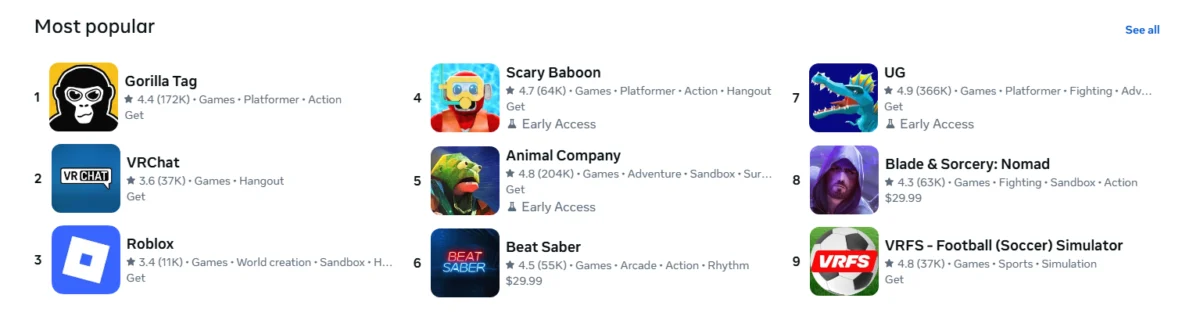
At the recent Augmented World Expo (AWE), I spent twenty minutes with High Horns, an upcoming social climbing game built on arm-based locomotion. On its surface, the title is a standard addition to the rapidly expanding Meta Horizon Store. However, beneath the mechanics of scaling virtual mountains lies a broader, more pressing question for the industry: Are we witnessing a sustainable evolution of the VR marketplace, or are we approaching a point of diminishing returns in the free-to-play social hangout genre?
The developer behind High Horns, XORWire, is a microcosm of the current industry frenzy. Since December 2024, the studio has released five titles—a blistering pace that highlights the "shotgun approach" currently dominating VR development. As the market grapples with a string of high-profile studio closures and pivots to flatscreen development, the reliance on the free-to-play (F2P) model has become both a survival strategy and a potential trap.
The XORWire Phenomenon: A Case Study in Rapid Prototyping
XORWire’s release schedule is, to put it mildly, aggressive. High Horns follows a string of predecessors including BreakoutVR, Chemp Physics, Stupid Chimp Slop, and Munkie All-Stars—the latter of which launched less than a month before the AWE event.
My hands-on time with High Horns revealed a game that is technically functional but fundamentally unrefined. I encountered a persistent "sticky hands" issue, where virtual grips failed to release at the appropriate moment, leading to jarring, unnatural movement. Furthermore, the game struggled with visual clarity, specifically in distinguishing climbable geometry from decorative set dressing.
While I provided this feedback to the team, the experience reinforced a growing sentiment: when studios are pressured to ship titles with such frequency, the "polish" phase of development is often sacrificed at the altar of market relevance. The developers are clearly banking on the hope that if one of these titles hits a critical mass of users, the development costs of the previous four will be eclipsed by long-term, recurring microtransaction revenue.
Market Realities: The Shift Toward Free-to-Play
The industry is currently in a state of structural transition. We have covered extensively the wave of layoffs at major studios and the unfortunate shuttering of teams that once held the torch for premium, paid VR experiences. Many of these developers, faced with lower-than-expected sales, have opted to pivot to traditional flatscreen development to reach a larger, more stable install base.
The Meta Horizon Store’s "Most Popular" charts tell a story that is impossible to ignore. A recent snapshot of the top ten titles reveals that only two—Beat Saber and Blade & Sorcery: Nomad—are premium, paid applications. The rest of the list is dominated by free-to-play experiences. Even when expanding the scope to the top twenty, only four paid titles remain, with Bonelab and Job Simulator joining the fray.
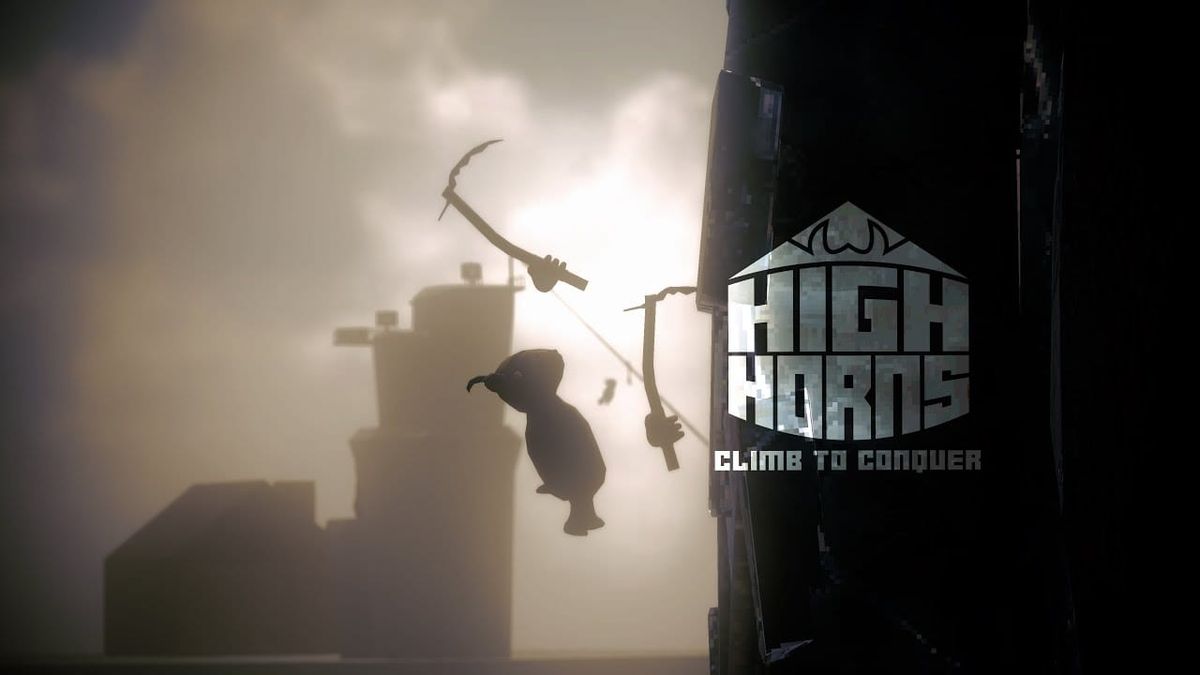
The economic gravitational pull toward F2P is understandable. When a game like Gorilla Tag captures over one million daily users, or Animal Company secures half a million, the potential for revenue through cosmetics and battle passes is immense. These are numbers that most flatscreen developers—who operate in a market ten times larger than VR—would envy.
The "Live Service" Trap: Learning from Flatscreen Mistakes
The current strategy in VR mirrors the disastrous "live service" gold rush seen in the flatscreen gaming sector. Over the last few years, major publishers have poured hundreds of millions into titles like Concord and Redfall, only to watch them collapse shortly after launch.
The logic remains the same: the goal is to create a "forever game." By removing the barrier to entry, studios hope to build a massive, captive audience that generates a steady stream of recurring revenue without the development overhead required for sequels or expansive, finite single-player campaigns.
However, there is a fundamental difference between the flatscreen market and VR. The VR player base is still relatively niche. In the flatscreen world, a game can survive with a small percentage of a massive player base paying for add-ons. In VR, that player base is significantly smaller, meaning the "volume" required to keep the lights on is often mathematically impossible to reach.
If a studio like XORWire has a community of five thousand users—a respectable number for a hobbyist—it is simply not enough to sustain a professional team. When you calculate the "conversion rate" of players who actually spend money, a community of a few thousand can barely cover server costs, let alone developer salaries.
The Meta Indicator: Why the Market Leader Matters
Perhaps the most telling signal of the state of the VR market comes from Meta itself. The company, which possesses the most granular data on user behavior, session length, and demographic growth, made the controversial decision to shutter VR support for Horizon Worlds (before ultimately walking that decision back).
That a company as invested in the "Metaverse" as Meta would even consider pulling the plug on its flagship social experience is a red flag for the entire industry. It suggests that the growth of the user base is not keeping pace with the sheer volume of content being pushed onto the store. If the market leader is struggling to retain users in its own ecosystem, how can smaller, independent studios expect to survive in a hyper-saturated, free-to-play market?
Implications: Where Does the Industry Go From Here?
The current trend of "churning out" F2P social VR titles is likely nearing a breaking point. We are seeing a saturation of "social hangouts" that offer little to distinguish themselves from the competition. As the novelty of VR social interaction wanes, users are becoming more selective with their time and their wallets.
1. The Death of the "Me-Too" Title
As the market matures, the "climbing game" or "tag game" clones will likely be pushed out. Users will gravitate toward experiences that offer deep, meaningful progression or genuinely unique mechanics, rather than generic social hubs that exist only to host cosmetic shops.
2. The Return of Value
There is a potential pendulum swing waiting to happen. As the F2P market becomes cluttered with low-quality, "slop" titles, players may once again appreciate the value proposition of a finished, premium, paid experience. The success of Blade & Sorcery: Nomad proves that if a game is high-quality, users are still willing to pay upfront.
3. Sustainability over Speed
Studios will need to shift their focus from the "quantity over quality" model. The XORWire approach of launching five titles in eighteen months is a high-risk strategy that ultimately devalues the developer’s brand. Long-term success in VR will likely require longer development cycles and a tighter focus on community retention rather than just acquisition.
Conclusion: A Cautionary Tale
As I left my demo for High Horns, I couldn’t help but feel a sense of fatigue. The game is fine—it does exactly what it says on the tin. But in a landscape littered with the corpses of failed studios and the echoes of "live service" promises, one has to wonder if the developers are chasing a golden goose that has already flown the coop.
The push for free-to-play social VR is a desperate attempt to find the next Fortnite. But for every success story like Gorilla Tag, there are dozens of games destined to fade into obscurity, taking the resources and hopes of their developers with them. For the sake of the industry, it is time for developers to stop looking for the next trend and start looking for the next innovation.
High Horns is expected to hit the Meta Quest store this fall. Whether it finds its audience or becomes another footnote in the history of the VR gold rush remains to be seen. One thing is certain: the era of easy, speculative growth in the VR social market is officially coming to an end. The market is maturing, and it is no longer enough to just show up—you have to bring something worth staying for.

