

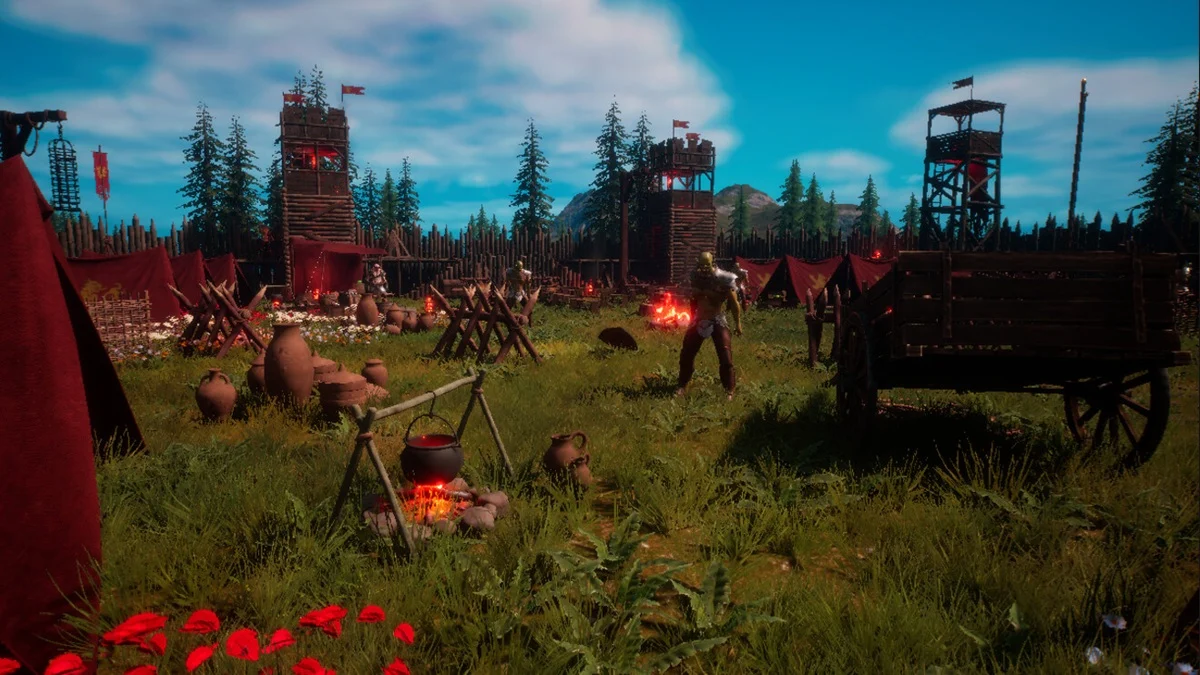
The digital storefronts of modern consoles have become increasingly crowded, but rarely does a title arrive with as much conceptual ambiguity as Ultra Kingdoms. Recently landing on the PlayStation Store as a free-to-play title, this ambitious multiplayer project from developer Cyber Apes Yacht Club and publisher Eight Galaxies has sparked a flurry of debate within the gaming community. Positioning itself at the intersection of Massive Multiplayer Online Role-Playing Games (MMORPGs) and the controversial "play-to-earn" (P2E) economic model, Ultra Kingdoms represents a bold, if divisive, experiment in the evolving landscape of console gaming.
Main Facts: What is Ultra Kingdoms?
At its core, Ultra Kingdoms is being marketed as an expansive online multiverse. According to the official documentation provided by the developers, the game is designed as a sandbox environment where players are tasked with the construction and management of their own sovereign territories. Players are invited to explore vast, procedurally generated or curated landscapes, interact with a global player base in real-time, and engage in a variety of social and economic systems.
The game is currently available exclusively for the PlayStation 5, with the PlayStation Store listing carrying a mandatory "beta" tag. This designation is crucial, as it suggests that the current build is a work-in-progress, subject to frequent updates, balance patches, and potentially significant structural changes. Interestingly, despite the "free-to-play" branding, the title requires an active PlayStation Plus subscription to access its online multiplayer features, a standard requirement for most premium console online experiences, yet one that adds a barrier to entry for a game that ostensibly relies on a broad player base to sustain its "metaverse" economy.
Furthermore, the game boasts "PS5 Pro Enhanced" status. This suggests that the developers have optimized the title to take advantage of the increased graphical overhead of Sony’s mid-generation hardware refresh, promising higher frame rates, improved ray tracing, or increased resolution—a technical boon for a game that describes itself as having "stunning graphics."
Chronology: A Timeline of Development and Release
The path to Ultra Kingdoms’ arrival on the PlayStation Store has been anything but conventional. While traditional AAA titles follow a years-long marketing cycle involving major trade shows and scripted press events, Ultra Kingdoms emerged through a more grassroots, digital-first trajectory.
The Emergence (Late 2024)
While the game has only recently hit the PlayStation Store, its roots trace back to the burgeoning interest in blockchain-integrated gaming models. Cyber Apes Yacht Club, the development studio, began teasing the project in late 2024, focusing on the promise of "digital ownership" and "multiverse interoperability."
The Promotional Push (September 2025)
By September 2025, the studio released a promotional trailer intended to showcase the game’s scope. This video highlighted the architectural building mechanics and the scale of the environments. However, the trailer was met with mixed reactions, as it struggled to clearly define the gameplay loop for those unfamiliar with the P2E ecosystem. Critics noted that the footage appeared to be a mix of pre-rendered cinematics and early-engine gameplay, leaving many questions regarding the actual "feel" of the game unanswered.
The Console Launch (Current Date)
The transition to the PlayStation Store marks the most significant milestone for the title to date. By securing a spot on Sony’s platform, the developers have moved from niche crypto-gaming circles into the mainstream console market. This transition is not merely technical; it is a validation of the game’s ability to meet the stringent quality control standards—or at least the submission requirements—of the PlayStation ecosystem.
Supporting Data: Community Sentiment and Technical Metrics
Data transparency is often a point of contention for blockchain-adjacent titles, but the PlayStation Store provides a rare, objective window into the community’s reception of Ultra Kingdoms.
User Ratings
As of the time of this writing, Ultra Kingdoms holds a 3.68/5-star rating on the PlayStation Store. With nearly 40 individual ratings, the sample size is admittedly small, yet it provides a snapshot of player sentiment. A rating of 3.68 suggests a polarized player base; some are clearly invested in the promise of the metaverse and the building mechanics, while others appear frustrated by the game’s beta state, potential bugs, or the underlying economic model.
Accessibility and Cross-Platform Status
Currently, Ultra Kingdoms is a console-exclusive experience. There has been no official word on a Steam release or a move to other platforms like the Xbox Series X|S. The absence of a PC version is particularly notable, given that most P2E games originate on browsers or PC clients. This suggests that the developers may be focusing on the "walled garden" stability of the PlayStation 5 to refine the user experience before attempting a wider rollout.
Official Responses and Developer Intent
In response to the confusion surrounding the game’s identity, the developers have provided a mission statement that leans heavily into the terminology of the "Web3" era. "Ultra Kingdoms is a popular online multiverse metaverse," the developers stated. "It combines MMORPG and P2E capability where players can build and manage their own kingdoms, explore vast lands, and interact with other players in real-time."
The language here is intentional. By utilizing terms like "multiverse" and "metaverse," Cyber Apes Yacht Club is positioning the game not just as a piece of software, but as a digital space—a virtual destination. However, the lack of a clear, concise explanation of how the "P2E" (play-to-earn) aspect functions within the strict confines of Sony’s ecosystem remains a point of intense curiosity. Sony has historically been cautious about blockchain and NFT-based assets within their games, so the integration of these features likely required significant negotiation or a unique approach to how assets are managed within the game’s servers.
Implications: The Future of P2E on Consoles
The arrival of Ultra Kingdoms raises several critical questions about the future of console gaming.
The Integration of Play-to-Earn
For years, the gaming industry has speculated on how, or if, blockchain-based economies would find a home on consoles. If Ultra Kingdoms finds success, it could pave the way for a wave of similar titles. However, if the game fails to engage the broader PlayStation community, it may serve as a cautionary tale for developers looking to bridge the gap between speculative digital economies and traditional console gaming.
The Challenge of the "Beta" Label
The "beta" tag is becoming increasingly common in the industry, often serving as a shield against criticism regarding performance, unfinished features, or lack of content. By releasing as a beta, Ultra Kingdoms effectively buys itself time. However, in an era where player attention is at a premium, the strategy of "launching now, fixing later" carries significant risks. If the initial experience is too unpolished, the player base may move on to more stable, established titles before the game ever hits its 1.0 release.
Community Engagement
Ultimately, the success of Ultra Kingdoms will not be decided by its economic model or its technical ambition, but by its community. Will the players find the "management" of their kingdoms engaging enough to overlook the complexities of the P2E infrastructure? Will the social interactions within the "multiverse" provide enough value to justify the ongoing costs of a PS Plus subscription?
The conversation around Ultra Kingdoms is still in its infancy. As the developers continue to patch the game and as more players begin to weigh in with their experiences, we will gain a clearer picture of whether this experiment is the future of interactive entertainment or a passing trend that failed to find its footing.
For now, the PlayStation Store remains a testing ground for this peculiar project. Whether it becomes a staple of the platform or fades into obscurity, it remains an essential case study in the ongoing evolution of the modern digital marketplace. We invite our readers to share their own experiences: Have you stepped into the lands of Ultra Kingdoms? Does the combination of kingdom-building and blockchain economics hold water, or does the game struggle to balance its disparate ambitions? The comments section remains open for your feedback.

