

SEOUL, South Korea – In a monumental declaration that underscores its unwavering commitment to global semiconductor leadership, SK hynix has unveiled an unprecedented investment plan totaling KRW 1.1 quadrillion (approximately $712.5 billion USD) for its operations across South Korea. This colossal long-term strategy, spanning decades, aims to dramatically expand production capabilities for cutting-edge memory technologies, including High Bandwidth Memory (HBM) and 3D NAND flash, while also fortifying its position in advanced DRAM manufacturing.
The announcement, initially highlighting a KRW 100 trillion ($64 billion) injection into its Cheongju campus, quickly revealed itself as merely the tip of a much larger strategic iceberg. This comprehensive investment signals a bold move to secure future growth engines, navigate an increasingly competitive global landscape, and reinforce South Korea’s status as a pivotal hub for advanced semiconductor innovation.
A Vision for Global Leadership
SK hynix, a world leader in memory semiconductors, is not merely expanding; it is strategically re-engineering its operational footprint to meet the surging demands of next-generation computing. The company’s colossal investment is primarily distributed across three critical locations: the existing Cheongju campus, the nascent Yongin Semiconductor Cluster, and a newly conceptualized Southwestern Semiconductor Cluster. Each site is earmarked for specialized development, creating a synergistic ecosystem designed to push the boundaries of memory technology.
This investment dwarfs previous industry benchmarks, signaling a profound belief in the sustained growth of data-intensive applications like artificial intelligence (AI), high-performance computing (HPC), and cloud infrastructure. By committing such an immense capital outlay, SK hynix is not only aiming to expand capacity but also to accelerate technological advancements, ensuring its competitive edge in a market characterized by rapid innovation and intense global rivalry.
Chronicle of Ambition: Site-Specific Strategies Unpacked
The multi-trillion won investment plan is meticulously structured, with each location playing a distinct, yet interconnected, role in SK hynix’s long-term vision.
Cheongju: Fortifying NAND and HBM Packaging Capabilities
The Cheongju campus, already a cornerstone of SK hynix’s manufacturing operations, is set to receive an additional KRW 100 trillion ($64 billion) investment. This substantial capital is dedicated to bolstering both 3D NAND flash production and advanced packaging capabilities crucial for High Bandwidth Memory (HBM).
Historically, Cheongju has been a primary hub for SK hynix’s 3D NAND flash manufacturing, housing key fabs such as M11, M12, and M15. These facilities have been instrumental in the company’s efforts to scale up multi-layer NAND production, essential for high-capacity solid-state drives (SSDs) and enterprise storage solutions. The new investment will see the construction of the M17 fab, with groundbreaking slated for next year and an anticipated operational launch around 2029. This new fab alone is projected to cost approximately KRW 80 trillion ($51.8 billion), a testament to the scale and complexity of modern semiconductor manufacturing.
Crucially, Cheongju is also evolving into a critical center for HBM stack production. The campus already utilizes facilities like M15X for producing DRAM dies that form the basis of HBM, and P&T3 for packaging operations. The latest investment includes KRW 20 trillion ($12.945 billion) for a new P&T7 packaging and test facility. This expansion is vital because multi-layer 3D NAND and HBM stacks often leverage similar advanced packaging technologies, allowing for operational synergies. By enhancing its HBM back-end processing capabilities in Cheongju, SK hynix aims to meet the skyrocketing demand for these specialized memory solutions, which are indispensable for AI accelerators and other high-performance applications. The integration of NAND and HBM packaging at this site reflects a strategic move to optimize resources and expertise across crucial memory segments.
Yongin: The Epicenter of Future DRAM Production
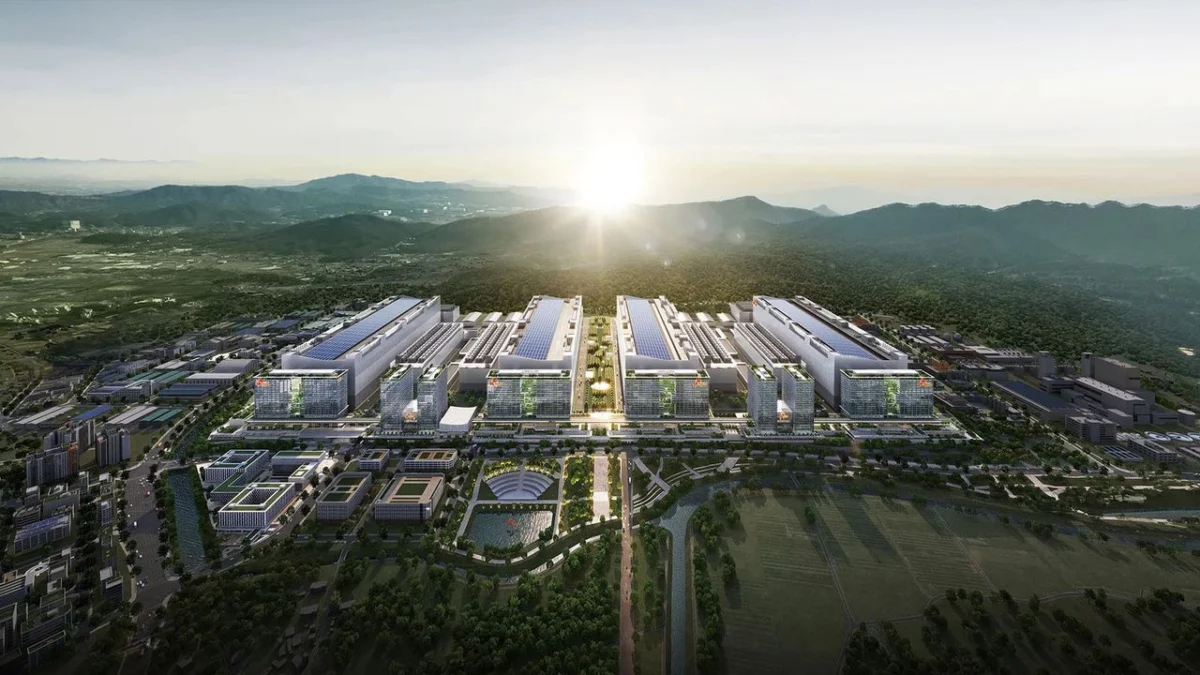
While the Cheongju investment is significant, it pales in comparison to the strategic importance and financial commitment directed towards the Yongin Semiconductor Cluster. SK hynix plans to inject an astonishing KRW 600 trillion ($389.3 billion) into this greenfield site, transforming it into the company’s largest DRAM production base.
The Yongin project represents the single largest investment commitment in SK hynix’s history, signaling its intent to dominate the global DRAM market. The development of a new semiconductor cluster from scratch is an undertaking of immense scale, requiring extensive infrastructure development, including power, water, and transportation networks. The first fab at Yongin is projected to commence operations in May 2027, with full ramp-up expected to impact the memory market in 2028-2029.
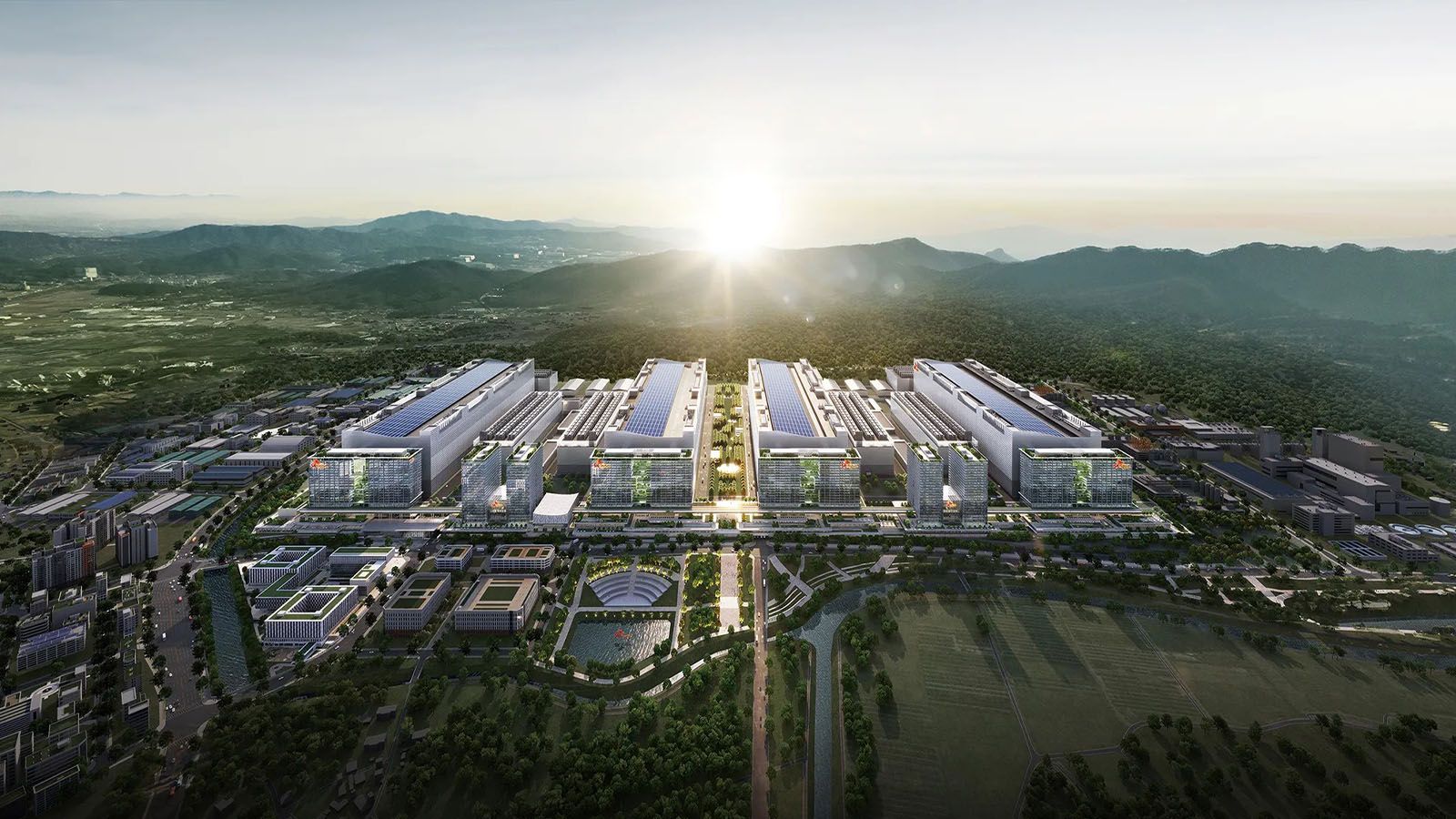
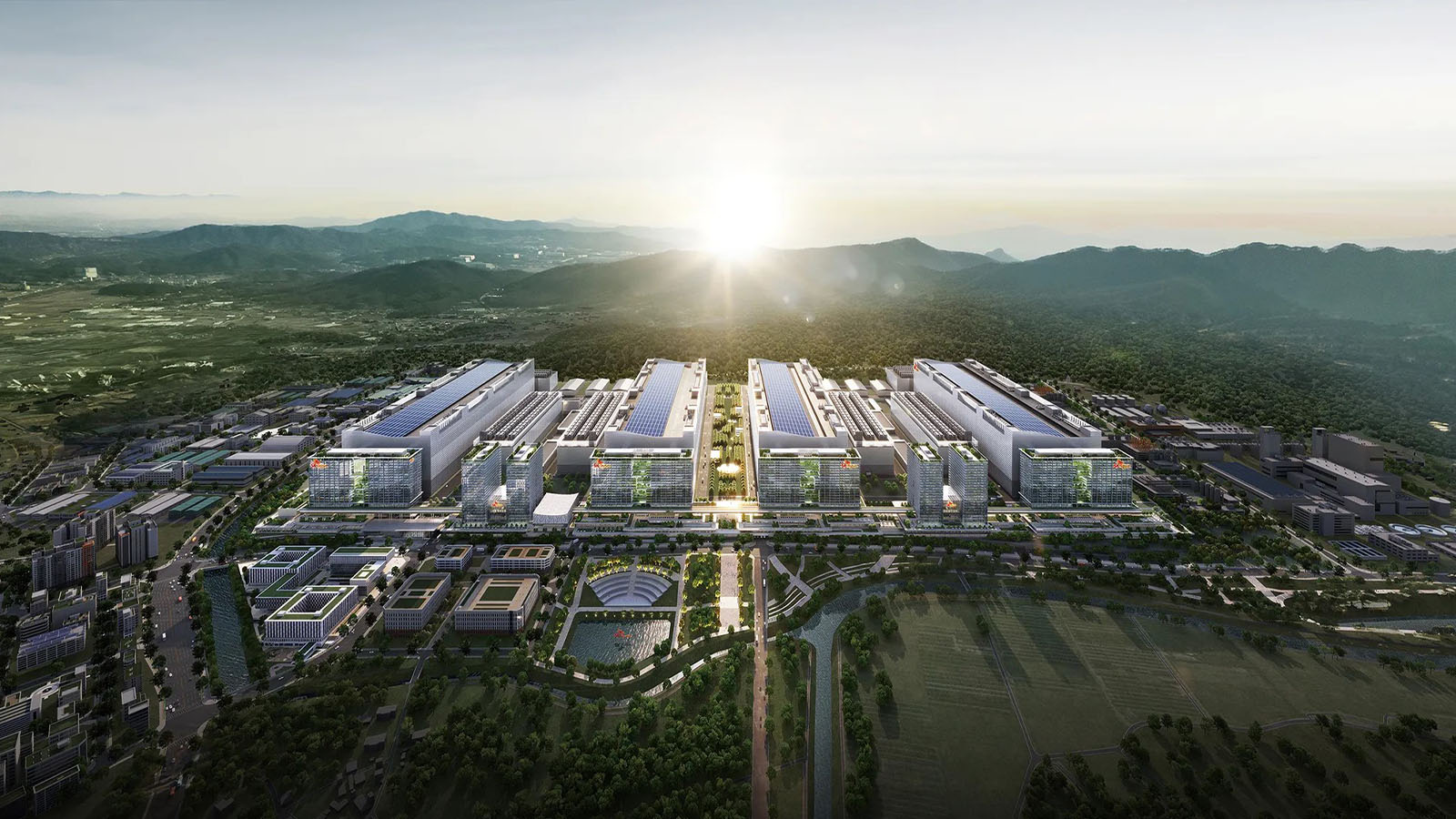
In an accelerated timeline from the original 2045 completion target, SK hynix now aims to have all four planned fabs at the Yongin cluster fully operational by 2033. This ambitious schedule highlights the urgency with which the company views the expansion of its DRAM capacity, particularly as demand for high-performance memory continues to surge across various computing platforms. The $389.3 billion investment is designed to sustain this rapid expansion and technological advancement beyond 2033, ensuring a continuous pipeline of cutting-edge DRAM products.
Southwestern Cluster: A Horizon Yet Defined
Looking even further into the future, SK hynix has unveiled plans for a third major manufacturing base: the Southwestern Semiconductor Cluster. This project, currently in its conceptual phase, is slated to receive approximately KRW 400 trillion ($259.5 billion) in investment. Unlike Cheongju and Yongin, a specific site within southwestern Korea has yet to be selected.
The company is currently evaluating potential locations based on critical infrastructure requirements, including land availability, electricity, water supply, and transportation networks, in close consultation with central and local governments. This meticulous planning process is indicative of the long lead times involved in developing a new semiconductor cluster, which can take many years – as exemplified by the nine-year development period for the Yongin Cluster.
The Southwestern Cluster is envisioned as SK hynix’s next major growth engine after its established sites in Icheon, Cheongju, and the developing Yongin. Given that its completion is decades away, the projected $259.5 billion investment is subject to change based on evolving market conditions, technological advancements, and the fluctuating costs of wafer fabrication equipment. This long-term strategic play demonstrates SK hynix’s foresight and its commitment to building a resilient and expansive manufacturing base capable of meeting the demands of an ever-evolving digital world far into the future.
Fueling the Future: Market Dynamics and Demand
The sheer scale of SK hynix’s investment is a direct response to, and a bet on, profound shifts in global technology demand. The semiconductor industry is experiencing unprecedented growth, driven by several key macro trends.
The AI Imperative: Driving HBM Demand
Perhaps the most significant driver behind SK hynix’s aggressive expansion, particularly in HBM, is the explosive growth of artificial intelligence. AI models, especially large language models and generative AI, require immense computational power and, crucially, vast amounts of high-speed memory to process data efficiently. HBM, with its stacked die architecture and wide interfaces, offers significantly higher bandwidth and lower power consumption compared to traditional DRAM, making it indispensable for AI accelerators from companies like NVIDIA, AMD, and Intel.
SK hynix has been at the forefront of HBM technology, often being the first to market with successive generations (HBM2, HBM2E, HBM3, HBM3E). The company’s investments in advanced packaging at Cheongju are specifically tailored to capitalize on this surging demand, ensuring it can supply the specialized memory needed for the rapidly expanding AI data center market. Analysts predict that the HBM market will continue to grow at a compound annual growth rate (CAGR) exceeding 50% in the coming years, making it a critical strategic focus.
Evolving Landscape of NAND Flash
While AI drives HBM, the broader data economy continues to fuel demand for NAND flash memory. Cloud computing, enterprise storage, and the proliferation of mobile devices and IoT sensors all rely heavily on high-capacity, non-volatile storage. SK hynix’s investment in 3D NAND at Cheongju aims to maintain its competitive position in this segment, enabling the production of higher layer count NAND with improved density and performance.
The transition to enterprise SSDs, which offer superior performance and reliability over traditional hard drives for data centers, is a significant growth area. Consumer electronics, from smartphones to gaming consoles, also continue to push for larger storage capacities. SK hynix’s strategy ensures it can deliver advanced 3D NAND solutions across these diverse applications, maintaining its market share against rivals like Samsung and Micron.
Persistent Need for High-Performance DRAM
Beyond HBM, standard high-performance DRAM remains a fundamental component of virtually all computing systems. Servers, PCs, mobile devices, and increasingly, automotive systems, require vast quantities of DRAM. The Yongin cluster’s focus on DRAM production is a strategic move to meet this foundational demand and to prepare for future generations of DRAM technologies.
As data centers continue to expand globally and new computing paradigms emerge, the need for efficient, high-density DRAM will only intensify. SK hynix’s significant investment in Yongin is designed to ensure a robust supply chain and technological leadership in this core memory segment, safeguarding its long-term market position.
A National Imperative: Economic and Strategic Implications
SK hynix’s monumental investment is not merely a corporate strategy; it is a national endeavor with profound economic and strategic implications for South Korea.
South Korea’s Semiconductor Supremacy
South Korea has long positioned itself as a global leader in semiconductor manufacturing, a status that is fiercely protected and continuously reinforced by both industry and government. These investments by SK hynix, mirrored by similar commitments from other domestic giants, cement the nation’s role as a critical node in the global technology supply chain.
The economic benefits are immense: the creation of hundreds of thousands of high-skilled jobs, significant contributions to GDP, and the fostering of a robust ecosystem of ancillary industries, from equipment suppliers to material providers. Moreover, by expanding domestic manufacturing capabilities, South Korea enhances its technological sovereignty and reduces reliance on external supply chains, a critical consideration in an era of increasing geopolitical tensions and supply chain vulnerabilities. The long-term nature of these projects ensures sustained economic growth and technological advancement for decades to come.
The Competitive Chessboard: Samsung’s Parallel Moves
SK hynix is not alone in its ambitious domestic investment strategy. Just days prior, its arch-rival, Samsung, announced its own substantial plans, committing KRW 140 trillion ($90.98 billion) to its operations in South Korea’s Chungcheong region. This parallel wave of investment by two of the world’s largest memory manufacturers highlights the intense competition and strategic importance of the semiconductor sector.
Samsung’s plans include expanding OLED production by Samsung Display in Asan, building five new HBM production lines and modernizing HBM-related facilities by Samsung Electronics in Onyang and Cheonan, establishing a battery production line by Samsung SDI in Cheonan for next-generation technologies, and expanding AI server package substrate manufacturing by Samsung Electro-Mechanics in Sejong. These synchronized investments by both SK hynix and Samsung underscore a collective national effort to reinforce South Korea’s dominance across multiple high-tech industries, from memory chips to advanced displays and components for AI. While intensely competitive, their parallel growth ultimately strengthens the national semiconductor ecosystem.
Global Context and Challenges
While the outlook is overwhelmingly positive for South Korea’s semiconductor ambitions, such massive investments are not without their challenges. The global semiconductor industry is inherently cyclical, and future market downturns or geopolitical shifts could impact the profitability and timelines of these projects. Environmental considerations for constructing and operating industrial complexes of this scale, including water and energy consumption, will also be significant.
Moreover, the global "chip race" sees nations like the United States (with the CHIPS Act), Europe, Japan, and China all pouring billions into domestic semiconductor manufacturing. While South Korea holds a strong lead in memory, this global push for localized production means competition for talent, resources, and technological breakthroughs will only intensify. SK hynix’s strategy is a clear statement that it intends to not only keep pace but to lead this global race.
Looking Ahead
SK hynix’s $712.5 billion investment plan is a powerful declaration of intent. It represents a long-term vision to expand its global leadership in memory technologies, driven by the insatiable demand for AI, data centers, and advanced computing. By strategically developing its Cheongju, Yongin, and future Southwestern clusters, the company is building a formidable manufacturing backbone designed to innovate and scale for decades to come. This monumental commitment, alongside similar efforts by its domestic rivals, solidifies South Korea’s indispensable role in shaping the future of the digital world. The coming years will see these ambitious blueprints transform into concrete infrastructure, profoundly impacting not just SK hynix and South Korea, but the entire global technology landscape.

