

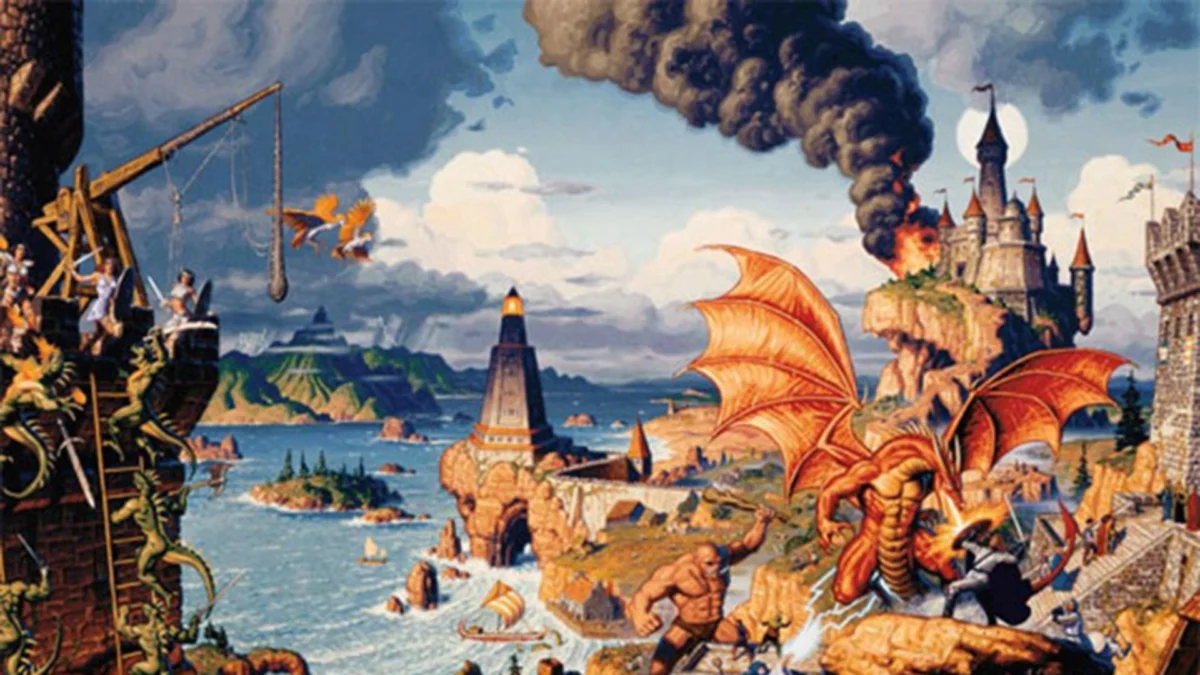
In the pantheon of role-playing games, few names carry the historical weight of Ultima. Created by Richard Garriott, the series did more than just define the computer RPG genre; it built the structural blueprint for modern interactive storytelling, open-world exploration, and the very concept of the MMORPG with Ultima Online. For over two decades, the intellectual property has languished under the stewardship of Electronic Arts (EA), largely confined to the digital archives of history. However, a seismic shift is on the horizon. According to Garriott himself, a quirk of United States copyright law is set to return the rights to his magnum opus to their creator as early as next year.
A Legacy in Limbo: The Chronology of Origin and EA
To understand the significance of this potential reclamation, one must first revisit the tumultuous history of Origin Systems. Founded by Garriott alongside his brother Robert and father Owen, Origin was the creative powerhouse that delivered the Ultima series, Wing Commander, and System Shock.
In 1992, at the height of the studio’s success, the Garriotts sold Origin Systems to Electronic Arts. At the time, the deal was seen as a strategic partnership that would provide the resources necessary to scale their ambitious projects. For a time, it was: Richard Garriott continued to direct Ultima titles and served as the driving force behind Ultima Online (1997), a title that effectively birthed the commercial MMORPG industry.
The relationship soured toward the turn of the millennium. The tepid reception of Ultima IX: Ascension in 1999 served as a catalyst for a massive restructuring at EA. The publisher canceled several high-profile projects in development at Origin, including the highly anticipated steampunk-themed Ultima Online 2. Garriott departed the company shortly thereafter, marking the beginning of the end for the brand. By 2004, EA had shuttered the Origin Systems studio entirely, and the Ultima franchise was relegated to "legacy" status—a dormant asset in a corporate portfolio.
The 35-Year Rule: Invoking Copyright Reversion
The mechanism for this unexpected revival lies in the nuance of the U.S. Copyright Act of 1976. Specifically, Section 203 of the Act grants authors the right to terminate grants of copyright transfer after 35 years.
"There’s a really weird United States copyright law that says, if you are the original holder of a copyright and you assign it or sell it to any publisher or any other entity, after 35 years you can just take it back," Garriott explained in a recent interview with Jesse Petrilla. "There’s no money that you need to transfer; all you need to do is tell them a year before you take it back."
Garriott has confirmed that he initiated this legal process in April of this year. He formally notified Electronic Arts of his intent to reclaim the Ultima copyrights, and, according to Garriott, the publisher has acknowledged the legitimacy of his claim. "They wrote back and said, ‘Yeah, we know that’s the law, we will act accordingly,’" he stated.
Current Status and Official Responses
As of this writing, both parties remain in the transition phase. While the legal pathway is clear, the practical application of this shift is still being negotiated. Garriott is currently in active discussions with EA to determine the future of the brand. The dialogue is centered on whether a collaborative path forward exists or if the two entities will part ways entirely.
For the gaming community, the ambiguity of these discussions is the primary source of both excitement and apprehension. While EA has largely ignored the IP for years, their massive corporate infrastructure still holds the keys to the legacy code, server architecture, and existing trademarks. Garriott’s assertion that he is currently "in discussions" suggests that while the copyright is reverting, there may be a complex handover involving assets or existing infrastructure that requires professional cooperation rather than a clean, hostile break.
The Implications: Remakes, Sequels, and Risks
What happens if Garriott truly regains control? The possibilities range from the preservation of historical software to the development of entirely new, modern entries in the series.
1. Preservation and Remasters
At a minimum, ownership would allow Garriott to revitalize the early Ultima titles. Given the current trend of "HD-2D" remakes and faithful retro-reimaginings, the early Ultima games are prime candidates for a modern, engine-agnostic re-release that keeps the core systems—the "Virtues" and the systemic player agency—intact.
2. The Return of the Sequel
The mention of "sequeling" the series has ignited significant speculation. The prospect of Ultima Online 2—or perhaps a spiritual successor that fulfills the promises of the 1999 cancellation—is a tantalizing concept for the millions of players who cut their teeth on the original Britannia. However, the gaming landscape has shifted dramatically since the 1990s. The industry is currently dominated by live-service models and monetization strategies that were unheard of during the height of the Ultima era.

3. The "Garriott Factor"
There is a duality to the excitement surrounding Garriott’s potential return. His influence on the RPG genre is unquestioned; he is a pioneer of player-driven narrative. Yet, his post-EA career has been checkered. Attempts at blockchain-integrated MMOs and other ambitious projects have met with mixed, and at times, intensely critical reception. Critics argue that while the Ultima IP is safer in his hands than in EA’s "dormant" pile, the modern iteration of Garriott’s design philosophy may not necessarily align with what long-time fans of the series are hoping for.
The Broader Industry Context
The story of Ultima is not an isolated incident. The industry is littered with "zombie IPs"—franchises held by major publishers who have no intention of developing them but refuse to license them out or sell them. This often leads to the degradation of historical assets.
As noted by former industry managers, EA holds a vast catalog of such properties, including Wing Commander, which have been cited in discussions regarding potential acquisitions or divestments. The fact that Garriott is successfully navigating the copyright reversion process could serve as a bellwether for other creators. If an independent developer can reclaim a foundational IP through copyright law, it could force larger publishers to re-evaluate their "hoarding" strategy, potentially leading to a wave of revivals for long-dormant classics.
Conclusion: A New Era for Britannia?
Whether Richard Garriott’s reclamation of Ultima results in a renaissance for the series or a quiet period of preservation remains to be seen. What is certain is that the power dynamic between creators and corporations has been momentarily tilted.
For the fans who spent years exploring the dungeons of Sosaria or navigating the intricate political economies of Ultima Online, the news is a glimmer of hope. It represents the potential for a "Lord British" return to the digital realm he helped construct. As the clock ticks toward the formal transfer of rights next year, the industry will be watching closely. Whether this leads to a new generation of Ultima or simply ensures the legacy of the old one remains in the hands of its creator, one thing is clear: the age of the dormant Ultima is coming to an end.
The question remains: does the world still have room for the old-school, unforgiving, systemic depth of an Ultima game? If anyone is going to attempt to prove that it does, it is the man who created it in the first place.

