

By Global Gaming Desk
Published: October 24, 2024
Main Facts
As the global gaming community counts down the days to one of the most anticipated entertainment events in history, a recent corporate disclosure has recalibrated player expectations. Rockstar Games and its parent company, Take-Two Interactive, have provided fresh clarity regarding the architecture of Grand Theft Auto VI (GTA VI). Speaking during Take-Two’s annual shareholder meeting, company executives reiterated a fundamental design philosophy for the upcoming blockbuster: GTA VI is, at its core, a single-player experience.
This confirmation arrives alongside a firm commitment to the continued longevity of the existing GTA Online, which will maintain active support well beyond the November 19, 2026, global launch of the new title. For fans eagerly awaiting the neon-drenched chaos of Vice City, the messaging carries a subtle yet significant implication: the multiplayer frontier for the next generation of Grand Theft Auto may either be absent at launch, delayed significantly, or structured in a way that prioritizes the traditional, narrative-driven solo campaign.
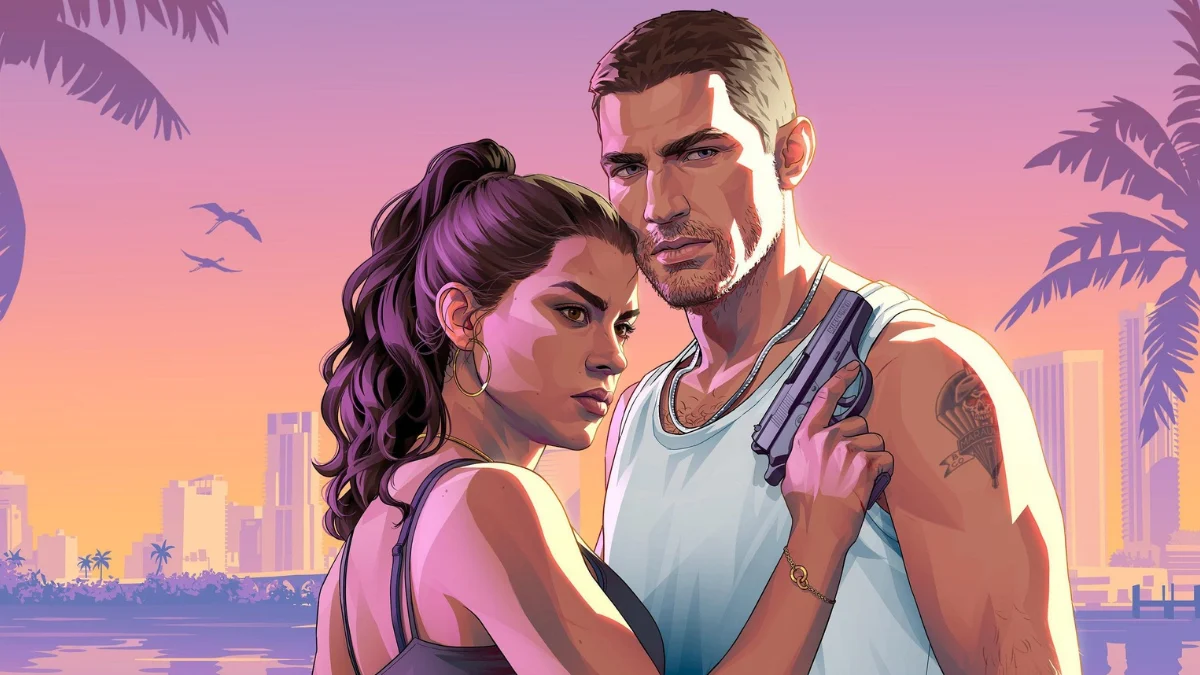
While industry insiders and previous data leaks have long pointed to the eventual development of a dedicated GTA VI multiplayer framework, official details remain tightly sealed. Consequently, millions of players are forced to ponder how the colossal economic engine of GTA Online will transition into the modern era, or if Rockstar intends to keep the San Andreas-based phenomenon running concurrently with the single-player exploits of Jason and Lucia in Vice City.
Chronology
To understand the weight of Take-Two’s recent announcement, it is essential to trace the historical timeline of Rockstar’s online infrastructure and the prolonged rollout of GTA VI:
- September 2013: Grand Theft Auto V launches to unprecedented critical and commercial acclaim on PlayStation 3 and Xbox 360, establishing a massive single-player benchmark.
- October 2013: GTA Online debuts as a separate, bundled multiplayer component, initially suffering from server instability before evolving into a multi-billion-dollar cultural phenomenon.
- 2014–2020: Rockstar continuously updates GTA Online across multiple console generations (PS4, Xbox One, and PC), introducing massive expansions such as The Diamond Casino & Resort and The Cayo Perico Heist.
- October 2018: Red Dead Redemption 2 releases, followed shortly by the launch of Red Dead Online, establishing Rockstar’s pattern of pairing massive single-player epics with distinct online ecosystems.
- February 2022: Rockstar Games officially confirms that active development for the next entry in the Grand Theft Auto series is well underway.
- December 2023: The official GTA VI reveal trailer shatters global entertainment records, confirming a return to Vice City and a dual-protagonist narrative, initially slated loosely for a 2025 window.
- August 2026: Rockstar grants the public an extensive, unprecedented look at GTA VI gameplay via a special showcase on Netflix, subsequently mirrored on YouTube, driving global pre-orders into hyperdrive.
- October 2026: During Take-Two Interactive’s annual shareholder meeting, executives reaffirm that GTA VI is fundamentally a single-player title, promising indefinite post-launch support for the original GTA Online.
- November 19, 2026: GTA VI is officially scheduled for global release on PlayStation 5 and Xbox Series X|S.
Supporting Data
The financial and cultural footprint of the Grand Theft Auto franchise provides essential context for why Rockstar’s online strategy is scrutinized with microscopic intensity by Wall Street and gamers alike.
- Sales Milestones: Grand Theft Auto V has shipped over 200 million copies worldwide, making it the second best-selling video game of all time (trailing only Minecraft).
- Recurring Consumer Spending: A substantial portion of Take-Two Interactive’s annual net revenue is driven by "microtransactions"—specifically Shark Card purchases within GTA Online. For over a decade, this revenue stream has funded continuous, free content updates for the community.
- Development Scale: GTA VI represents what is widely believed to be the most expensive video game development cycle in history, with estimated budgets soaring past the billion-dollar mark when factoring in global marketing campaigns.
- Marketing Momentum: Entering the final two months of its pre-launch cycle, Rockstar has diversified its promotional playbook. Recent announcements include GTA VI: The Album, targeted merchandise collaborations, limited-edition GTA VI branded DualSense controllers for the PlayStation 5, and digital pre-order availability across current-gen consoles.
Official Responses
The landscape of corporate communication in the video-game industry often relies on carefully measured statements designed to manage investor expectations without crushing consumer enthusiasm. The recent disclosures from Take-Two Interactive and Rockstar Games are no exception.
During the shareholder briefing, executive leadership addressed the future of the franchise’s ecosystem. According to transcripts highlighted by industry trackers on ResetEra, Rockstar reiterated its core design ethos: "GTA VI is a single-player title." When queried by investors regarding the integration of a next-generation multiplayer suite, the publisher added a crucial addendum: "We will continue to support GTA Online after GTA VI’s release and beyond."
Take-Two CEO Strauss Zelnick has previously gone on record to alleviate fears regarding market cannibalization. In past investor calls and media interviews—including discussions covered extensively by outlets like IGN—Zelnick asserted that the eventual successor or evolution of GTA Online would not come at the direct expense or immediate termination of the original San Andreas-based platform.
This philosophy suggests that Rockstar is wary of abruptly severing the massive, monetization-heavy community that has sustained GTA V for over thirteen years. However, the corporate phrasing leaves ample room for interpretation. By emphasizing that GTA VI is primarily built as a narrative-focused, single-player adventure, Rockstar has effectively tempered rumors of a seamless, simultaneous multiplayer launch on Day One.
Implications
The revelation that GTA VI is launching primarily as a single-player experience—with no immediate, concrete details regarding a parallel online counterpart—carries profound implications for the gaming industry, financial markets, and millions of dedicated fans.
1. Re-centering Narrative Craftsmanship
In an era where live-service games dominate publisher roadmaps and frequently eclipse traditional storytelling, Rockstar’s stubborn commitment to a rich, offline, single-player narrative is a bold statement. For years, skeptics worried that the astronomical success of GTA Online would permanently corrupt Rockstar’s DNA, reducing future single-player campaigns to mere afterthought pretexts for online maps. By reaffirming GTA VI as a single-player title, Rockstar signals that the cinematic, character-driven storytelling seen in Red Dead Redemption 2 and GTA V remains the studio’s paramount creative north star.
2. The Longevity of Legacy Infrastructure
The promise to support the original GTA Online "after GTA VI’s release and beyond" creates an unprecedented scenario in gaming history. For the first time, a publisher will maintain two massive, concurrent ecosystems within the same intellectual property umbrella across different game engines and hardware generations. Whether this means GTA Online will eventually receive backward-compatible or cross-promotional hooks tied to Vice City, or if it will remain entirely tethered to Los Santos and San Andreas, remains one of the industry’s most compelling mysteries.
3. Financial and Market Reactions
Wall Street analysts and Take-Two shareholders closely monitor recurring consumer spending metrics. While some investors historically fretted over a potential revenue gap if GTA Online players migrated en masse to a new standalone multiplayer suite, Take-Two’s strategy mitigates this risk. By keeping the legacy cash cow running while selling copies of a premier single-player blockbuster priced at modern AAA standards, Take-Two secures a diversified revenue stream that protects its quarterly earnings reports.
4. Player Anticipation and the Waiting Game
For fans whose primary joy stems from cooperative heists, chaotic street races, and emergent sandbox shenanigans with friends, the news introduces a measure of patience. While the stunning gameplay deep-dive broadcasted on Netflix and YouTube in August proved that Vice City’s single-player world is breathtakingly immersive, those hoping to cause synchronized online mayhem immediately on November 19, 2026, must brace themselves for a potential staggered rollout.
As the release date draws ever closer, all eyes remain fixed on Rockstar Games. Whether an announcement regarding a next-gen multiplayer companion is waiting in the wings post-launch or if Vice City’s online frontier is destined to be a separate, later chapter, one thing is certain: the world will be watching when the doors to Vice City finally swing open.

