


For decades, the trajectory of consumer display technology seemed linear and absolute. Flat panels replaced bulky boxes, liquid crystal displays (LCDs) gave way to light-emitting diodes (LEDs), and organic light-emitting diodes (OLEDs) established the modern gold standard for contrast and deep blacks. Along the way, consumers cheerfully embraced higher resolutions, thinner profiles, and massive screen real estate, leaving behind the heavy, glass-fronted cathode-ray tube (CRT) monitors of the late 20th and early 21st centuries.
Yet, as modern display engineering reaches unprecedented refresh rates—pushing past 500 Hz on high-end gaming monitors—a growing faction of display purists, developers, and hardware enthusiasts are coming to a startling realization: in the relentless pursuit of thinness and resolution, modern panels lost something vital.
Motion clarity.
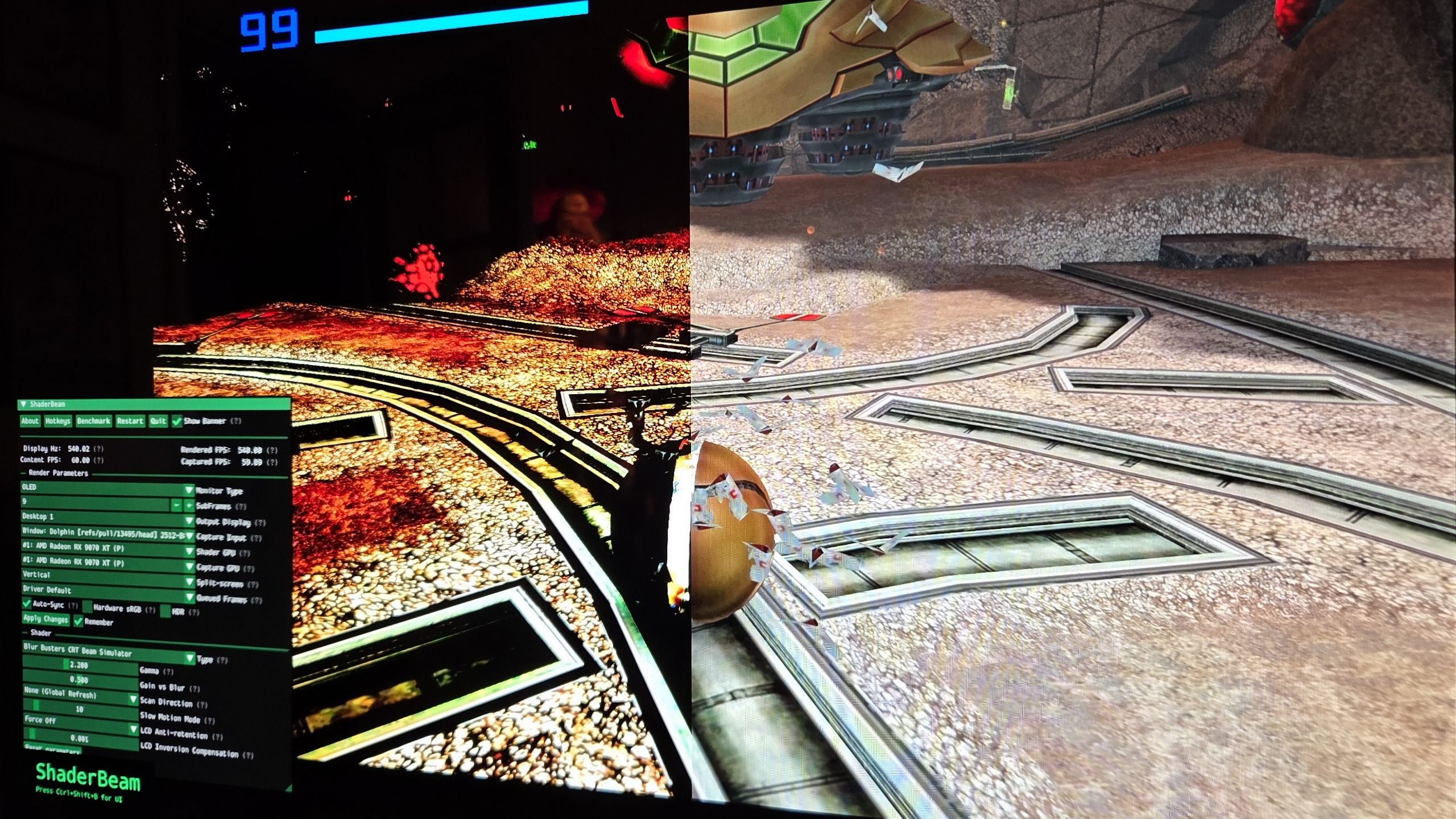
Today, pioneers like Mark Rejhon, founder of the display-testing resource Blur Busters, alongside independent software developers and hardware manufacturers, are spearheading an ambitious crusade. Their goal is not merely to reminisce about the past, but to reverse-engineer the unique physical properties of CRTs onto modern ultra-high-refresh-rate displays using advanced GPU shaders and hardware-level strobing.
Main Facts: The CRT Motion Clarity Advantage
To understand why tech veterans are looking backward to move forward, one must understand the fundamental difference in how CRTs and modern flat panels render motion.
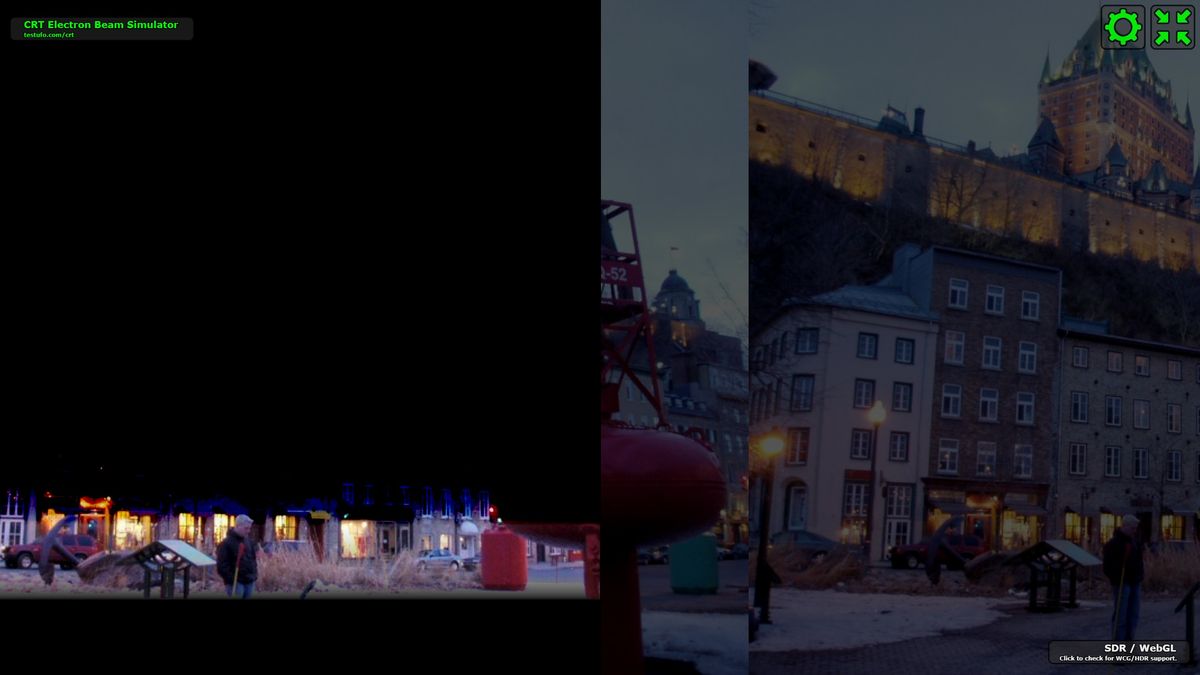
When a CRT monitor displays an image, an electron beam physically sweeps across the screen from top to bottom, energizing red, green, and blue phosphors. Crucially, these phosphors illuminate brightly for a fraction of a millisecond and then immediately fade—a phenomenon known as phosphor decay. Because the light emission is exceptionally brief (often less than 1/1000th of a second, acting like a camera shutter), the human eye perceives sharp, pristine motion without blurring, even at standard frame rates like 60 frames per second (fps).
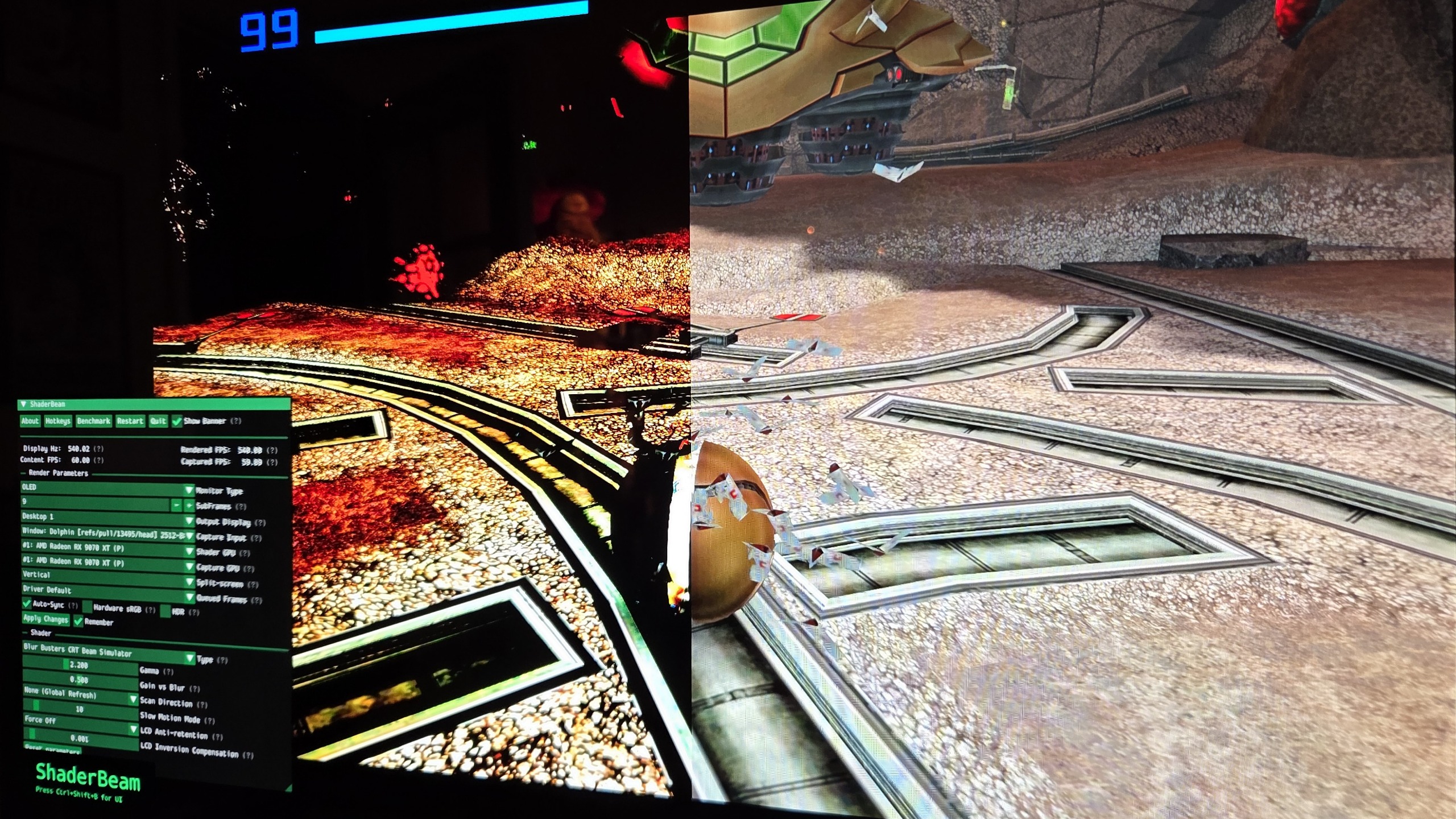
By contrast, modern sample-and-hold displays (such as LCDs and standard OLEDs) maintain a static image on screen continuously until the next frame is drawn. As pixels transition from one color to another, they require time to change state. This pixel response time, combined with the continuous persistence of the image on the retina while the eyes track movement, creates a visible "ghost trail" or motion blur.
While mid-2000s LCDs were notoriously sluggish, leaving severe smear trails behind fast-moving objects, today’s bleeding-edge 240 Hz and 500 Hz+ panels combat this primarily through sheer brute force: pumping out hundreds of frames per second to reduce the duration each image sits on the retina. However, games locked at 60 fps—including a massive library of retro titles, console emulators, and modern PC classics—still suffer from motion blur on these expensive displays.
Chronology: From the HD Revolution to Shader Innovation
The Great Compromise (Late 2000s)
The mass migration away from CRTs accelerated in the mid-to-late 2000s as high-definition flat-panel televisions and monitors plummeted in price and improved in sharpness. Early adopters eagerly dropped small fortunes on 1366×768 or 1080p LCD displays for dorm rooms and desktop setups. The immediate benefits—compact footprints, razor-sharp static text, and digital connectivity—completely overshadowed the subtle loss in motion fidelity and rich color blending inherent to analog technology.
The Rise of Black Frame Insertion (2010s)
As gamers and monitor manufacturers recognized the motion blur penalty of sample-and-hold panels, the industry introduced Black Frame Insertion (BFI). By flashing a black frame in between each rendered frame, BFI simulated the strobe effect of a CRT. However, traditional 60 Hz BFI introduced harsh, eye-fatiguing flicker and a noticeable drop in overall panel brightness, limiting its mainstream adoption.
The Breakthrough Algorithm (Late 2024 – Present)
In late 2024, Mark Rejhon partnered with former Nvidia developer Timothy Lottes to debut a breakthrough algorithm designed to simulate a CRT tube via GPU shaders. Leveraging ultra-fast 240 Hz+ displays, this software approach simulates the gentle "phosphor fade" and rolling top-to-bottom scan of a CRT. This dramatically reduces motion blur for 60 fps content without requiring harsh black frames or immense GPU horsepower.
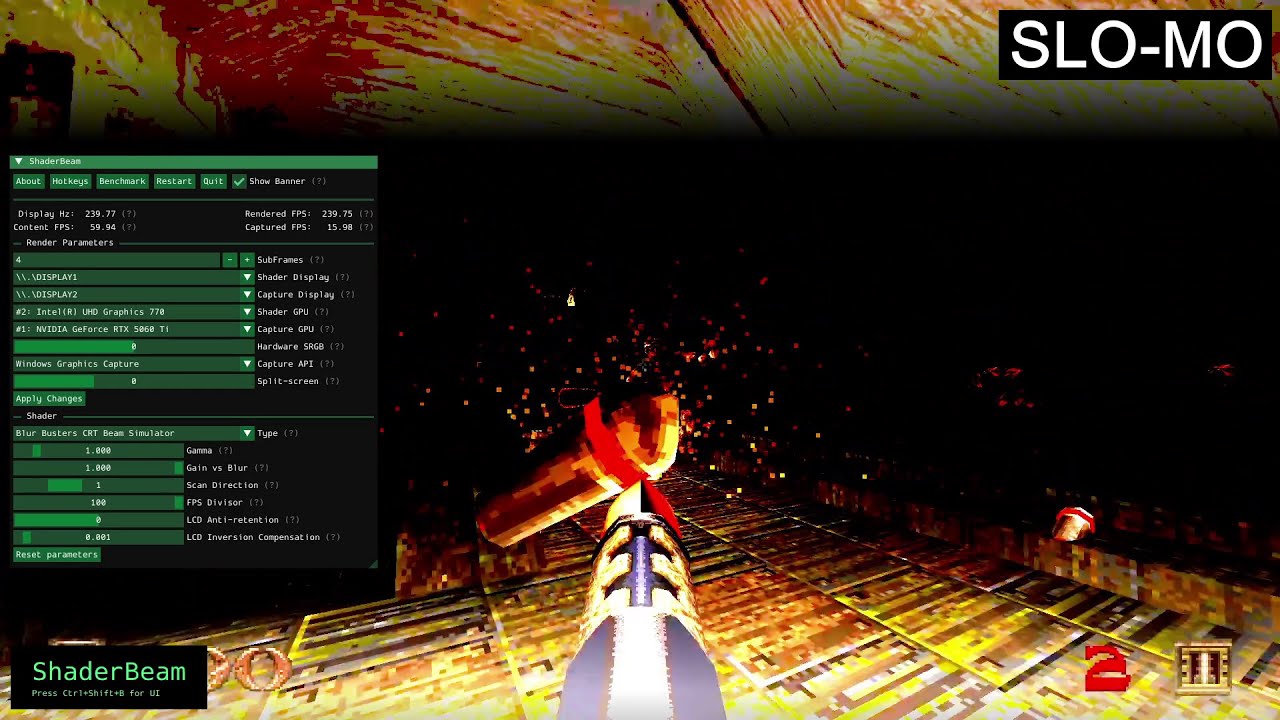
Building on this, independent developer Mausimus launched ShaderBeam, a standalone Windows application designed to apply this complex CRT beam simulation cleanly across desktop game windows.
Supporting Data: The Mechanics of Modern CRT Simulation
Replicating an analog electron beam on a digital pixel grid is an extraordinary technical challenge. Because standard operating systems and GPU scheduling pipelines are not natively designed to sync sub-frame display passes with exact source content, running ShaderBeam requires meticulous calibration.
Advanced setups often involve:
- Multi-GPU Distribution: Utilizing an integrated processor GPU (iGPU) to handle the heavy lifting of the CRT beam shader, preventing resource contention and frame-pacing stutters on the primary discrete graphics card.
- Ultra-High Refresh Rates: Testing on elite panels like the Asus ROG Swift OLED PG27AQWP-W, which boasts a 540 Hz refresh rate (or 720 Hz at 720p resolution), allowing the simulated scanline to closely mimic the physical drawing speed of historical CRT tubes.
- Software Overrides: Disabling Variable Refresh Rate (VRR), pruning background tasks via software like Process Lasso, and applying specific registry tweaks to guarantee zero dropped frames.
When properly dialed in, the visual payoff is profound. As demonstrated in demanding test cases like emulated GameCube titles (Metroid Prime 2: Echoes) or fast-paced shooters (Quake, Amid Evil), moving the camera rapidly no longer turns complex textures into an illegible smear. Instead, individual pixels remain razor-sharp, successfully achieving a "perceived clarity" that mimics running the game at hundreds of frames per second.
Official Responses and Industry Perspectives
The movement to restore CRT-level clarity has garnered attention from major graphics hardware manufacturers seeking hardware-level solutions.
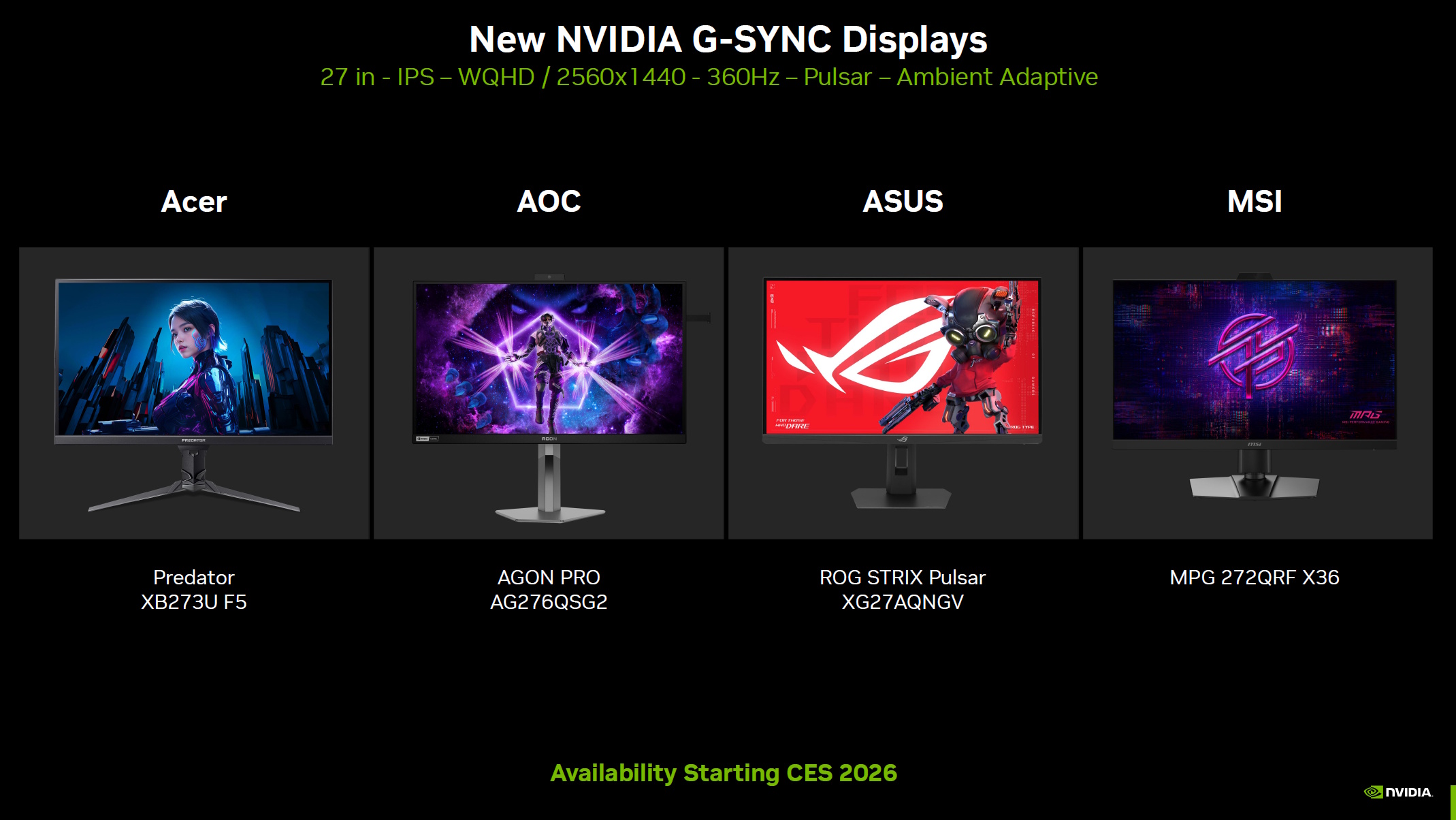
Nvidia has recently tackled the motion clarity problem from a hardware standpoint with G-Sync Pulsar. Integrated into select high-end gaming monitors, G-Sync Pulsar combines variable refresh rate technology with backlight strobing and a rolling top-to-bottom refresh cycle reminiscent of a CRT.
However, current hardware solutions carry significant restrictions—they are often locked exclusively to proprietary GPUs and have yet to be fully integrated into OLED ecosystems.
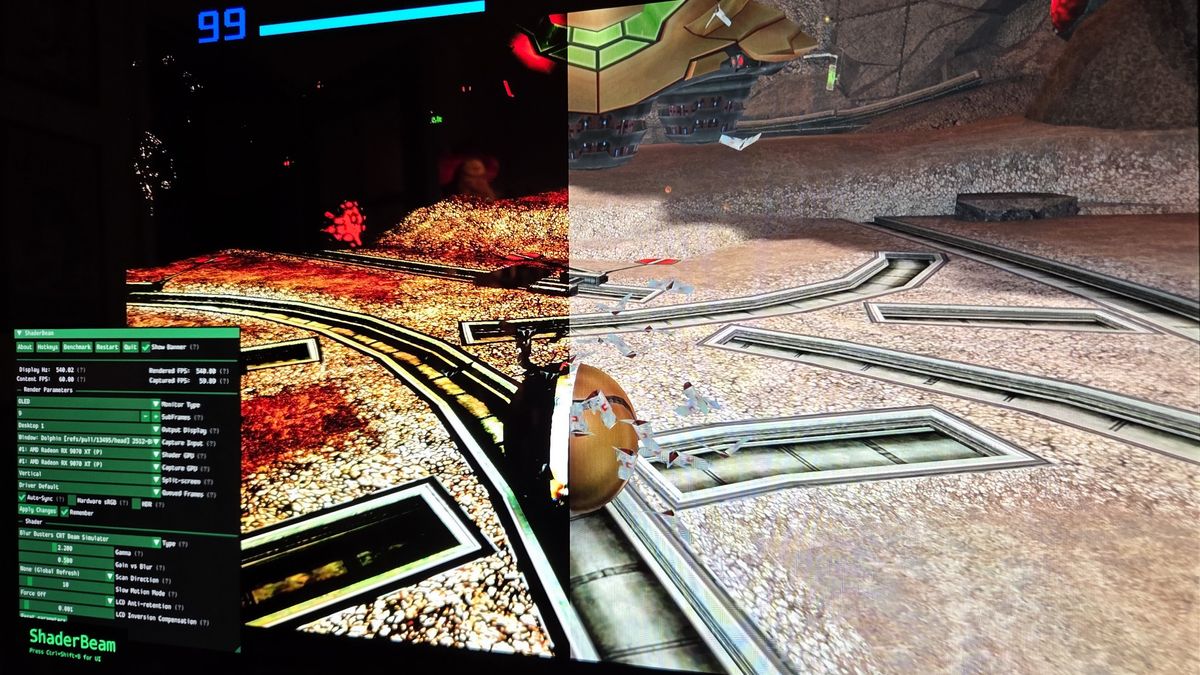
Regarding software-based simulations, developers acknowledge the current friction involved. Mausimus notes that while ShaderBeam relies on makeshift screen-capture and window-transparency workarounds, its ultimate purpose is advocacy.
"Even if ShaderBeam’s makeshift workarounds never reach levels of consistency needed for wide adoption, the hope is that they will boost users’ interest in having this kind of technology properly supported by OS, GPU and display manufacturers," Mausimus explains.
Mark Rejhon echoes this sentiment through Blur Busters’ Open Source Display Shaders Initiative, advocating for a future where native shader hooks are hard-coded directly into operating systems and display firmware.
Implications for the Future of PC Gaming
The resurgence of interest in CRT characteristics points to a broader philosophical shift in display technology. For years, the tech industry measured progress almost exclusively through pixel counts (1080p to 4K to 8K) and peak brightness metrics. Motion performance—how images behave when the camera or objects are in rapid motion—frequently took a backseat.
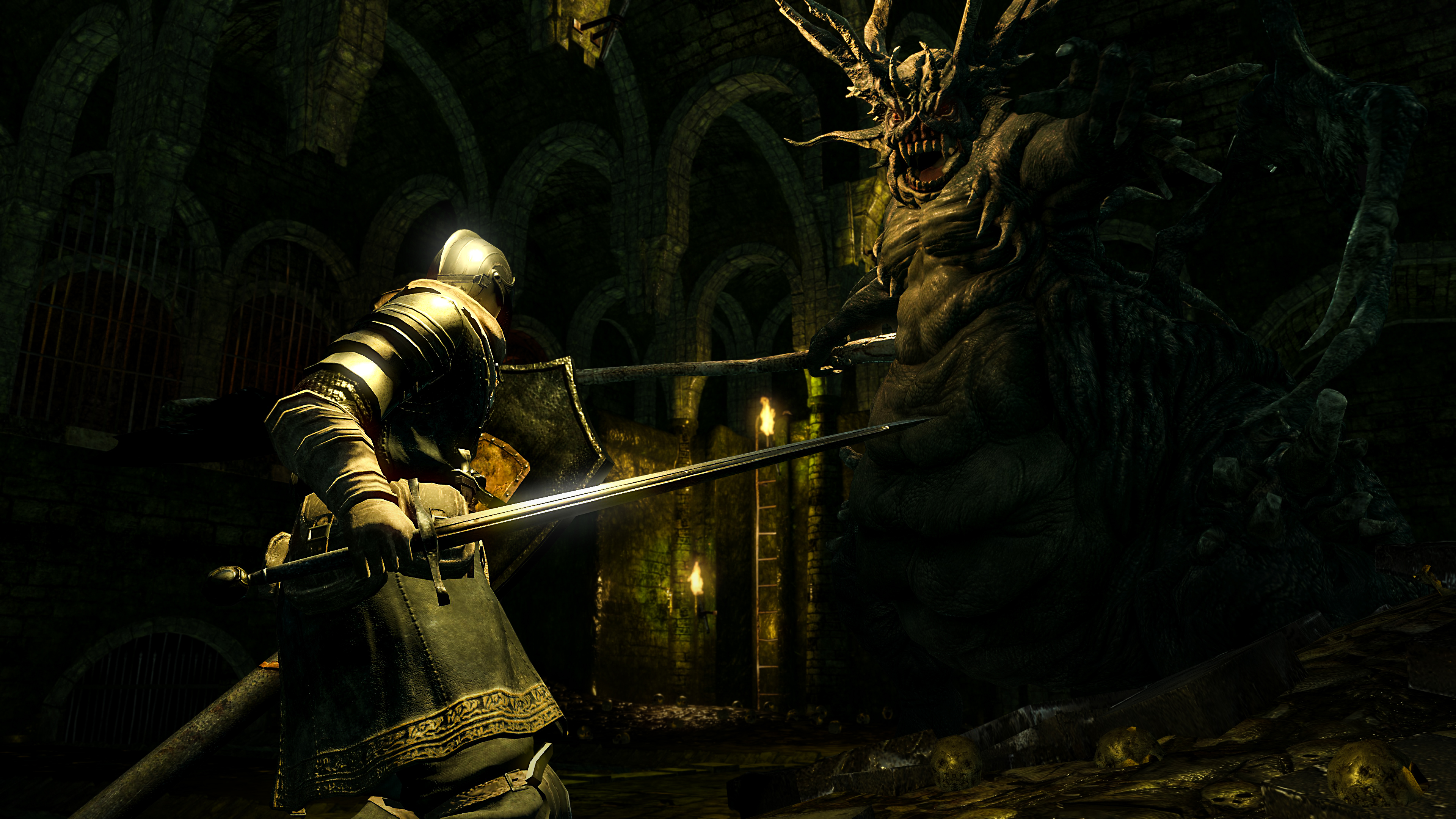
For retro enthusiasts, modern platformers, and action titles permanently locked at 60 fps (such as Dark Souls: Remastered, Nier: Automata, and Mirror’s Edge), the inability to scale cleanly in motion has long been an accepted compromise of modern hardware.
If initiatives like ShaderBeam and Blur Busters successfully influence the next decade of display architecture, the PC gaming landscape of the 2030s could look fundamentally different. By integrating video-processing GPUs directly into display panels and baking refresh-cycle shaders into operating systems, future gamers may finally achieve the ultimate display holy grail: the infinite contrast and color depth of modern OLEDs married to the sublime, smear-free motion clarity of the humble CRT.

