

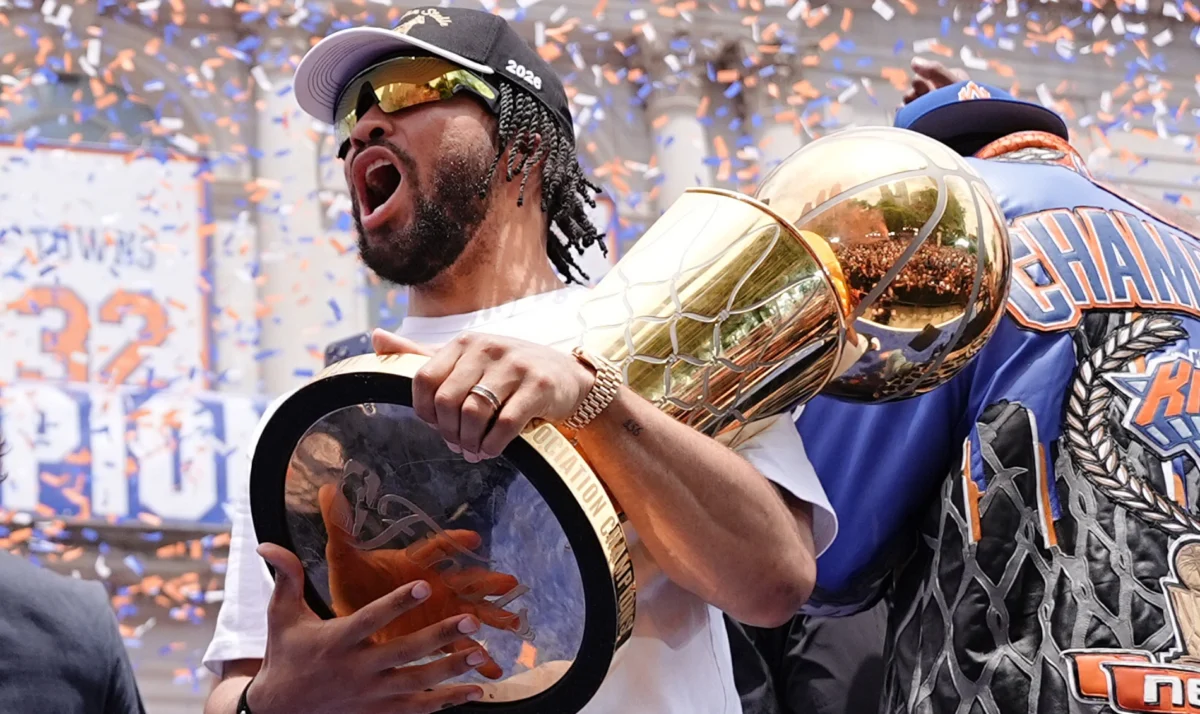
On June 13, 2026, the atmospheric pressure in New York City seemed to shift. As the final buzzer sounded at Madison Square Garden, the New York Knicks secured a victory over the San Antonio Spurs, effectively vaporizing a 53-year championship drought. For a fanbase that had endured over half a century of heartbreak, mismanagement, and tactical mediocrity, the title was more than just a trophy; it was a societal exhale.
What followed was not merely a victory parade, but a seismic cultural event that fundamentally altered how sports are consumed, shared, and monetized in the digital age. With 15 billion social media views and counting, the 2026 NBA Finals didn’t just break viewership records—it set a new blueprint for the marriage of professional athletics and creator-led internet culture.
The Chronology of a Championship
The path to the 2026 title was defined by a rapid, viral escalation.
- June 13: The Knicks clinch the NBA Finals. Within minutes, the streets of Manhattan transformed into an impromptu, city-wide festival.
- June 14–17: As the dust settled, the focus shifted from the court to the content. Creators, influencers, and local media flooded the boroughs, documenting the raw, unfiltered reactions of a fanbase that had long forgotten what winning felt like.
- June 18: The official victory parade in Lower Manhattan acted as the grand finale. The event served as a nexus point where traditional media (The Daily Show), high-profile celebrity performance (Alicia Keys), and political spectacle (Mayor Zohran Mamdani) collided.
This timeline highlights a transition from traditional broadcast consumption to a decentralized, platform-agnostic viewing experience. While millions watched the game on television, billions experienced the aftermath through the lens of short-form vertical video.
Supporting Data: The 15-Billion-View Phenomenon
The statistics surrounding the 2026 Finals are staggering. According to official NBA data, content related to the series has surpassed 15 billion views across platforms like TikTok, YouTube, and Instagram. To put this in perspective, the 2025 Finals between the Oklahoma City Thunder and the Indiana Pacers—a series that lasted two games longer than the 2026 showdown—topped out at approximately 5 billion views.
This represents a 200% increase in social engagement, suggesting that the "Knicks Factor"—the combination of a massive, starved media market and the team’s long-standing narrative—created a perfect storm for algorithmic amplification. The engagement wasn’t just passive viewing; it was participatory. Users were not just watching clips; they were creating, stitching, and remixing the narrative of the win, turning the series into a living, breathing internet phenomenon.
The Creator Economy Meets the Hardwood
The 2026 Finals proved that the modern sports fan expects their content to be mediated by the creators they trust.
The Sidetalk Effect
Perhaps no entity captured the spirit of the celebration better than Sidetalk. The man-on-the-street channel, known for its chaotic, NSFW, and quintessentially New York energy, became the de facto documentarian of the championship. By recruiting NYC Mayor Zohran Mamdani as a guest correspondent, Sidetalk bridged the gap between municipal authority and grassroots internet culture. This collaboration provided a template for how public figures can leverage niche creator platforms to reach younger, hyper-local demographics.
The Rise of "Fan Gatekeeping" and Meme Culture
The digital discourse also saw a rise in irony-laden content. A prominent example involved creators testing "fans" by asking them to pick a favorite player between "Darren Watkins, Jr." and "Drew Desbordes." The humor lay in the fact that neither were NBA players—Watkins is the real name of streamer iShowSpeed, and Desbordes is the surname of comedian Druski.
The trend of "testing" fans revealed a deep-seated desire for communal gatekeeping. In an era where everyone wants to be considered a "real one," these memes allowed veteran fans to express superiority, distancing themselves from the casuals who couldn’t tell a YouTuber from a benchwarmer. This psychological "itch" for authenticity is a powerful driver of social media traffic, mirroring the engagement patterns seen in "rage-bait" cooking videos, where viewers rush to comment on perceived incompetence to prove their own culinary expertise.
Official Responses and the "Let’s Remember Some Guys" Doctrine
The victory parade was headlined by Alicia Keys, whose performance became an instant viral staple, but the most significant moment for digital strategy came from Mayor Zohran Mamdani.
In a move that caught digital analysts by surprise, Mamdani’s victory speech adopted the "Let’s Remember Some Guys" format popularized by sports outlets like Deadspin and Defector. By pivoting from the current championship roster to obscure, long-forgotten role players like Renaldo Balkman and Toney Douglas, the Mayor effectively signaled that he was not just a politician, but a student of the same internet-native sports culture as his constituents.
By engaging in this "pointless nostalgia," Mamdani tapped into a powerful vein of community building. He proved that to lead a modern city, one must speak the language of its internet forums. This was not just a speech; it was a masterclass in cultural alignment.
Implications for Brands and Content Strategy
For CMOs and content strategists, the 2026 Knicks run serves as a case study in "agile marketing."
The NewFronts Reality
At the 2026 NewFronts, industry leaders emphasized "culture-first" advertising—the ability to place brands at the center of ongoing conversations rather than interrupting them. The Knicks’ run was an unpredictable "tentpole" event. Unlike the World Cup, where brands have years to prepare, the 2026 Finals provided zero lead time.
Brands that had already invested in platform-native ad products—specifically those designed for TikTok’s Pulse or YouTube’s trending algorithm—were able to insert themselves into the celebration in real-time. Those that relied on traditional, static ad buys were left on the sidelines, unable to keep pace with the velocity of the internet’s reaction.
The Future of Sports Fandom
The lesson here is clear: the future of sports media is no longer strictly defined by the game clock. It is defined by the "Guys to Remember," the viral interviews, the meme-based challenges, and the collective memory of the fans.
The Knicks’ 2026 championship proved that when a team with a deep history finally hits its stride, it creates a vacuum that sucks in every aspect of digital culture. For brands, the goal is no longer to sponsor the game; it is to sponsor the conversation surrounding the game.
As we look toward future sporting events, the benchmark has been set. The 15-billion-view mark is the new frontier, and the strategy is simple: be authentic, be nostalgic, and above all, understand the "Guys." Because in the digital age, a championship isn’t just a trophy held by players—it is a narrative owned by the fans, and those who know how to tap into that narrative will find themselves at the center of the next great cultural explosion.

