

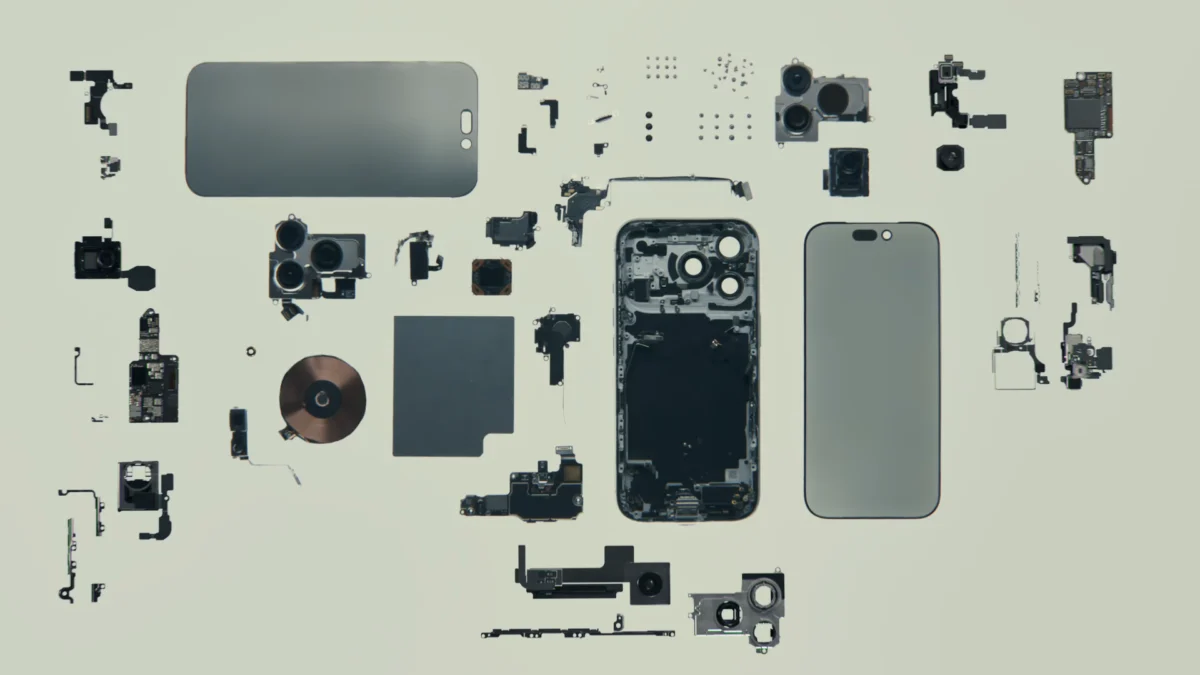
CUPERTINO — Apple’s latest flagship smartphone rollout, the iPhone 18 Pro series, has once again captured the global tech spotlight. Hitting store shelves last week, the new devices boast cutting-edge processing architectures, refined camera arrays, and expanded battery life. However, beneath the polished exterior and high-performance silicon, a hardware design choice has ignited a fierce debate among storage experts, hardware reviewers, and power users.
According to recent independent testing, Apple has transitioned to Quad-Level Cell (QLC) NAND flash memory for the higher-capacity storage tiers of the iPhone 18 Pro lineup—specifically the 1TB and rumored upcoming higher variants. While this architectural shift allows the tech giant to pack unprecedented amounts of data into a mobile footprint, it introduces a noticeable performance compromise during sustained, heavy data transfers.
As mobile devices increasingly double as portable editing suites, gaming consoles, and data storage hubs, the distinction between TLC (Triple-Level Cell) and QLC NAND flash memory has moved from the realm of enterprise server rooms into the consumer spotlight.
Main Facts: The QLC Trade-Off in the iPhone 18 Pro
The core of the controversy lies in the fundamental physics of NAND flash memory. For generations, smartphones have predominantly relied on TLC (Triple-Level Cell) NAND flash, which stores three bits of data per memory cell. TLC offers a balanced compromise: high durability, fast read and write speeds, and acceptable thermal and energy efficiency.
By contrast, QLC (Quad-Level Cell) technology crams four bits of data into a single memory cell. This dramatic increase in storage density provides massive commercial advantages. Manufacturers can produce denser, higher-capacity chips—such as 1TB and 2TB modules—without expanding the physical footprint of the storage die or significantly increasing the device’s thickness. For consumers, this translates to having massive local libraries of 4K/8K video footage, AAA mobile games, and offline media collections directly in their pockets.
However, the laws of semiconductor physics dictate a severe penalty for this packing density. To differentiate between four bits within a single cell, the controller must precisely manage 16 distinct voltage states. This precision requires tighter voltage margins, making the writing process inherently slower and more error-prone.
When a user initiates a sustained, heavy write workload—such as offloading hundreds of gigabytes of raw ProRes video or transferring massive files from a computer—the high-speed cache of the storage drive eventually saturates. Once this happens, the drive must write directly to the slower QLC blocks, resulting in a precipitous drop in sustained transfer speeds. For the average consumer scrolling social media or streaming music, this limitation will likely go completely unnoticed. For professional content creators and power users relying on the "Pro" branding of the device, however, the performance bottleneck introduces a tangible workflow friction.
Chronology: How the Discovery Unfolded
The revelation regarding the iPhone 18 Pro’s internal components did not come from a corporate press release, but rather from the meticulous diagnostic work of the tech community.
Week 1: Launch and Early Unboxings
Last week, the iPhone 18 Pro and iPhone 18 Pro Max officially went on sale globally. Early reviews focused heavily on the device’s exterior finish, display brightness, and the efficiency of the new A-series processor. Storage performance was initially assumed to follow the trajectory of previous generations, maintaining high-speed consistency across all capacities.
Mid-Week: Deep-Dive Benchmarking Begins
As review units landed in the hands of independent hardware analysts and enthusiast channels, deeper stress testing commenced. Notably, the popular Bilibili tech channel Homolab acquired a top-tier 1TB iPhone 18 Pro Max for a comprehensive teardown and performance audit.
The Breakthrough Test
During sustained input/output (I/O) stress tests designed to push the storage controller to its limits, Homolab observed a stark anomaly. While initial burst writes—absorbed by the device’s dynamic SLC cache—blazed along at expected flagship speeds, sustained writing over extended periods saw performance plummet far below what was recorded on previous-generation TLC-based iPhones of equivalent capacity.
The Aftermath
Within 48 hours of Homolab’s findings being published, translated excerpts and technical breakdowns flooded Western forums, Reddit communities, and specialized hardware publications like Tom’s Hardware. The discussion quickly shifted from casual curiosity to a broader critique of Apple’s component selection for a device bearing the "Pro" moniker.
Supporting Data: Understanding NAND Performance Metrics
To fully grasp the implications of Apple’s QLC adoption, it is helpful to look at the underlying data mechanics of modern mobile storage (Universal Flash Storage, or UFS standards).
| Feature | TLC NAND (Previous Pro Tiers) | QLC NAND (iPhone 18 Pro 1TB+) |
|---|---|---|
| Bits per Cell | 3 Bits | 4 Bits |
| Storage Density | Moderate | High |
| Cost to Manufacture | Higher per GB at scale | Lower per GB at scale |
| Sustained Write Speed | High and stable | Prone to significant throttling |
| Program/Erase (P/E) Cycles | ~1,000 to 3,000 | ~500 to 1,000 |
| Target Audience | Enthusiasts, Professionals | Mass Market, High-Capacity Seekers |
The Mechanics of SLC Caching
Modern smartphones mask the inherent slowness of QLC and TLC through a technique known as SLC Caching. By dynamically treating a portion of the QLC or TLC memory as SLC (Single-Level Cell, storing only one bit per cell), the storage controller can accept incoming data at blazing-fast speeds.
The problem arises when a file transfer exceeds the size of this dynamic cache. On a TLC drive, the post-cache fallback speed is moderately fast. On a QLC drive, the fallback speed drops significantly. When moving massive files—such as a 400GB project folder—the iPhone 18 Pro’s storage controller is forced to empty the cache and write directly to the dense QLC matrix, resulting in the prolonged transfer times observed in the Homolab tests.
Furthermore, QLC endurance—measured in Program/Erase (P/E) cycles—is lower than that of TLC. While Apple’s advanced wear-leveling algorithms and over-provisioning mitigate premature failure, extreme heavy writes over years of professional use will wear down QLC cells faster than their TLC counterparts.
Official Responses and Industry Context
As of publication, Apple has not issued a formal statement addressing the specific NAND flash architecture used in the iPhone 18 Pro series. Historically, Apple’s technical specification sheets list broad capacities and interface standards (such as "NVMe-based storage") without detailing the underlying cell architecture (TLC vs. QLC) or controller specifications. This lack of transparency is standard industry practice across both the smartphone and PC component sectors, where manufacturers frequently dual-source components or shift memory types based on global supply chain availability and cost optimization.
Industry analysts note that Apple is not alone in navigating this transition. As consumer demand for multi-terabyte storage on mobile devices surges—driven by local AI models, offline media libraries, and high-resolution video capture—the cost of maintaining pure TLC flash at scale has become economically challenging. Competitors in the Android ecosystem have similarly flirted with high-density storage solutions to hit aggressive price points and capacity targets in ultra-slim chassis designs.
However, critics argue that a device marketed explicitly to professionals under the "Pro" banner should not compromise on sustained I/O performance, regardless of cost efficiencies.
Implications: What This Means for Consumers and Professionals
The integration of QLC NAND into the highest tiers of the iPhone 18 Pro series carries distinct implications depending entirely on how the device is utilized.
For the Average Consumer
If you purchase a 1TB iPhone 18 Pro primarily for everyday tasks—taking photos, shooting short 4K clips, running apps, caching music libraries, and browsing the web—the QLC trade-off is virtually a non-issue. The dynamic SLC cache will absorb almost all routine burst writes seamlessly. You get the benefit of massive storage capacity without experiencing any noticeable slowdowns in daily operation.
For Content Creators and Power Users
For videographers, mobile journalists, and digital artists who regularly record ProRes footage directly to internal storage or transfer hundreds of gigabytes of data back and forth to a Mac or external SSD, the performance drop is a critical consideration. Sustained workflows will take longer to complete once the cache is exhausted.
Recommendations for Buyers
- Evaluate Your Storage Needs: If you require 1TB or higher capacities for massive professional workflows and demand sustained peak performance, examine whether cloud offloading or lower-capacity TLC configurations better suit your workflow.
- Understand the Limits: Recognize that burst speed does not equal sustained speed. Review independent benchmarks before committing to high-capacity mobile purchases if heavy data transfer is a core component of your daily routine.
As smartphones continue to encroach upon the territory traditionally held by dedicated desktop and laptop computers, hardware compromises like the QLC transition highlight the difficult balance manufacturers must strike between raw performance, physical space constraints, and consumer-friendly pricing.

