

By Staff Reporters
Published: September 2026
Main Facts
The explosive global demand for artificial intelligence capabilities has triggered an unprecedented capital expenditure super-cycle, with Big Tech hyperscalers pouring more than $1 trillion into data infrastructure since 2023. Analysts project an additional $745 billion will be funneled into these projects through 2026 alone. However, this breakneck expansion is colliding with a powerful, immovable object: grassroots local opposition.
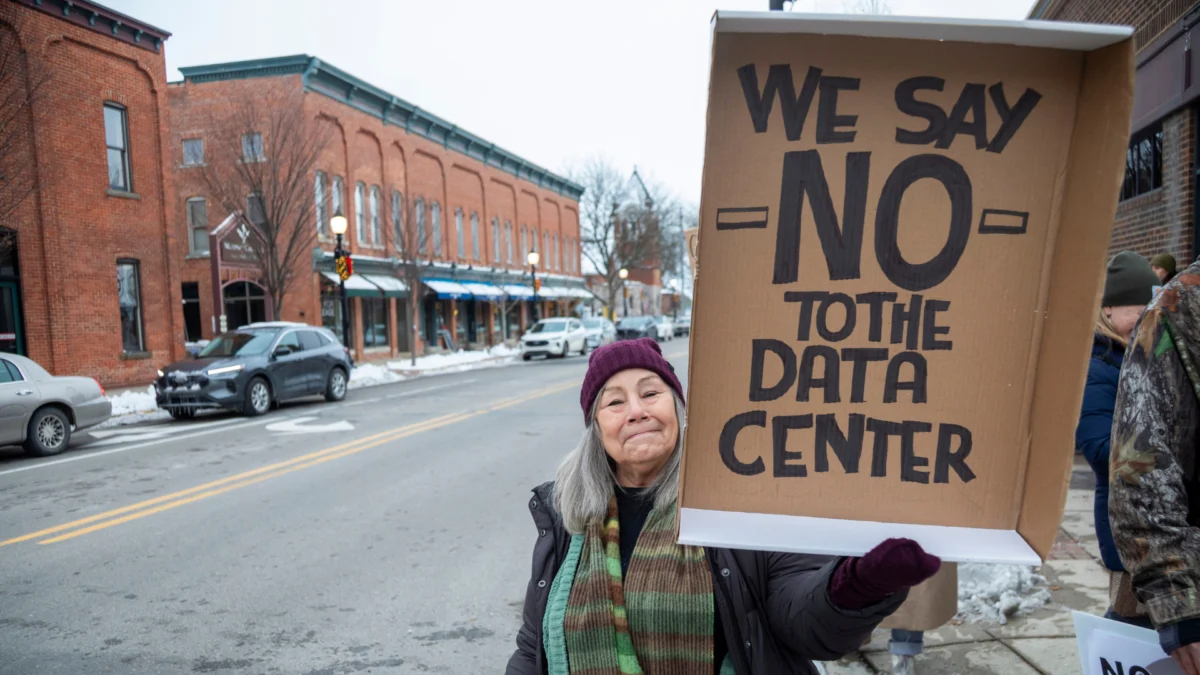
According to a September 21 report by Bloomberg, citing comprehensive tracking data from the research group Data Center Watch, local pushback successfully blocked or delayed an astonishing $68 billion worth of data center projects between April and June of this year alone.
The friction is no longer limited to isolated zoning disputes. Legislative bodies across the United States are stepping into the fray, with 30 state legislatures having enacted or proposed stringent rules governing data center siting, zoning restrictions, and the consumption of critical resources like water and municipal power. In numerous municipalities, exasperated residents and local officials are bypassing traditional permitting appeals altogether, enacting sweeping preemptive moratoriums on data center construction even before developers can formally submit their permit applications.
This widening chasm between corporate AI ambitions and local community tolerance highlights a mounting crisis in modern infrastructure development. As tech giants race to secure land, power, and computing dominance, they find themselves locked in a high-stakes standoff with communities worried about the degradation of local quality of life, soaring utility bills, and environmental strain.
Chronology of a Crisis: From Cloud Growth to Grassroots Backlash
To understand how the data center industry reached this multi-billion-dollar bottleneck, it is necessary to examine the rapid evolution of the cloud and AI sectors over the past decade.
2020–2022: The Quiet Expansion
During the height of the COVID-19 pandemic, remote work, streaming, and enterprise cloud migrations drove a quiet boom in data center construction. While traditional hubs like Northern Virginia’s "Data Center Alley" absorbed the lion’s share of development, secondary and tertiary markets welcomed the influx of property tax revenue with open arms. Local zoning boards routinely fast-tracked permits, viewing server farms as clean, quiet industrial neighbors that brought high-value tax bases without the smokestacks of heavy manufacturing.
2023–2024: The Generative AI Gold Rush
The public debut and subsequent enterprise explosion of generative AI fundamentally altered the landscape. Hyperscalers—including Microsoft, Alphabet (Google), Amazon Web Services, and Meta—realized that their existing infrastructure was wholly inadequate for training and deploying large language models. Capital expenditure surged. Companies began buying up land parcels measured in thousands of acres rather than tens, demanding massive electrical capacities previously reserved for small cities.
Late 2024–2025: The First Cracks in the Facade
As massive facilities broke ground outside major metropolitan areas, the sheer scale of the projects began to shock local residents. Water consumption figures—with single campuses utilizing millions of gallons daily for cooling towers—became public knowledge. Overhead transmission lines and substation upgrades sparked localized protests. State legislatures began fielding hundreds of constituent complaints regarding rising residential electricity rates tied to surging industrial grid demand.
April–June 2026: The $68 Billion Wall
The friction culminated in the spring of 2026. Data Center Watch data reveals that between April and June, community resistance reached a critical mass, resulting in $68 billion worth of developments being delayed or outright terminated. State houses that once welcomed tech investments began drafting bipartisan legislation aimed at capping resource consumption, forcing developers to pay for green energy upgrades, and empowering local communities to veto projects that threaten regional power grids.
Supporting Data: The Numbers Behind the Boom and the Bottleneck
The tension between tech capital and community resistance is defined by stark economic and infrastructural metrics.
Capital Expenditure vs. Physical Reality
- $1 Trillion+: The total amount spent by major hyperscalers on AI and cloud infrastructure between 2023 and early 2026.
- $745 Billion: Projected capital expenditures by Big Tech earmarked specifically for infrastructure additions throughout 2026.
- $68 Billion: The market value of data center projects blocked or delayed by local opposition in a single quarter (Q2 2026).
- 30 States: The number of U.S. state legislatures that have implemented or actively debated specialized regulatory frameworks governing data center siting and resource allocation.
Resource Demands and Grid Realities
Modern AI data centers are unlike traditional web-hosting facilities. A typical hyperscale AI cluster requires anywhere from 100 megawatts to over 1 gigawatt of continuous power—equivalent to the electrical needs of hundreds of thousands of homes.
According to regional transmission organizations (RTOs), the sudden surge in data center interconnection requests has created a massive backlog. Utility companies are forced to choose between fast-tracking power for multi-billion-dollar tech campuses or ensuring grid reliability and stable rates for residential customers. In many regions, the local power grid simply cannot support the requested load without significant upgrades, leading public utility commissions to pump the brakes on approvals.
Water usage presents an equally contentious battleground. Air and liquid cooling systems for high-density GPUs consume staggering quantities of water, raising alarms in drought-prone regions across the American Southwest, parts of the Midwest, and the rural Mid-Atlantic.
Official Responses: Perspectives from Industry, Government, and Communities
The clash over data center expansion has drawn sharply contrasting statements from the primary stakeholders involved.
Big Tech and Developers
Industry trade groups and corporate representatives argue that stalling these projects poses a direct threat to national security and technological competitiveness. Tech executives maintain that winning the global artificial intelligence race requires unhindered domestic infrastructure development.
"The infrastructure we are building today is the digital highway of the 21st century," said a spokesperson for a major cloud infrastructure coalition, speaking on the condition of anonymity. "Delays of this magnitude do not just affect corporate bottom lines; they threaten to cede American leadership in artificial intelligence to global competitors. We are fully committed to working with local communities, investing in grid modernization, and pioneering closed-loop cooling systems, but outright moratoriums only drive up costs and stifle innovation."
State and Local Lawmakers
Conversely, state and local officials are increasingly finding themselves caught between the economic allure of multi-billion-dollar investments and the immediate, vocal anger of their constituents.
"We are not anti-technology, but we are pro-community," stated a state senator from a Midwestern state that recently enacted strict data center zoning limits. "When a single corporate campus demands more electricity than half our state combined—while offering very few permanent jobs after construction wraps—it fundamentally alters our way of life. Local residents shouldn’t have to foot the bill for grid overhauls or face dry wells just to train a chatbot."
Grassroots and Environmental Organizations
Citizen action groups have grown more sophisticated, moving from simple "not in my backyard" (NIMBY) complaints to legal challenges regarding environmental impact statements, noise pollution from industrial cooling fans, and greenhouse gas emissions from fossil-fuel-backed power plants restarting to feed the grid.
Implications: What the Standoff Means for the Future of AI
The widespread disruption of $68 billion in projects carries profound implications for the trajectory of the artificial intelligence industry, the broader economy, and energy markets.
1. Shift Toward Alternative Energy and Off-Grid Solutions
To bypass local grid congestion and public opposition, hyperscalers are increasingly forced to look beyond traditional municipal power hookups. Major tech firms are investing directly in nuclear power purchase agreements—such as deals involving restarted nuclear reactors—as well as dedicated solar and wind farms paired with massive battery storage systems. By attempting to become energy self-sufficient, developers hope to neutralize the argument that data centers are stealing power from local residents.
2. Geographic Decentralization and International Flight
Strict domestic zoning laws and community pushback may accelerate the decentralization of data center construction away from traditional North American hotspots. Developers are increasingly eyeing international markets with fewer regulatory hurdles, or remote regions with abundant, stranded energy resources and low population densities. However, latency requirements for real-time AI applications mean that facilities cannot always be built hundreds of miles away from user bases.
3. Rising Costs for End Users
The friction between supply and demand is bound to impact the economics of artificial intelligence. As land becomes scarcer, permitting processes drag on for years, and developers are forced to finance costly grid upgrades or green energy microgrids, the cost of building and operating AI infrastructure will skyrocket. These increased capital expenditures will inevitably trickle down, influencing the subscription costs of enterprise AI services, cloud storage, and consumer-facing software.
4. A New Paradigm for Industrial Development
Ultimately, the current standoff marks the end of the era when tech companies could quietly slide massive industrial complexes into rural and suburban communities under the radar. Moving forward, successful data center development will require unprecedented levels of upfront community engagement, transparent resource management, and direct financial contributions to local public infrastructure.
As Big Tech prepares to deploy another $745 billion into infrastructure through the remainder of 2026, the message from local communities is unmistakable: the AI revolution cannot outrun the laws of physics, nor can it bypass the democratic will of the neighborhoods where it seeks to build its foundations.

