

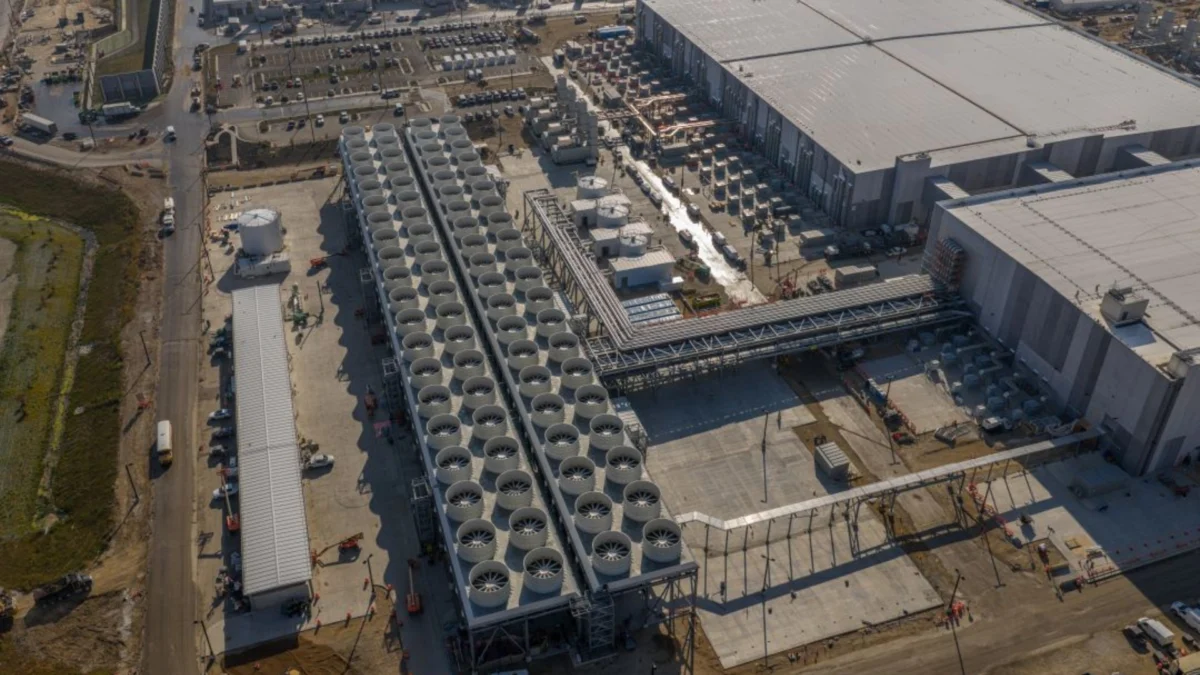
Manama, Bahrain – In a significant escalation of geopolitical tensions, Amazon’s crucial Amazon Web Services (AWS) data center in Bahrain has reportedly been struck once again by cruise missiles launched by Iran’s Islamic Revolutionary Guard Corps (IRGC). This latest assault, claimed by Iranian state media, asserts the facility was "destroyed" and serves as a direct retaliation for recent U.S. airstrikes against a nuclear plant under construction in Darkhovin, Iran, and IRGC targets in Jordan. While Amazon has not officially confirmed the extent of the damage or the attacks, the ongoing hostilities highlight the increasing vulnerability of critical digital infrastructure in the volatile Middle East.
The incident underscores a dangerous new phase in the long-standing animosity between Washington and Tehran, where commercial data centers, vital to the global digital economy, are becoming strategic targets. Despite the physical attacks, Amazon maintains that it has successfully rerouted customer traffic to unaffected sites, ensuring service continuity. However, the repeated targeting of AWS facilities in the region has left its Middle East (Bahrain) Region (ME-SOUTH-1) in a "hard down" status, raising serious questions about the long-term stability of digital operations in areas plagued by conflict.
A Chronology of Escalation and Retaliation
The recent missile strike on the AWS Bahrain data center is not an isolated event but rather the latest salvo in a rapidly escalating series of retaliatory actions between the U.S. and Iran. The current wave of hostilities can be traced back to earlier this year, marking a significant downturn in regional stability.
The initial phase of this intensified conflict saw the U.S. initiate air strikes against targets within Iran and its proxy forces. In a direct response to these American military actions, the IRGC launched a coordinated campaign of attacks against several AWS Middle East regional data centers. These initial assaults, which reportedly utilized both drones and missiles, occurred in late March and early April. The damage inflicted during these early strikes was severe enough to prompt Amazon to declare a "hard down" status for multiple zones within its Middle East (Bahrain) Region (ME-SOUTH-1). As per the AWS Health Dashboard, this critical region has since remained "currently unavailable," indicating sustained operational disruption.
A brief glimmer of hope for de-escalation emerged when the U.S. and Iran reportedly agreed to a ceasefire in mid-June. However, this fragile truce proved short-lived. Just weeks later, in early July, the situation deteriorated sharply following allegations that Iran attacked three ships in the strategically vital Strait of Hormuz, specifically in Omani waters. This incident ignited a fresh cycle of retaliations, pushing the two nations further towards open confrontation.
In response to the Strait of Hormuz incident and other provocative actions, the U.S. military launched further strikes. U.S. Central Command confirmed that it targeted a nuclear plant under construction in Darkhovin, Iran, near the Iraqi border. Additionally, American forces struck Islamic Revolutionary Guard Corps elements in Jordan, specifically those deemed responsible for an attack that resulted in American casualties in mid-July. It was these specific U.S. actions, particularly the targeting of the Darkhovin facility and IRGC forces in Jordan, that the IRGC cited as the direct justification for its most recent missile strike against the Amazon AWS data center in Bahrain. This established a clear, tit-for-tat dynamic where vital commercial infrastructure has become a recognized, if controversial, target in a broader geopolitical struggle.
Critical Infrastructure Under Siege: The Strategic Importance of Data Centers
The repeated targeting of Amazon’s AWS data centers in Bahrain underscores a chilling evolution in modern conflict: the deliberate weaponization of critical digital infrastructure. Amazon Web Services (AWS) is not merely a commercial entity; it is the backbone of vast segments of the global digital economy, providing cloud computing services that power everything from startups and small businesses to large enterprises, government agencies, and even critical public services. The Middle East (Bahrain) Region (ME-SOUTH-1) specifically serves as a vital hub for cloud services across the Arabian Gulf, supporting regional businesses, financial institutions, media, and various public sector operations. Its disruption, therefore, carries significant economic and operational implications beyond Amazon itself.
Data centers are attractive targets in a geopolitical conflict for several reasons. Firstly, they represent a high-value asset. Disrupting these facilities can cripple an adversary’s economy, undermine public confidence, and sow chaos in everyday operations. Secondly, targeting a prominent American company like Amazon, particularly its cloud services, sends a clear political message to the United States and its allies about Iran’s willingness to escalate and inflict economic pain. The use of cruise missiles, as claimed by the IRGC, suggests a calculated and deliberate strike, implying a level of precision targeting aimed at critical components. Cruise missiles are advanced weapons designed for long-range, low-altitude flight, making them difficult to detect and intercept, and capable of delivering significant destructive power.

Despite the gravity of these attacks and Iran’s claim of having "destroyed" the facility, Amazon’s inherent architectural resilience appears to have mitigated a widespread catastrophe for its global customer base. AWS is renowned for its highly distributed and redundant infrastructure, featuring multiple Availability Zones (AZs) within a region and connections across numerous global regions. This design allows customers to distribute their applications and data across physically isolated locations, meaning that an outage in one AZ or even an entire region can often be compensated for by rerouting traffic to healthy infrastructure elsewhere. This strategic foresight has likely enabled Amazon to maintain service continuity by migrating customers to unaffected regions, even as its Bahrain facility remains in a "hard down" state.
However, even with such robust redundancy, the sustained unavailability of an entire region like ME-SOUTH-1 signifies substantial physical damage and operational challenges. It necessitates significant repair, rebuilding, and re-provisioning efforts, representing a substantial financial and logistical burden for Amazon. Furthermore, the attacks introduce an element of risk into regional business operations, potentially deterring future investment in digital infrastructure in areas perceived as unstable. Bahrain, a small island nation with strong ties to the U.S. (hosting the U.S. Fifth Fleet), has positioned itself as a growing financial and technological hub in the Gulf. The targeting of its critical infrastructure directly challenges this aspiration and exposes the kingdom to the ripple effects of broader regional conflicts.
The Geopolitical Chessboard: US-Iran Tensions and Regional Stability
The repeated targeting of civilian infrastructure like Amazon’s data centers is deeply embedded within the complex and fraught geopolitical landscape of the Middle East, a region perpetually on edge due to the enduring rivalry between the United States and Iran. This conflict is characterized by direct military confrontations, economic sanctions, proxy wars, and increasingly, attacks on economic and technological assets.
The United States maintains a significant military presence and strategic interests in the Middle East, primarily focused on safeguarding oil routes, combating terrorism, and supporting key allies like Saudi Arabia, the UAE, and Bahrain. Iran, on the other hand, views the U.S. presence as an infringement on its regional hegemony and seeks to expand its influence through a network of proxy forces and strategic alliances, including Hezbollah in Lebanon, Houthi rebels in Yemen, and various militias in Iraq and Syria. This clash of ambitions often manifests in a cycle of escalation and retaliation.
The Strait of Hormuz, a narrow maritime chokepoint through which a significant portion of the world’s oil supply passes, remains a critical flashpoint. The alleged Iranian attacks on shipping in Omani waters in early July are a prime example of Tehran’s strategy to leverage its geographical advantage to exert pressure and demonstrate its capacity for disruption. Such actions invariably draw sharp condemnation and responses from the U.S. and its allies, escalating tensions further.
The U.S. decision to bomb a nuclear plant under construction in Darkhovin, Iran, represents a significant move. While the exact nature and purpose of this plant were not fully disclosed by Iranian authorities, any strike on nuclear-related facilities, even those ostensibly for civilian use, is viewed by Iran as a direct assault on its national sovereignty and strategic interests. Similarly, the targeting of IRGC forces in Jordan, following an incident that caused American casualties, reflects Washington’s commitment to protecting its personnel and deterring further attacks.
The IRGC’s response—striking a prominent American commercial data center in Bahrain—is a clear signal that Iran is willing to broaden the scope of its retaliation beyond traditional military targets. By hitting civilian-critical infrastructure, Tehran aims to impose economic costs on the U.S. and its corporate interests, hoping to influence American foreign policy or deter future military actions. This strategy blurs the lines between conventional warfare, economic warfare, and cyber warfare, creating a dangerous precedent for future conflicts. The current cycle of attack and counter-attack highlights the precarious balance of power in the region and the constant threat of a wider, more devastating conflict, with critical civilian infrastructure increasingly caught in the crossfire.
Official Narratives and Corporate Silence
In the aftermath of the alleged missile strikes, the official narratives from the involved parties have been starkly different, with a notable silence from the direct corporate target. Iranian state media, acting as the mouthpiece for the Islamic Revolutionary Guard Corps (IRGC), has been unequivocal in its claims. Reports from outlets like Sepah News declared that the IRGC successfully launched cruise missiles against the Amazon AWS facility in Bahrain and "destroyed it." This narrative frames the attack as a decisive and justifiable act of retaliation, a direct response to what Iran perceives as U.S. aggression—specifically, the bombing of the Darkhovin nuclear plant and the targeting of IRGC forces in Jordan following American casualties. The IRGC’s statements are designed to project strength, capability, and resolve, both to its domestic audience and to its international adversaries.

On the American side, statements have largely focused on justifying their own military actions rather than directly confirming or detailing the Iranian attacks on AWS. U.S. Central Command (CENTCOM) typically issues statements regarding its operations, outlining the rationale for its strikes against Iranian targets or proxy forces. These statements emphasize the protection of U.S. personnel and interests, counter-terrorism efforts, and deterrence of further aggression. While CENTCOM would likely be aware of any significant attack on U.S. infrastructure in the region, an immediate official confirmation or detailed assessment of damage to a commercial entity like Amazon Web Services is less common, particularly if the U.S. government views it as a corporate matter or if the intelligence is still being assessed.
Perhaps most conspicuously, Amazon itself has maintained a public silence regarding the alleged missile strikes. There has been no official press release or statement from Amazon or AWS directly acknowledging the attacks or confirming the extent of any physical damage. The only public indication of disruption comes from the AWS Health Dashboard, which, as noted, reports the Middle East (Bahrain) Region (ME-SOUTH-1) as "currently unavailable." This highly technical, understated communication contrasts sharply with the dramatic claims from Iran.
Amazon’s corporate silence is likely a calculated strategy. Direct acknowledgment of being "destroyed" by a state actor could have severe implications for customer confidence, investor relations, and potentially drag the company further into a complex geopolitical dispute. By focusing on service continuity and internal recovery efforts, Amazon aims to reassure its customers that their data and applications remain safe and accessible, even if hosted elsewhere. Engaging in a public dispute with a sovereign nation like Iran could also set an undesirable precedent and open the company to further politicization. The Bahraini government, caught between its U.S. allies and its regional neighbor Iran, has also remained largely silent, likely seeking to avoid further inflaming tensions or confirming attacks on its territory that could undermine investor confidence.
Far-Reaching Implications: A New Front in Modern Conflict
The repeated targeting of Amazon’s AWS data centers in Bahrain signals a profound and troubling shift in the nature of modern geopolitical conflicts, opening a new front where critical civilian digital infrastructure becomes a primary battleground. The implications of these actions are far-reaching, affecting corporations, regional economies, and the broader global digital ecosystem.
For Amazon and AWS, these incidents present unprecedented operational challenges. Beyond the immediate costs of repairing or rebuilding infrastructure, the company faces escalating security expenses, the need to re-evaluate its risk assessments for data center locations in volatile regions, and potentially a re-thinking of its long-term investment strategy in the Middle East. While Amazon’s architectural resilience has ensured service continuity for customers, the declaration of an entire region as "hard down" is a significant blow to its operational prestige and could subtly erode customer confidence, especially for those sensitive to data sovereignty and regional stability. Companies might reconsider hosting critical data in regions prone to physical attacks, even with robust redundancy measures.
For the regional digital economy, the implications are more direct and potentially severe. Businesses, financial institutions, and government services that rely on AWS or other cloud providers in the Middle East now face an undeniable and tangible threat. Investor hesitancy could increase, stifling the growth of nascent tech sectors and digital transformation initiatives across the Gulf. The long-term unavailability of ME-SOUTH-1 could force regional entities to migrate to more distant, and potentially more expensive, cloud regions, impacting latency and operational costs. This jeopardizes the aspirations of countries like Bahrain to become leading digital hubs in the region.
The most concerning implication, however, extends to the broader tech sector. The IRGC has explicitly threatened other major American tech companies, including Microsoft, Apple, Google, and even OpenAI’s multi-billion-dollar Stargate AI data center project in Dubai. This is not just saber-rattling; it represents a strategic declaration that civilian tech giants, whose services are interwoven into the fabric of modern life, are legitimate targets in their geopolitical struggle. This expands the scope of conflict beyond traditional military and economic targets to encompass the very infrastructure that underpins global communication, commerce, and innovation.
This evolving threat environment underscores the urgent need for enhanced national and corporate resilience strategies. Governments must work with private sector tech companies to develop robust defense mechanisms, intelligence sharing protocols, and contingency plans to protect critical infrastructure. For corporations, it necessitates deeper integration of geopolitical risk into their infrastructure planning, potentially leading to more geographically dispersed and resilient architectures, even at higher costs. The blurring lines between physical attacks, cyber warfare, and economic pressure means that hybrid warfare is becoming the norm, with data centers now on the front lines. The conflict in the Middle East serves as a stark warning: as the world becomes increasingly digital, the battle for physical and virtual control will increasingly target the foundational elements of our connected existence, demanding unprecedented levels of vigilance and adaptation from all stakeholders.

