

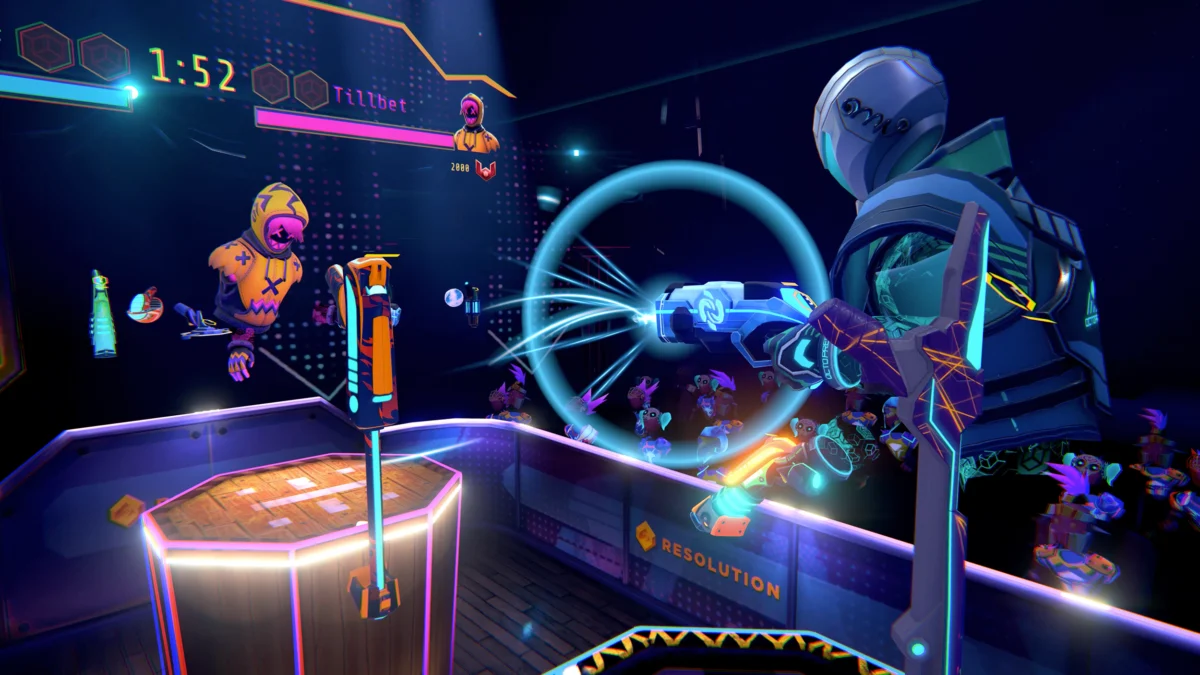
In the rapidly expanding ecosystem of Virtual Reality, few titles manage to capture the primal thrill of competitive combat without succumbing to the limitations of current hardware. While many developers chase the "AAA" dream with sprawling open worlds or complex narrative simulators, Resolution Games took a different approach. Their title, Blaston, has emerged as a sleeper hit, transforming the VR headset from a mere device for escapism into a high-octane, sweat-inducing digital arena.
For many, the allure of VR in the current climate is simple: total immersion. As users seek a respite from the stresses of daily life, the "purer form of escapism" provided by standalone headsets like the Oculus Quest 2 (now Meta Quest) has become a cultural touchstone. Blaston stands at the intersection of this demand, offering a dueling experience that feels both futuristic and fundamentally human.
The Genesis of a Duel: Main Facts and Gameplay Mechanics
At its core, Blaston is a tactical, slow-motion dueling game that eschews the traditional "point-and-click" shooting mechanics of VR shooters in favor of positioning and spatial awareness. The game forces players into a confined arena where they must face off against an opponent, attempting to deplete the other’s health bar through a combination of projectile management and physical endurance.
The Mechanics of Combat
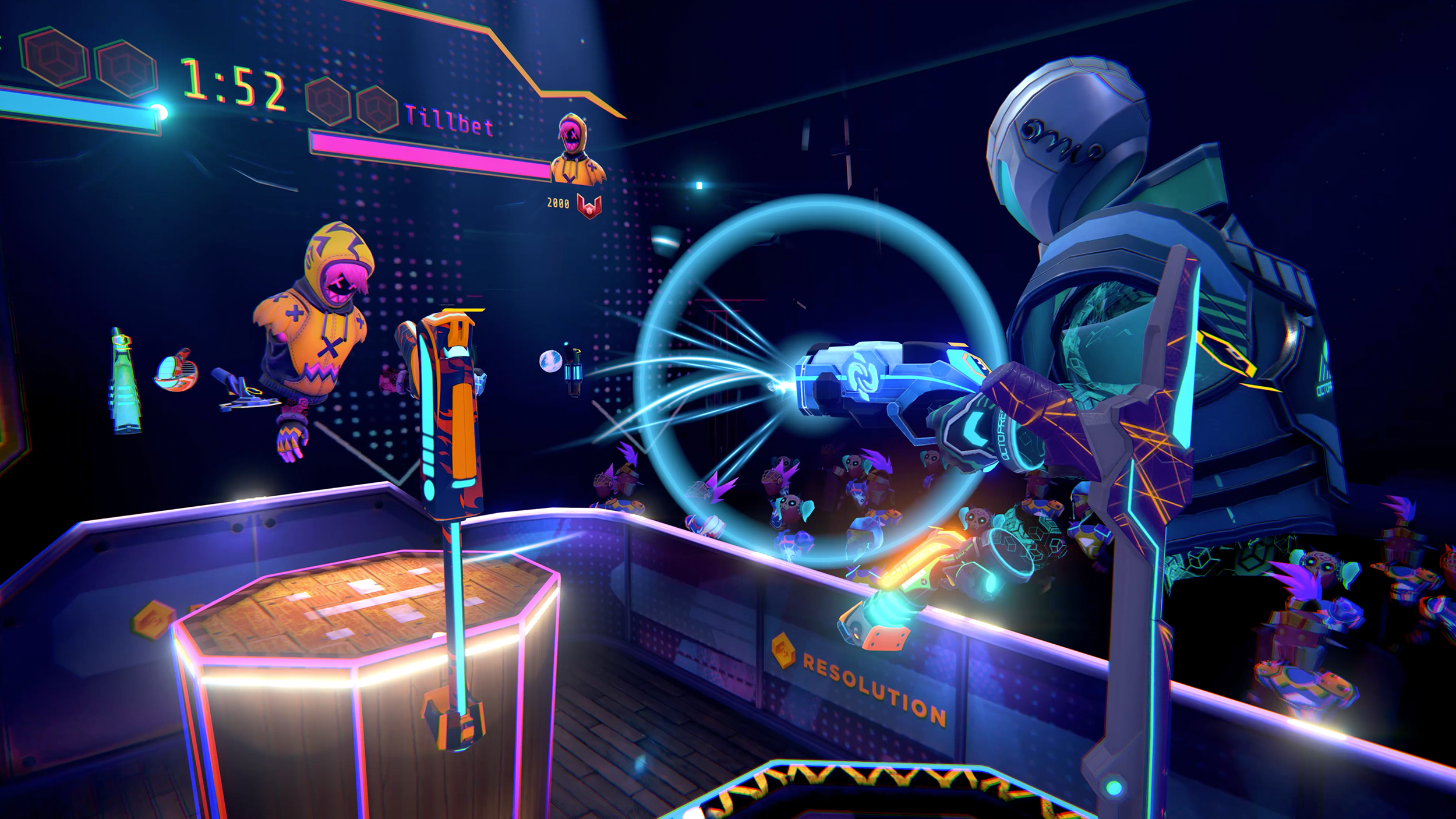
Unlike traditional shooters where aim is the primary metric of success, Blaston functions more like a high-stakes game of chess mixed with a high-intensity cardio workout. The game’s defining feature is its weapon management system:
- The Arsenal: Weapons do not sit in a permanent inventory. Instead, they spawn randomly at six distinct locations surrounding the player.
- Spatial Strategy: There are no objectively "better" weapons; success is dictated by how a player utilizes their loadout to control the geometry of the arena.
- The "Bullet Hell" Factor: Because projectiles move at a speed that allows for dodging rather than hit-scan precision, the game rewards players who can read their opponent’s patterns and force them into unfavorable positions.
One standout example is the electrical beam weapon, which serves a dual purpose: it acts as a damage-over-time tool if it connects, but more importantly, it functions as a physical barrier. By deploying these beams, players can "gate off" sections of the arena, forcing their opponent into the path of incoming projectiles. This layer of depth turns every match into a kinetic puzzle.
Chronology: From Hidden Gem to VR Staple
The journey of Blaston is one of organic growth. Initially launched to moderate fanfare, the game quickly found its footing through word-of-mouth recommendations among the VR enthusiast community.
2020: The Initial Launch
Resolution Games, known for their prowess in VR design, released Blaston with the intent of creating a "living game." Unlike titles that rely on scripted AI, Blaston was built from the ground up for PvP (Player vs. Player) engagement.
2021: Refining the Experience
By late 2021, the title had reached a critical mass. As hardware like the Quest 2 became more accessible, the user base for Blaston exploded. It was during this period that the game transitioned from being a "whim" purchase for casual users to a nightly ritual for dedicated players. The developers’ commitment to constant updates, balancing patches, and community events solidified its reputation as a "must-have" title for any VR library.
Supporting Data: Why Physicality Matters
The rise of Blaston provides a compelling case study on the importance of "visceral VR." Data from the VR fitness community suggests that games requiring significant physical movement—such as dodging, ducking, and reaching—are significantly more likely to retain players over a six-month period than stationary experiences.
- Retention Rates: Players who engage in Blaston report playing for at least one to two hours per session. This is an outlier in the VR industry, where average session times for shooters often hover around the 30-to-45-minute mark.
- The "Air Link" Factor: The transition to standalone play (utilizing the Quest’s onboard processor) removed the "friction" of cables. By eliminating the need for a tethered desktop experience, Blaston allows for a 360-degree range of motion that is essential for its "dodge-and-weave" gameplay.
Official Responses and Developer Philosophy
Resolution Games has remained remarkably transparent regarding the design philosophy of Blaston. In various developer diaries and community Q&As, the team has emphasized that they did not want to make just another "wave shooter."
"We wanted to create a game that felt like a sport," a spokesperson for the studio noted in a press release. "When you step into the arena in Blaston, you aren’t just a player behind a screen. You are the character. Your physical reaction time, your ability to read the opponent, and your management of the arena space—these are the things that define the winner."
The studio has also leaned heavily into the "esports-ready" nature of the game, providing spectating tools and balance adjustments that ensure no single weapon meta remains dominant for too long. By treating the game as a living ecosystem rather than a finished product, they have kept the meta-game fresh, preventing the stagnation that often kills competitive VR titles.
The Implications: The Future of VR Competitive Play
The success of Blaston serves as a signpost for the future of virtual reality. As we look ahead, the implications for the medium are profound.
The Shift Toward "Active" VR
Blaston proves that VR doesn’t need to be hyper-realistic to be immersive. Its stylized aesthetic and focus on kinetic gameplay suggest that developers are moving away from trying to replicate "reality" and instead focusing on creating "new realities." The future of VR lies in experiences that use the human body as the primary controller.
The Death of the "Gimmick"
For years, VR was criticized for having a "tech demo" problem—titles that were fun for ten minutes but lacked longevity. Blaston successfully breaks this mold by offering a depth of mastery that rivals traditional fighting games like Street Fighter or Tekken. It suggests that if developers provide enough mechanical depth, VR can sustain a long-term competitive scene.
Accessibility and the "Plug-and-Play" Model
The ease with which Blaston can be picked up and played—without the need for complex controllers or advanced room setups—is a blueprint for VR’s mainstream adoption. As the industry looks to move beyond the early-adopter phase, games that offer high-intensity, short-burst engagement will be the key to bringing non-gamers into the fold.
Conclusion: Stepping into the Arena
Whether you are a veteran of VR shooters or a newcomer looking for a reason to dust off your headset, Blaston offers something that few other titles can: a genuine, adrenaline-pumping test of skill. It manages to be both a workout and a tactical exercise, a rare combination that makes it a standout entry in the current VR library.
In an era where we are increasingly aware of the limitations of our digital spaces, Blaston provides a necessary, visceral escape. It is not just a game; it is an arena. And as more players discover the joy of the duel, it is clear that Blaston will remain a cornerstone of the VR landscape for years to come. If you have been searching for a title that justifies the cost of your hardware, the search ends in the duel. Step in, pick your weapons, and prepare to move. The arena is waiting.

