

In an era where the battle for eyeballs is increasingly fought in the digital arena, the landscape of sports broadcasting is undergoing a seismic shift. As the value of premium sports broadcast packages continues to skyrocket, transforming the economics of traditional television, a new, formidable player has entered the ring. TikTok, the world’s leading short-form video platform, is aggressively expanding its footprint into live sports, leveraging its massive user base to bridge the gap between social media engagement and high-stakes athletic broadcasting.
Through a series of strategic partnerships, TikTok is positioning itself as a primary destination for live sports content, moving beyond mere highlight reels to deliver full-scale events. From championship boxing matches featuring undisputed titans to the high-octane action of the NBA and WNBA, the platform is betting that the future of sports consumption lies not on the couch in front of a television, but in the palm of a hand.
The New Fight Card: Amanda Serrano and the Evolution of Boxing
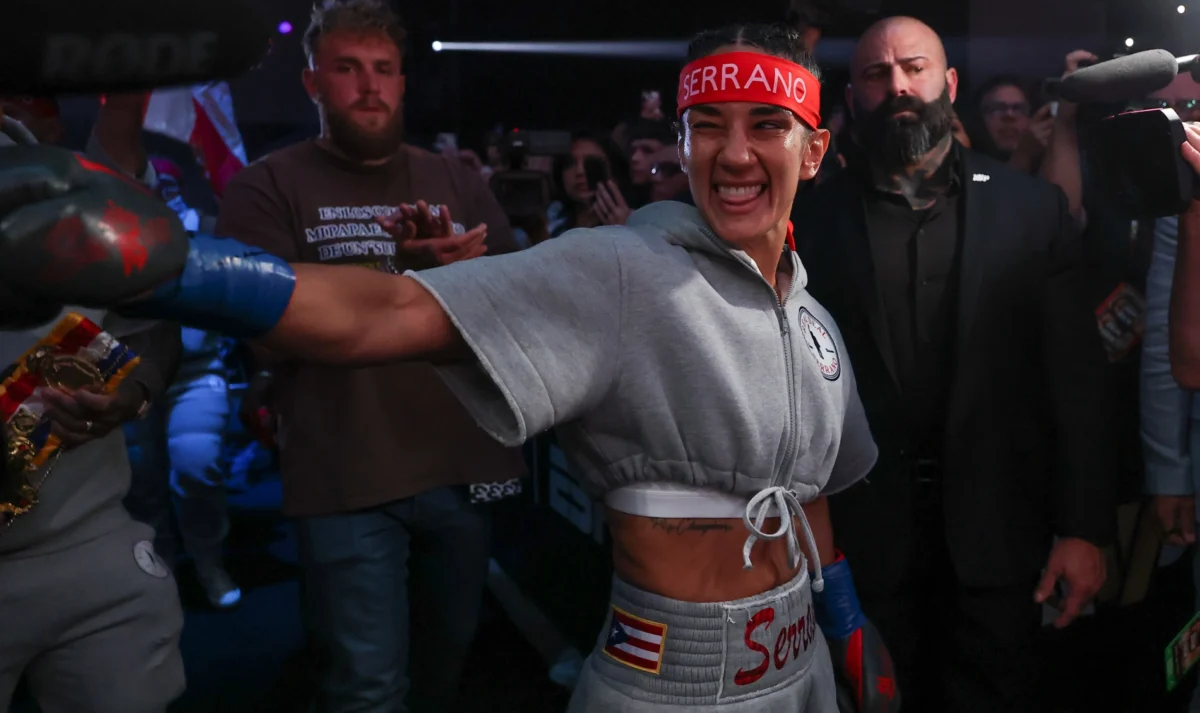
The crown jewel of TikTok’s recent expansion into live sports is its foray into championship boxing. On August 21, in Temecula, California, the platform will host the live broadcast of a title defense by undisputed featherweight champion Amanda "The Real Deal" Serrano. She will face off against challenger Lucrecia Manzur in a bout that marks a milestone for the social media giant: the first-ever championship boxing event broadcast live on TikTok.
Serrano, who boasts an impressive career record of 49-4-1 with 32 knockouts, has long been a force in the sport, but her trajectory reached new heights when she aligned with Most Valuable Promotions (MVP). Co-founded by Jake Paul and Nakisa Bidarian, MVP has made a business out of disrupting the traditional boxing model. Serrano’s profile surged significantly following her iconic, high-stakes battle against Katie Taylor, which served as a pivotal undercard for the global spectacle of Jake Paul’s fight against Mike Tyson.
That specific matchup captured the cultural zeitgeist so thoroughly that it necessitated a high-profile rematch, recently booked for streaming on Netflix. By securing the rights to stream her upcoming title defense, TikTok is not just tapping into Serrano’s individual star power; it is capitalizing on the massive, digitally native audience that MVP has successfully cultivated around professional pugilism.
Chronology: From Social Highlights to Global Broadcasts
To understand the speed of TikTok’s evolution, one must look at the recent timeline of its sports integration. For years, the platform served as a supplementary medium—a place where fans went to catch a viral dunk or a post-fight interview.
- 2025 – The Influencer Boxing Boom: Following the massive success of the Jake Paul-Mike Tyson undercard, TikTok began to see the potential of "influencer-adjacent" boxing. The platform noted that engagement metrics for high-profile fighters were consistently outperforming traditional sports content.
- 2026 – The Infrastructure Phase: TikTok launched "TikTok GamePlan," a comprehensive suite of tools designed to allow professional sports leagues to better integrate with the creator economy.
- Early 2026 – Strategic Alliances: Major organizations, including Major League Baseball (MLB) and FIFA, began pilot programs using GamePlan to activate creator partnerships. These partnerships proved that the platform could drive significant traffic to official league broadcasts.
- Mid-2026 – The Pivot to Live: With the infrastructure proven, TikTok shifted to securing direct broadcasting rights. The announcement of the Serrano-Manzur fight and the expansion into NBA/WNBA content represent the transition from "supporting platform" to "destination broadcaster."
Data-Driven Strategy: Why Basketball Matters
The choice to partner with the NBA and WNBA is far from incidental. According to internal data released by TikTok, the platform’s community is inherently hungry for basketball content. Since the beginning of 2026, organic searches for "NBA" and "WNBA" have spiked by 30% and 15%, respectively.
This search behavior indicates a massive, untapped audience that is actively seeking basketball content within the app. By providing a "direct path from the feed to the broadcast," TikTok is solving a perennial problem for sports leagues: the difficulty of converting casual social media scrollers into live-game viewers.
Through the GamePlan integration, creators will receive exclusive access to highlights, behind-the-scenes content, and events like the NBA All-Star Weekend. This creates a feedback loop. A creator posts a highlight; a fan engages with it; that engagement triggers a notification about the live broadcast; the fan clicks the link and enters the live stream. It is a seamless funnel that traditional cable broadcasters have struggled to replicate in the digital age.
Official Responses: A Shared Vision of Accessibility
The partnership between TikTok, the NBA, and the WNBA is being framed by executives as a necessary evolution of fan engagement. Rollo Goldstaub, TikTok’s Global Head of Sport, emphasized the symbiotic nature of the relationship in a recent statement:
"This partnership shows how central TikTok has become to the way fans discover and engage with basketball around the world. As the NBA and WNBA share game highlights, creators and fans can join the conversation around the biggest moments in real time, and TikTok GamePlan carries that same discovery straight through to tune-in, giving fans a direct path from the feed to the broadcast."
Similarly, the leadership at Most Valuable Promotions views the TikTok partnership as a fulfillment of their mission to redefine sports media. In a joint statement, Jake Paul and Nakisa Bidarian noted: "From day one, MVP has challenged the traditional boxing model by creating the biggest moments and opportunities for fighters while finding new ways to bring the sport to fans around the world. Partnering with TikTok to deliver the first-ever championship boxing event on TikTok Live is another example of that vision to grow the audience for boxing and make world championship fights more accessible than ever."
Implications for the Media Landscape
The implications of TikTok’s aggressive expansion are profound. For decades, the broadcast sports industry has relied on the "bundle"—the idea that consumers would pay for a large package of channels to access a few key games. That model is fracturing as viewers move toward fragmented, on-demand, and social-first streaming services.
1. The Death of the Passive Viewer
TikTok’s model relies on active participation. Unlike watching a game on cable, where the viewer is largely a passive recipient, the TikTok Live experience is built around real-time interaction. Fans can comment, use effects, tip creators, and share clips instantly. This "community-first" approach is expected to keep younger demographics engaged for longer periods than traditional broadcast formats.
2. Advertising and the Pulse Premiere
The monetization strategy behind these sports broadcasts is anchored in TikTok’s "Pulse Premiere" ad product. This tool allows advertisers to place their content next to top-tier, trending videos. By tying these ad deals to the NBA, WNBA, and high-profile boxing, TikTok is offering brands a way to reach highly engaged audiences during peak cultural moments. For advertisers, this is the digital equivalent of a Super Bowl spot, but with the added benefit of precise, data-driven targeting that cable television cannot provide.
3. The Arms Race for Rights
TikTok is now directly competing with giants like NBCUniversal, Peacock, and Amazon Prime for the right to control the viewing experience. As viewer data shows that platforms with the most "coveted" live sports packages generate the most traffic, TikTok’s move is essentially a defensive and offensive play to keep users within its ecosystem. If users leave the app to watch a game on another service, TikTok loses data, attention, and ad revenue. By keeping the stream in-app, they retain the entire user journey.
The Road Ahead
As the August 21 boxing match approaches, the industry will be watching closely to see how the technical aspects of the broadcast hold up under the pressure of a live, global audience. If successful, it will likely trigger a rush of other sports leagues to sign similar deals.
The traditional sports broadcast model is not necessarily dead, but it is being forcibly evolved. The future of the industry is no longer about who owns the satellite dish; it is about who owns the attention of the fan. With the inclusion of live championship events into its algorithmic feed, TikTok has signaled that it is no longer content to just host the conversation—it intends to own the game.
Whether this transition will satisfy the traditionalists who prefer a 4K, 60-frames-per-second, multi-camera television production remains to be seen. However, for a generation that consumes the world in vertical, high-speed snippets, the "Arena of the Algorithm" is fast becoming the only venue that matters. As leagues scramble to find new ways to reach Gen Z and Alpha, the partnership between legacy sports and the short-form titan appears to be the most logical, and perhaps most inevitable, next step in the digital revolution of sports entertainment.

