

Main Facts
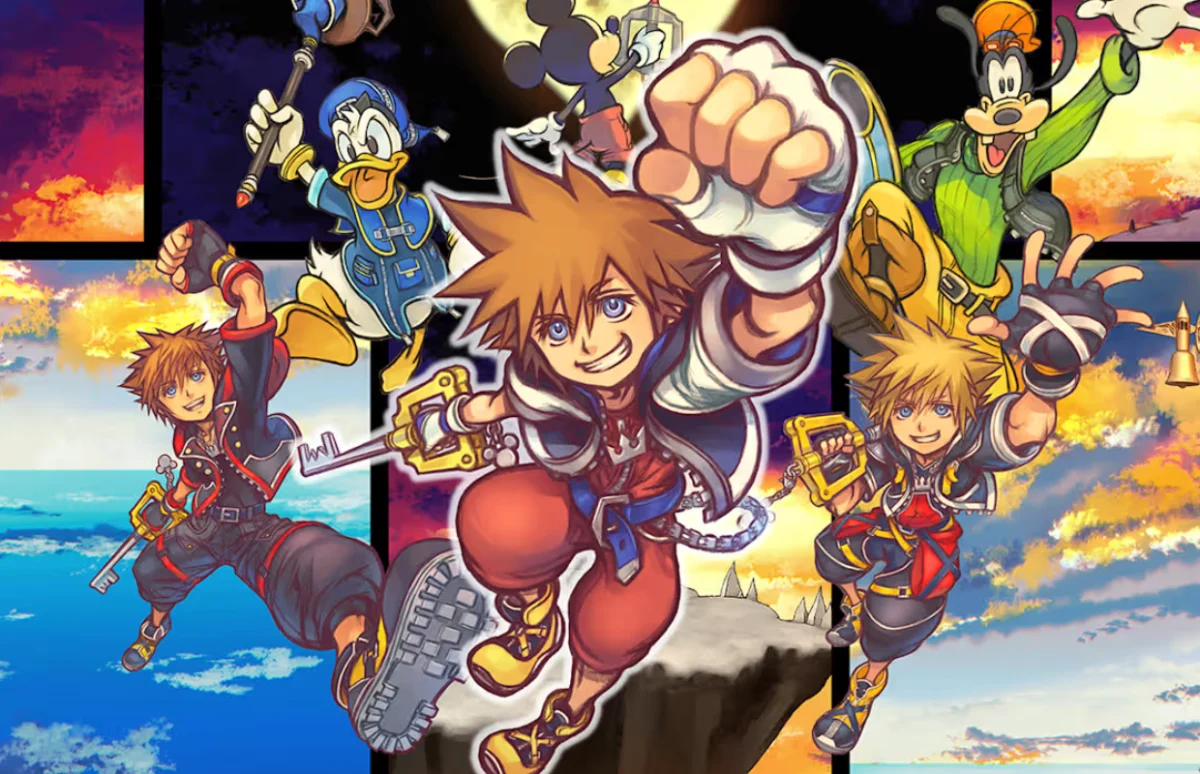
Square Enix’s critically acclaimed and sprawling Kingdom Hearts franchise has finally broken free from the restrictive clouds of the past, landing natively on modern hardware. The newly released Kingdom Hearts Collection [I~III] brings the entire narrative arc to contemporary platforms—including native versions for the PlayStation 5, Xbox Series X/S (via Smart Delivery / Play Anywhere), and crucially, Nintendo’s next-generation system, the Nintendo Switch 2. Additionally, Kingdom Hearts HD 1.5 + 2.5 ReMIX has been brought to the original Nintendo Switch.
Historically, Nintendo platforms were limited to controversial cloud-streaming editions of the series, which drew heavy criticism from fans due to latency, connectivity requirements, and unstable framerates. The Kingdom Hearts Collection [I~III] bundle comprehensively packages three monumental software releases: Kingdom Hearts HD 1.5+2.5 ReMix, Kingdom Hearts HD 2.8 Final Chapter Prologue, and Kingdom Hearts III bundled alongside its expansive ReMind DLC.
While the package represents an unprecedented opportunity to experience Sora, Donald, and Goofy’s journey natively in a single ecosystem—particularly on a handheld hybrid system—early technical analysis reveals a stark disparity in performance quality across the included titles. While the 1.5+2.5 ReMix compilation shines as a definitive portable experience on the Nintendo Switch 2, the heavier, more graphically intensive entries (2.8 and III) suffer from unstable, uncapped frame rates and notable technical oversights that make the overall bundle difficult to recommend without significant caveats.
Chronology: A Multi-Generation Retrospective
To understand the weight of this massive multi-platform release, one must trace the historical trajectory of the Kingdom Hearts series collections across nearly two decades of hardware iterations:
- The PlayStation 3 Era (2013–2014): The compilation journey began with the release of Kingdom Hearts HD 1.5 ReMIX and subsequently 2.5 ReMIX on the PlayStation 3, finally bringing high-definition remasters and "Final Mix" content previously exclusive to Japan to Western audiences.
- The PlayStation 4 and Xbox One Generation (2017–2020): Square Enix consolidated the catalog onto the PS4, Xbox One, and later PC via the Epic Games Store, releasing 1.5+2.5 ReMix, 2.8 Final Chapter Prologue, and eventually Kingdom Hearts III. These versions established the 60fps baseline for the older titles, though they inherited specific architectural quirks, such as the 8-directional movement snapping issue in Kingdom Hearts II Final Mix.
- The Cloud Era on Nintendo Switch (2022): In an attempt to bring the franchise to Nintendo’s massive handheld market, Square Enix released cloud versions of the entire saga. The reception was overwhelmingly lukewarm, isolating players with poor internet connections and highlighting the limits of streaming resource-heavy action RPGs.
- Current-Gen Native Releases (Present): Square Enix remedies past hardware omissions by rolling out native versions for PlayStation 5, Xbox Series X/S, and the Nintendo Switch 2. For the first time, players can experience the early eras of the franchise portably on Nintendo hardware without the tether of an internet connection, though technical execution varies wildly between titles.
Supporting Data: Performance Analysis Across Platforms
Evaluating Kingdom Hearts Collection [I~III] requires looking closely at how individual components behave on modern hardware, specifically contrasting the Nintendo Switch 2 against the PlayStation 5 and Xbox Series X ecosystems.
Kingdom Hearts HD 1.5+2.5 ReMix
- Performance: Locked solidly at 60 frames per second (fps) across both the PlayStation 5 and the Nintendo Switch 2 (both in docked and handheld configurations).
- Quality of Life: Unlike the original PS4 versions—which limited cutscene skipping strictly to in-engine cinematics—both the PS5 and Switch 2 iterations allow players to skip pre-rendered cutscenes in the original Kingdom Hearts, a massive quality-of-life improvement for speedrunners and returning veterans.
- Drawbacks: The notorious 8-directional movement issue in Kingdom Hearts II Final Mix persists, wherein analog movement occasionally snaps into one of eight cardinal/ordinal directions rather than offering true 360-degree analog fluidity. Rumble features on Switch 2 remain standard rather than utilizing advanced HD rumble or sophisticated haptics.
- Verdict: Undisputedly the standout success of the collection on Switch 2.
Kingdom Hearts 2.8 Final Chapter Prologue
- Performance: Kingdom Hearts 0.2 Birth by Sleep – A Fragmentary Passage runs at an uncapped and highly variable frame rate on the Nintendo Switch 2, exhibiting noticeable stutters even in early game areas.
- Visuals: The Switch 2 version manages to improve draw distances over the legacy PlayStation 4 Pro version. Meanwhile, the native PlayStation 5 version boosts both resolution and draw distance significantly, but suffers from a glaring visual bug: bloom lighting is cranked up excessively, washing out scenes in a way not present on the PS4 or Switch 2 builds.
Kingdom Hearts III + ReMind DLC
- Performance: Mirroring the pre-launch demo criticisms, Kingdom Hearts III on the Switch 2 features an uncapped, unstable frame rate with no implemented 30fps lock option.
- Console Comparison: On the PlayStation 5 and PS5 Pro, the game retains the "Default" and "Stable" configuration modes inherited from the PS4 Pro era. When tested across multiple heavy-load environments, these modes perform identically on standard PS5 and PS5 Pro hardware, seemingly preserved primarily for power-saver compliance.
Official Responses and Developer Context
Square Enix has heavily promoted the transition of the Kingdom Hearts franchise to current-generation platforms as the ultimate unification of Sora’s journey. By abandoning the controversial cloud format on Nintendo systems, the publisher has directly addressed years of fan feedback demanding local, offline play.
However, the studio has remained largely silent regarding the technical inconsistencies present in the collection at launch. Developer choices—such as leaving modern ports without high-refresh-rate (120fps) support for older legacy titles to avoid breaking legacy animation timings—demonstrate the delicate nature of remastering titles built across vastly different hardware paradigms. Furthermore, the absence of basic mitigation tools, such as an optional 30fps cap for the resource-heavy Kingdom Hearts III and 0.2 on the Switch 2, highlights a missed opportunity to stabilize user experiences on hybrid hardware.
Implications for the Industry and Consumers
The release of Kingdom Hearts Collection [I~III] carries significant implications for both Square Enix’s porting strategies and the expectations surrounding hybrid console hardware like the Nintendo Switch 2:
- The Mixed-Bag Problem of Remaster Bundles: When publishers bundle disparate generations of games into a single SKU, consumers face a fragmented value proposition. While early-generation PS2 remasters (1.5+2.5) run brilliantly on modern handhelds, anchoring them to graphically demanding current-gen titles (III and 0.2) that lack proper optimization results in uneven critical and commercial reception.
- Uncapped Frame Rates vs. User Options: The lack of standardized graphical toggles—such as user-selectable frame rate caps—demonstrates a growing friction in port development. On platforms capable of variable performance, giving players the tools to lock performance (e.g., a stable 30fps mode) is paramount for maintaining playability in action RPGs where input timing dictates combat success.
- The Switch 2’s Capabilities: Analysts note that the Nintendo Switch 2 is demonstrably capable of running much more complex geometry and lighting setups than what is showcased in the Kingdom Hearts III port. The performance friction seen here suggests that port optimization required more time or deeper architectural tailoring.
Ultimately, prospective buyers face a nuanced decision. For players purely invested in reliving the nostalgia of Kingdom Hearts HD 1.5+2.5 ReMix on a modern, portable screen, the collection is a triumph and an easy purchase. However, for those looking to experience the heavier, modern entries (2.8 and III) on Nintendo’s newest ecosystem, the unpolished, variable performance means waiting for patch updates—or sticking to dedicated home consoles—remains the wisest course of action.

