

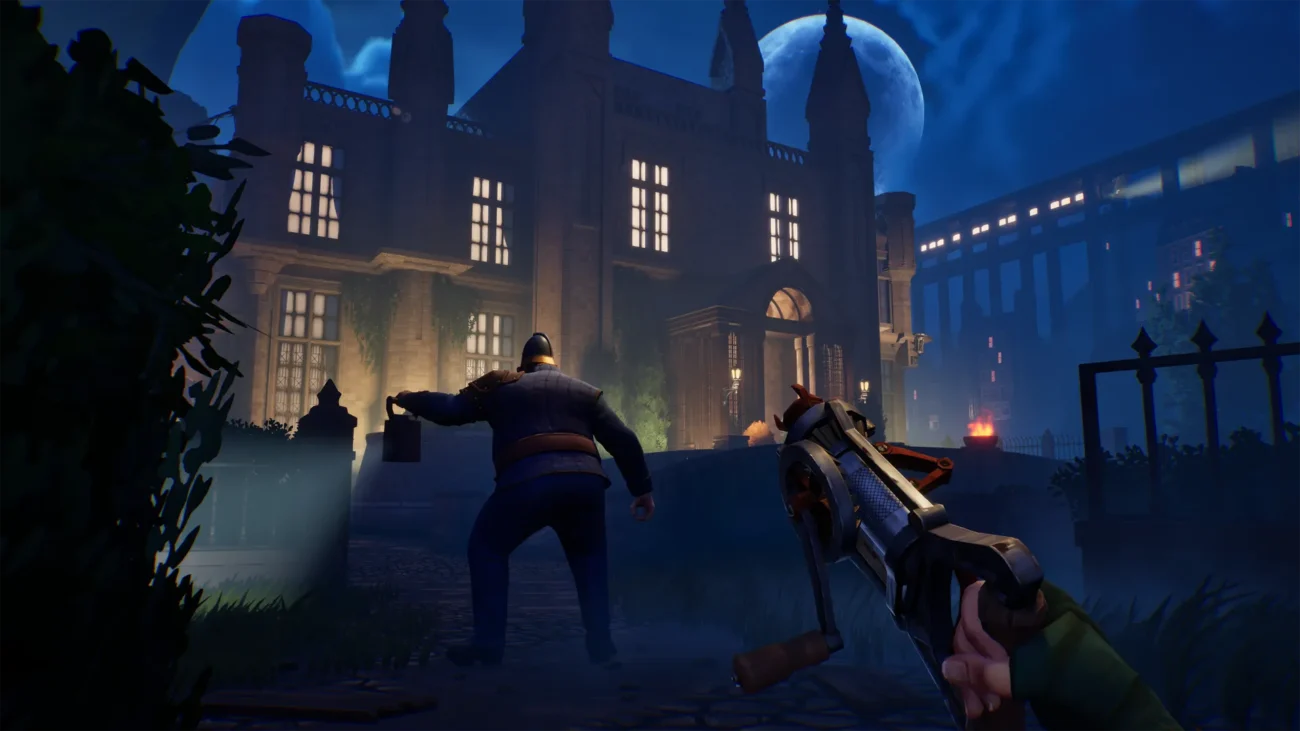
The studio behind Underworld Ascendant and Thick as Thieves confirms the departure of 17 staff members as industry-wide volatility continues to claim mid-tier development projects.
OtherSide Entertainment, a studio steeped in the legacy of immersive sim pioneers, has confirmed a significant reduction in its workforce. In a statement provided to industry outlets, the studio revealed that 17 staff members were laid off at the end of May following the difficult decision to cancel an in-development project codenamed "Argos."
The closure of the project, which the studio leadership believed held significant potential under different economic conditions, highlights the deepening crisis facing independent and mid-tier development houses in the current fiscal climate.
The Facts: A Studio in Transition
The cancellation of Argos marks another chapter of instability for a company that has navigated a turbulent decade. According to the studio’s official response, the project was deemed "unviable for now" due to what they described as a "brutally challenging" industry environment.
While specific details regarding the nature of Argos remain under wraps, the timing of the cancellation is particularly poignant. It follows the recent release of Thick as Thieves, a multiplayer stealth-heist game published by Megabit—a subsidiary of the Aonic Group, which acquired OtherSide in 2023.
The loss of 17 positions is a significant blow to the studio’s headcount. In a show of solidarity, OtherSide’s management explicitly endorsed the displaced employees, telling external studios: "To any studios out there hiring, we cannot recommend these impacted people highly enough."
A Chronology of OtherSide’s Development History
Founded in 2014 by industry veteran Paul Neurath—the visionary behind the Ultima Underworld series—OtherSide Entertainment was initially positioned to carry the torch of the immersive sim genre. Its early years were defined by high ambitions, but the studio’s history is a complex tapestry of creative potential hampered by shifting publisher relations and market headwinds.
2014–2016: The Visionary Foundation
OtherSide was established with the goal of revisiting the classic Underworld intellectual property. The studio generated immediate industry buzz, which only intensified when Warren Spector, the legendary creator of Deus Ex and System Shock, joined as studio director in 2016. The industry expectation was that the union of Neurath and Spector would revitalize the immersive sim genre for a modern audience.
2018–2020: The System Shock 3 Impasse
The studio’s most high-profile project during this period was System Shock 3. The project faced a rocky road from the start, compounded by the financial instability of its original publisher, Starbreeze. As Starbreeze’s own fortunes dwindled, the funding for System Shock 3 became increasingly precarious.
In 2020, the project hit a terminal wall when Tencent acquired the rights to the System Shock franchise. This transition resulted in a round of layoffs at OtherSide and effectively signaled the end of the studio’s involvement with the IP. By 2022, Warren Spector confirmed that OtherSide was no longer involved in the development of the title.
2023–2024: Acquisitions and Cancellations
The start of 2023 brought reports of a potential partnership with Hasbro to develop a Dungeons & Dragons title. However, those plans were ultimately scrapped, marking another missed opportunity for the studio. Later that year, the Aonic Group—a firm focused on backing mid-tier developers—acquired OtherSide, aiming to stabilize the studio’s operations. Despite this backing, the recent cancellation of Argos suggests that even with corporate support, the current market for "middle-market" games remains unforgiving.
Supporting Data: The "Brutally Challenging" Environment
To understand why OtherSide Entertainment has been forced to downsize, one must look at the macro-economic reality of the video game industry in 2023 and 2024.
The industry is currently suffering from a "correction" phase following the pandemic boom. Several key factors have contributed to the unviability of projects like Argos:
- Exploding Development Costs: The budget required to produce a competitive AA or AAA title has skyrocketed. Inflation, combined with the rising cost of specialized talent, has forced studios to demand higher returns on investment.
- Publisher Risk-Aversion: Publishers are increasingly hesitant to fund projects that do not offer "live service" potential or massive, franchise-level revenue. A mid-tier, single-player or narrative-focused project is currently viewed as a high-risk asset.
- The "Live Service" Trap: While Thick as Thieves ventured into the multiplayer space, the market for multiplayer games is arguably more saturated and volatile than ever. Studios are finding it difficult to gain traction without massive marketing budgets.
- Capital Scarcity: Interest rate hikes have made venture capital and private equity funding harder to secure. For studios like OtherSide, which rely on external investment to fuel long-term development cycles, the "runway" to release a game has become significantly shorter.
Official Responses and Studio Sentiment
In their statement, OtherSide Entertainment chose to frame the layoff as a consequence of the macro environment rather than a failure of internal vision. The company’s emphasis on the "potential" of the project suggests that the cancellation was a strategic retreat—a way to preserve the studio’s core viability by shedding the weight of a project that could not meet the stringent ROI requirements of their current financial partners.
This reflects a broader trend in the industry where studios are being forced to pivot rapidly. "We believe in our team, and we believe in our craft," a spokesperson noted in a follow-up, emphasizing that the studio intends to continue operations despite the recent setbacks.
Implications for the Future of Mid-Tier Development
The situation at OtherSide Entertainment serves as a cautionary tale for the "middle class" of the game development industry.
The Erasure of the AA Tier
For years, the industry has been bifurcated into massive, billion-dollar AAA projects and small, hyper-niche indie games. The "AA" space—where studios like OtherSide operate—is being squeezed from both sides. Without the massive marketing power of a conglomerate, these studios struggle to break through the noise of a digital storefront crowded with thousands of new releases each year.
The Shift Toward Leaner Operations
If the cancellation of Argos is any indication, the future of studios like OtherSide may involve significantly shorter development cycles and a pivot away from ambitious, multi-year projects that require massive upfront capital. Investors are demanding "proof of concept" much earlier, and the margin for error has effectively vanished.
The Impact on Talent Retention
The most devastating impact of these cycles is the "brain drain." Every time a studio undergoes layoffs, top-tier talent is either funneled into larger, more risk-averse companies or leaves the industry entirely. The loss of 17 developers from OtherSide is a loss of institutional knowledge—talent that helped define the immersive sim genre is now looking for work in an industry that is currently shedding jobs at a record pace.
Conclusion
The story of OtherSide Entertainment is not yet over, but it is at a crossroads. While the studio has survived acquisitions and project cancellations in the past, the current industry climate presents a challenge that persistence alone cannot overcome.
As the gaming industry continues to recalibrate, the focus will likely shift toward more sustainable, scalable development models. For now, the 17 staff members impacted by the closure of Argos are the latest casualties in a sector struggling to find its footing in a post-pandemic world. Whether OtherSide can leverage its remaining assets and its partnership with the Aonic Group to find a path to stability remains to be seen.
For the fans who have followed the studio since its inception, the hope remains that the lessons learned from these "brutally challenging" years will eventually result in the kind of high-caliber, innovative gaming experiences that put OtherSide on the map in the first place. For now, however, the priority for the studio is survival, consolidation, and the search for a new, viable direction.

