


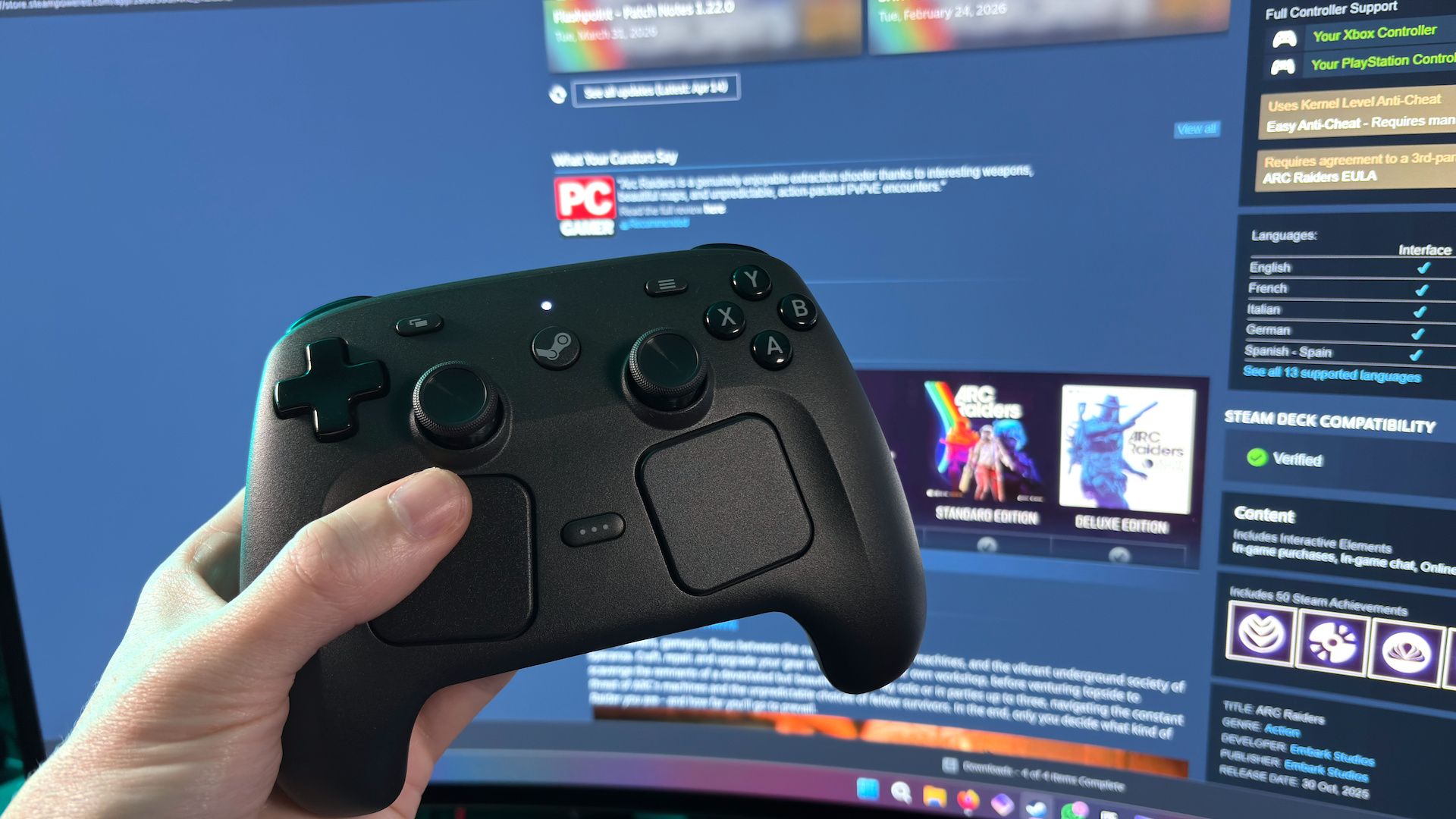
In a turn of events that underscores the enduring legacy of Valve’s experimental hardware, the company has found itself in a paradoxical position: they are struggling to keep up with the overwhelming demand for a device that many had written off as a relic of a bygone era. The Steam Controller, characterized by its signature dual trackpads and deep customization options, has seen a resurgence in interest that has completely outstripped the company’s manufacturing capacity.
For potential customers, the reality is sobering. If you are not already positioned in the queue, you are likely looking at a wait time that extends well into 2027. This bottleneck has forced Valve to implement a rigorous, tiered reservation system, reminiscent of the strategy used during the highly successful launch of the Steam Deck, to manage expectations and provide a semblance of order to a chaotic marketplace.
The Chronology of a Surprise Comeback
The current situation is the culmination of a rapid sequence of events that began in early May. When Valve initially announced the availability of the Steam Controller, the response was instantaneous. Within hours, initial stock levels were decimated, catching even Valve’s logistics teams off guard.
"When we launched the Steam Controller last month, we quickly saw that initial demand exceeded our expectations," Valve stated in a recent official update.
Following the initial sell-out, Valve transitioned to a reservation-based model. Unlike a traditional pre-order system, which often requires a financial commitment, Valve’s approach allows interested parties to reserve a place in line without an upfront deposit. This low-friction entry point has contributed significantly to the length of the queue, as users flocked to secure their spot, creating a backlog that now reaches over two years into the future.
Breaking Down the Queue: Shipping Windows
To provide transparency, Valve has updated its storefront page to reflect the current supply chain realities. Prospective buyers are now categorized into three distinct shipping windows:
- The Near-Term: "By September 2026." This group includes those who managed to secure a spot early in the reservation process.
- The Mid-Term: "By December 2026." This cohort represents the bulk of the current waitlist.
- The Long-Term: "In 2027." This is the reality for anyone joining the queue today. Valve has noted that more specific timing for these 2027 orders will be communicated as production schedules solidify.
For those who have already reserved their place, the process is straightforward: by visiting the official Steam Controller hardware page, users can view their estimated availability window. Valve has emphasized that once an order becomes available, the user has a 72-hour window to complete the transaction. If the deadline passes without payment, the reservation is forfeited, and the device is offered to the next person in the queue.
Analyzing the Demand: Why Now?
The resurgence of the Steam Controller is a fascinating case study in brand loyalty and hardware longevity. When it first launched years ago, the controller was a polarizing piece of kit. Its unique haptic trackpads, while revolutionary for playing mouse-heavy strategy games or shooters on a couch, required a steep learning curve.
However, over the years, the Steam community has cultivated an immense library of "community layouts," turning the controller into a "Swiss Army knife" of input devices. As Valve’s ecosystem has grown—specifically with the massive success of the Steam Deck—a new generation of users has discovered the utility of trackpad-based control schemes. The Steam Controller is no longer seen as a failed experiment; it is now viewed as the essential companion to the Steam ecosystem.
Furthermore, the "no deposit" reservation policy has likely inflated the queue numbers. Because there is no financial penalty for joining, many users have treated the reservation as a "just in case" placeholder. While this is a consumer-friendly approach, it creates a "phantom demand" that is difficult for supply chain managers to quantify. Are all these people actually going to buy the unit in 2027? Some may change their minds, while others may have moved on to newer hardware by the time their slot arrives.
Official Responses and Manufacturing Constraints
Valve has been quick to clarify that they have no intention of discontinuing the device. "We have no plans to stop making the Steam Controller," the company stated. This reassurance is vital, as it prevents the secondary market from spiraling into predatory price gouging.
However, the company is effectively hamstrung by the realities of global manufacturing. Even with "knobs they can turn"—a metaphorical reference to their ability to scale production—there is a hard limit to how many units can be produced annually while maintaining the quality standards Valve requires. By prioritizing transparency in shipping windows, Valve is attempting to mitigate the frustration that typically follows long wait times.
Broader Implications: The Future of Valve Hardware
The bottleneck at the Steam Controller factory is not happening in a vacuum. It comes at a time when Valve appears to be gearing up for a broader hardware push. With rumors and reports regarding a new "Steam Machine" and potential "Steam Frame" hardware, the current controller shortage serves as a canary in the coal mine.
If Valve cannot meet the demand for a peripheral, the logistical challenge of launching a high-performance console or a new display unit is immense. The success of the Steam Deck proved that Valve is a major player in the gaming hardware space, but that success has created a new set of problems: they are now victims of their own popularity.
The next 18 months will be critical for the company. They must balance the need to satisfy the existing, massive queue for the Steam Controller while simultaneously preparing for the next wave of hardware launches. If they fail to streamline their supply chain, they risk alienating a user base that has proven to be incredibly eager to spend money on the "Steam-branded" experience.
Conclusion: Is the Wait Worth It?
For the average gamer, the question remains: is it worth joining a list that might not result in a delivery until 2027?
From a purely objective standpoint, it is a low-risk gamble. There is no money down, and if the landscape of gaming changes—or if a superior successor is released by Valve in the interim—the user is under no obligation to finalize the purchase.
As we look toward 2027, the Steam Controller stands as a testament to the idea that design innovation, even when it takes years to be fully appreciated, can eventually triumph. Whether this specific device remains relevant in a world of increasingly sophisticated VR and haptic feedback controllers is an open question. However, for now, the desire to own a piece of Valve’s history—or perhaps the best tool for an obscure genre of PC gaming—is stronger than ever.
Valve’s challenge now is not just about building controllers; it is about managing the expectations of a community that has proven it will wait years for a product it believes in. Whether this patience will be rewarded with a seamless delivery in 2027 or a further cascade of delays remains to be seen. One thing is certain: in the world of PC gaming, the Steam Controller has moved from being a niche curiosity to a highly coveted piece of engineering.

