

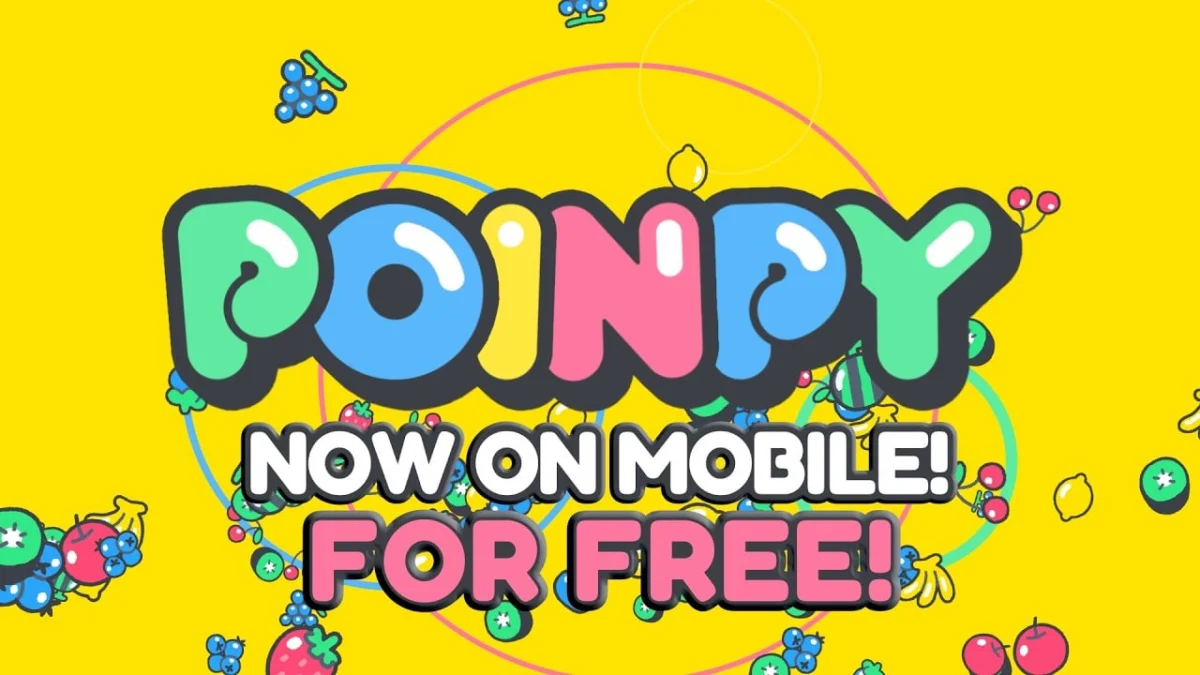
In the rapidly shifting landscape of mobile gaming, titles often disappear as quietly as they arrive. Licensing agreements, platform exclusivity, and the volatility of subscription-based services frequently consign innovative projects to digital obscurity. However, for the vibrant, high-octane vertical climber Poinpy, the story has taken a rare and heartening turn. After being pulled from the Netflix Games library in June 2025, the title has returned to the mobile market—not as a paid product or a subscription-gated exclusive, but as a completely free, ad-free experience.
Developed by Ojiro Fumoto—the creative mind behind the cult classic Downwell—under his pseudonym "Moppin," Poinpy has once again become available to the public, marking a significant win for game preservation and accessibility.
The Chronology: From Netflix Exclusive to Free-to-Play Freedom
To understand the significance of Poinpy’s return, one must look at its peculiar journey through the mobile ecosystem.
The Initial Launch (June 2022)
When Poinpy first debuted in June 2022, it was touted as a flagship title for Netflix Games. At the time, Netflix was aggressively building its gaming portfolio, seeking to add value to its streaming subscriptions by offering high-quality, ad-free, and microtransaction-free mobile games. Poinpy was the perfect candidate: a tight, polished, and mechanically brilliant vertical platformer that resonated with players who enjoyed the challenge-heavy aesthetic of titles like Downwell.
The Delisting (June 2025)
The digital afterlife of Poinpy began in June 2025. Following the expiration of the exclusive licensing deal between publisher Devolver Digital and Netflix, the game was removed from the Netflix Games platform. For many, this was a moment of frustration; once the subscription access was revoked, there was no legitimate way to purchase or download the title. It became "abandonware" almost overnight, a common fate for mobile games tethered to specific service providers.
The Resurrection (Present Day)
In a move that surprised the industry, Devolver Digital announced that Poinpy would be returning to the Google Play Store as a standalone, free-to-play title. This pivot represents a departure from standard industry practices, where publishers might attempt to monetize a game further upon reclaiming the rights. Instead, the game has been released in a "pro-consumer" format: no ads, no in-app purchases, and no requirements to sign into third-party accounts.
The Mechanics: Why Poinpy Still Matters
Poinpy is not merely a game of climbing; it is a game of rhythmic survival. The core gameplay loop is deceptively simple but offers a high skill ceiling that keeps players engaged for hours.
The Vertical Loop
Players control a small, green, wide-eyed creature tasked with ascending through procedurally generated levels. The verticality is the main hook, but it is the pressure from below that defines the intensity. A hungry, looming blue beast stalks the player, threatening to consume them if they spend too much time lingering in one spot.
The Juice Economy
The game introduces a unique "juice" mechanic. To appease the monster chasing you, you must collect specific fruits scattered throughout the stage. These fruits must be brought to a processing area to create juice, which acts as a "tribute" to the beast. The pacing of the game is dictated by these demands; you are constantly balancing the need for speed with the tactical collection of specific fruit combinations required to keep the monster at bay.
Control and Physics
The control scheme is one of the most intuitive aspects of the experience. Much like the slingshot mechanics found in Angry Birds, players hold and drag on the screen to aim their jumps. This allows for precise trajectory adjustment, enabling the player to bounce off walls, chain together mid-air maneuvers, and navigate complex obstacle courses at high speed. The physics are snappy and responsive, a hallmark of Moppin’s design philosophy.
Supporting Data: The Developer Behind the Magic
To understand the quality of Poinpy, one must consider the track record of its creator, Ojiro Fumoto. His previous title, Downwell, became a landmark indie release for its minimalist art style and punishing, rewarding difficulty.
Poinpy serves as the second major collaboration between Fumoto and publisher Devolver Digital. While Downwell focused on the intensity of descending into darkness, Poinpy acts as a spiritual antithesis: a vibrant, colorful, and ascending journey. Data from user reviews during the Netflix era consistently praised the game for its "perfect pick-up-and-play" nature, citing the 5-to-10-minute gameplay sessions as ideal for mobile commutes.
Furthermore, the decision to release the game for free, while offering an optional "tip" button, is an interesting experiment in the "pay-what-you-want" model for mobile. It tests the theory that players are willing to support developers directly if they feel the product is high-quality and free of predatory monetization schemes.
Official Responses and Strategic Implications
The industry response to Poinpy’s re-release has been largely positive. By bypassing the traditional subscription gate, Devolver Digital has effectively maximized the potential player base for the game.
Devolver Digital’s Stance
Devolver Digital has long positioned itself as a champion of indie developers. By bringing Poinpy back to the store without monetization, they are reinforcing their brand identity as a publisher that prioritizes artistic integrity and player goodwill over short-term revenue extraction.
Implications for Mobile Gaming
The "Netflix Effect" on gaming has been a subject of intense debate. While subscriptions provide a steady revenue stream for developers, the danger of "platform lock" is real. When a game is tied to a service, its survival is entirely dependent on that service’s business strategy.
Poinpy’s transition from a locked exclusive to a free, publicly accessible title could set a precedent. It suggests that publishers are becoming more aware of the "long tail" of their games. Rather than letting a title die when a contract ends, there is value in keeping the game alive, building community sentiment, and maintaining the developer’s reputation for future projects.
Analyzing the "No-Monetization" Choice
Critics might ask: Why give it away for free?
In the current mobile market, which is saturated with "Gacha" mechanics, loot boxes, and aggressive advertisements, Poinpy stands out as an anomaly. By removing all barriers to entry, the game is likely to achieve a much higher number of downloads than it would have as a premium, paid title.
The optional tipping model is also a fascinating look at the "patronage" model of game funding. It acknowledges that while players may not want to be forced to pay to win, they often feel a sense of gratitude toward creators who deliver a polished, bug-free experience. This creates a psychological bond between the developer and the audience that is rarely found in the world of high-budget, microtransaction-heavy mobile games.
Conclusion: A Victory for the Player
The return of Poinpy is more than just a piece of news; it is a victory for the preservation of digital culture. In an era where games can be "turned off" at the whim of a corporate contract, having a beloved, high-quality title return to the wild, completely free, is a rare cause for celebration.
Whether you are a fan of high-speed platformers, a long-time follower of Moppin’s work, or simply someone looking for a game that doesn’t demand your credit card or your attention to advertisements, Poinpy is a must-download. It represents the best of what mobile gaming can be: accessible, challenging, and created with genuine passion.
As you dive into the colorful, fruit-filled world of Poinpy, remember the journey it took to get there. It is a reminder that even in the world of big business and subscription wars, the games that matter most—the ones with heart and tight, responsive design—have a way of finding their way back to the players who love them.
You can find the game now on the Google Play Store. And if you find yourself hooked on the vertical climb, consider leaving a tip for the developer—it is the best way to ensure that games like Poinpy continue to exist in a landscape that often seems to have forgotten the joy of simple, pure play.

