

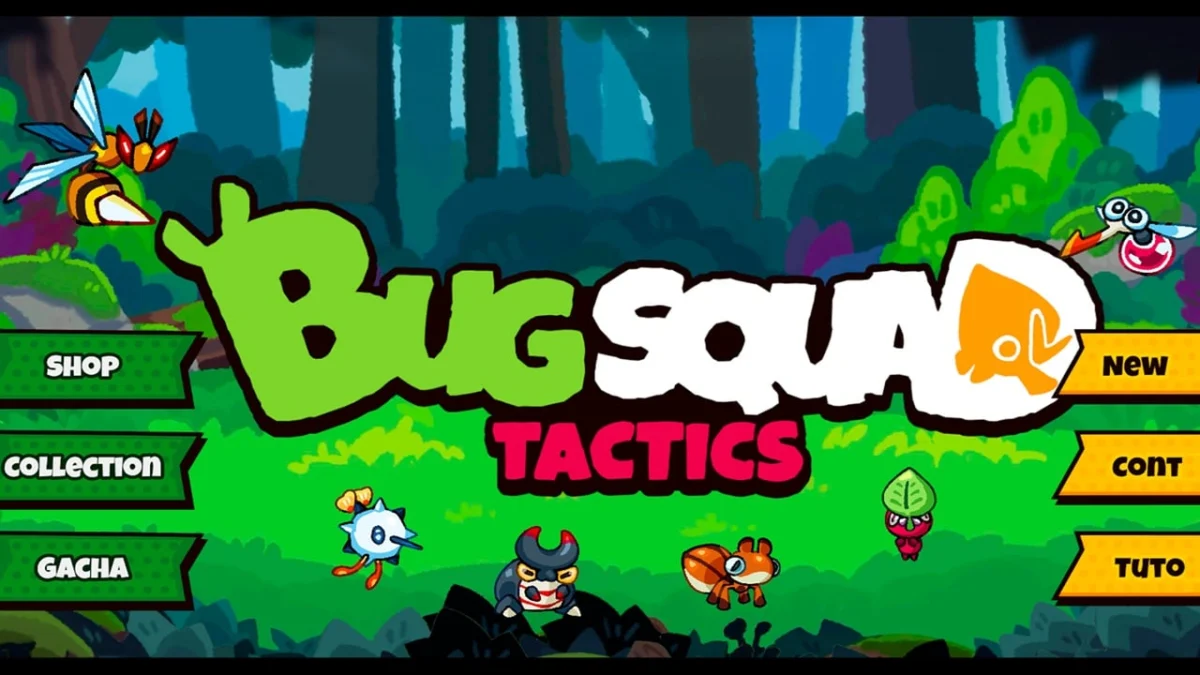
The mobile gaming landscape has just become a little more crowded—and a lot more insect-centric. Indie developer Adisoft Gaming has officially released Bug Squad Tactics, a strategic roguelike autobattler that shrinks the player down to the undergrowth, tasking them with assembling and commanding a team of hyper-specialized insects. Available now on the Google Play Store, the title blends the high-stakes tension of the roguelike genre with the satisfying, tactical depth of autobattler mechanics, all set against a backdrop of macro-photography-inspired natural warfare.
Main Facts: A New Breed of Strategy
At its core, Bug Squad Tactics is an exercise in synergy and positioning. Players are dropped into a 50-turn gauntlet where they must survive five grueling encounters, culminating in battles against formidable predators—including a boss encounter featuring a gargantuan, terrifying frog.
The game’s primary draw is its deep roster of 30 playable insect species, each boasting distinct active abilities. When combined with a sprawling library of 60 passive abilities, the potential for team compositions is staggering. Players must assemble a squad of five units, but success is not merely a matter of picking the strongest creatures; it is a matter of placement. The game’s "Formation" system is the linchpin of the experience, requiring players to arrange their bugs in specific patterns to trigger chain reactions. If a player successfully connects the right passive effects, they can unleash devastating combos that turn a ragtag group of beetles and ants into a lethal, synergistic war machine.
Chronology of Development and Release
The journey of Bug Squad Tactics from concept to storefront reflects the common trajectory of modern indie mobile development: iterative design focused on replayability. Adisoft Gaming began development with the intent to bridge the gap between casual "pick-up-and-play" mobile titles and the "hardcore" roguelike community.
- Early Conceptualization: The developers focused on the "autobattler" engine, ensuring that the AI handling the combat was robust enough to respect the player’s positioning choices.
- Beta Testing Phase: Throughout the development cycle, the focus shifted to balancing the 30-unit roster. The challenge was ensuring that no single "meta" build dominated the landscape, encouraging players to experiment with underutilized bugs.
- Official Launch: Following a quiet soft-launch period, Bug Squad Tactics went live on the Google Play Store this week. The launch marks the beginning of a live-service roadmap, with the developer hinting at potential future updates involving new biomes and expanded insect rosters.
Supporting Data: Understanding the Mechanics
To master Bug Squad Tactics, players must engage with the game’s unique progression systems. The game employs a dual-tier star system that differentiates between temporary buffs and permanent growth.
The Progression Loop
- The Run-Based System: Each run spans 50 turns. During this time, players encounter food rewards—specifically fruits—that provide temporary star level increases. These boosts are instrumental in surviving mid-run spikes in enemy difficulty, but they are purged upon the completion or failure of a run.
- Permanent Progression: Unlike traditional roguelikes, where a "game over" resets the player to ground zero, Adisoft Gaming has introduced a gacha-based permanent upgrade system. By investing in permanent star levels for their bugs, players carry over their power increases into future runs. This creates a "rogue-lite" structure that rewards consistent play, ensuring that even a failed run feels like a step toward long-term success.
- The "Second Chance" Mechanic: Survival is difficult. Players are granted a single defeat buffer; if the squad is wiped out, they can continue. However, a second defeat results in a hard termination of the current run, emphasizing the weight of every tactical decision.
Tactical Synergy Matrix
The 60 passive abilities are designed to feed into one another. For instance, an ant unit might possess a "Pheromone Trail" ability that buffs the attack speed of adjacent allies, while a beetle might possess "Carapace Shielding" that triggers when a teammate attacks. By placing the ant behind the beetle, players create a chain where defensive pressure leads to offensive output. This "chaining" logic is the engine of the game’s difficulty curve.
Official Perspectives and Philosophy
While Adisoft Gaming has maintained a lean profile, the design philosophy behind Bug Squad Tactics is clear. In a market saturated with "idle" games that play themselves, Adisoft has opted for a "tactical-first" approach.
The inclusion of a gacha system—usually a point of contention in the gaming community—has been implemented with a specific goal: player retention. By decoupling the permanent star upgrades from the temporary run-based buffs, the developers have successfully mitigated the "frustration factor" often associated with roguelikes. Players aren’t just grinding for temporary power; they are building a collection of units that they can call upon with greater efficiency in future attempts.
The developers have emphasized that the "terrifying frog" boss is designed to act as a skill gate. It is not meant to be defeated by brute force, but by a carefully curated formation that exploits the frog’s specific attack patterns. This reflects a broader design ethos: the player’s brain is the most important unit on the board.
Implications for the Roguelike Genre
Bug Squad Tactics serves as an interesting case study for the evolution of the roguelike autobattler genre on mobile devices.
Bridging the Gap
By adopting a gacha model for permanent progression, Adisoft Gaming is navigating the intersection of "Hardcore Strategy" and "Mobile-Friendly Progression." This model appeals to two distinct demographics: the purist who enjoys the thrill of a 50-turn run, and the casual player who wants to see their account power grow over time.
The Future of Mobile Autobattlers
The success of Bug Squad Tactics may indicate a shift away from the "infinite idle" trend and back toward games that require active engagement. If the player base responds well to the complexity of the formation-based chain reactions, we may see more developers moving toward mechanics that prioritize spatial intelligence over simple statistical grinding.
Furthermore, the game’s focus on thematic immersion—the "insect world"—is a clever way to differentiate the title in a market filled with fantasy and sci-fi tropes. The "macro-scale" of the game makes the humble ant or beetle feel like a legendary hero, providing a sense of scale that is often lacking in turn-based mobile strategy.
Conclusion: Is It Worth the Download?
Bug Squad Tactics is a robust addition to the Android gaming ecosystem. Its combination of deep tactical positioning, a satisfying permanent progression loop, and a refreshingly unique theme makes it a standout entry for fans of strategy games. While the learning curve for the chain-reaction mechanics may be steep for beginners, the "second chance" mechanic provides enough of a safety net to encourage experimentation.
As the game settles into its post-launch phase, the real test will be how Adisoft Gaming handles balance updates. If they can continue to introduce units that offer unique interactions without breaking the delicate equilibrium of the existing roster, Bug Squad Tactics could very well become a staple in the mobile strategy genre.
For those currently playing, the advice is simple: don’t get too attached to your current formation. In the world of insects, adaptation is the only way to survive the garden. Whether you are aiming to defeat the frog or simply optimizing your beetle’s star level, the game offers a refreshing, brain-teasing experience that demands both patience and foresight.
For those looking for more gaming news, including recent developments in interactive fiction and narrative-driven titles, check out our latest deep dive into "The Traitors: Interactive Game" and how its choice-based mechanics are shifting the landscape of mobile social-deduction games.

