


At first glance, screenshots and gameplay videos of Shil might tempt casual observers to write it off as overly simplistic. Yet, that very simplicity is the linchpin of its brilliance. Developed by OSM Games, this psychological horror-puzzle hybrid eschews traditional jump scares and high-budget visual fidelity in favor of all-encompassing, void-like environments. The result is one of the most engrossing, deeply unsettling, and addictive virtual reality experiences to hit the market.
For a medium that frequently relies on loud noises, low lighting, and heavy-handed musical cues to manufacture fear, Shil takes a daringly divergent route. By stripping its digital world down to a stark, two-tone art style, the game weaponizes minimalism. Players often find themselves staring blankly into seemingly empty space, yet a creeping, visceral certainty tells them that something is lurking just out of sight. It is a psychological heavy-lift that defies traditional trailers or screenshots—an atmosphere that truly demands to be experienced firsthand.
1. Quick Facts & Core Overview
To understand what makes Shil a standout title in the crowded VR landscape, it helps to review the essential hardware and design specifications:
- What is it? A psychological horror game seamlessly interwoven with intricate puzzle mechanics.
- Platforms: Meta Quest (tested on Quest 3); PC VR support is officially slated for release in the near future.
- Release Date: October 8, 2026.
- Developer: OSM Games.
- Price: $14.99.
- Comfort Options: Includes teleportation locomotion, snap versus smooth turning options, and an adjustable motion vignette to mitigate discomfort for sensitive players.
2. Chronology: Trapped Within the Recesses of a Shattered Mind
The narrative premise of Shil places the player directly inside the fractured psyche of an unnamed protagonist. Guided only by a cryptic artificial intelligence, your core objective is deceptively straightforward: reclaim your lost, scattered memories by navigating a labyrinth of abstract rooms.

The Early Stages: A False Sense of Security
When players take their first steps into the void-like chambers, the initial puzzles breeze by with comforting ease. You learn the foundational mechanics of forging paths across endless drops, manipulating interactive objects, and neutralizing unseen, two-toned entities.
However, as the rooms progress, the minimalist design begins to bare its teeth. The game’s stellar, restrained sound design kicks in, compounding simple physical obstacles into nerve-wracking dilemmas that force players to freeze, hesitate, and second-guess their every move.
Escalating Complexity: The Mechanics of Dread
A prime example of Shil’s ingenious design philosophy occurs early in the experience. Players encounter a series of kinetic obstacles: massive, automated pistols mounted to either side of the pathway, firing one-shot-kill projectiles.
Because of the game’s strict two-tone color palette, the pistols match the color of the environment (e.g., black) or contrast with it (e.g., yellow). Players are equipped with a primary ball launcher used to recolor pathways to create safe routes. However, shooting the pistols to turn them black for better environmental visibility has a terrifying catch: it also turns the bullets black.
Consequently, the projectiles completely vanish against the matching background paths. Players must choose between relying on raw peripheral timing—watching for the invisible bullet to cross their path—or making the weapons visible and trusting their gut as they sprint across dynamic danger zones. When developers layer four to six such guns firing on independent timers across both flanks, a seemingly simple concept transforms into an exercise in high-stakes spatial reasoning.
As players push deeper, the toolset expands. Magnets are introduced to pull floating platforms toward the player for safer traversal, or to temporarily freeze oncoming hazards—such as giant, swinging chopping knives. Slingshots become vital utilities for managing distant threats and shifting pillars to block incoming traps. By the time players encounter room-scale, psychedelic variations of classic logic games like Minesweeper, solving a room yields a profound, chest-heaving sense of accomplishment.
3. Supporting Data: Replayability and Psychological Design
While a single, straightforward playthrough of Shil can be powered through in roughly one hour depending on player pacing, the game’s structural architecture encourages repeated visits.
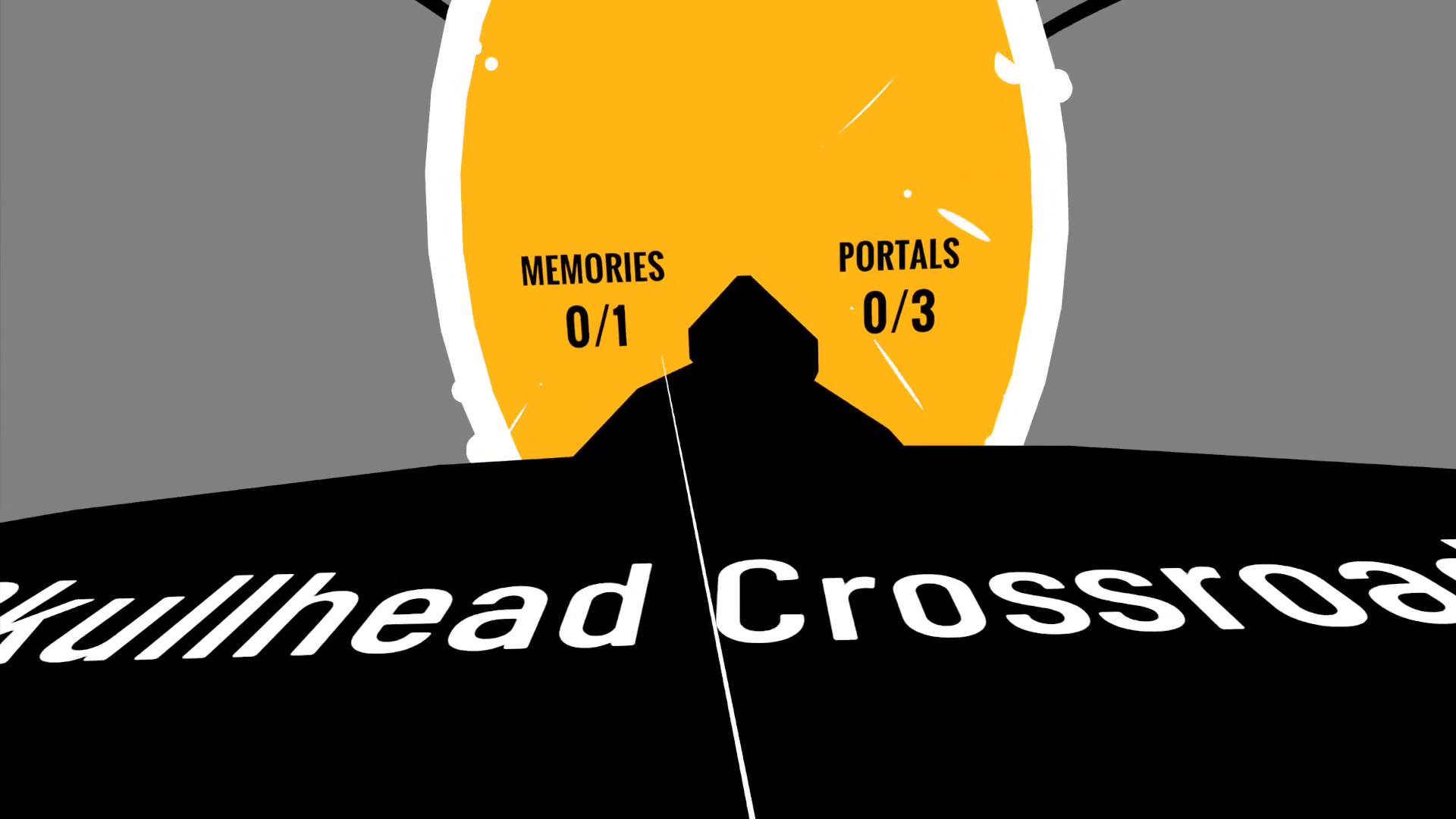
- The Branching Map: Portals leading to new rooms explicitly display how many path branches and hidden memories are left undiscovered. The overall map acts as a persistent reminder of what remains incomplete.
- Seven Unique Endings: Depending on the winding path branches a player chooses, Shil features seven distinct conclusions. This narrative branching drastically inflates the title’s true playtime for completionists eager to piece together every recovered memory.
- Comfort Metrics: Thanks to thoughtful accessibility and comfort settings—such as robust teleportation and snap-turn options—the game remains remarkably accessible, rarely inducing motion sickness outside of the most severely motion-sensitive demographics.
4. Official Developer Intentions and Gameplay Philosophy
OSM Games designed Shil around a very specific brand of psychological unease: the fear of the unknown.

In a statement reflecting on the game’s thematic inspirations, the development team leaned heavily into the concept of sensory deprivation. Much like being left alone in a white room with no external stimuli save for one’s own racing thoughts, Shil weaponizes silence and emptiness. It functions much like waiting in a clinic for stressful medical test results—the mind naturally races to construct worst-case scenarios, filling the quiet voids with imagined terrors.
Voiceover snippets encountered along the journey further muddy the waters. These audio logs replay shattered memories that actively undermine the player’s trust, casting doubt on the protagonist’s own sanity, the true intentions of the AI guide, and the nature of figures from the character’s past life.
5. Implications for the VR Horror Genre
Shil arrives as a refreshing reminder that the virtual reality medium does not need hyper-realistic textures, bleeding-edge ray tracing, or relentless jump scares to evoke genuine terror. By focusing entirely on cerebral tension, precise mechanical design, and sensory manipulation, OSM Games has crafted something truly special.
Reviewers and early adopters have drawn favorable comparisons to titles like Superhot VR—games where minimalist aesthetics mask deceptively deep, tactical gameplay loops. While Shil may not rely on traditional gore or visceral monster designs, its ability to persistently rattle a player’s nerves makes it a milestone release for Quest users.
Final Verdict
- Rating: 4 / 5 Stars
- Summary: Shil is a masterclass in minimalist game design. It prioritizes the player’s mind and nerves over cheap visual shock value, delivering an experience that is consistently distressing, deeply rewarding, and endlessly clever. For $14.99, it is an essential addition to any VR horror enthusiast’s library.

