

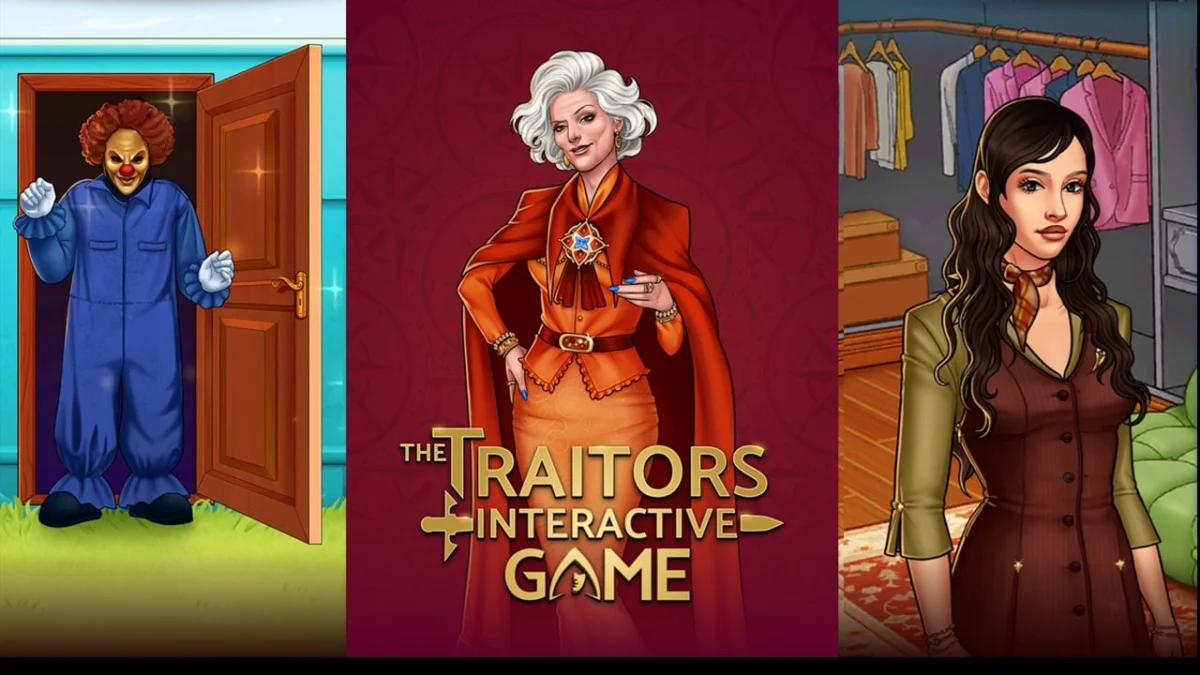
The psychological warfare that has captivated millions of television viewers worldwide is no longer confined to the screen. Fusebox Games, the UK-based interactive entertainment studio and a subsidiary of Nazara Technologies, has officially brought the high-stakes world of The Traitors to mobile devices. The Traitors: Interactive Game offers fans of the hit franchise the chance to experience the paranoia, alliance-building, and cutthroat deception of the show from the palm of their hand.
As the mobile gaming market continues to pivot toward narrative-driven experiences, Fusebox Games—best known for their work on Love Island: The Game and Big Brother: The Game—seeks to capitalize on the “social deduction” craze. By blending player-driven branching narratives with the high-pressure environment of the show’s infamous castle, the developer has created a digital experience that tests not just logic, but the ability to manipulate perception.
Main Facts: The Architecture of Deception
The Traitors: Interactive Game is a simulation experience that drops the player into a 22-person competition. The core objective is simple in concept but daunting in execution: either survive the "murders" as a Faithful or eliminate the competition as a Traitor.
The game’s mechanics are built upon a foundation of player-driven choices. Every interaction, accusation, and alliance formed during the 12-day in-game cycle ripples outward, fundamentally altering how non-playable characters (NPCs) perceive the player. Whether you choose to be a vocal, aggressive strategist or a quiet, unassuming wallflower, the game engine tracks your "social footprint."
Core Features:
- Archetype Selection: At the onset, players define their persona—the "Leader," the "Chameleon," or the "Wildcard." Each archetype offers distinct dialogue options and social bonuses.
- Fashion as Strategy: A unique addition to the genre, the game allows for wardrobe customization. Players must curate outfits for Missions and Round Tables, treating style as a form of "psychological warfare" to gain influence.
- The 12-Day Cycle: The game operates on a compressed timeline, simulating the pressure-cooker environment of the TV series.
- Immunity Mechanics: Beyond the pursuit of the final gold prize, players must compete in missions to win shields, which provide crucial protection from being "murdered" during the night phase.
Chronology: The 12-Day Path to the Endgame
The game is structured as a narrative gauntlet. Over the course of 12 intense days, the player must navigate a series of high-stakes environments designed to break the strongest of wills.
Days 1–3: The Formation of Alliances
The initial phase is defined by "The Introduction." Players are ushered into the castle by Vivienne, the game’s virtual host. During these opening days, the primary goal is survival through integration. You must quickly identify who is trustworthy and who is signaling "Traitor" behavior. During these days, your choice of archetype—Leader, Chameleon, or Wildcard—is tested. A Leader might try to command the room, while a Chameleon may try to blend into the background, observing the chatter of others.
Days 4–8: The Escalation of Paranoia
As the pool of contestants thins, the game’s difficulty spikes. The Round Table becomes a place of genuine tension. Here, the player must articulate their theories without appearing too knowledgeable—if you are too accurate, you become a target for the Traitors; if you are too vague, you are suspected of being a Traitor yourself.
Days 9–12: The Endgame
The final stretch is a race against time. Missions become more difficult, and the frequency of "murders" increases. This is where the alliances built in the early game either pay off or result in a betrayal. The final day culminates in a showdown that requires the player to reconcile their accumulated evidence with their personal strategy. Success requires a delicate balance: reach the endgame without having your identity exposed or your reputation shredded by your peers.
Supporting Data: Why Social Deduction Works
The rise of The Traitors: Interactive Game is not an isolated phenomenon. It sits at the intersection of three major trends in modern mobile gaming: the rise of "asynchronous" social play, the popularity of social deduction board games (like Among Us or Werewolf), and the "transmedia" trend where television franchises look to extend their brand lifespan through interactive applications.
Market research suggests that mobile users are spending significantly more time on narrative-driven titles than they were five years ago. Fusebox Games has successfully identified that players don’t just want to "watch" the drama; they want to "author" it. By placing the player in the seat of a contestant, the game taps into the same psychological hooks that make the TV show successful:
- The "Observer" Bias: Players believe they could play better than the contestants on TV. This game provides the platform to prove or disprove that hypothesis.
- The High-Stakes Reward System: The inclusion of tangible rewards—Gold and Shields—gamifies the social anxiety of the show, making every choice feel like it has a high-value consequence.
- Branching Complexity: By utilizing a robust decision-tree engine, Fusebox ensures that no two playthroughs are identical, encouraging high replayability.
Official Perspectives and Studio Vision
In a recent statement regarding the launch, the team at Fusebox Games highlighted the importance of "authenticity." The goal was not merely to create a quiz game, but to capture the emotional texture of the show.
"We wanted the player to feel the same sense of anxiety and exhilaration that the real-life contestants feel," a spokesperson for the studio noted. "When you walk into the Round Table in our game, the music, the visual cues, and the way the other characters react to your past decisions—it’s all designed to make you feel like you are truly in the line of fire."
Nazara Technologies, the parent company, has also signaled that this title is a major milestone in their strategy to expand into the Western mobile market. By leveraging the intellectual property (IP) of The Traitors, they are utilizing a globally recognized brand to lower the "barrier to entry" for new players, effectively merging casual gaming with reality television fandom.
Implications: The Future of Interactive TV Tie-ins
The success of The Traitors: Interactive Game may signal a shift in how media conglomerates approach mobile app development. For years, "tie-in" games were often low-effort promotional tools—simple puzzle games with branded skins. Fusebox Games is proving that a "narrative-first" approach is far more sustainable.
1. The Death of the "Passive Fan"
The era of the passive viewer is fading. Audiences now expect a secondary layer of engagement. If this game performs well, expect to see a surge in "Choose-Your-Own-Adventure" style apps accompanying major reality TV franchises, from Survivor to The Bachelor.
2. Psychological Gaming as a Niche
We are seeing a move toward "psychological gaming," where the challenge isn’t reflex-based (like in Call of Duty) or logic-based (like in Candy Crush), but social-based. Developers are realizing that the most complex AI is not one that calculates physics, but one that calculates human social patterns.
3. The Monetization of Personality
By incorporating wardrobe customization and character archetypes, the game introduces a subtle but effective way to personalize the experience. Players who want to express their "Leader" persona through distinct, high-end virtual outfits are likely to spend, suggesting that even in social deduction games, digital self-expression remains a powerful monetization lever.
Conclusion: Are You Ready for the Round Table?
Whether you are a die-hard fan of the television series or a mobile gamer looking for a new narrative challenge, The Traitors: Interactive Game offers a unique, high-pressure playground. It is a game that forces you to lie to your friends, keep your secrets hidden, and ultimately decide if you have the stomach to survive the cutthroat environment of the castle.
As the game is now available on the Google Play Store, the question remains: When you sit at the Round Table, will your story hold up? Or will you be the next one to be banished? The game is waiting, and the traitors are already among you.
For those interested in exploring the broader landscape of mobile adaptations, check out our latest coverage on other major titles making the jump to mobile, including the explosive, high-octane world of ‘Ratchet & Clank: Ranger Rumble.’

