

For decades, the evolution of 3D video game movement was defined by a singular, relentless pursuit: frictionless power. When we look back at the touchstones of thoughtful character motion—the fluid wall-runs of Mirror’s Edge, the kinetic momentum of Titanfall 2, the calculated blink-and-slash mechanics of Dishonored 2, the brutalist high-speed loops of Doom Eternal, or the granular tactical physicality of ARMA 3—they all shared a common objective. They were designed to make the player feel extraordinary.
These titles set a dizzying ceiling for what could be achieved with a keyboard, mouse, or controller. They offered a specialized power fantasy built for mastery. Whether you were launching yourself onto the chassis of a giant mech, sliding under gunfire to flank an enemy, or micro-adjusting your stance to line up a three-hundred-meter sniper shot, the goal was to elevate the player above human limitation.
Yet, as we examine the contemporary landscape of interactive entertainment, a fascinating counter-movement has taken root. Today, developers are increasingly turning their attention away from superhuman agility and toward the agonizing, unglamorous friction of real life. They are stripping away the power fantasies to focus on the granular, everyday mechanics of human motion: walking slowly, negotiating a jagged cliff face, mantling awkwardly over a ledge, or humiliatingly tumbling backward down a gentle grassy slope.
This is the era of the physics-driven movement simulator, where finding joy in the struggle of basic locomotion has transformed historically "boring" concepts into critical darlings and Game of the Year contenders.
Main Facts: The Rise of Anti-Friction Mechanics
The shift away from automated, frictionless parkour toward high-fidelity physics simulations represents one of the most significant design trends of the 2020s.
- The Core Phenomenon: Modern indie and mid-budget titles are treating fundamental actions—such as balancing packages in Death Stranding, managing mud resistance in SnowRunner, or simply preventing a character from face-planting in Baby Steps—as complex puzzles requiring intense cognitive and physical engagement.
- The Catalysts: Critical successes like Baby Steps (2025), Cairn, Big Walk, and specialized movement-focused titles have proven that players are hungry for mechanics that demand deliberate, calculated inputs rather than automatic cinematic animations.
- The Design Philosophy: This movement sub-genre treats standard navigation not as a bridge between cutscenes or combat arenas, but as the primary gameplay loop itself. Every step, shift of weight, and handhold matters.
Chronology: From Cinematic Automation to Granular Chaos
To understand how we arrived at an era where a game about the sheer difficulty of walking can win critical acclaim, it helps to trace the historical trajectory of 3D movement in video games.

The Arcade and Platforming Roots (Late 1990s – Early 2000s)
In the pioneering days of 3D gaming, spatial navigation was often a battle against the camera and rigid collision boxes. Platformers like Super Mario 64 and early action-adventure games established basic rules for jumping and momentum, but movement was largely functional—a means to explore an environment or evade enemies.
The Era of the Cinematic Shortcut (Late 2000s – 2010s)
As multiplatform blockbuster budgets swelled during the late 2000s and 2010s, developers faced pressure to streamline experiences for massive audiences. Drawing inspiration from cinematic tropes, games like Assassin’s Creed, Uncharted, and later Ghost of Tsushima popularized automated traversal.
During an Irrational Games podcast years ago, a developer famously noted that Grand Theft Auto III revolutionized open-world design by condensing a complex sequence of physical actions—opening a car door, pulling out a driver, sliding in, and starting the ignition—into a single button press ("Triangle"). While earlier titles like GTA 1 laid structural groundwork, this philosophy of reducing player friction became standard practice.
Movement was sanded down. Friction was eliminated. Developers wanted millions of players to effortlessly scale ancient ruins and leap across rooftops without ever misjudging a ledge or getting stuck on a rock. You were only allowed to interact with designated, pre-approved structural elements. A jump stopped feeling like a physical leap and started feeling like an interactive animation trigger.
The Pendulum Swings Back (Late 2010s – Present)
Eventually, standardization breeds fatigue. Just as hardcore action games swung back toward grueling, deliberate combat inspired by FromSoftware’s design ethos, players and developers grew starved for genuine tactile stimulation in character movement.
The turning point arrived not through high-budget triple-A blockbusters, but through experiments that asked a radical, subversive question: What is movement, actually?
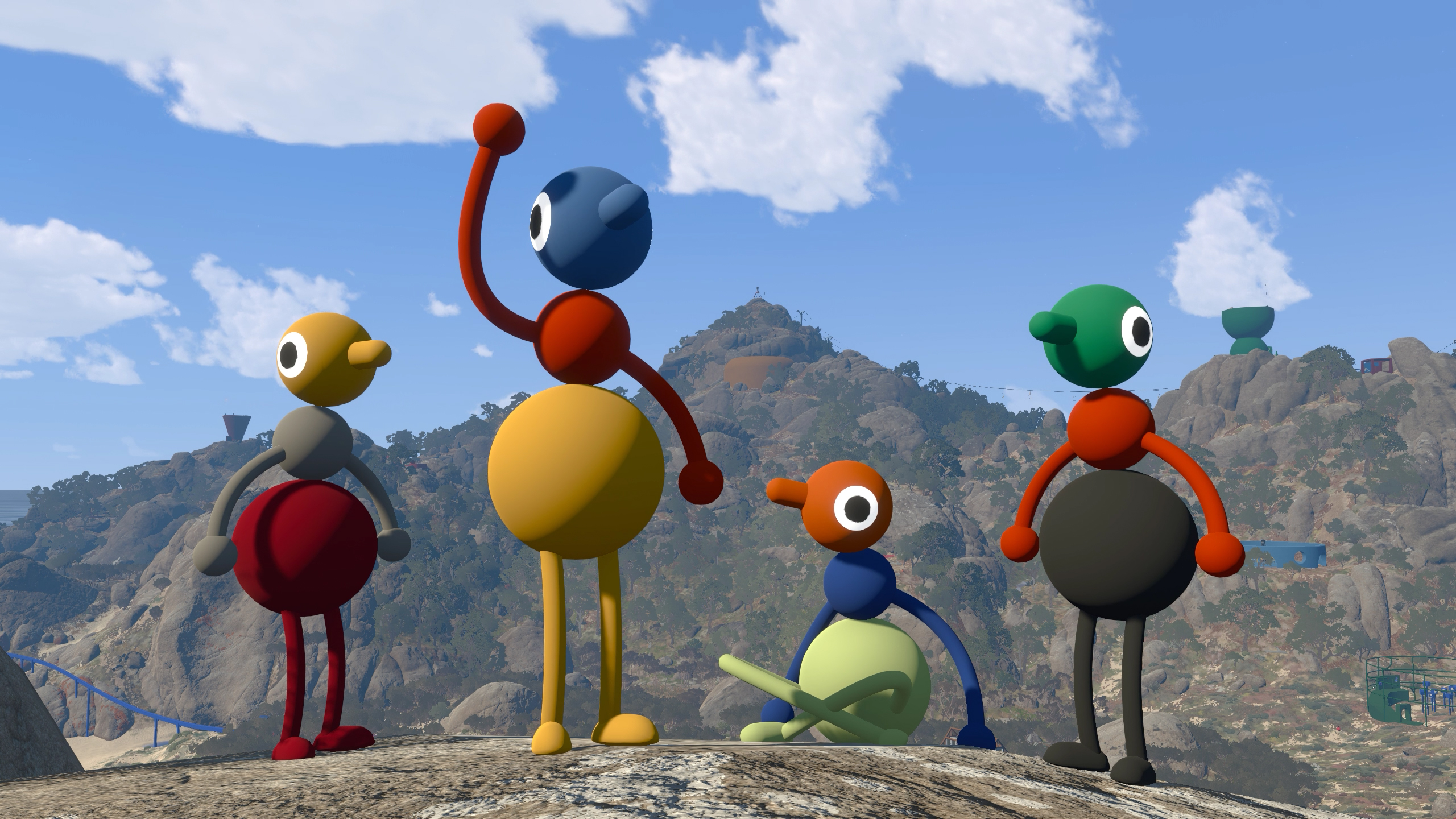
Titles like Death Stranding (2019) demonstrated that managing center of gravity and cargo distribution could be intensely compelling. By 2025, games like Baby Steps took this philosophy to its logical extreme, turning the act of putting one foot in front of the other into a physics-based ordeal.
Supporting Data and Creative Inspirations
The resurgence of granular movement physics is not happening in a vacuum; it draws from surprising artistic origins and a diverse ecosystem of modern releases.
The Skateboarder and the Mod
Interestingly, games like Baby Steps—which strips away conventional power fantasies—drew major inspiration from a notoriously demanding custom mod for Mirror’s Edge called Stratocubulus. Created by map-making communities, Stratocubulus forced players to completely rethink Faith’s moveset, exploiting ambiguous level geometry and puzzle-like spatial navigation.
At GDC 2026, designer Gabe Cuzillo noted that the project was inspired by observing Japanese professional skateboarder Gou Miyagi. Watching Miyagi’s improvisational, unconventional approach to urban architecture made the design team look at physical space in a completely different light. "All of a sudden, I was actually looking at and seeing the space in a way that I hadn’t in a single-player level in a long time," Cuzillo explained. That spirit of viewing standard geometry as an obstacle course of micro-puzzles translated directly into Baby Steps.
A Ecosystem of Movement Innovation
The current gaming landscape is saturated with titles utilizing movement as their primary storytelling and mechanical vehicle:
- Cairn: Transforms the act of climbing a towering mountain face into a meticulous navigation and resource-management puzzle, where every hand and foot placement must be carefully calculated.
- Control Resonant: Merges traditional superhero-style mobility with brain-bending, gravity-shifting mechanics.
- Vholume: Offers a stripped-back aesthetic that conceals immense mechanical depth within intricate parkour level layouts.
- Big Walk: Turns a simple multiplayer trek across a sprawling map into a hilarious, cooperative exercise where even crossing a knee-high barrier becomes a group negotiation.
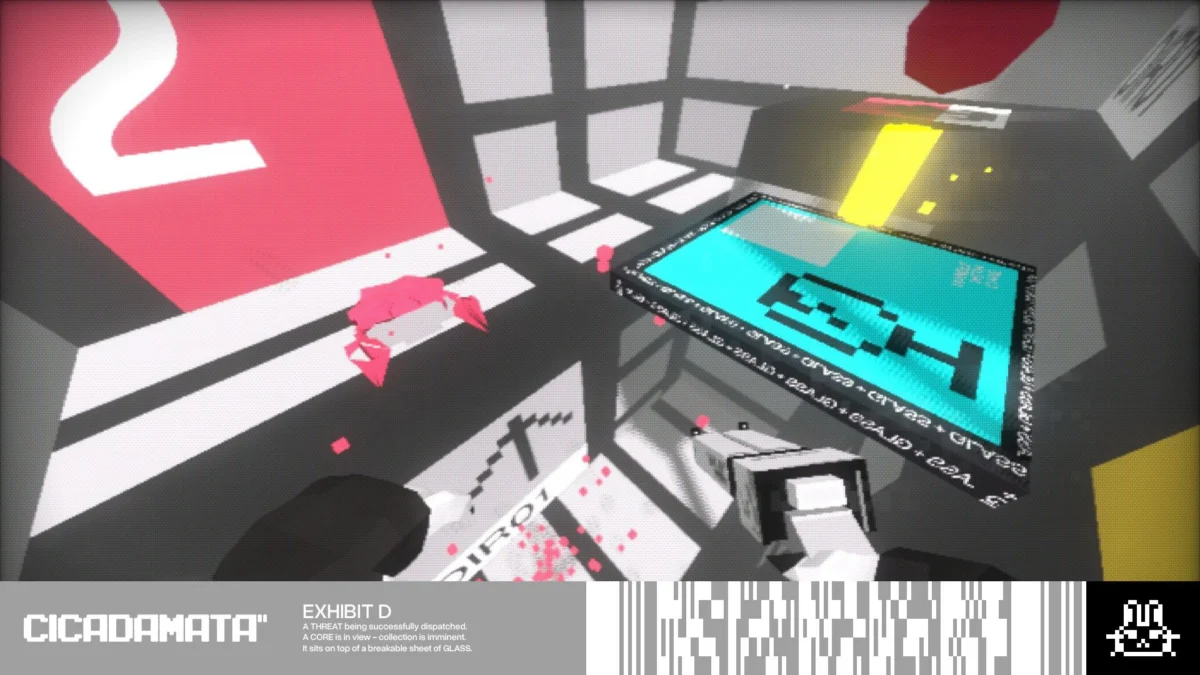
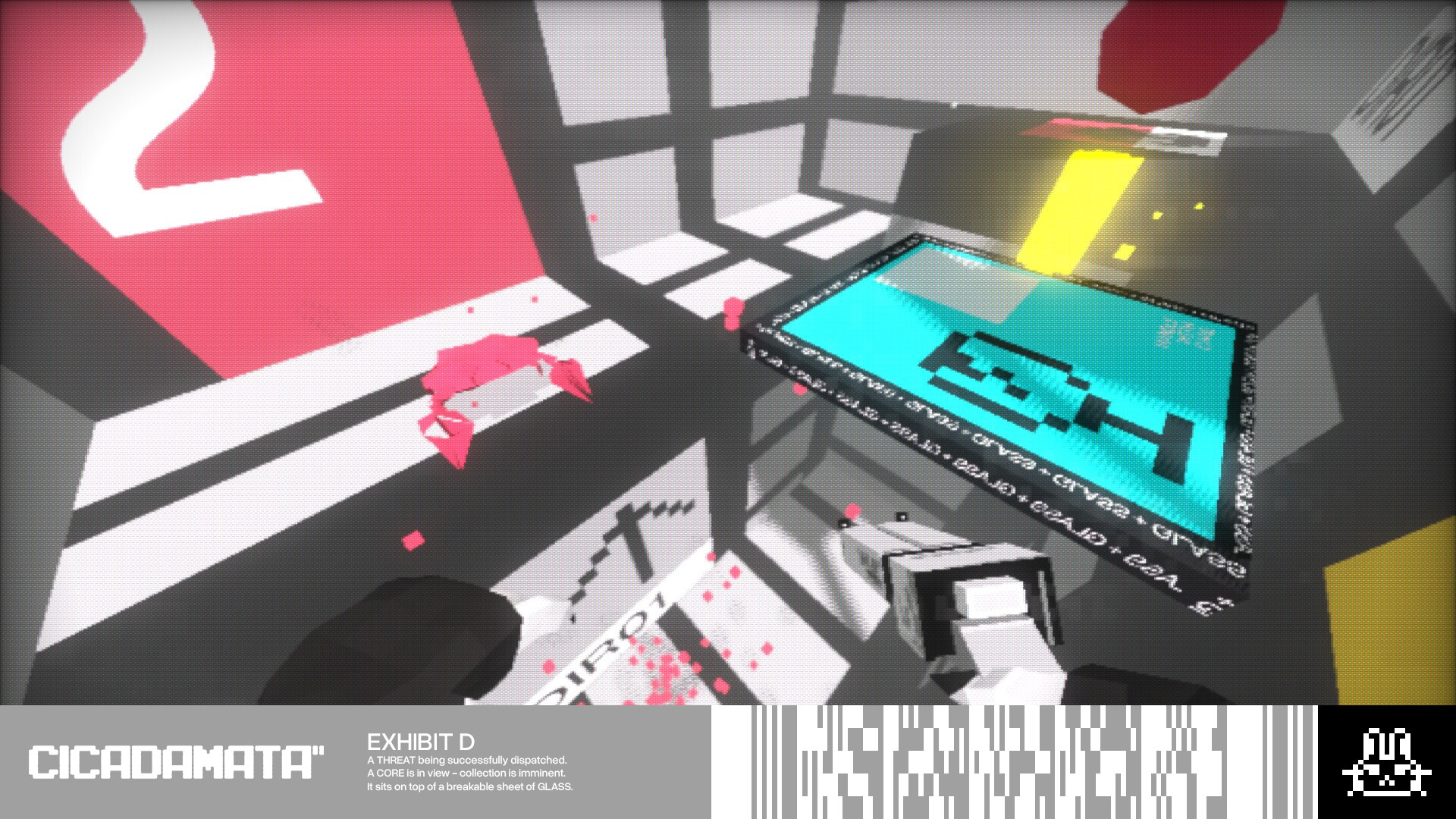
- Cicadamata: Employs disorienting Field of View (FOV) manipulation and towering triple-jump dynamics to reinvent combat arena navigation.
Official Responses and Industry Perspectives
Game creators and critics alike have weighed in on this unexpected pivot toward hyper-realistic, often clumsy locomotion.
Industry analysts point out that after nearly three decades of 3D gaming, developers have exhausted standard gameplay loops, pushing them to mine the mundane for novelty. When every conceivable sci-fi shooter and fantasy role-playing game has been built, the microscopic details of human biomechanics remain a largely uncharted frontier.
Independent developers championing these mechanics argue that friction is the secret ingredient of emotional engagement in games. Without struggle, achievement rings hollow.
"There’s something subversive about designers taking a step back and asking, Well, what is movement, actually?" notes industry commentary on the trend. "What do you have to accomplish to put one foot in front of the other? What happens to your body’s positioning when you place the weight behind your left arm against a cliff face? Those are more interesting questions to ask than I ever thought they could be."
Implications: The Future of Spatial Interaction
The implications of this movement renaissance extend far beyond quirky indie experiments. As players grow weary of automated, hold-forward-to-win traversal systems, developers are learning valuable lessons about immersion and player agency.
- Re-evaluating Level Design: Level designers can no longer rely on invisible walls and obvious, glowing yellow paint to guide players through linear environments. When movement requires active calculation, the environment itself becomes the ultimate puzzle box.
- The Death of Trivialized Travel: The industry-wide expectation that moving from Point A to Point B should be mindless transit is eroding. Whether in a realistic survival simulator or an abstract comedy game, travel is reclaiming its status as core gameplay.
- The Expansion of Sub-Genres: We are likely to see an expansion of physics-heavy simulations into unexpected genres. The success of these titles proves that players do not need superpowers to feel engaged; they just need to feel the tangible weight of their digital existence.
As we look toward the horizon of game development, one can only imagine what hyper-granular simulations await us. Perhaps the next Game of the Year contender will not feature frantic combat or sprawling open worlds at all, but rather a deeply psychological, fourteen-hour narrative about tying your shoelaces while holding your breath. In the current golden age of digital physics, anything is possible—provided you don’t trip over your own feet getting there.

